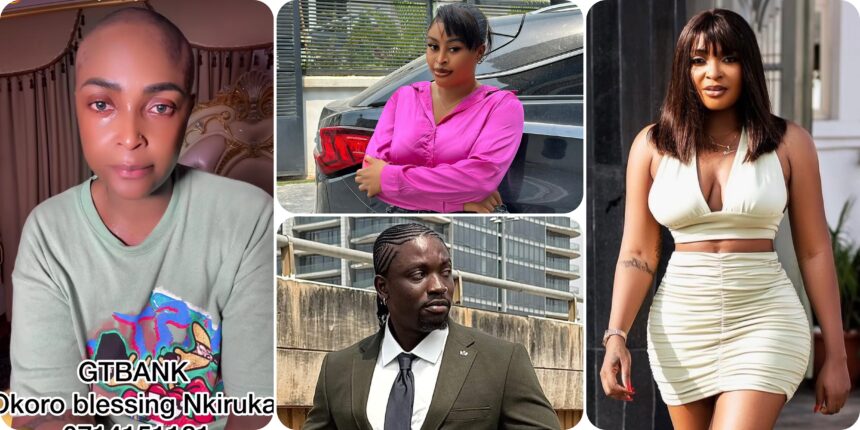
The emotional revelation made by Blessing Okoro that she is battling stage 4 breast cancer has sparked a fierce debate across social media, pitting sympathy against skepticism as celebrities and netizens question the authenticity of her claims.
What started as a deeply personal disclosure quickly spiralled into controversy, with Sarah Martins and Martins Vincent Otse among those demanding proof, raising broader concerns about trust, transparency and the monetisation of personal crises in the social media age.
Who is Blessing CEO and What Did She Say?


Blessing CEO, whose real name is Okoro Blessing Nkiruka, is a prominent Nigerian social media personality, self-acclaimed relationship therapist, and influencer born on May 23, 1989.
Blessing CEO has built her brand on blunt, often polarising takes on love, marriage and personal growth. With a strong social media presence and a history of online disputes, she is no stranger to public scrutiny.
That scrutiny intensified after the self-styled relationship expert released a series of emotional videos claiming she is battling stage 4 breast cancer, a diagnosis she said followed the discovery of a lump initially believed to be non-cancerous before later tests confirmed it had become malignant and spread.
In the videos, she appeared visibly distressed, at one point with a shaved head, explaining that her hair had been falling out and admitting she had struggled with denial and a deep fear of hospitals.
Alongside detailing her condition, she indicated the financial burden of treatment, including chemotherapy and possible surgery, prompting her to appeal for financial support. She shared her bank details and suggested a distress sale of her property to fund care.
However, as public attention grew, so did questions. While maintaining that her diagnosis is real, Blessing CEO declined to release her medical reports publicly, arguing that such records are private and could be misinterpreted by the general public. Instead, she said she would only share them selectively with trusted individuals.
That decision, coupled with the public nature of her financial appeal soon became the point of a widening controversy.
Sarah Martins’ Reaction


If Blessing CEO’s revelation initially drew sympathy, Sarah Martins’ response quickly shifted the tone of the conversation. It introduced a wave of skepticism that would ripple across social media.
In a series of posts, the actress openly questioned the authenticity of the cancer claim, alleging that the relationship influencer may have fabricated the illness to attract sympathy and financial support. She also claimed Blessing CEO’s partner, IVD’s late wife, is responsible for the influencer’s health issue. She wrote:
“What a day to be alive. Dear Bimbo… I see what you did there, keep it up Kpai them all!
Either through cancer or whatever means! They bragged and mocked your death, now it’s time to experience what pain feels like!.”
In another post, Sarah Martins claimed Blessing CEO was not battling cancer but instead going about her daily life. She said:
“Blessing CEO doesn’t have cancer. She stays in Lakwe and enters bus with IVD everyday. The Benz she posted as a gift from IVD was a stunt and for clout! There’s no money anywhere!
Her old car was sold to offset feeding expenses! Both she and IVD are broke! This cancer stunt is a manipulative stunt to gain sympathy and empathy from Nigerians in order to raise money to start a business for IVD!.”
Beyond questioning the illness itself, she also tied her criticism to Blessing CEO’s past controversies, suggesting a pattern of attention-seeking behaviour.
VDM’s Reaction

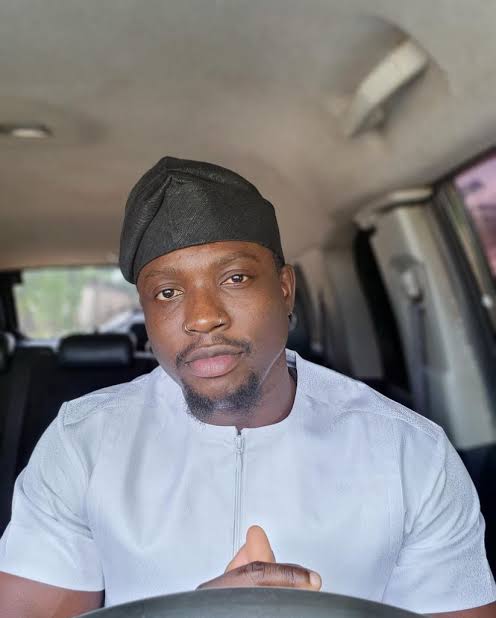
While Sarah Martins’ comments injected emotion into the controversy, Martins Vincent Otse, popularly known as VeryDarkMan (VDM) approached the issue from a different angle: public accountability.
In a video response that quickly gained traction online, VDM openly questioned the credibility of Blessing CEO’s cancer claim, urging her to provide verifiable medical evidence to support such a serious disclosure.
“I just hope what Blessing CEO is saying is the truth,” he said, warning that cancer is too sensitive a subject to be associated with “prank, clout chasing or… gathering money.”
VDM argued that beyond the emotional videos, there was no documented proof, like hospital reports or treatment records made available to the public, despite the financial appeal tied to the announcement. He called on her to “post the proof” to dispel doubts.
VDM also tied his doubts to how Blessing CEO seemingly loves chasing clout, insisting that she can’t be trusted because of her past. He told Blessing CEO that he would be in Lagos and suggested they meet, adding that he wanted to physically check her breast for lumps to confirm whether she truly has cancer.
Wider Public and Celebrity Reactions
Amid the growing skepticism, several celebrities and public figures struck a more empathetic tone, offering prayers and words of encouragement to Blessing Okoro.
Actress Anita Joseph expressed confidence in her recovery, writing, “The Lord will heal you completely.”
Similarly, Iyabo Ojo offered a brief but heartfelt prayer, “May God heal you totally.”
For Destiny Etiko, the news appeared overwhelming, reacting simply with, “Oh my God.”
Dancer Janemena shared a longer message of hope and faith, praying that the illness would be temporary and that healing would come swiftly. She wrote:
“Your healing is coming sooner than you think. This will be your first and only last surgery in Jesus name. Sickness shall never be in same spot with you, Amennnn. I wish you divine healing and protection. May God foresee all your pains, worry and cleanse them. Amen and Amen. Love you sist.”
Actress cum lifestyle influencer Ify Eze urged her to stay strong, describing the situation as serious but expressing belief in her recovery. She wrote: “Ahhh, this is seriousoo, Jesus !!! Pls be strong darling, God is with you and you are healed already.”
Blessing CEO’s Response to Critics and Doubters


As skepticism mounted, Blessing Okoro pushed back, firmly rejecting allegations that her diagnosis was fabricated while defending her decision to keep certain details private.
In a series of follow-up videos and live sessions, she insisted her illness is real, maintaining that people close to her have seen her medical results, even if the wider public has not. She argued that releasing such documents online would violate her privacy and could lead to misinterpretation.
Responding directly to critics like VDM, she took issue with attempts to link her past controversies to her current health claims. She said:
“VDM, you also have a past. if we are talking about our past, nobody will want to associate with you. Let the past be in the past. Also, I can’t post my medical record because it is my privacy. I have forwarded it to my close friends. My aim of telling the public was not to gain money
I am a hardworking woman. I appreciate everyone that has donated. To those that don’t believe me, you don’t need to believe me. Just learn. Cancer can happen to anybody. This is not about saying God forbid.”
“It is disrespectful to say you want to come to Lagos and touch my boobs to check for cancer. I have a man in my life. If you are in Lagos and you need evidence that I have stage 4 cancer, let us schedule a meeting in a public place and I will give you all the evidence you need. Thank you for your concern and empathy.”
At the same time, she sought to clarify aspects of her diagnosis, explaining that the condition began as a lump that was initially dismissed before further tests revealed a more serious development. She also shared educational content about stage 4 cancer, appearing to respond indirectly to doubts about the accuracy of her earlier statements.
Still, some of her actions, such as deleting an earlier video announcing the diagnosis and continuing to appeal for financial assistance has kept the controversy alive. Some netizens have argued that transparency is necessary when public sympathy and money are involved.
Conclusion
Beyond the personalities involved, the controversy surrounding Blessing Okoro’s cancer claim speaks to a deeper shift in Nigeria’s digital culture.
It’s quite sad that some personal stories are no longer received at face value, but interrogated in real time by an increasingly skeptical audience. This usually happens when a person has used a similar technique to gain public sympathy and financial support.
So it’s not shocking when for some, the instinct is to empathise first, and for others, experience has bred caution, even distrust.