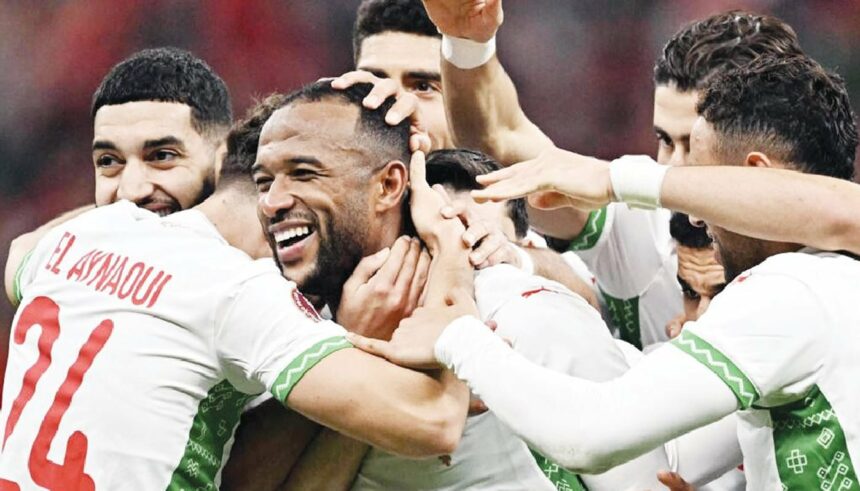
The Confederation of African Football (CAF) has overturned the outcome of the 2025 Africa Cup of Nations final, transferring the title from Senegal to Morocco.
The decision was announced on March 17, nearly two months after Senegal secured a 1–0 victory over Morocco in the final played in Rabat.
Senegal had initially celebrated the win after a late goal sealed the match, with players lifting the trophy before supporters across the country.
The reversal has since generated extensive reactions from football stakeholders, governments, and supporters across Africa and beyond.
The final itself was marked by tension, particularly in the closing stages of regulation time when key officiating decisions drew strong reactions.
A goal scored by Senegal during open play was disallowed by the referee, leading to protests from the team’s technical bench.
Moments later, a penalty was awarded to Morocco in the final minutes of the match, which intensified the situation.
The head coach of Senegal, Pape Thiaw, instructed his players to leave the field in protest following the penalty decision.
The development caused a temporary halt in the game, raising concerns about a possible abandonment of the final.
After several minutes, the players returned to the pitch following intervention from the team captain, Sadio Mané.
Morocco failed to convert the penalty, and play continued into added time where Senegal scored the winning goal.
The match concluded with Senegal declared winners, and the result stood until the recent ruling by CAF.
In its decision, CAF’s Appeals Board cited provisions within its regulations relating to conduct during matches.
The body stated that Senegal’s temporary exit from the pitch constituted a breach of competition rules.
Under Articles 82 and 84 of the regulations, a team that leaves the field without approval may forfeit the match.
Based on this interpretation, CAF adjusted the result to a 3–0 victory in favour of Morocco.
The Senegalese Football Federation responded by rejecting the ruling and announcing plans to pursue further legal action.
The secretary-general of the federation, Abdoulaye Seydou Sow, confirmed that an appeal would be filed at the Court of Arbitration for Sport.
“We will engage our lawyers and file an appeal. We will stop at nothing. The law is on our side,” he said.
Players from the Senegalese team also reacted publicly to the development.
Sadio Mané criticised the situation and expressed concerns about governance within African football.
“What happened has gone too far. This is not the football we fight for, nor the Africa we believe in. There is too much corruption in our sport, and that is killing the passion of millions of fans across the continent. The players give their all on the pitch, but decisions off the pitch determine the outcome of matches and titles,” he said.
Defender Idrissa Gueye maintained that the experience of the final remains unchanged despite the decision.
“We know what we lived through that night in Rabat, and no one will be able to take that away from us, God willing,” he said.
Forward Iliman Ndiaye also commented briefly on the development.
“Come and get it if you can,” he said.
The Moroccan Football Federation acknowledged the ruling while maintaining its earlier position on the matter.
Officials stated that their appeal focused on the application of regulations rather than the performance of teams on the field.
Reactions within Morocco have been reported as supportive of the decision, although some observers noted the possibility of further legal review.
A Moroccan journalist indicated that the country would accept any final outcome determined by international arbitration.
“We are satisfied that we reached the final,” he said.
The situation has also attracted attention from political authorities in Senegal.
Government officials called for an independent investigation into the decision-making process within CAF.
Concerns were raised regarding possible conflicts of interest linked to positions held within football administration.
Former disciplinary official at CAF, Raymond Hack, highlighted the role of the referee in managing match proceedings.
“A lot will depend on the referee’s written report, but the fact that the referee allowed the game to continue and they went into extra time gives the impression that he was satisfied that the game would continue.
“He is the only person who can call an end to the game. Not the authorities, not the governing bodies, only the referee. Otherwise, you’re going to have a situation worldwide where every time someone disagrees with a decision, they’re going to go on appeal or take it to court,” he said.
The Senegalese government also issued a formal statement rejecting the outcome of the ruling.
“Senegal unequivocally rejects this unjustified attempt at dispossession,” the statement read.
Officials further described the decision as inconsistent with the correct interpretation of competition regulations.
The development has also drawn reactions from political figures outside Senegal.
A former lawmaker, Shehu Sani, described the situation in strong terms.
“Senegal won the AFCON on the pitch but was snatched by CAF in the boardroom. That’s unconscionable and a dangerous precedent in African football,” he said.
Reactions from former and current footballers across different countries have also emerged.
Former Nigeria international, Etim Esin, questioned the basis of the decision.
“How can that be possible now? I am tired of all these African demonstrations.
“From day one, they wanted Morocco to win this AFCON, and it showed. African football is always political, and they are embarrassing the entire continent. After over two months, now they think Senegal will just accept this? I know they will not,” he said.
Another former player, Azubuike Egwuekwe, expressed surprise at the timing of the ruling.
“This is the first I have ever heard of a thing like this happening. Do they now want to go and collect the title from Senegal, or will they make a new trophy for Morocco? This is something everyone had already forgotten, and they are making this shocking decision now,” he said.
Professional footballers also shared their views through social media platforms.
Asisat Oshoala questioned the legitimacy of the outcome.
“Morocco are champions in your books, not ours,” she said.
Former international players from outside Africa also commented on the development.
Patrice Evra criticised the situation and its implications for the sport.
“It’s a disgrace for African football, a scandal. The Africa Cup of Nations has lost all credibility. Two months later, they announced that Morocco are champions. I thought it was an April Fool’s joke. The real champions are Senegal, and they always will be,” he said.
Samir Nasri raised concerns about the delay in reaching the decision.
“If they had done it the same evening or the next day, we could understand, but now?” he said.
“Next time, will they do it in 2035?” he added.
The controversy has continued to generate discussion around the administration of football competitions on the continent.
Observers say the outcome of any appeal process may determine how similar disputes are handled in future tournaments.