The federal government’s announcement that the prolonged dispute over OPL 245 has been settled was designed to signal closure to one of the most contentious episodes in Nigeria’s oil industry.
The presidency disclosed that a settlement agreement had been reached between the federal government and Eni/Nigerian Agip Exploration Limited, marking what officials described as a resolution of lingering legal and commercial uncertainties.
President Bola Tinubu endorsed the agreement during a ceremony in Abuja attended by senior representatives of the oil firms, reinforcing the administration’s position that the matter had been conclusively addressed.
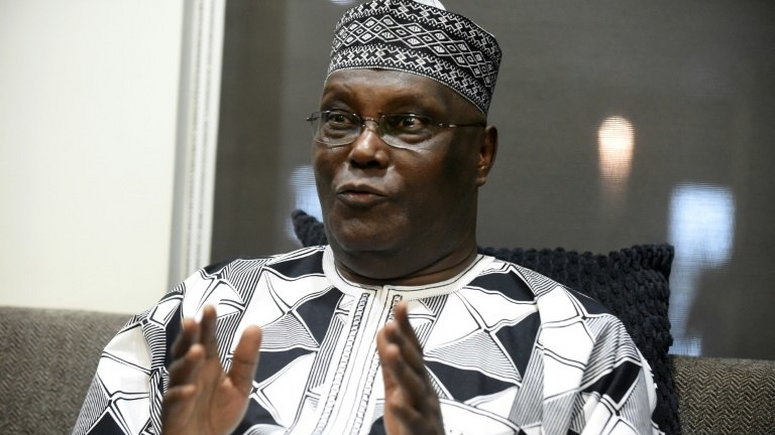
However, the declaration has been met with resistance, as former vice-president Atiku Abubakar criticised the process, arguing that the resolution was reached “without the involvement of the critical stakeholders”.
The identity of these stakeholders remains a subject of debate, as multiple individuals and entities have historically laid claim to interests connected to the oil block.
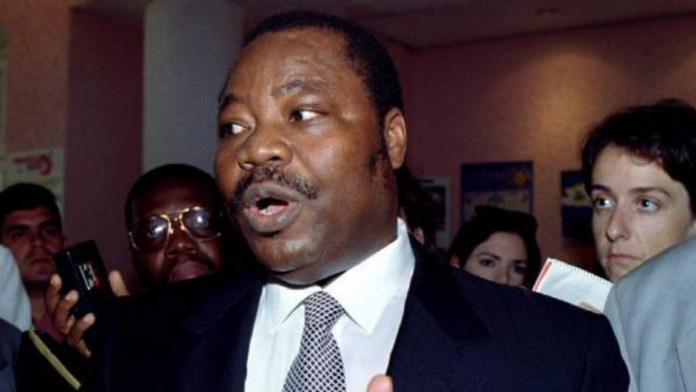
Mohammed Abacha has consistently asserted that he is the majority owner of Malabu Oil and Gas Limited, the company originally granted OPL 245 in 1998 during the military administration of his father, Sani Abacha.
Pecos Energy, linked to businessman Otunba Oyewole Fasawe, has also been identified as a stakeholder due to its historical association with negotiations surrounding the oil block.
Dan Etete, who served as minister of petroleum resources under the Abacha regime, had been officially recognised by the federal government as the beneficial owner of Malabu as far back as 2001.
This recognition was contested by Mohammed Abacha in 2010, when he alleged that his name had been unlawfully removed from the company’s register of directors.
During proceedings at a Federal Capital Territory high court, Abacha acknowledged that he did not pay for the shares he claimed, while also admitting that a pseudonym was used in the company’s registration.
The incorporation documents of Malabu indicated that its shareholders were listed under pseudonyms, including “Mohammed Sani”, “Kweku Amafagha”, and “Wabi Hassan”.
Subsequent disclosures revealed that these names corresponded to Mohammed Abacha, Dan Etete, and Adamu Hassan, who at the time served as Nigeria’s ambassador to the United States.
Following the recent settlement announcement, lawyers representing Abacha issued a pre-action notice rejecting the agreement and cautioning regulators against implementing any arrangement that excludes Malabu’s purported owners.
Abacha has maintained that his legal interests in OPL 245 remain valid and are subject to ongoing litigation in Nigerian courts, alongside a demand for N1tn in damages.
His earlier opposition to the 2011 sale of the oil block by the Etete-led Malabu to Eni and Shell, conducted without his involvement, contributed to the escalation of disputes that later drew international scrutiny.
Mohammed Bello Adoke, who served as attorney-general of the federation at the time of the transaction, recounted aspects of the controversy in his book, ‘OPL 245: The Inside Story of the $1.3bn Nigerian Oil Block’.
Adoke stated that Abacha had approached him to persuade Etete to allocate a share of the proceeds, a request he declined on the grounds that it was a private shareholders’ dispute.
He further alleged that he faced prosecution under the administration of former president Muhammadu Buhari due to perceptions that he had acted against the interests of the Abacha family.
Despite the controversy, courts in the United Kingdom and Italy, along with regulatory authorities in the United States and the Netherlands, found no evidence of criminal wrongdoing in the transaction.
Adoke was also discharged and acquitted by Nigerian courts, bringing legal clarity to his role in the deal.
Amid these developments, Atiku Abubakar has emerged as a vocal critic of the federal government’s handling of the latest settlement.
In a statement issued through his media office, he accused the government of misleading the public by declaring the dispute resolved despite unresolved concerns.
“A government that sidelines critical stakeholders, disregards pending judicial processes, and proceeds to celebrate a disputed agreement demonstrates not strength, but recklessness,” Atiku said.
Beyond his criticism, questions have resurfaced regarding Atiku’s historical connection to OPL 245 and whether his intervention reflects a broader interest.
Accounts contained in Adoke’s book suggest that Gabriel Volpi, described as an associate of Atiku, participated in negotiations in the early 2000s to acquire a majority stake in Malabu.
According to Adoke, the proposal involved a 60 per cent stake, which would have conferred substantial control over the company and, by extension, the oil block.
The negotiations reportedly collapsed after Etete declined to relinquish majority ownership, effectively halting the proposed arrangement.
Adoke further recounted that in 2010, an individual identified as Lawal Abba claimed to represent the interests of both Atiku and the Abacha family in relation to Malabu.
“…I never knew the Abacha family was involved in OPL 245 until one Lawal Abba surfaced from nowhere in 2010 and claimed to be representing the interests of former Vice-President, Alhaji Atiku Abubakar, and the Abacha family,” Adoke wrote.
“He said they had stakes in Malabu. He demanded that we should ensure that his clients were paid from the sale proceeds of the oil block.”
Public reports have also suggested that Atiku may have acquired Adamu Hassan’s 20 per cent stake in Malabu during his tenure as vice-president, although this has neither been officially confirmed nor denied.
What remains undisputed is that the Etete-led Malabu received the proceeds from the eventual sale of OPL 245 to Shell and Eni, while competing claims have persisted over entitlement to those funds.
The history of OPL 245 reflects a complex sequence of allocations, revocations, legal battles, and negotiated settlements spanning multiple administrations.
The oil block was initially awarded to Malabu in April 1998, before being revoked in 2001 under president Olusegun Obasanjo and reassigned to Shell without a competitive bidding process.
A legal challenge by Malabu led to the restoration of its ownership in 2006 following an out-of-court settlement with the federal government.
Subsequent arbitration and negotiations culminated in the 2011 agreement under president Goodluck Jonathan, in which Shell and Eni acquired the block for $1.1bn, alongside a $210m signature bonus paid to the federal government.
The recurring disputes and overlapping claims have ensured that OPL 245 remains one of the most scrutinised assets in Nigeria’s oil sector.
As fresh disagreements emerge over the latest settlement, the question of underlying interests, including those attributed to Atiku Abubakar, continues to shape discussions around the future of the oil block.