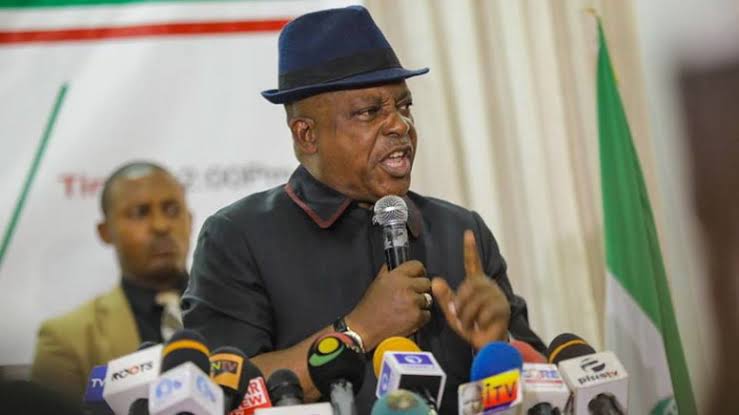
Rising strain between the ruling party and opposition groups in Nigeria has become more visible as political activities gradually build towards the 2027 general elections.
Across different regions, interactions between political actors have been marked by suspicion, rivalry and growing mistrust.
These developments have played out both within political parties and between opposing blocs seeking influence ahead of the next electoral cycle.
Reports indicate that disagreements have extended beyond policy debates into confrontations involving supporters and party loyalists.
In some cases, political gatherings organised by opposition figures have reportedly faced disruptions.
Such incidents have contributed to perceptions of an uneven political environment among stakeholders.
Within the opposition, internal divisions have also been observed, with factions emerging over leadership and strategy.
These divisions have, at times, weakened collective action and coordination among opposition platforms.
Observers note that internal disagreements may affect the ability of opposition parties to present unified alternatives.
At the same time, allegations have surfaced suggesting attempts to influence internal dynamics within rival parties.
While such claims remain contested, they have added to the climate of tension surrounding political engagement.
Public statements by political leaders have also played a role in shaping the current atmosphere.
Some remarks have been interpreted as confrontational, further deepening divisions between competing groups.
These exchanges have often attracted widespread attention on traditional and digital media platforms.
Security concerns have also emerged as a key issue in the relationship between opposition and government actors.
In several instances, political figures have reported threats or attacks linked to their activities.
Such developments have raised questions about the safety of political participation in certain areas.
Law enforcement agencies have responded to some of these incidents, including arrests and ongoing investigations.
The handling of such cases is seen as important in maintaining public confidence in the rule of law.
The Nigerian Constitution provides for freedom of association and political participation.
These provisions form the basis for a multi-party system where different interests can compete peacefully.
However, recent events have prompted discussions about how these rights are exercised in practice.
The role of government institutions in ensuring a level playing field has also come under scrutiny.
Regulatory bodies are expected to operate impartially in overseeing political processes.
This includes managing party registrations, monitoring campaigns and enforcing electoral guidelines.
Political analysts note that a stable relationship between government and opposition is essential for democratic consolidation.
Such stability allows for constructive debate and policy alternatives without resorting to conflict.
However, when tensions escalate, the risk of political instability may increase.
In addition to domestic dynamics, Nigeria’s political climate is often observed by international partners.
Developments within the country can influence perceptions of governance and democratic practice.
As such, maintaining peaceful political engagement is considered important for broader national interests.
The approach to upcoming elections is expected to test the resilience of political institutions.
Stakeholders have emphasised the need for adherence to established rules and procedures.
Political parties are also expected to manage internal processes in ways that reduce conflict.
Efforts to promote dialogue and conflict resolution have been highlighted as possible measures to ease tensions.
Civil society organisations have continued to advocate for peaceful participation and respect for rights.
They have also called for accountability in cases involving violence or intimidation.
Media coverage has played a role in documenting incidents and shaping public discourse on political relations.
Balanced reporting is considered essential in providing accurate information to citizens.
As the electoral timeline progresses, attention remains on how political actors will navigate existing challenges.
The conduct of parties and their supporters is likely to influence the overall tone of the political environment.
Ensuring that competition remains within lawful and peaceful boundaries is seen as a shared responsibility.
The evolving relationship between opposition groups and the government will continue to shape Nigeria’s political landscape in the period leading to the elections.