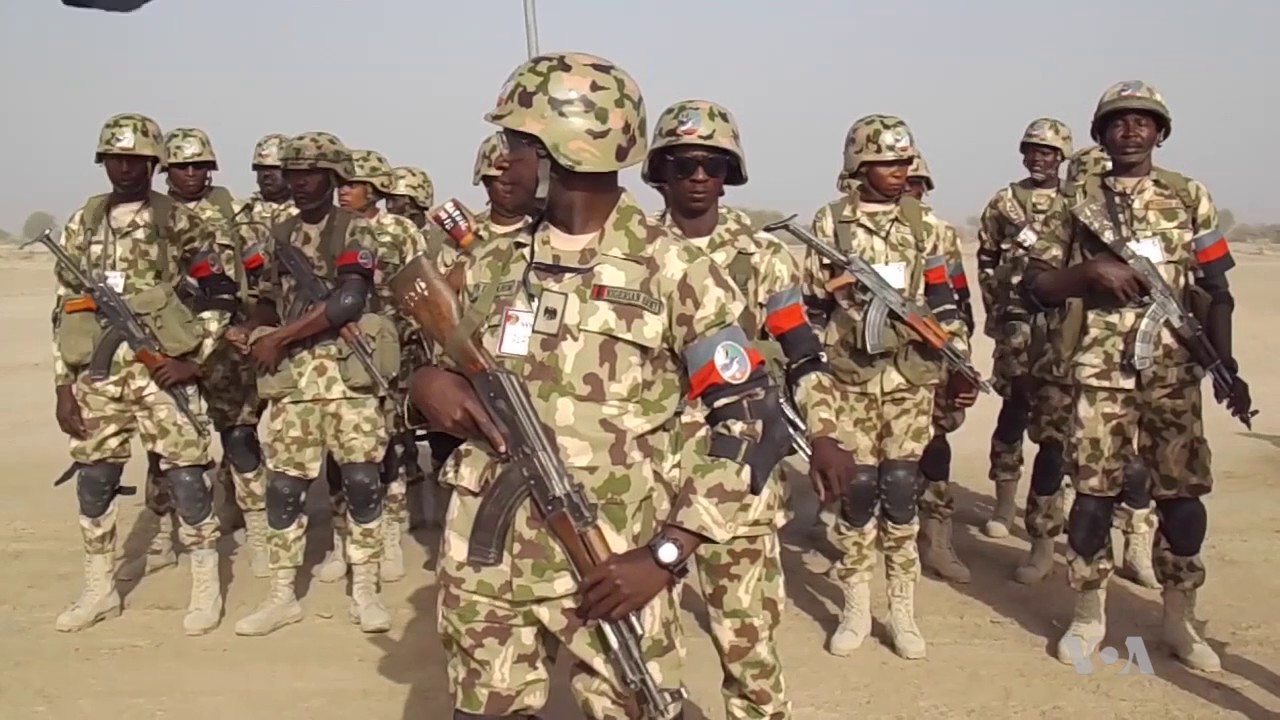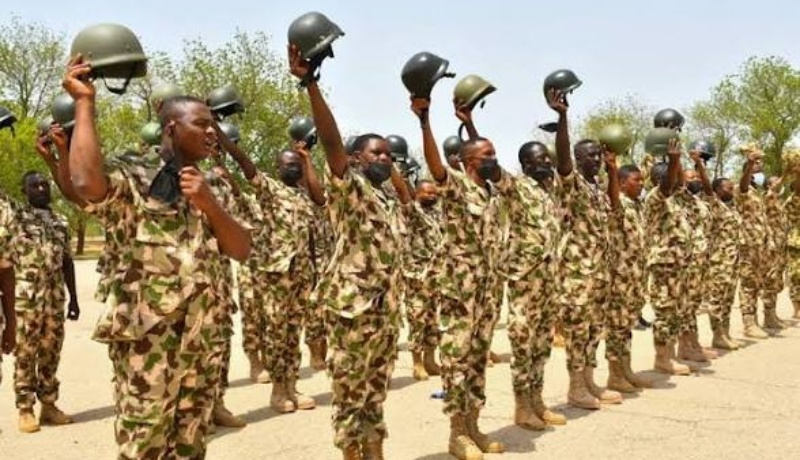
Recently, the Nigerian Army announced the commencement of the 91 Regular Recruits Intake (91RRI) for 2026.
According to the release by the Army, the online registration runs from March 30 to May 17, 2026.
The security outfit further stated that the applications are free and must be submitted via the official Nigerian Army recruitment
However, following this development, many youths across the states have brace up for the recruitment with many surpassing their quota.
By and large, for years now in the South East region, thousands of qualified youths for recruitment have shown no interest in the exercise.
According to the Nigerian Army in early 2026, the enrolment of Igbo youths in the 2026 army recruitment exercise (specifically 91RRI/90RRI) continues to show low turnout, following a similar trend from 2024 and 2025.
In 2025 recruitment, Army officials, including Brigadier-General Chima Ekeator leading the recruitment enlightenment team, stated in April 2025 toured all the South East states, encouraging youths in the region to join the security outfit.
Despite his efforts and that of other notable high ranking officers of South East extraction, only about 200 youths from the South-East had registered in the initial phase of the ongoing recruitment exercises, while other regions recorded thousands of applicants.
According to reports, as of April 2025, while some states in other regions recorded over 3,000 applications, states like Enugu and Abia were battling to reach 100 or 200 applications.
Nevertheless, findings showed that in previous recent cycles, Abia State filled only 53 slots out of 200, and Enugu State filled only 58, highlighting a massive gap in meeting the allocated quota.


However, this apathy also cuts across almost all the security outfit in the country.
It was gathered that even police, naval and Air force recruitment also witness such low turn out from the zone.
However, in a chat with Abuja-based legal practitioner, Barr. Gideon Odo, he explained why the situation has continued to persist.
Barr. Odo stated that “the concern that many young people from parts of the South-East appear less attracted to military enlistment has been widely discussed.
“The causes are therefore political, historical, economic, and psychological rather than ethnic in a simplistic sense.
“Historical memory and trust deficit
serves as a major factor. This is because in many families in the South-East, military institutions are still viewed through memories of:
wartime suffering, post-war exclusion narratives, distrust of central state security institutions.”
Explaining further he said that “historical consciousness affects how some youths perceive military service.
For some, the army is seen less as a career and more as an institution linked to historical grievance.
“Again, the rise of separatist tensions in the South-East, especially around Indigenous People of Biafra, IPOB has deepened distrust toward federal security institutions. Military operations in the region have sometimes produced public resentment.”
Francis Odo is an ex-police officer. In a chat with our reporter that “The reluctance of Igbo youths to join the Nigerian Army can be attributed to several factors, including the Nigerian Civil War. This has left a lasting impact on d Igbo community, fostering a deep-seated distrust towards federal institutions, particularly the military.
“Again, many Igbo youths feel that their region has been marginalized and excluded from key government positions and opportunities.
“Apart from that, Igbo youths perceive systemic bias in recruitment, promotion and recognition within the military, limiting career progression for non-Northerners or non-Muslims.
“In addition to this they also feel that the region is underrepresented in the upper ranks of the military and national decision-making.”
Explaining further, he said that “more worrisome is the prevailing notion that Igbo soldiers are disproportionately deployed to high-risk zones, particularly in the North-East, where Boko Haram insurgency is rampant. This perception has created fear and discouragement among Igbo youths.
“Beyond all this, the region’s insecurity, including activities of unknown gunmen and violent enforcement of sit-at-home orders has made some young people wary of joining the army, fearing they might b targeted by their communities.
“Many Igbo youths prioritize entrepreneurial pursuits and quick financial gains over military service, which is perceived as poorly remunerated.
“Finally the strained relationship between the military and local communities in the South-East, coupled with perceived injustices and human rights abuses, has eroded trust in the military, thereby fueling the low enrolment of the youths of the region in the military.”