If you have watched football long enough, you already know that the smartest players are not always the loudest or the flashiest. They are usually in midfield, quietly deciding how the match should feel. They touch the ball, and suddenly everything makes sense. The tempo settles. The angles appear. The team breathes again.
The most intelligent midfielders do not just play football, they interpret it. They understand when to slow things down, when to speed things up, when to take responsibility, and when to let the game flow through others. They see pressure before it arrives and space before it opens. That is why they often look like they have more time than everyone else on the pitch.
This is not about tricks or highlight reels. It is about awareness, timing, positioning, decision-making, and control. It is about the players who made football easier for their teammates and more complicated for their opponents.
In this article, we are looking at the most intelligent midfielders in football history, not just based on reputation, but on how they thought, how they moved, and how they shaped games with their minds as much as their feet.
What Makes a Midfielder Truly Intelligent
When we talk about the “most intelligent midfielders ever,” we are not talking about players who are just good with the ball. We are talking about players whose brains work faster and clearer under pressure than most others on the pitch. Intelligence in midfield is not something you can measure with goals or assists alone. It is something you see in how they play, where they move, and how they make decisions that change the tempo and direction of a match.
One of the most obvious traits of an intelligent midfielder is spatial awareness, the ability to find and occupy spaces that other players either do not see or do not think to use. Great midfielders constantly scan their surroundings before they receive the ball, know where their teammates and opponents are, and make themselves available in the right pockets of space.
This scanning and spatial understanding is why they often seem to have “extra time” on the ball; they position themselves before the situation becomes uncomfortable, reducing immediate pressure and opening up better options as soon as they get the pass. It is not magic. It is awareness and anticipation that comes from experience and study of the game itself.
Another part of intelligence is tempo control, knowing exactly when to speed the play up and when to slow it down. Midfielders who control tempo are like conductors, deciding when their team should push forward aggressively or hold possession and calm things down. They do this by the weight and timing of their passes, body orientation, and even the number of touches they take. When a midfielder receives the ball, they are already thinking about the next two or three actions before the ball moves. That ability to instinctively read the flow of the game and manipulate it is what separates a good midfielder from an elite one.
Closely related is vision and passing choice. Top midfielders see passes that almost no one else attempts. They have the ability to pick out line-breaking passes that split defences or find a teammate in a tight channel under pressure. This is about more than technical skill; it is about reading the opponent’s shapes and rhythms and making a choice before the situation fully unfolds. Their choices consistently make the team more dangerous, not because they are unpredictable, but because they are correct in context.
One of the most subtle but crucial parts of midfield intelligence is decision timing, knowing exactly when to release the ball. Elite midfielders do not rush their passes, but they also do not hold the ball too long. They time their actions so that they release the ball just before pressure arrives, keeping possession and avoiding tackles. Young players often make decisions after they receive the ball. The smartest midfielders make decisions before they receive it, which gives the appearance of having more time and space. This anticipatory decision-making is what helps them stay calm even when opponents press aggressively.
Finally, truly intelligent midfielders have a deep understanding of game context, they read the opponent’s patterns, anticipate where the next phase is likely to unfold, and react accordingly. This goes beyond simple passing or positioning; it means understanding when to press, when to drop, when to link play, and when to trigger forward momentum. This kind of game reading is what makes players seem always one step ahead, influencing matches even when their team does not dominate possession or territory.
All these traits: spatial awareness, tempo control, vision and passing choice, decision timing, and game context reading, combine to make midfielders feel like they have “ten more seconds on the ball.” It is not a literal clock time. It is game time, shaped by anticipation, positioning, and tactical intelligence that allows them to make high-impact decisions before others even recognise the situation developing.
10 Most Intelligent Midfielders in Football
Football intelligence has very little to do with how many tricks a player can perform or how hard he can strike a ball. It shows up in quieter ways. It shows up in how early a midfielder scans his surroundings, in how he positions his body before the ball arrives, in how calm he stays when three opponents close him down.
The smartest midfielders do not rush. They do not panic. They do not play the game at the speed of the crowd. They play it at the speed of their own thinking. They read situations before they fully happen, manipulate space with small movements, slow matches down when chaos threatens, and speed them up when an opening appears. Even under pressure, they still find a way to control the rhythm.
That is why some midfielders always seem to have more time than everyone else. Not because defenders are slower, but because these players have already solved the problem before the ball reaches their feet. Their first touch is cleaner because their mind is already settled. Their passes look simple because the decision was made earlier. Their movement feels effortless because it is planned.
This list focuses on the midfielders who mastered that art. Players whose awareness, decision-making, and vision made football look easier than it really is. Players who did not just play in midfield, but thought the game from it and in doing so, made it seem like they were always playing with ten extra seconds on the ball.
1. Diego Maradona


Diego Maradona was not the type of midfielder whose intelligence was measured by neat passing charts or possession statistics. Instead, his football brain was visible in how he carried the ball, how defenders reacted to him, and how he seemed to see opportunities several beats before others did. He operated with a mix of instinct and anticipation that made the game feel almost slow around him, even in chaotic situations where other players seemed rushed or overwhelmed.
Maradona’s intelligence was not textbook. It was born from his ability to read the flow of play, turn pressure into advantage, and navigate tightly congested areas with precision, traits that set him apart as one of the most instinctively intelligent footballers the sport has ever seen.
Born on 30 October 1960 in Lanús, Buenos Aires, Argentina, Maradona’s rise from local youth prodigy to global legend is part of what makes his understanding of the game so fascinating. Long before he became the captain of Argentina’s national team, he was already demonstrating a rare ability to integrate vision with execution. His close ball control, low centre of gravity, and dribbling skill were most effective because they were grounded in awareness, awareness of defenders’ body shapes, of space opening up just beyond the immediate challenge, and of teammates’ runs that had not yet fully developed. Every time he picked up the ball in a congested midfield, he was already thinking two or three movements ahead.
What made Maradona particularly intelligent in a midfield context was his spatial comprehension under pressure. In the 1986 World Cup quarter-final against England, he scored the famous “Goal of the Century” by collecting the ball in midfield and then dribbling past five defenders before finishing past the goalkeeper.
That moment did not come purely from physical skill. It came from anticipation, from knowing how defenders would commit, where the next pocket of space would appear, and how to thread his movement through a sequence where most players would have lost control. As one analysis of his 1986 exploits pointed out, the amount of decisions he had to make during that famous run, under intense defensive pressure, demonstrated a football IQ beyond comprehension.
Maradona’s intelligence was also evident in his decision-making around the tempo of the game. He often slowed play when chaos threatened to engulf his team, using gentle touches and subtle positioning to draw opponents forward before releasing a pass that would exploit the imbalance he had created. This kind of tempo control, pausing when the situation called for patience and then surging forward with precision is a hallmark of intelligent midfield play, yet Maradona applied it with instincts that felt more natural than calculated.
Beyond his technical traits like first touch, dribbling, and passing, Maradona’s vision allowed him to see patterns on the pitch that others could not. He regularly delivered incisive through balls that split defences, not because he was flashy, but because he recognised how defenders were shifting before they fully committed. His passing range was described by some observers as “surgical,” and his decision-making razor-sharp, a combination of creativity and situational intelligence that kept defenders guessing and teams tethered to his influence.
Maradona also brought this intelligence into leadership and influence. As captain of Argentina during their 1986 World Cup triumph, he directed play not by shouting orders, but by asserting presence in every critical area of the pitch. Teammates looked to him not only to create opportunities but to read moments, when to press, when to recycle possession, when to take risks. His influence went beyond his individual brilliance because players around him began to anticipate his thinking, synchronising their movements to his timing.
What made Maradona’s intelligence particularly striking was how he combined it with unpredictability. While many midfield maestros rely on structured patterns, Maradona thrived in chaos. He could improvise inside congested areas, not randomly, but with a tactical sense that turned disorder into advantage. This ability allowed him to bend matches to his will, making defenders uneasy because they never knew whether he would dribble past them, release a penetrating pass, or shoot from unexpected positions.
In the long view of football history, Maradona’s intelligence stands not only in his technical brilliance but in his situational awareness, the way he read movements, understood space, manipulated tempo, and executed decisions under pressure. His ability to turn moments of tension into opportunities, to find sightlines others did not see, and to influence the flow of entire matches remains a benchmark for understanding intelligent play in football.
2. Xavi Hernández
Xavi Hernández did not build his legacy on spectacular goals or long dribbles. He built it on control. Real, total control of football matches. When people say Xavi “ran games,” they are not speaking emotionally. They are describing something you could actually see if you watched him closely. He decided where Barcelona stood on the pitch, how fast they moved the ball, and when the game needed to breathe.
At Barcelona, especially between 2008 and 2015, Xavi became the central reference point of Pep Guardiola’s positional system. Every build-up phase passed through him. He positioned himself slightly away from pressure, always on the half-turn, always open to both sides of the pitch. That body orientation alone already gave him an advantage before receiving the ball. By the time a defender stepped forward, Xavi had already seen the next option.
In big matches, his passing numbers were not high by accident. In Champions League knockout ties, in El Clásicos, in international tournaments, he routinely completed well over one hundred passes per match with accuracy that stayed consistently above ninety percent. But the important part was not the quantity. It was the timing. He rarely forced the difficult pass unless the defensive structure had already been stretched. He waited for the correct angle, the correct run, the correct moment.
With Spain, he played the same role in a different shirt. At the 2008 European Championship, the 2010 World Cup, and the 2012 European Championship, Xavi was the midfielder who kept Spain calm when matches became tense. Spain did not dominate those tournaments through speed or power. They dominated through patience. Xavi was the player who ensured that patience did not turn into fear. When Spain needed to recycle possession, he was there. When Spain needed to accelerate the rhythm, he was already shaping the next sequence.
What truly separated Xavi from other elite midfielders was how little he needed space. He could receive the ball with opponents closing from both sides, take one touch to escape pressure, and still deliver the pass he had already decided on. That ability came from scanning. Xavi was famous among teammates for constantly checking his surroundings before receiving the ball. Some former Barcelona players said he scanned more than any player they had ever seen. That is why he always looked unhurried. His mind had already settled the situation.
His positional intelligence also allowed Barcelona to keep possession in areas where other teams would lose it. When defenders stepped out, Xavi slipped into the gap they left behind. When midfielders crowded him, he dragged them away with small movements that opened lanes for teammates. He did not just play inside the system. He shaped the system.
By the time Xavi left Barcelona, he had not only won everything available at club and international level, he had also changed how people understood midfield control. Possession football stopped being about passing for safety and became about passing for domination.
3. Andrés Iniesta

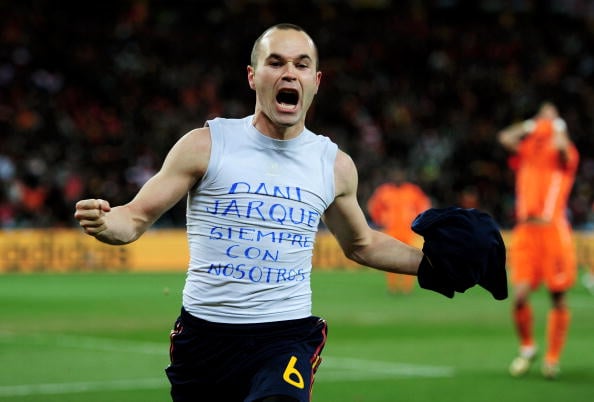
When you watch Andrés Iniesta play, the first thing that strikes you is how naturally he seems to slow the game down even in the most pressured moments. He was never the most physically imposing midfielder, but he always seemed to have space when others did not. That ability came from his remarkable understanding of timing, movement, and body orientation long before the ball reached his feet. Iniesta was famous for his close control and quick feet, but these attributes were only effective because he paired them with exceptional spatial awareness and vision, traits that put him among the most intelligent midfielders in the history of football.
Iniesta grew up in Barcelona’s La Masia academy, where coaches conditioned him to think about the game beyond immediate touches. From his earliest days breaking into the first team in 2002 to the peak of his career in the late 2000s and early 2010s, he learned to use his low centre of gravity, balance, and timing to navigate situations crowded with defenders.
His first touch was often a decision in itself, allowing him to redirect the ball into space or open up passing angles before opponents could react, a skill that flows naturally from his ability to read the game ahead of actual play. This was not an accidental trait, but a cultivated intelligence in understanding the relationship between space and time, praised by Pep Guardiola himself, who acknowledged Iniesta’s mastery in using this relationship to disorient defenders.
What truly set Iniesta apart was how he manipulated tight spaces. In football, crowded midfield situations usually lead to rushed decisions and loss of possession, but Iniesta had an uncanny ability to make defenders hesitate just enough to open passing or dribbling lanes. Whether he was threading a precise through ball between markers, dropping a short pass to maintain momentum, or turning defenders with subtle changes of direction, his movement off the ball was always in tune with the emerging patterns of the opponent’s shape. This spatial intuition allowed him to operate effectively even when Barcelona or Spain lacked clear territorial advantage.
Numerous iconic moments illustrate this. In the 2010 FIFA World Cup final, Iniesta received a pass with world titles at stake and, after one controlled touch to settle the ball and shift his body slightly, struck a half-volley that won the match for Spain in the 116th minute. That moment came from more than technical execution; it was borne of situational awareness built over thousands of games, where he had constantly measured pressure, space, and timing in ever-changing contexts.
Further, his performances in the UEFA European Championships of 2008 and 2012 underlined how his intelligence could unlock stagnant games. In Euro 2008, playing in midfield against some of Europe’s best defensive blocks, Iniesta’s ability to find and exploit micro-spaces allowed Spain to sustain possession in dangerous areas and feed attackers consistently. By Euro 2012, his vision and timing had matured to the point where he was often the conduit between deep possession phases and sudden attacking transitions, all without needing physical dominance to impose himself on the opposition.
Iniesta’s career statistics reflect longevity and success, but they do not fully capture his influence in critical moments. Over nearly two decades at Barcelona, he made over 670 appearances and contributed to a coach’s tactical plan that relied on sustained possession and constant movement, always calibrated through his reading of the game. Off the ball, his anticipation of teammates’ runs and defenders’ vulnerabilities often made simple plays highly effective without calling attention to himself. This is why opponents sometimes appeared more burdened by his presence than by his actions; he shaped football’s rhythm without needing the spotlight.
This blend of spatial awareness, quick adaptation to pressure, and exceptional timing explains why Iniesta could create momentum almost out of nothing. He did not just play through tight spaces, he created space by knowing where defenders would be before they arrived. That kind of football intelligence is rare and is a defining reason Iniesta is remembered not only as a great midfielder, but as one of the smartest in the history of the game.
4. Andrea Pirlo

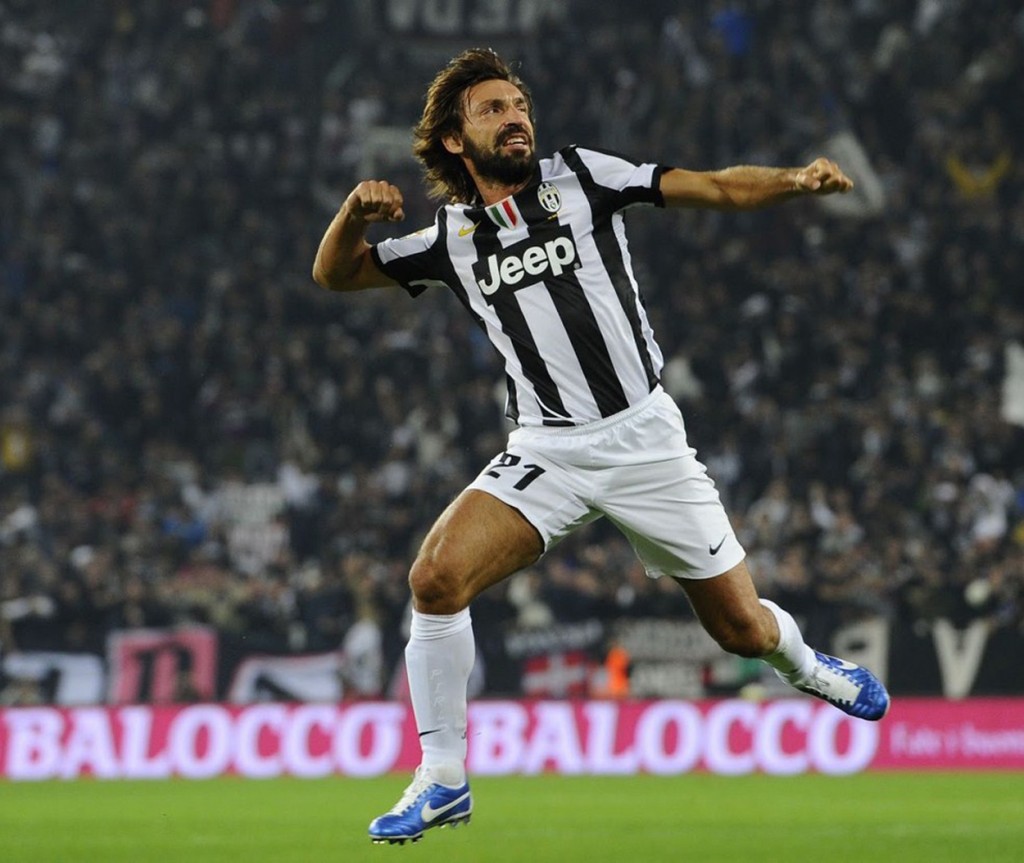
Andrea Pirlo did not fit the physical mold of a typical midfield general, but he reshaped what a midfielder could be. Born on 19 May 1979 in Flero, Italy, Pirlo’s football intelligence became so central to his identity that the deep-lying playmaker role, the regista, is often associated with him more than any other player in history.
Early in his career, Pirlo started as a more advanced midfielder, but it was only when coaches shifted him into a deeper position that his unique ability to read the game, control tempo, and orchestrate play from the back of midfield truly shone. That positional switch, first implemented under coach Carlo Mazzone at Brescia and later refined under Carlo Ancelotti at AC Milan, unlocked his ability to see the pitch in ways most players never do.
Pirlo’s role as a regista was not about physical domination. He never possessed the pace of a box-to-box midfielder, nor did he rely on strength to bully opponents. Instead, his intelligence was rooted in his ability to anticipate the flow of play and choose the exact moment to release the ball, often before anyone else around him recognised what was happening. That trait meant the match slowed down for Pirlo the moment he received the ball.
Defenders rushed toward him thinking they could close him down, but his calm first touch, combined with instant scanning of his surroundings, allowed him to redirect play with surgical precision. Whether he was completing short passes to maintain possession or splitting defensive lines with long diagonal balls, Pirlo’s distribution was always purposeful and often decisive.
At AC Milan, from the early 2000s through the mid-2010s, Pirlo became the cerebral axis of the team. In this deeper role, he was involved in everything from initiating attacks to maintaining possession under pressure, making him indispensable to any system he played in.
Detailed analytical studies of his play during peak seasons show that Pirlo consistently created high-value sequences, passages of play that generated significant attacking potential, at a rate far above the average Serie A midfielder. In several seasons with Milan, he was among the top players in the league for his involvement in sequences that led to attacking moves, illustrating not only his passing ability but also his broader contribution to team build-up and tempo control.
Pirlo’s intelligence extended to his longer passes and diagonal switches, which became trademarks of his game. During his first season at Juventus, he attempted over 13 long balls per 90 minutes with an impressive success rate of around 84 percent, using these long deliveries to thrust attacks forward or switch play to less congested areas of the pitch. That season, his creative output included numerous assists and sustained attacking momentum that helped Juventus win their first Serie A title in nine years after his arrival. His role at Juventus reinforced how a midfielder could dictate play without being the flashy centrepiece; instead, he controlled the rhythm and precision of transitions with calm calculation.
Pirlo’s talent also translated seamlessly to the international stage. With Italy, he was a cornerstone of the team that won the 2006 FIFA World Cup, often determining the pace of matches from deep and controlling play even under extreme pressure from some of the world’s most elite opponents. His technical sophistication and strategic mindset were acknowledged by teammates and rivals alike, and his performance earned him widespread respect from figures across the football world. Coaches, commentators, and fellow players have highlighted his ability to change the complexion of a game not through speed or strength, but through vision, anticipation, and the precise timing of his decisions.
Even in the twilight of his playing career, Pirlo’s style remained recognisable. At New York City FC in Major League Soccer, he continued to control games from deep positions, bringing the same cerebral approach that defined his European career to a new audience. His influence was such that even fans and analysts unfamiliar with European tactical traditions could see how a midfielder with such a complete understanding of space and timing could still shape matches in a league with different tempos and styles.
His vision, composure, and distribution not only made him one of the most intelligent midfielders ever, but fundamentally redefined the deep-lying playmaker role for modern football.
5. Zinedine Zidane
Zinedine Zidane was never the fastest player on the pitch, but when he had the ball, it often felt like the whole game slowed down around him. That sensation was not an illusion. It came from a rare combination of spatial awareness, first touch, vision, and an almost instinctive ability to read the flow of play. Zidane was not a typical deep-lying creator or a pure number ten; he was a blend of both, an advanced playmaker who could dictate tempo, unlock defenses, and shape attacking moments in ways that few midfielders before or after him have managed.
Born on 23 June 1972 in Marseille, France, Zidane began his professional career with Cannes before rising to prominence at Bordeaux, where his ability to control the ball and anticipate movements caught the attention of Europe’s elite. From there he moved to Juventus in Italy, one of the most tactically demanding leagues in the world, where he refined his understanding of space and timing against some of the best defenders of the era. His performances in Turin showed that even against packed midfields, he could find the right moments to shift play or accelerate an attack because he saw patterns before others around him did.
Zidane’s intelligence was most visible through his first touch. He had the extraordinary ability to receive the ball under pressure and instantly put it into a position that kept the game flowing in his team’s favor. That first touch was not passive. It was an active part of his decision-making process, a way of reshaping the situation before he even looked up for the next pass. This set him apart from many other midfielders, because rather than reacting to pressure, he often seemed a step ahead of it. Observers describe watching Zidane control the ball as if he could “stop time,” and that wasn’t hyperbole, it was his way of making opponents commit and then use their momentum against them.
At Real Madrid, Zidane’s role as a playmaker became even more influential. Playing as a classic number 10, he was the link between midfield and attack, but he also had the freedom to drop deeper to orchestrate movements or drift wide to create overloads and drag defenders out of position. His vision allowed him to pick out passes that others might not attempt, turning stagnant possession into dangerous transitions with a single decisive ball. His delicate balance of calmness and quick decision-making meant that defenders could rarely pin him down; he would either turn away from pressure or use it to create passing lanes that seemed to appear out of nowhere.
Zidane’s spatial intelligence was not limited to linking play, it also showed up in goal-scoring moments that came at the biggest stages. His volley in the 2002 UEFA Champions League final for Real Madrid against Bayer Leverkusen is often cited as one of the greatest goals in European football history. Positioned at the edge of the box with defenders converging, Zidane’s ability to judge trajectory, space, and timing allowed him to meet Roberto Carlos’s cross perfectly, a moment that combined technical execution with a deep understanding of space and pressure.
Internationally, Zidane was equally impactful. In the 1998 FIFA World Cup final against Brazil, he scored two headed goals that helped France lift the trophy for the first time. The timing of those runs into the box, especially from an attacking midfielder, showed that his intelligence went beyond build-up play; he knew when to position himself where defenders least expected him, a move that changed his country’s footballing history.
Technically, Zidane was ambidextrous, excellent in the air, and comfortable in tight spaces, but what truly defined him was decision timing and vision. He could see patterns two passes ahead, and this anticipation allowed him to manipulate matches without ever needing raw pace. Coaches and peers repeatedly highlighted that when Zidane had the ball, defenders hesitated because they were not sure whether he was going to pass, dribble, or turn and that hesitation gave him an extra half-second that often became an entire advantage.
Zidane’s career statistics, over 500 club appearances and 108 caps for France with 31 international goals, tell only part of the story. His true legacy lies in how he influenced the rhythm of matches, controlled tempo under intense pressure, and made critical decisions that turned games and trophies in his team’s favor. His intelligence on the ball was not just physical or technical. It was cognitive understanding where defenders would move, where space would open, and how to make the complex look effortless.
In an era that often celebrates physicalism, Zidane stands as a reminder that football intelligence, the ability to see five phases ahead, to control space and tempo with subtlety is just as critical as any athletic trait. His legacy as one of the most intelligent midfielders ever is grounded not in flashy stats, but in how he made the game itself feel as though it moved at his pace, a hallmark of true midfield mastery.
6. Lothar Matthäus
Lothar Matthäus was not just one of his generation’s greatest midfielders; he was a rare breed of player who combined physical strength with a deep understanding of the game’s flow and rhythm. A midfielder who could influence both attack and defence, Matthäus offered opponents problems that could not be solved simply by marking him tightly or outmuscling him. His intelligence on the pitch — his sense of timing, positioning, and awareness of game context — made him one of the most complete and decisive midfield figures in football history.
Matthäus was a box-to-box maestro before the term became trendy. He could drop deep, pick up the ball between the lines, and orchestrate possession, but he could also surge forward into attacking positions with power and precision. At Bayern Munich, Inter Milan, and in his role as captain of West Germany, his ability to read the game allowed him to influence matches in multiple phases: defence, build-up, progression, and finishing. Coaches and teammates praised him for his tactical awareness, and journalists often highlighted his footballing brain as a key reason for his longevity and adaptability.
Where many midfielders excel in one dimension: passing, tackling, or shooting, Matthäus excelled across all of them. He had a powerful long range shot, technical skill in tight spaces, and a passing range that allowed him to switch the point of attack effectively. This breadth of capability stemmed from his understanding of when to use each tool. He was not simply reacting to the game; he was anticipating opponent moves and positioning himself where the next phase of play was likely to develop. This sense of anticipation often gave him what felt like a mental edge in matches, enabling him to orchestrate transitions and create advantages before opponents could respond.
Matthäus’s intelligence was most apparent in high-pressure situations and major tournaments. As captain of West Germany at the 1990 FIFA World Cup, he led his team with a blend of tactical discipline and creative provocation, controlling the tempo of matches against the world’s elite and helping Germany lift the trophy with a performance that emphasised timing and leadership as much as individual skill. His performance at that tournament and across five World Cups cemented his reputation as a footballer who understood context, when to accelerate play, when to calm it down, and how to influence games that were balanced on a knife’s edge.
At club level, his adaptability saw him transition seamlessly between roles and systems. Under coaches like Giovanni Trapattoni at Inter Milan, he moved into deeper creative positions where his tactical intelligence became even more valuable. In those years in Serie A, a league renowned for tactical sophistication, Matthäus did more than adapt. He thrived, dictating play with long passes, breaking lines with incisive vision, and contributing defensively with well-timed interceptions and positioning that often cut off danger before it fully materialised.
Matthäus’s influence also extended to his leadership on the pitch. Teammates and opponents alike noticed how his presence commanded attention; he was a player who seemed to shape the match environment rather than simply participate in it. Whether organising his team’s shape, controlling tempo, or initiating attacks, his decision-making reflected a deep understanding of game flow, a hallmark of a midfielder who did not just see the pitch, but anticipated its unfolding patterns.
In a career that spanned more than two decades at the highest level, Matthäus won domestic league titles in both Germany and Italy, lifted the World Cup, earned individual honours such as the Ballon d’Or in 1990 and the FIFA World Player of the Year in 1991, and left a legacy of midfield versatility and tactical intelligence that still resonates today.
Lothar Matthäus’s intelligence was not just about individual skills, it was about understanding the game’s patterns, reacting before others did, and using that insight to shape matches. That is what made him not just a great midfielder, but one of the most intelligent players football has ever seen.
7. Bobby Charlton
Sir Bobby Charlton was one of those rare midfielders whose intelligence was woven into every phase of his game, not just through flair or goals, but through an almost instinctive understanding of when and how to influence a match at the highest level. Born 11 October 1937 in Ashington, Northumberland, England, Charlton’s journey from a teenage prodigy at Manchester United to one of the most respected figures in world football is one grounded in technical ability, tactical awareness, spatial intelligence, and an uncanny knack for reading the game as it unfolded in real time.
Charlton’s career spanned nearly two decades, with most of it spent at Manchester United, where he emerged from the youth ranks and became a cornerstone of Sir Matt Busby’s revolutionary team. Despite suffering the trauma of the 1958 Munich air disaster, in which eight of his teammates lost their lives, Charlton instead became the player around whom United rebuilt itself, blending determination with an intelligent sense of positioning and tempo control that defined his playing identity.
Technically, he was a complete player, capable of playing as an attacking midfielder, on the left wing, or even as a forward, but his real value was how he combined physical attributes with mental acuity. He had unusually advanced spatial awareness for his era, able to find pockets of space between defenders and exploit them with precise passing or penetrating runs that few opponents anticipated. His ability to detect when to speed up play, when to slow it down, and when to pull the trigger allowed him to dictate the rhythm of games, whether closer to his own box or in the final third.
Charlton was also renowned for his ball mastery and vision, he rarely panicked under pressure, and his first touch often saw him control and redirect the ball into space where he or a teammate could use it effectively. In an era before modern pressing systems, Charlton’s comfort with the ball at his feet and his ability to scan the pitch continuously made him look like he anticipated pressure before it arrived. That instinct helped him complete long passes across shifting defensive lines and find attacks where others saw only congestion.
His effectiveness in manipulating space was most visible in landmark matches. In the 1966 FIFA World Cup on home soil, Charlton was central to England’s triumph, not only by scoring crucial goals, including two in the semi-final against Portugal, but also by dictating tempo through his movement and passing choices, breaking opposition lines and creating attacking momentum when matches became cagey or congested. His performances earned him the Ballon d’Or later that year as the best player in Europe, a rare honour for a midfielder who was as much a creator as a goalscorer.
At Manchester United, his intelligence helped guide the club to multiple First Division titles and, most memorably, the 1968 European Cup, where United defeated Benfica 4–1 at Wembley. Charlton scored twice in that final, both goals a blend of technical precision and intelligent positioning, positioning that placed him in the right place at the decisive moment, even against a tight defence. It was a vivid demonstration of how his reading of situations, timing of runs, and understanding of opponent tendencies translated directly into match-defining contributions.
What truly distinguished Charlton from many contemporaries was his dual threat as both creator and finisher. He could unlock defences with incisive balls and then turn around and finish from range himself, mixing long shots with carefully timed surges into space that caught opponents off guard. That blend of skills, and his ability to execute them in pressure-laden matches for club and country, is why his football intelligence is often discussed alongside the greatest midfield brains the game has ever seen.
Charlton’s legacy is not merely measured in goals or accolades. He was a footballer who shaped games through reading space, influencing tempo, and making sophisticated decisions under pressure, at times when tactical nuance was less understood than it is today. That made him one of the truly intelligent midfielders in football history, a player who saw the game ahead of others and acted on it at exactly the right moment.
8. Ruud Gullit

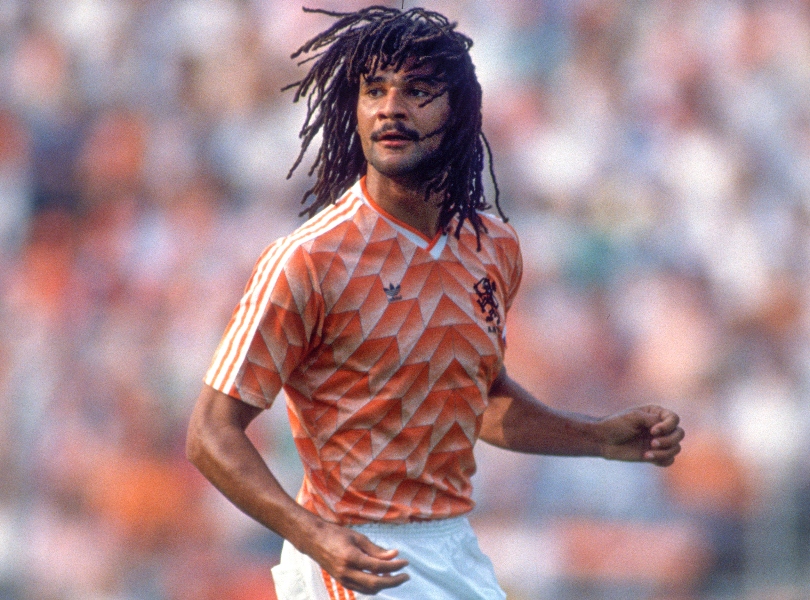
Ruud Gullit was one of those footballers who brought everything to the pitch: power, technique, versatility, leadership, and an intelligent understanding of the game that made him far more than just a physical presence. Born Ruud Gullit (née Rudi Dil) on 1 September 1962 in Amsterdam, he carved out a career that spanned nearly two decades at the highest level and saw him excel in numerous positions, from attacking midfield and forward roles to deeper midfield and even defensive duties, all because his football brain allowed him to adapt and excel wherever he was needed.
Gullit was a central figure in the Netherlands national team that won UEFA European Championship 1988, captaining the squad and helping secure the Netherlands’ first major international title. In that tournament, his awareness of space and ability to link midfield with attack were key factors in unlocking tight matches and maintaining pressure on organised defences.
At club level, Gullit’s intelligence shone brightest during his time with AC Milan, where he was part of a legendary trio alongside Marco van Basten and Frank Rijkaard. He helped Milan dominate Serie A and European football, winning three Serie A titles and two European Cups in the late 1980s and early 1990s. What made him stand out in Milan’s tactical setup was not just his physical attributes, but how he read the game, anticipated opponent movements, and positioned himself to exploit transitional phases.
His style was a unique blend of strength, technique, and tactical understanding. Standing at 1.91 m with impressive balance and athleticism, he could dominate aerial duels, protect the ball, and bring teammates into play. Yet what truly defined Gullit’s intelligence was how he combined these physical tools with vision and spatial awareness.
He could operate as an attacking midfielder driving forward with the ball, but he could just as easily drop deeper to orchestrate build-up play, acting almost as a deep-lying creator when the situation demanded. Because of this versatility, defenders never quite knew how to handle him, he was equally dangerous carrying the ball at pace, evading pressure with skillful dribbling, or making incisive passes to break lines.
Tactically, Gullit was a product of the Dutch Total Football ethos, where understanding positional interchange and spatial dynamics was essential. He could drift wide to draw defenders out of shape, then use that disruption to open gaps for teammates to exploit. His ability to transition between defence and attack wasn’t random improvisation; it came from a deep comprehension of where space would appear next and how to make himself useful without dominating the ball for long periods.
His intelligence was also evident in pressure situations where physical fatigue and defensive attention were highest. Gullit’s composure allowed him to make split-second decisions that created scoring opportunities or kept possession alive. Whether he was threading a precise pass in tight areas, launching a long ball into space, or surging forward with strength and control, his actions consistently had purpose. Clubs and managers valued him not only for his versatility but for the tactical balance he brought, enabling teams to adapt fluidly between systems and styles without losing control of the match rhythm.
Even late in his career, during spells with Sampdoria and Chelsea, Gullit used his tactical understanding to influence games. He could examine the opposition’s setup beforehand and adjust his positioning accordingly, helping teams transition quickly and exploit defensive weaknesses. As player-manager at Chelsea, that football intelligence translated into leadership, guiding younger teammates in understanding space, tempo, and tactical awareness at a time when the Premier League was becoming more physically demanding and strategically complex.
In summary, Ruud Gullit’s midfield intelligence was a composite of versatility, spatial awareness, anticipation, and tactical adaptability. He was not just a box-to-box midfielder. He was a footballer whose understanding of movement, space, and timing allowed him to influence games in multiple dimensions, driving attacks forward, controlling possession under pressure, and helping restructure defensive lines before opponents could react. That breadth of influence is what makes him not just one of the most versatile players ever, but one of the truly intelligent midfielders in football history.
9. Michel Platini
Michel François Platini was born on 21 June 1955 in Jœuf, France, and became one of the most influential attacking midfielders of the modern era, a player whose intelligence on the pitch was as defining as his technical brilliance. His ability to read space, influence tempo, and make decisive attacking decisions marked him out long before modern analytics tried to define what an “intelligent midfielder” really is. Platini did not just create chances with flair. He predicted them, making him one of the most cerebral number tens football has ever produced.
Platini’s football journey began at AS Nancy, where he developed a reputation for intelligent play and technical finesse. From early on, teammates and coaches recognised his ability to interpret defensive patterns and find passing lanes that others overlooked. He then moved to AS Saint-Étienne in 1979, a team already strong in domestic competition, and helped sustain their success by combining goal scoring with midfield creativity, a dual threat that confounded opponents.
His greatest years came with Juventus, where between 1982 and 1987 he became a global star. Platini was more than a midfielder; he was Juventus’s blueprint for transition from defence to attack. He scored frequently from midfield, leading Serie A in goals in 1983, 1984, and 1985, a remarkable achievement for a number ten tasked with both playmaking and finishing. His vision allowed him to pick out forward runners and commit defenders to movements that opened space for others, an instinctive understanding of how to manipulate team shape that few players before him consistently demonstrated.
Platini’s intelligence was not confined to club football. In UEFA Euro 1984, he captained France to the European Championship title, arguably his most iconic achievement. He finished as top scorer in the tournament with nine goals, still a record for a single European Championship, despite only appearing once in the competition. More impressive than raw goals was how he positioned himself in and around the box to exploit moments when defenders had shifted their focus. Rather than just running into space, Platini anticipated opposition reactions, creating room for himself and teammates in sequences that felt inevitable once they unfolded.
What set Platini apart in midfield intelligence was his dual threat as creator and scorer. He was equally comfortable dropping deep to collect the ball and orchestrate play, or pushing into the box to finish sequences himself. His passing range extended from short, intricate exchanges in tight midfield pockets, to barreling through defensive lines with incisive, long-diagonal balls, all executed with a calmness under pressure that made him profoundly difficult to defend against.
Platini’s football brain was also evident from set pieces. His free kicks and penalties were not just technically superb but tactical tools. He approached dead balls with the mindset of splitting defensive organization before the kick even began, adding another dimension to his influence on the game. Defences had to account not only for his passing but for the scoring threat those set pieces represented, which often pulled players out of position and opened unexpected lanes for his teammates.
Internationally, Platini scored 41 goals in 72 appearances for France and was his country’s all-time top scorer for a period, a remarkable feat for a midfielder rather than an out-and-out striker. His leadership on the pitch helped transform French football’s identity in the 1980s, moving the national team from hopeful contenders to genuine European force.
Off the pitch, Platini’s understanding of the game saw him take on coaching and administrative roles after retirement, including managing France’s national team and later serving in top football governance. It was a career marked not only by individual honours, he won the Ballon d’Or three consecutive times (1983, 1984, 1985), but by an enduring recognition of his footballing mind as much as his feet.
Michel Platini’s intelligence was a blend of situational anticipation, vision, and decision-making under pressure. He saw the pitch in layers, how defensive shapes would collapse, how runs would develop, and how passes could thread through multiple lines of play. This capacity to think ahead, manipulate space, and affect outcomes consistently is why Platini remains one of the most intelligent midfielders ever to play the game.
10. Zico
Zico was not just a great player. He was the kind of midfielder whose intelligence showed up every time he had the ball, especially in tight or high-pressure situations where space was limited and defenders expected him to panic.
Born Arthur Antunes Coimbra on 3 March 1953 in Rio de Janeiro, Brazil, Zico became one of the most celebrated attacking midfielders of all time, a player who combined brilliant technical skill with an extraordinary sense of game context and creative vision that influenced every team he played in. Often compared to Pelé and famously described by Pelé himself as the player who came closest to him, Zico did more than score goals; he made football look alive and dynamic, shaping matches through timing, anticipation, and unselfish play.
From his early days at Flamengo, Zico’s intelligence was evident. He was not just an attacker in the traditional sense; he was a playmaker who read incoming pressure, positioned himself where defenders would vacate space, and then used his vision to unlock opposition lines. In an era when Brazilian football emphasised flair, he brought something extra, a tactical instinct that blended South American creativity with an almost European understanding of build-up play. That combination made him a nightmare to mark because defenders never knew whether he would dribble, pass into a tight corridor, or take a shot.
At Flamengo, Zico’s influence was transformational. He led the club during its most successful period, helping them win multiple Campeonato Carioca titles, three Brazilian national league titles, the Copa Libertadores in 1981, and the Intercontinental Cup the same year. Flamengo’s dominance in Brazilian and South American football during the late 1970s and early 1980s was not just about attacking talent; it was about how Zico read unfolding situations, often dictating the team’s tempo and opening channels for his teammates before defenders knew he had spotted them.
On the international stage, Zico’s intelligence was on full display with the Brazil national team. He played in the 1978, 1982, and 1986 FIFA World Cups, earning 71 caps and scoring 48 official goals, making him one of Brazil’s most prolific midfield goal scorers. The 1982 Brazilian squad, often heralded as one of the most beautiful teams football has ever seen, was built around his creative intuition. Opponents quickly learned that closing him down too aggressively often opened space behind for his teammates, while giving him a moment’s time invited incisive passes that split defensive lines.
Zico’s game was also defined by his two-footed passing ability, sharp first touch, and uncanny knack for reading play before it fully developed. He could find his teammates in the smallest pockets of space and thread passes others would not attempt, showing a deep sense of timing and anticipation. That made him not just a goal threat but one of the era’s most effective chance creators, capable of shifting the momentum of a match through a single clever pass or run.
His technical base extended to set pieces as well, where his mastery of free kicks, often bending the ball from unexpected angles with precision became legendary and influenced generations of specialists who followed. That ability to contribute both in open play and from dead-ball situations added layers to his intelligence, because defenders had to account for his threat in all phases of play, stretching them psychologically and spatially.
Later in his career, Zico’s intelligence translated into leadership roles, including coaching the Japan national team at the 2006 FIFA World Cup and serving as a technical director for Kashima Antlers, where his deep understanding of the game helped shape younger players and tactical structures off the pitch as well.
Zico’s football intelligence was not just skill combined with flair. It was his ability to read situations early, position himself where the game was about to open up, and make decisive creative decisions before others reacted. That mixture of vision, timing, and spatial awareness is what makes him stand out not just as one of the greatest Brazilian number tens, but as one of the most intelligent midfielders in the history of the sport.
Conclusion
Midfield intelligence is the quiet force that decides football matches long before the scoreboard reflects it. It is the difference between reacting to the game and shaping it. The players we have talked about did not just pass well or move elegantly. They thought faster, saw earlier, and understood situations more deeply than everyone around them. They knew where pressure was coming from before it arrived. They sensed where space would appear before it opened. And they made decisions that gave their teams calm when others felt rushed.
This is why midfield intelligence feels like a superpower. It does not rely on speed, strength, or even constant visibility. It lives in timing, positioning, awareness, and judgment. It is why a player can look unhurried while the match is burning around him. It is why some midfielders seem to have extra seconds that nobody else is given. Those seconds are not gifts. They are earned through understanding.
When a team has a truly intelligent midfielder, everything changes. Attacks become clearer. Defences feel safer. Teammates move with more confidence. Opponents hesitate more often. And over time, that control turns into dominance. Not loud dominance. Not chaotic dominance. But the kind that wins trophies, defines eras, and builds legacies.
That is why these midfielders stand apart in football history. Not because they were simply talented, but because they understood the game at a level that most players never reach. They did not just play football. They conducted it. And in doing so, they proved that intelligence in midfield is not just an advantage, it is the foundation of greatness.