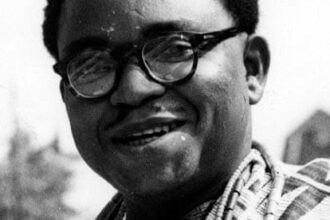
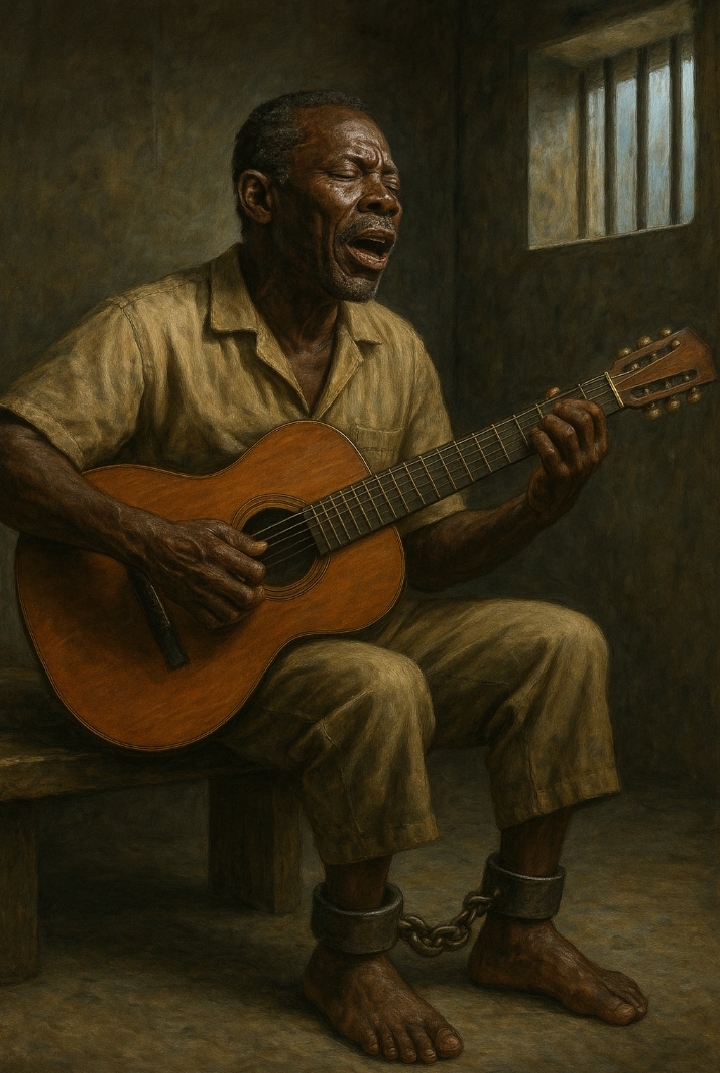
The sound of a guitar scraping against steel bars was an unusual kind of rebellion. Somewhere within the confines of a cold, echoing prison hall, Orlando Owoh’s voice cut through the heavy stillness, like sunlight threading its way through storm clouds. It was not a performance meant for applause or accolades. Each note was an assertion of survival, a claim that humanity could persist even when the world outside had sealed its doors. The audience was captive, literally and figuratively, yet in that moment, they were free—swaying, humming, and moving with a rhythm that transcended walls.
There is an almost mythical quality to the image of Owoh singing behind prison walls, shackles at his feet, yet untethered in spirit. The environment was grim, the days long, and the nights restless, but the music transformed the space. What began as a personal act of defiance evolved into collective catharsis. Prisoners who had lost their names to numbers, their voices to silence, rediscovered themselves in the cadence of highlife. Owoh’s guitar, calloused fingers, and resonant tenor conjured memory, longing, and hope.
It was not an instant heroism, nor was it a performance calculated for fame. It was a survival of identity, a reclaiming of self through melody. Observers later recalled that even the guards paused, unsure if they should intervene, as if the music had temporarily rewritten the rules of captivity. Somewhere in that tension, the human spirit spoke louder than the cell bars.
This story, like Owoh’s music itself, is layered with contradictions—joy and sorrow, freedom and confinement, despair and resilience. It asks a question that resonates beyond the prison walls: Can art remain unbroken even when life imposes chains? Owoh’s answer, delivered in sinew, voice, and rhythm, became a blueprint for the transformative power of music in Nigeria’s turbulent social landscape.
Early Life: From Lagos Streets to Musical Apprenticeship
Orlando Owoh was born in 1932, in Ondo State, though Lagos would eventually become the crucible for his musical identity. His childhood was threaded with both hardship and cultural richness, where the streets hummed with Yoruba rhythms and the radio carried the distant echoes of highlife and jazz. Music was less a hobby than a lifeline, a way to translate everyday struggles into something tangible and enduring. The community itself was a living orchestra: market traders drumming on tin cans, street vendors chanting melodies to sell their wares, and children weaving rhythm with clapping hands and improvised instruments.
By the late 1940s, Owoh’s talent was undeniable. He apprenticed under several established musicians, absorbing the technicalities of guitar playing while learning the art of storytelling through song. His performances were electric, not just because of skill but because of emotional resonance. Audiences felt the stories he carried—of lost love, political unrest, and the collective heartbeat of Lagosian life. Every performance became a negotiation between public entertainment and personal confession.
Lagos in those years was a paradoxical city: vibrant yet precarious, culturally fertile but politically tense. The cityscape itself, with its bustling markets, colonial architecture, and densely packed neighborhoods, seeped into Owoh’s music. He was absorbing more than chords; he was internalizing the pulse of a people negotiating modernity while tethered to tradition. Highlife, as Owoh practiced it, was never just music—it was social commentary, history, and identity wrapped in rhythm.
This apprenticeship shaped not only his technical mastery but also his philosophical approach to music. For Owoh, melody was inseparable from meaning. Every strum of the guitar, every beat of the drum, carried an embedded story that demanded attention. It was this insistence on depth that would later render him not only a highlife legend but a musical chronicler of human resilience, capable of turning prison walls into concert halls.

Rise to Fame: Highlife, Lagos Clubs, and National Recognition
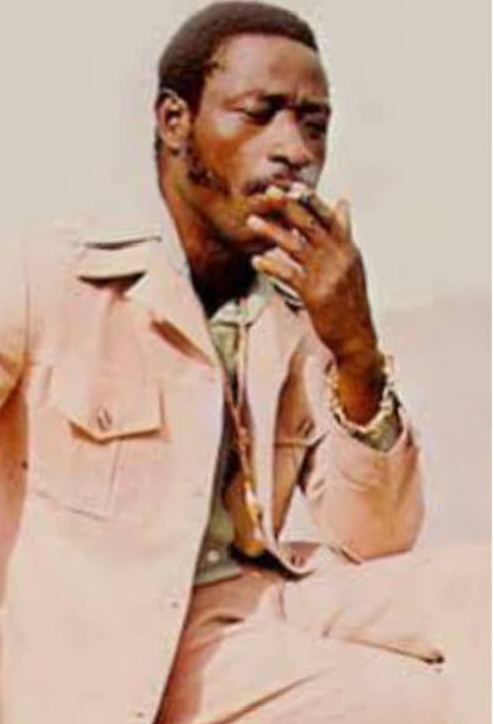
By the 1950s and 1960s, Orlando Owoh had emerged as a fixture in Lagos’s vibrant nightlife. Clubs and cabarets became laboratories for experimentation, where he fused Yoruba rhythms with broader West African highlife sensibilities. His band, the “Funkees Orchestra,” became a symbol of Lagosian modernity, bringing together musicians from diverse backgrounds to create a sound that was both local and cosmopolitan.
Audiences were drawn not only to the music but to the humanity that permeated every performance. Owoh sang of love, betrayal, migration, and community struggles, blending metaphors with tangible experiences. Songs were not escapism—they were reflection, dialogue, and confrontation. In a society negotiating postcolonial identity, his music resonated with both the elite and the working class, bridging social and generational divides.
National recognition followed naturally. Radio stations amplified his voice, and his records traveled beyond Lagos to the rest of Nigeria and neighboring countries. The music industry, still nascent in Nigeria, began to recognize Owoh as a pioneer—a storyteller who could infuse modern instrumentation with indigenous sensibilities. He did not merely perform highlife; he redefined it.
Yet fame did not insulate him from societal pressures. Political tensions, shifting cultural landscapes, and personal missteps would later intersect with the law, culminating in the period that gave birth to his legendary prison performances. Even as his popularity soared, Owoh remained tethered to his roots, aware that music was both a platform and a responsibility.
The Prison Years: Music as Survival
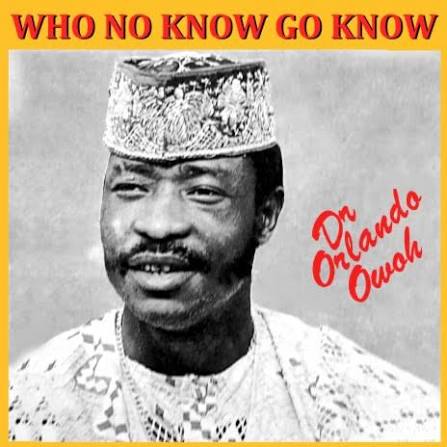
Stephen Oladipupo Olaore Owomoyela, known to the world as Orlando Owoh, had already carved his name into the vibrant tapestry of Nigerian highlife when fate took a harsh turn. The mid-1980s found him in the unlikeliest of places: the confines of Kirikiri Maximum Security Prison, one of Lagos’s most forbidding detention facilities. His arrest stemmed from allegations of unlawful possession of drugs, including cocaine—a charge that carried severe social stigma and legal jeopardy. Though he would ultimately be discharged and acquitted for want of evidence, the period behind bars became one of the most defining chapters of his life and career.
Prison was a world defined by absence—absence of freedom, absence of choice, absence of certainty. Yet, Owoh discovered that music was not merely entertainment; it was a lifeline. Behind steel gates and concrete walls, he transformed his guitar and voice into instruments of survival. Each strum was a negotiation with despair, each lyric a declaration of existence. Fellow inmates, initially strangers, became witnesses to a defiance that transcended the official narrative of guilt and innocence. Owoh’s music, vibrant and urgent, reminded everyone that identity cannot be erased by accusation or confinement.
Life inside the facility was relentless. Days melted into nights under harsh fluorescent lights, punctuated by the distant clatter of keys and footsteps. Meals were functional, cold, and repetitive; the air was thick with tension and mistrust. Yet, within this oppressive atmosphere, Owoh created a sanctuary of sound. His music became a collective lifeline, drawing prisoners into a shared emotional space where fear was replaced, however briefly, by rhythm, memory, and communal energy. Even the guards paused, caught in the gravity of his presence, unsure whether to enforce silence or allow the music to flow.

The songs themselves reflected the duality of his experience. He sang of the streets of Lagos and the markets he knew, of love lost and life deferred, of hope persisting despite injustice. There was a rhythm to his resilience, a cadence to his courage. In this way, his music became both therapy and testimony: a reflection of personal struggle and a mirror of societal dynamics. Owoh’s prison period illustrated that art could flourish in adversity, that freedom could exist in the internal realm even when external liberties were stripped away.
Shackles and Songs: How Owoh Transformed Captivity
The physical shackles around Owoh’s ankles were tangible, cold, and unyielding. Yet the music that poured from his throat and fingertips rendered them almost irrelevant. The juxtaposition of restraint and liberation became a defining feature of his prison legend. Songs moved like water through iron, softening the hardness of confinement, reminding everyone present that limitation could coexist with creativity.
Each performance became an act of emotional negotiation. Owoh understood the psychology of the prison environment—the fatigue, suppressed energy, and underlying tension among inmates. A single riff could ignite recognition; a familiar lyric could evoke memory, laughter, or tears. In these moments, music served as both shield and voice, warding off the erosion of dignity that confinement threatened to impose.
The content of his music reflected the duality of his own ordeal: love and longing coexisted with hardship and injustice. Rhythms alternated between jubilant beats that invited defiant foot-tapping and slower, plaintive melodies acknowledging vulnerability. Prisoners found mirrors of their own lives, while guards glimpsed the persistence of a spirit they could neither command nor extinguish. In this microcosm of society, Owoh demonstrated that human resilience could manifest in sound, rhythm, and communal participation.
His experience also highlighted music’s broader role in Nigeria during times of political tension and societal inequity. Just as Lagos had shaped his early compositions, the prison walls offered new texture—sharpened contrasts, deeper human insight, and a stage stripped of artifice. These years, harsh though they were, reinforced the idea that creativity and humanity cannot be confined, that sometimes the most profound art is forged in adversity.
Final Years and Death: The Silence After the Song
The twilight of Stephen Oladipupo Olaore Owomoyela’s life was like the fading echo of a highlife melody—gentle, reflective, and rich with memory. After decades of shaping Nigerian music, his performances became quieter, marked by mentorship and the passing down of lessons to younger musicians. Even in restraint, his music carried the power to teach, console, and inspire.
In his later years, every note seemed to hold the weight of a life fully lived—triumphs celebrated, hardships endured, and lessons learned. Fame had illuminated him, imprisonment had tested him, and Lagos had molded him. His songs retained a contemplative grace, speaking of endurance, identity, and the human capacity to find rhythm even in life’s most discordant moments.
When he passed on October 7, 2008, in Lagos, the city felt the hush left by his absence. Tributes poured in from fans, radio stations, and fellow musicians, each acknowledging the man who had turned confinement into art and life into melody. Yet even in death, his music remained alive—echoing in memories, continuing to teach, and sustaining the pulse of highlife for new generations.
Musical Legacy: From Lagos Streets to Global Highlife
Even after his release, Orlando Owoh’s prison performances reverberated far beyond the walls that once contained him. The resilience, emotional depth, and narrative precision he demonstrated became a benchmark for musicians across Nigeria. Young artists studied his recordings, absorbing lessons in storytelling, melodic construction, and audience engagement. His influence extended from Lagos to London, Accra, and beyond, where diasporic audiences began to recognize highlife as both a genre and a vessel for cultural memory.
Owoh’s legacy was multifaceted. On one level, he embodied the archetype of the musician as social historian, chronicling everyday struggles and triumphs through song. On another, he demonstrated the psychological power of music: its ability to heal, to humanize, and to transform spaces of despair into stages of collective affirmation. The prison, which could have been a terminal point in his career, instead became a defining chapter, illustrating the capacity of art to endure and transcend circumstance.
Moreover, his work reinforced the notion that highlife was not merely entertainment—it was commentary, pedagogy, and community-building. Songs that might seem playful or romantic on the surface often carried encoded lessons about resilience, ethical conduct, and social responsibility. Owoh’s ability to balance melody with meaning ensured that his music remained culturally relevant, academically studied, and emotionally resonant decades later.
Even in death, his influence persists. Contemporary musicians cite him as a touchstone, while scholars examine his recordings to understand postcolonial Nigeria’s cultural and social dynamics. Festivals, tributes, and retrospectives continue to honor his contributions, cementing Orlando Owoh’s place not only in the annals of Nigerian music but in the broader narrative of art as a lifeline in human struggle.

Resilience in Rhythm: Lessons Beyond Music
Orlando Owoh’s life is a testament to the idea that resilience is not merely surviving; it is creating meaning in the midst of adversity. His music, particularly during the prison years, exemplified a philosophy that hardship could be transformed into expression. Each note carried a lesson: that confinement—whether physical, social, or emotional—was not the end of one’s story, but a space to cultivate strength, empathy, and insight.
Beyond the immediacy of performance, Owoh’s approach to music underscores a broader human truth: art has the capacity to reconstruct identity. In prison, he was reduced in status, yet elevated in presence. The shackles around his feet could not bind the flight of his creativity. In this way, his story resonates universally, echoing the struggles of countless individuals who confront systemic limitations yet discover, through craft and conviction, the capacity to transcend circumstance.
This resilience also reflects a communal dimension. The prisoners who gathered around Owoh’s guitar were not passive recipients; they were participants in a co-created experience of liberation. Music became a bridge, connecting disparate lives within a shared space. In witnessing and joining in his songs, the inmates reclaimed fragments of dignity, memory, and hope. It was a collective education in endurance, an auditory affirmation that the human spirit is elastic and adaptable, capable of bending without breaking.
Ultimately, Owoh’s journey invites reflection on the enduring significance of highlife in Nigeria’s cultural landscape. His compositions did more than entertain—they documented lived experience, navigated social complexity, and provided a framework for understanding human resilience. In the interplay between melody and meaning, between confinement and freedom, Orlando Owoh reminds us that music is not merely sound; it is a force that shapes perception, strengthens community, and immortalizes the nuances of life itself.
Conclusion: The Eternal Echo
Orlando Owoh left behind a legacy that defies simple categorization. He was a musician, a storyteller, a social commentator, and, for a brief but transformative period, a prisoner whose art outshone his confinement. The prison, with its oppressive silence and rigid walls, became an unlikely stage for demonstrating that creativity can flourish even under duress. His voice, a blend of Yoruba lyricism and highlife rhythm, continues to echo through generations, offering lessons in courage, resilience, and the profound human capacity to transform adversity into art.
In revisiting his life, one realizes that the most compelling performances are not always those staged for public acclaim. Sometimes, they occur in solitude, in adversity, in moments when survival and expression intertwine. Owoh’s music, whether in the bustling clubs of Lagos or the quiet corners of a prison hall, encapsulates this truth: that the spirit, once awakened, cannot be contained. His songs remain a sanctuary for listeners, a reminder that joy, sorrow, and hope coexist, and that even in the harshest conditions, the human soul can sing freely.

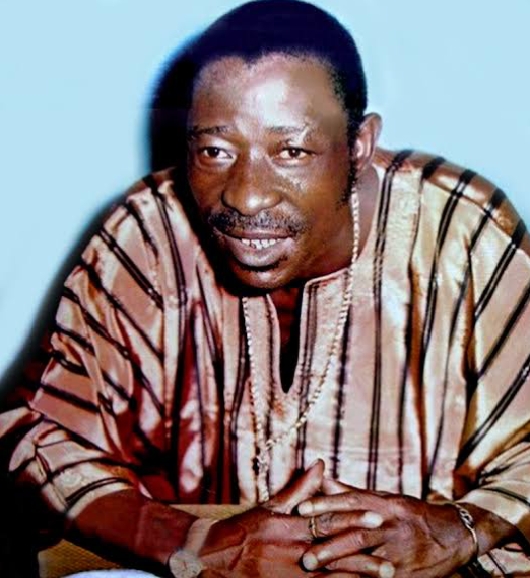
Orlando Owoh’s story is more than a biography; it is an exploration of the transformative power of art, the resilience of the human spirit, and the ways in which music can create freedom where none exists. For every listener, every aspiring musician, and every person who has ever felt the weight of limitation, Owoh offers a simple yet profound lesson: the chains of circumstance are never as strong as the will to create, to connect, and to endure.