Power in Nigeria does not always sit where the constitution places it, and it does not always speak through elected voices or formal institutions. Beneath the surface of modern governance, another layer continues to breathe, influence, and decide outcomes in ways that often escape official records. Traditional rulers occupy that space, moving between history and present reality, holding authority that was never fully surrendered even as political systems changed over time.
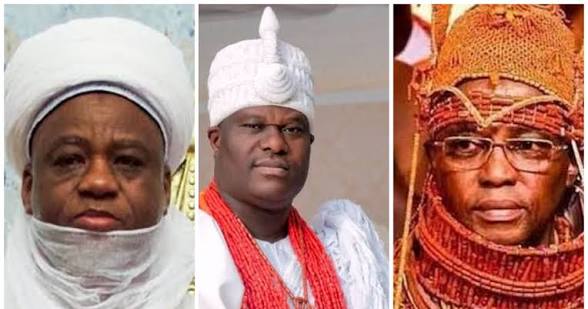
Across villages, towns, and even major cities, their presence is felt in decisions that shape daily life, from resolving disputes to influencing who emerges as a political leader. Figures like the Ooni of Ife Adeyeye Enitan Ogunwusi, the Sultan of Sokoto Muhammadu Sa’ad Abubakar, and the Oba of Benin Ewuare II are not just ceremonial heads, they are influential voices whose words carry weight far beyond palace walls. Their authority does not rely on ballots or legal frameworks, yet it commands obedience and respect that many formal institutions struggle to achieve.
Understanding why traditional rulers remain key power brokers in Nigeria requires tracing their journey across time, examining the nature of their authority, and confronting the reality that Nigeria operates on more than one system of power. What appears informal often proves decisive, and what lacks legal backing often carries the greatest weight in the eyes of the people.
The Original Foundation of Authority
Long before the formation of Nigeria as a modern state in 1914, traditional rulers governed territories that functioned as independent political systems. These rulers were kings, emirs, obis, and chiefs whose authority extended across governance, justice, spirituality, and land control. Their decisions were final, their words carried the force of law, and their legitimacy came from ancestry and cultural continuity rather than external validation.
Communities did not question their authority because it was embedded in belief systems that tied leadership to divine order and ancestral lineage. Governance was not separated into branches as seen in modern systems, instead it existed as a unified structure where rulers embodied executive, legislative, and judicial powers at once. This concentration of authority created a system that was efficient within its context and deeply respected by the people it governed.
Such origins matter because they established a psychological and cultural framework that continues to shape how communities perceive authority today. Even when modern governance structures were introduced, they did not erase these deeply rooted beliefs, they simply layered over them. The result is a dual system where traditional authority still commands loyalty that formal institutions often struggle to replicate.
The Colonial Reinforcement That Changed Everything
British colonial administration did not dismantle traditional institutions, instead it strategically strengthened them through a system known as indirect rule. Beginning in the early 1900s, colonial officers relied on traditional rulers to administer local governance, collect taxes, and maintain order within their communities. This approach allowed colonial authorities to govern vast territories without establishing a heavy administrative presence everywhere.
Rather than weakening traditional rulers, this system elevated their importance by integrating them into the colonial structure. They became intermediaries between foreign rulers and local populations, gaining new forms of authority while retaining their cultural legitimacy. This explains why emirs such as the Emir of Kano Aminu Ado Bayero and historical predecessors in northern Nigeria became central figures in governance during colonial administration.
This period marked a turning point because it ensured that traditional rulers were not sidelined during a major political transition. Instead of fading into history, they adapted and became part of a new system, strengthening their relevance in ways that would outlast colonial rule itself. Their authority became both traditional and administrative, a combination that would shape their future role in independent Nigeria.
Independence Without Disappearance
Nigeria gained independence in 1960, and over the following decades, constitutional reforms gradually removed traditional rulers from formal political structures. By the time the 1999 Constitution came into force, they no longer held official executive or legislative powers within the framework of the state. On paper, their authority had been significantly reduced.
Reality tells a different story because removal from constitutional recognition did not translate to loss of influence. Traditional rulers remained embedded within their communities, continuing to perform roles that governments either could not or did not effectively handle. Palaces like that of the Oba of Lagos Rilwan Akiolu continue to serve as centers of authority where political figures and citizens alike seek guidance and legitimacy.
This contrast between legal status and practical influence is one of the most important aspects of their power. While politicians derive authority from elections and laws, traditional rulers derive theirs from identity and continuity. That distinction allows them to operate beyond the limitations of political cycles, maintaining relevance regardless of changes in government.
The Soft Power That Moves Everything
Modern discussions about power often focus on legal authority and institutional control, yet traditional rulers operate through a different kind of influence that is harder to measure but often more effective. Their power lies in their ability to shape behavior, guide opinions, and command loyalty without issuing formal directives.
Communities listen to them because they are seen as custodians of tradition and guardians of collective identity. Their words carry moral weight, and their endorsements can legitimize decisions in ways that official pronouncements cannot. When the Obi of Onitsha Nnaemeka Achebe speaks on governance or social issues, it resonates deeply within Igbo communities and beyond.
Soft power becomes especially significant in a society where trust in formal institutions is uneven. When people doubt political leaders or government systems, they turn to figures they trust, and traditional rulers often occupy that space. Their authority is not imposed, it is accepted, and that acceptance gives it strength.
Grassroots Dominance and Direct Access
Political leaders often operate at a distance from the communities they govern, relying on structures that may not fully capture local realities. Traditional rulers, on the other hand, are deeply embedded within those communities, understanding their dynamics, tensions, and needs at a level that outsiders rarely achieve.
They serve as intermediaries between the government and the people, translating policies into local contexts and communicating community concerns back to authorities. This position gives them unmatched access to grassroots sentiment, making them invaluable in both governance and political strategy. The influence of the Emir of Ilorin Ibrahim Sulu Gambari within Kwara communities reflects this deep connection between traditional leadership and everyday life.
Their influence at this level is not theoretical, it is practical and immediate. When a traditional ruler speaks, the message reaches people directly, without layers of bureaucracy or distortion. This direct connection strengthens their role as power brokers, allowing them to shape outcomes from the ground up.
Conflict Resolution and Stability
Nigeria faces numerous challenges related to conflict, ranging from land disputes to communal clashes, and formal legal systems often struggle to resolve these issues quickly. Traditional rulers step into this gap, offering mediation that is faster, culturally relevant, and widely accepted by the parties involved.
Their ability to resolve disputes comes from their understanding of local customs and their position as neutral authority figures within their communities. People are more likely to accept their decisions because they are seen as fair and rooted in shared values rather than distant legal frameworks.
This role extends beyond dispute resolution into broader peacebuilding efforts. Traditional rulers often intervene to prevent conflicts from escalating, using their influence to calm tensions and maintain stability. Their involvement reduces the burden on formal institutions and highlights their importance in maintaining social order.
Political Influence Without Contesting Elections
Traditional rulers do not appear on ballots, yet their influence in political processes is undeniable. Politicians seek their endorsement, visit their palaces, and align themselves with their authority to gain acceptance within communities. These interactions are not symbolic, they carry real implications for electoral outcomes.
Their ability to shape political acceptance comes from their position as trusted figures within their communities. When they support a candidate, it signals legitimacy and reliability to the people, influencing how voters perceive their options. This role effectively makes them kingmakers, operating behind the scenes while shaping visible outcomes.
Political actors understand this dynamic and invest time and resources in maintaining relationships with traditional rulers. These relationships often determine access to communities and influence the success of campaigns, reinforcing the rulers’ role as critical players in Nigeria’s political landscape.
Cultural Authority and Emotional Connection
Traditional rulers are more than administrative figures, they are symbols of identity, representing the history, values, and continuity of their people. This symbolic role gives them emotional influence that goes beyond governance, shaping how communities see themselves and their place in the world.
They oversee cultural practices, festivals, and traditions that reinforce collective identity, ensuring that these elements are preserved across generations. The cultural influence of the Obong of Calabar Edidem Ekpo Okon Abasi Otu highlights how deeply traditional institutions shape identity in southern Nigeria.
Such emotional connection cannot be easily replicated by political institutions, which often operate on transactional relationships. Traditional rulers, by contrast, embody continuity and belonging, creating a form of influence that is both enduring and deeply rooted.
Filling the Gaps of Governance
Nigeria’s governance system faces challenges related to capacity, reach, and efficiency, particularly in rural and semi urban areas. Traditional rulers step into these gaps, providing leadership and coordination where formal systems fall short.
They mobilize communities for development projects, support government initiatives, and maintain order in areas with limited state presence. Their involvement ensures that governance continues even when formal structures are stretched thin.
This role highlights their importance as unofficial administrators, bridging the gap between state and society. Their ability to operate effectively in these spaces reinforces their relevance and underscores the limitations of relying solely on formal institutions.
The Power of Titles and Recognition
Traditional rulers hold the authority to confer titles that carry significant social and political weight. These titles elevate individuals within their communities, granting recognition that can influence public perception and status.
Politicians, business leaders, and elites actively seek these titles because they provide legitimacy and strengthen their connection to the community. This dynamic extends the influence of traditional rulers beyond local contexts, reaching into national and even international spheres.
The ability to grant recognition places them at the center of social hierarchy, reinforcing their role as gatekeepers of status and influence. This power operates quietly but effectively, shaping relationships and reinforcing their authority.
The Paradox of Power Without Legal Backing
Traditional rulers operate within a unique space where they hold significant influence without formal constitutional authority. This paradox defines their role in modern Nigeria, highlighting the difference between legal power and practical power.
Their influence persists because it is rooted in culture, trust, and continuity rather than legal frameworks. While governments may change and laws may evolve, these underlying factors remain constant, ensuring their continued relevance.
This dynamic challenges conventional notions of power, showing that authority can exist outside formal structures and still shape outcomes in meaningful ways. It also explains why attempts to diminish their influence have largely been unsuccessful.
Challenges and Contested Influence
Traditional rulers face challenges that reflect the complexities of their position within modern Nigeria. Political interference remains a major issue, with state governments influencing appointments and sometimes undermining their independence.
Some rulers are perceived as aligning too closely with political actors, raising questions about their neutrality and credibility. These perceptions can weaken trust and create tensions within communities.
Despite these challenges, their influence has not disappeared. Instead, it has adapted, continuing to operate within a changing environment while maintaining its core strengths. This resilience underscores the depth of their power and their ability to navigate evolving realities.
The Reality of Dual Power Systems
Nigeria operates on two interconnected systems of power, one formal and one informal, each influencing the other in complex ways. The formal system includes elected officials, laws, and institutions, while the informal system revolves around traditional rulers, cultural authority, and social influence.
These systems do not exist in isolation, they interact constantly, shaping decisions and outcomes across the country. Understanding Nigeria requires recognizing this dual structure and acknowledging the role each system plays.
Traditional rulers remain central to this balance, bridging the gap between formal governance and societal realities. Their presence ensures that power is not confined to institutions but extends into the cultural and social fabric of the nation.
Closing Reflection
Traditional rulers remain key power brokers in Nigeria because their authority is deeply rooted, widely accepted, and continuously relevant. They operate within a space that combines history, culture, and modern realities, influencing outcomes in ways that formal systems cannot fully replicate.
Their power lies not in laws or offices but in trust, identity, and connection, elements that define how communities function and respond to leadership. As long as these elements remain central to Nigerian society, traditional rulers will continue to shape its direction.
Nigeria’s story cannot be told through formal institutions alone, it must also account for the quiet influence that operates beyond official structures. Traditional rulers embody that influence, standing as a reminder that power is not always where it is written, but where it is felt and recognized.