When people refer to the most iconic football boots, they are usually referring to boots they have seen repeatedly in important matches, not to technical brochures or advertising claims. The idea of “iconic” in football footwear comes from visibility over time, from association with specific players, and from presence in matches that shaped how the sport is remembered.
Football boots are often discussed as equipment, but they also function as historical markers. Each major design reflects a period of the game. Heavier leather boots belong to an era of slower pitches and physical play. Lighter synthetic boots belong to a period of faster transitions and higher pressing. These changes did not happen suddenly. They happened as players, pitches, and tactics changed.
Some boots became iconic because they introduced new design ideas. Others became iconic because they solved practical problems so well that players kept using them for years. In many cases, the boot itself was not the main story. The story was the player who wore it and the matches in which it appeared.
This article focuses on ten football boots that stood out over time, and the footballers most associated with each one. The focus is not on ranking them by popularity or sales. The focus is on understanding why certain models remained relevant across different generations of players and fans.
Each boot in this list is examined through design purpose, player usage, and historical context. The goal is to explain how football footwear moved from simple protection to specialised performance equipment, and why a small number of models continue to be remembered while most are forgotten.
The Most Iconic Football Boots Ever And Who Wore Them
Football boots did not begin as sporting equipment. They began as modified work boots. Early players in the late nineteenth and early twentieth centuries wore heavy leather footwear with reinforced toes and metal studs, designed more for durability and protection than for comfort, touch, or speed. The primary concern was traction on muddy grass, not control of a spherical leather ball that absorbed water and gained weight during matches. Boots were tools for standing upright rather than instruments for expression.
Over time, football itself changed. Playing surfaces improved. Balls became lighter and more consistent. Tactical systems demanded faster movement, cleaner passing, and more precise shooting. These shifts forced boot manufacturers to rethink what football footwear was supposed to do. Weight reduced. Leather quality improved. Stud configurations became engineered rather than improvised. Eventually, boots stopped being generic footwear and started becoming performance equipment.
By the mid-twentieth century, boots were no longer just functional. They became part of a player’s identity. Certain models became linked to certain styles of play. Some became associated with specific tournaments. Others became attached to individual players so strongly that the boot and the player were remembered together rather than separately. When people recall Pelé in 1970, Zidane in 1998, or Ronaldo in 1998, they often remember not only the goals but also the boots.
Iconic boots do not become iconic only because of design. They become iconic because of timing, visibility, and repetition. A boot worn by a great player during an ordinary season may be remembered only by specialists. The same boot worn during a World Cup, a final, or a defining goal becomes part of cultural memory. Television broadcasting in the 1960s and 1970s amplified this effect. By the 1990s and 2000s, global media ensured that a boot could become famous in every football-watching country within days.
Each model of boot discussed here is examined through four lenses: design origin, technical purpose, player association, and cultural survival. These boots are not listed because they were marketed aggressively. They are listed because they stayed visible in football memory long after newer models replaced them.
1. Puma King
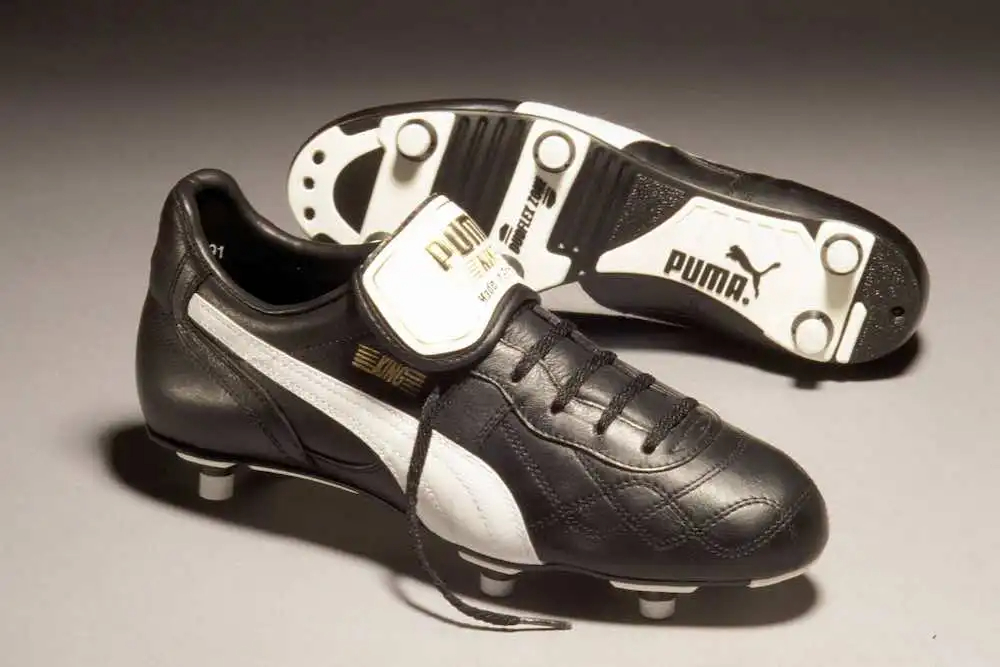

The Puma King was introduced in 1966, during a period when football boots were beginning to move away from industrial heaviness toward refined craftsmanship. The company’s intention was not to produce a radical technical experiment but to perfect what a leather football boot could be. The King used high-quality kangaroo leather, chosen for its combination of softness, strength, and adaptability to foot shape. The upper was stitched in a way that prioritised touch without sacrificing structural stability.
The stud configuration followed traditional layouts but was refined for balance rather than aggression. At a time when pitches varied dramatically across countries and competitions, this balance mattered. The boot had to perform on wet grass, dry dirt, and uneven surfaces. The Puma King did not specialise in one environment. It attempted to function reliably in all.
What made the Puma King historically important was not only its construction but its timing. It arrived during the period when football became a truly global televised product. The 1966 World Cup in England, followed by the 1970 World Cup in Mexico, brought football into living rooms across continents. Equipment worn in those tournaments became part of shared visual memory.
Pelé’s association with the Puma King during the 1970 World Cup is the most famous example. Pelé’s style required control, balance, and consistency rather than explosive pace. The King matched that profile. Its leather touch supported close control, while its stability supported repeated changes of direction. The boot did not attempt to make Pelé faster. It allowed him to remain precise.
Eusébio’s connection to the Puma King adds another layer of meaning. The original edition of the Puma King was influenced by Puma’s earlier model designed for Eusébio after his Golden Boot performance at the 1966 World Cup. This connection embedded the boot within World Cup history before Pelé ever wore it.
Diego Maradona wore Puma Kings in his early professional years before later switching brands. In those years, his playing style had not yet become the compact, low-centre-of-gravity version remembered from Napoli. The King supported a developing style that still relied heavily on touch and balance rather than on the aggressive dribbling later associated with him.
The Puma King’s cultural legacy is rooted in its silhouette. Even people who cannot identify the model by name often recognise its shape as the “classic” football boot. This is because the King did not chase fashion. It defined a template that later boots either followed or deliberately rejected. When modern brands release retro editions, the Puma King is often the reference point.
Another reason for its survival is its refusal to disappear. While many boots are discontinued after a few generations, the Puma King has been reissued in multiple forms for decades. This continuity has allowed different generations of players to associate with the same design, reinforcing its identity rather than fragmenting it.
The Puma King is iconic not because it changed football technology, but because it stabilised it. It demonstrated that a football boot could become timeless through consistency rather than through constant reinvention.
2. Adidas Copa Mundial — Most Worn Boot in Professional Football History
The Adidas Copa Mundial was released in 1979, with global attention focused on the upcoming 1982 FIFA World Cup in Spain. Adidas designed the boot with practicality rather than novelty in mind. The company selected kangaroo leather for the upper because of its durability and ability to retain softness over long use. Unlike some lighter modern materials, kangaroo leather stretches to accommodate foot shape without losing structural integrity.
The Copa Mundial’s outsole used a firm ground stud pattern optimised for natural grass. The studs were not designed for aggressive penetration but for even pressure distribution. This reduced stud fatigue over long matches and training sessions. The boot prioritised comfort and reliability rather than extreme performance characteristics.
One of the most important aspects of the Copa Mundial’s history is its refusal to change. While Adidas introduced countless new models with new technologies, the Copa Mundial remained largely unchanged. This stability allowed it to become a reference standard. Players knew exactly what they were buying. Coaches trusted its durability. Amateur players could use the same model as professionals.
Zinedine Zidane wore the Copa Mundial during parts of his career, including international competitions. His playing style required comfort and sensitivity rather than raw speed. Diego Maradona also wore Copa models at various points, particularly during his later years. Franz Beckenbauer’s association with Adidas during earlier eras helped establish the brand’s credibility, even though his most iconic moments predated the Copa Mundial’s release.
The Copa Mundial’s popularity among professionals was matched by its popularity among amateurs. In many countries, it became the default serious football boot. Players saved money specifically to buy Copas because they knew the boot would last several seasons. This practical longevity reinforced its reputation.
Culturally, the Copa Mundial represents a refusal to be trendy. Its black leather appearance never attempted to follow colour trends. Even when football boots became bright, patterned, and experimental in the 2000s, the Copa Mundial remained visually conservative. This made it a symbol of traditional professionalism.
Some critics argue that the Copa Mundial is iconic only because of longevity rather than because of innovation. This argument misunderstands its significance. Longevity itself is a form of achievement in sports equipment. Remaining relevant across changing playing styles, pitch conditions, and athlete expectations requires design balance.
Another reason for its iconic status is accessibility. Unlike limited-edition boots tied to specific players, the Copa Mundial was available globally for decades. This allowed millions of players to build personal memories with the same boot that professionals used.
The Copa Mundial is not remembered for a single goal or match. It is remembered for being present in thousands of matches across continents. Its icon status comes from accumulation rather than from spectacle.
3. Adidas Predator

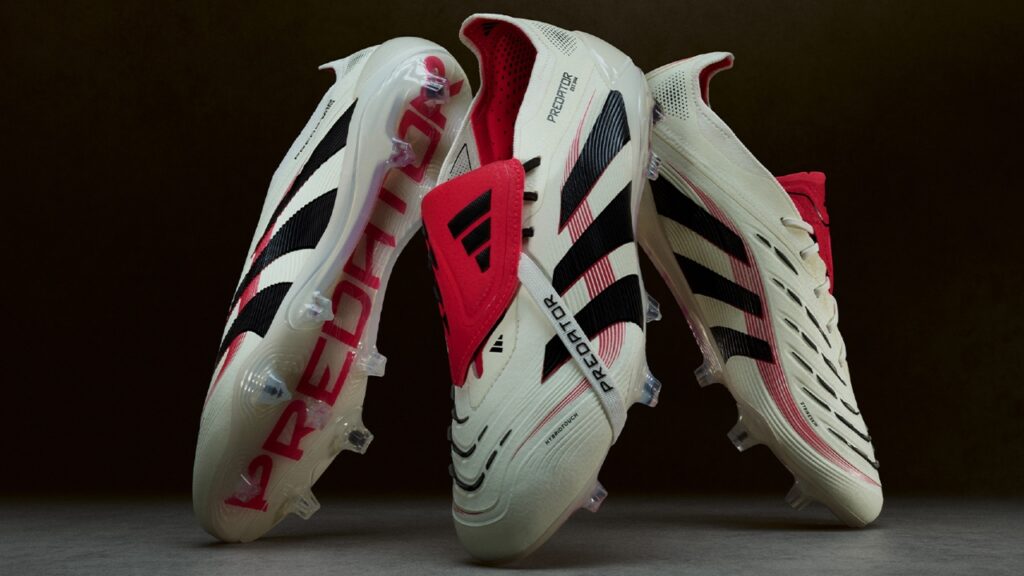
The Adidas Predator was introduced in 1994, designed by former Australian footballer Craig Johnston. Unlike earlier boots that refined existing designs, the Predator introduced a visible technical feature: rubber ridges on the upper. These ridges were intended to increase friction between the boot and the ball, improving swerve, control, and passing accuracy.
This design decision was controversial. Traditionalists questioned whether rubber elements belonged on a football boot. Some players initially resisted the feel. Over time, however, the practical effect became clear. Players could apply more spin on set pieces. Passes felt more controlled in wet conditions. Shooting technique adapted to the boot rather than remaining unchanged.
The Predator’s rise coincided with the tactical evolution of football in the mid-1990s. Midfielders gained more creative responsibility. Set pieces became more structured. The Predator fitted this environment by offering technical assistance rather than raw speed.
Zinedine Zidane became the Predator’s most influential ambassador. He wore Predator models throughout his prime years, including during France’s 1998 World Cup victory. Zidane’s playing style emphasised balance, timing, and controlled technique. The Predator visually and functionally aligned with that identity.
David Beckham’s association further strengthened the Predator’s reputation. Beckham’s crossing and free-kick technique relied heavily on spin and contact precision. The 2002 World Cup “Champagne” colourway became one of the most recognisable Predator editions, linking the boot directly to televised global moments.
Steven Gerrard and Michael Ballack continued this midfield association. Both players represented different football cultures but shared a reliance on long-range passing and shooting. The Predator became a boot associated with leadership roles in midfield rather than with wing play or pure striking.
The claim that the first World Cup goal scored in Predators occurred in 1998 has been debated because of overlapping boot generations and limited photographic clarity in some matches. Some sources credit Zidane’s early goals in the tournament, while others argue that earlier Predator wearers scored in qualifying matches that are sometimes misattributed.
This disagreement exists because Adidas gradually introduced Predator elements across different models rather than releasing a single uniform version. The disagreement does not weaken the Predator’s historical role. It highlights how equipment evolution rarely follows clean release boundaries.
Culturally, the Predator represents a turning point. It was the first widely accepted football boot that openly advertised a technical advantage. After the Predator, every major brand began designing boots around specific performance claims such as power, speed, or control.
The Predator is iconic because it changed what players expected from boots. It shifted perception from footwear as protection to footwear as technical assistance.
4. Nike Mercurial Vapor

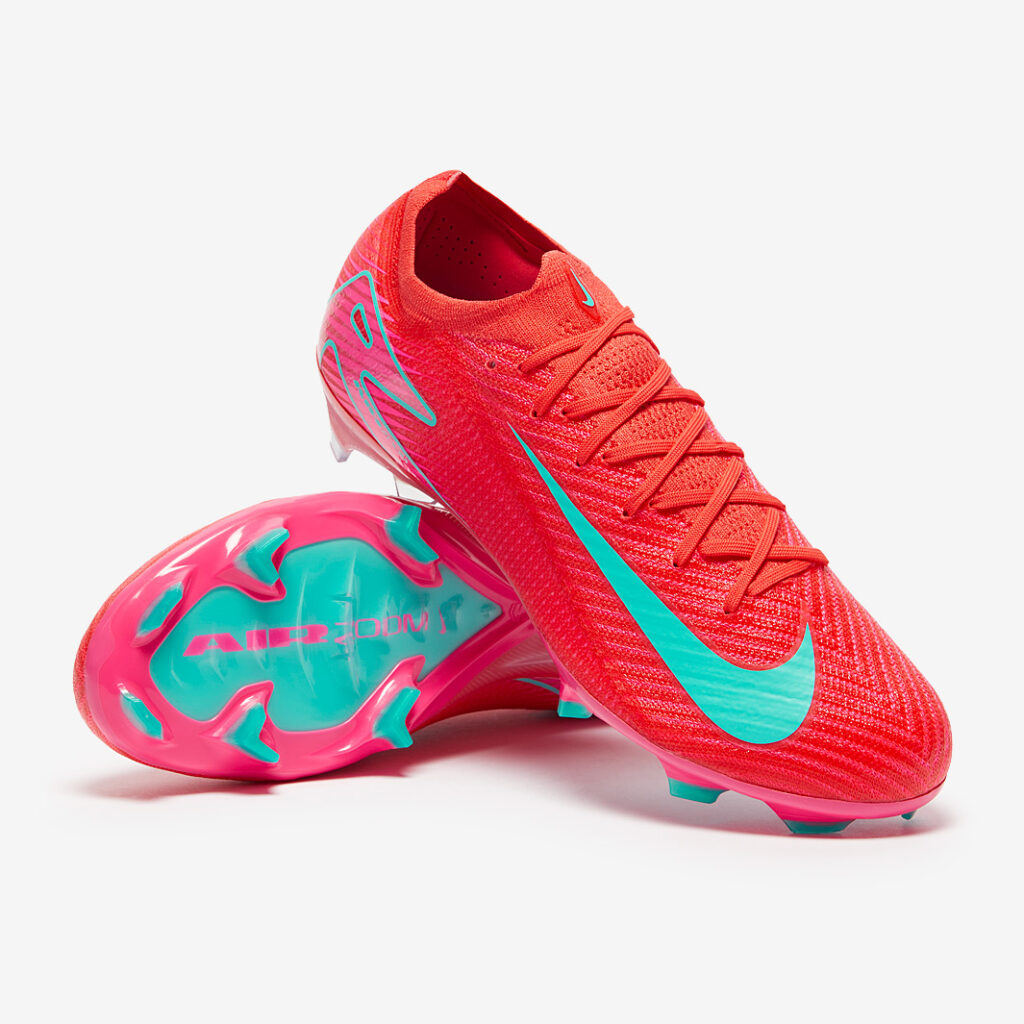
Nike entered the elite football boot market relatively late compared to Adidas and Puma. The original Nike Mercurial boot, designed for speed and famously worn by Ronaldo “El Fenómeno,” was launched in 1998, revolutionizing football boot design with its lightweight synthetic construction. The Vapor line emerged later, beginning with the Vapor I in 2002. The 1998 release marked the beginning of the iconic Mercurial family, focusing on extreme lightness for fast players, a concept that later evolved into the Vapor series. Instead, it focused on weight reduction and aerodynamic appearance. The Mercurial used synthetic materials that allowed the boot to be significantly lighter than most competitors.
The timing of the Mercurial’s release was strategic. Nike associated the boot with Ronaldo Nazário during the 1998 World Cup in France. Ronaldo was the fastest, most explosive striker in world football at the time. His playing style relied on acceleration, directness, and physical dominance. The Mercurial visually reinforced that identity.
Although Ronaldo’s 1998 World Cup final performance was affected by health issues, his earlier tournament goals in Mercurials ensured the boot received global exposure. The image of Ronaldo sprinting past defenders in silver Mercurials became a defining marketing moment for Nike.
Technically, the Mercurial prioritised minimalism. It removed unnecessary padding. It used a thin upper to maximise ball feel at high speed. It reduced overall weight to support acceleration rather than comfort. This design philosophy forced players to adapt. The Mercurial did not forgive poor touch. It rewarded technical control at speed.
Later generations of Mercurials became associated with Cristiano Ronaldo, who adopted the model as his primary boot. Cristiano Ronaldo’s playing style evolved across his career, but speed remained central. Nike’s continued development of Mercurial technology alongside his career reinforced the boot’s identity as a speed instrument.
Kylian Mbappé later continued this association. His acceleration, short-distance sprinting, and direct dribbling style matched the Mercurial concept almost perfectly. For younger audiences, Mbappé rather than Ronaldo Nazário became the Mercurial reference.
The Mercurial’s cultural importance lies in its redefinition of boot priorities. Before it, boots tried to balance multiple performance factors. After it, specialized boots became normal. Speed boots, power boots, control boots, and agility boots all became separate categories.
The Mercurial also changed visual language. Bright colours, metallic finishes, and aggressive shapes became acceptable in football culture because the Mercurial normalised them.
Some critics argue that the Mercurial sacrificed comfort for marketing. This criticism is partially valid. Early Mercurial models were less forgiving on wide feet and required adaptation. However, that discomfort was part of its identity. It was not designed for everyone. It was designed for players willing to prioritise speed over comfort.
The Mercurial Vapor is iconic because it aligned boot identity with player identity more clearly than any previous model.
5. Nike Total 90 / Nike T90

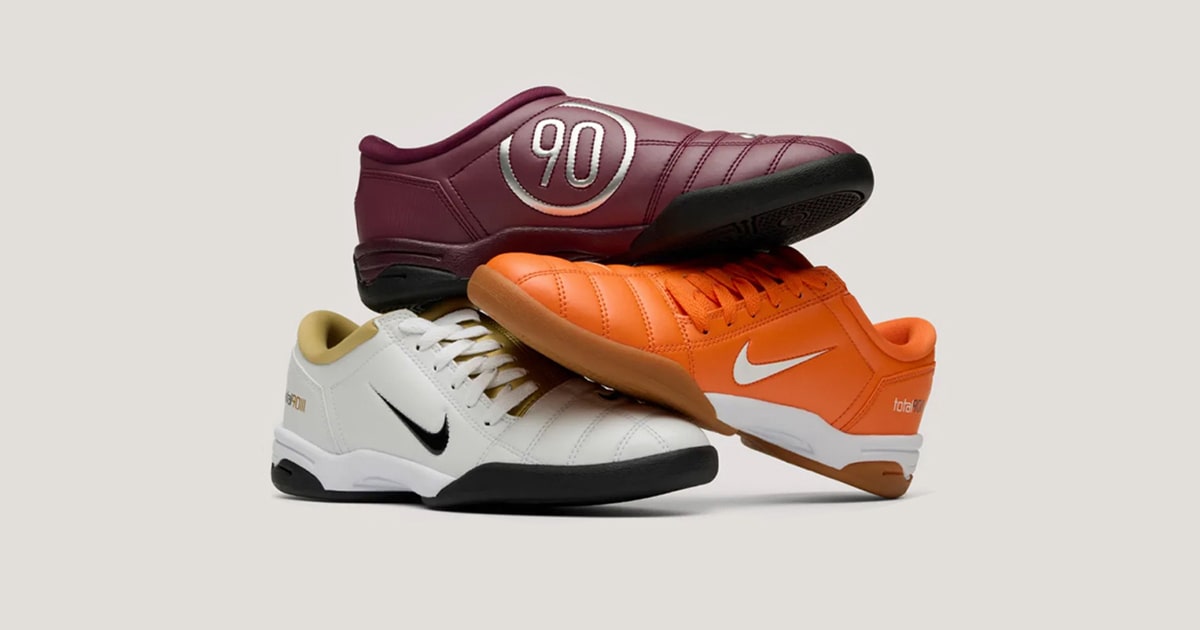
Nike introduced the Total 90 line in 2000 as a deliberate counterpoint to the lightweight, speed-driven direction that was beginning to dominate football boot design. The Total 90 project did not attempt to make players faster. It attempted to make their contact with the ball more predictable, more controlled, and more powerful. Nike’s internal design focus centred on expanding the usable striking surface and stabilising the foot during shooting and long passing.
Early Total 90 models introduced asymmetrical, or lateral, lacing. This moved the lace knot away from the central striking zone, creating a cleaner contact area. Later generations added concentric strike textures intended to guide impact points rather than dramatically alter ball physics. The intention was not to promise exaggerated swerve but to reduce inconsistency in ball contact. Nike’s technical documentation from the mid-2000s consistently framed the Total 90 as a boot for accuracy under power, not for finesse.
The Total 90 Laser, released in 2007, represented the most refined version of this philosophy. The Laser combined strike zones with a stabilised soleplate and a relatively supportive upper. Compared to the Mercurial of the same period, the Laser felt structured rather than minimal. This reflected a different understanding of performance. Nike was implicitly acknowledging that not all elite players wanted the same sensory relationship with the ball.
Luis Figo became one of the most visible Total 90 wearers in the later stages of his career. By that point, Figo’s game relied more on passing accuracy, crossing, and positional intelligence than on pace. The Laser suited that profile. Other prominent European players, including Wayne Rooney and Fernando Torres, also wore Total 90 models during seasons in which long-range shooting and direct attacking play were central to their roles.
The Total 90’s popularity coincided with a tactical period in which midfield and forward players were expected to strike from distance more frequently. Defences often sat deeper. Space outside the box became tactically valuable. Boots that supported stable, repeatable contact were therefore culturally relevant.
The decline of the Total 90 line did not occur because the concept failed. It occurred because commercial and tactical trends shifted back toward speed and minimalism. As football placed increasing emphasis on pressing, acceleration, and rapid transitions, lighter boots regained dominance. Nike eventually discontinued the Total 90 line rather than dilute its original identity.
The Total 90 remains iconic because it represents a complete design philosophy that was allowed to exist fully for a defined period. It did not attempt to become everything. It attempted to serve a specific interpretation of football performance, and it did so with clarity.
6. Umbro Speciali
The Umbro Speciali occupies a different place in football boot history. It was never marketed as a technological breakthrough. It was marketed as a continuation of leather craftsmanship at a time when many brands were beginning to treat leather as an outdated material.
Umbro developed the Speciali as a premium leather boot focused on comfort, touch, and structural simplicity. The upper used high-quality leather that prioritised natural foot movement over engineered stiffness. The soleplate design avoided aggressive geometries. The boot was intended to disappear on the foot rather than announce its presence.
Alan Shearer’s long-term use of the Umbro Speciali is central to its cultural identity. Shearer did not rely on flair or elaborate footwork. His game was based on timing, positioning, strength, and finishing technique. The Speciali supported that approach by offering a consistent touch and reliable stability. Over the course of his Premier League career, Shearer scored more goals than any other player in the competition’s history while wearing Umbro boots for significant portions of that period.
Michael Owen also wore Umbro Speciali during his early professional years. Owen’s pace and directness required a boot that did not interfere with foot speed or natural striking motion. The Speciali’s light leather construction allowed that freedom.
The enduring appeal of the Speciali lies in its refusal to participate in visual excess. While other boots adopted bright colours, aggressive textures, and visible technological claims, the Speciali maintained a restrained appearance. This restraint became part of its identity. Players who chose it often did so deliberately.
From a cultural perspective, the Speciali represents a continuity argument. It suggests that football boots do not need to constantly redefine themselves to remain relevant. Comfort, touch, and trust can be sufficient reasons for professional adoption.
The Umbro Speciali is iconic because it preserved a philosophy that could easily have disappeared. It demonstrated that tradition can survive within modern professional sport without becoming nostalgic.
7. Lotto Stadio Classic
Lotto, founded in Italy in 1973, built its football reputation around leather craftsmanship rather than aggressive technological marketing. The Lotto Stadio became one of the brand’s flagship expressions of that philosophy. The boot emphasised material quality, stitching precision, and balanced construction.
The Stadio used premium kangaroo leather and traditional panel construction. Its fold-over tongue and clean silhouette aligned closely with the visual language of classic football boots from the 1970s and 1980s. Unlike some competitors, Lotto did not attempt to disguise the boot’s leather heritage. It made that heritage central.
Players such as Dino Zoff, Davor Šuker, and Paul Gascoigne wore Lotto boots during important periods of their careers. Each represented a different football culture, but all valued touch and balance. The Stadio became associated with professionalism rather than with marketing spectacle.
Gary Lineker is always referenced in connection with the Adidas Stratos 2000 during the 1986 World Cup. Historically, Lineker did indeed wear Adidas rather than Lotto. The reason this confusion persists in football memory is visual similarity. Many black leather boots from that era shared similar silhouettes, and archival footage rarely provides clear brand identification. Over time, these images merge into a single cultural category of “classic World Cup boots.”
This overlap is important because it shows how football boot history is not only technical but also perceptual. Cultural memory does not always preserve precise brand distinctions. It preserves visual and emotional categories. The Lotto Stadio benefits from that memory even when not directly present in specific famous moments.
The Stadio’s legacy is therefore not built on singular iconic goals but on sustained respect among players, collectors, and historians. It represents Italian manufacturing tradition within a global sport dominated by multinational marketing strategies.
The Lotto Stadio is iconic because it represents credibility without dominance. It remains admired even when it is not widely remembered.
8. Adidas Predator Mania

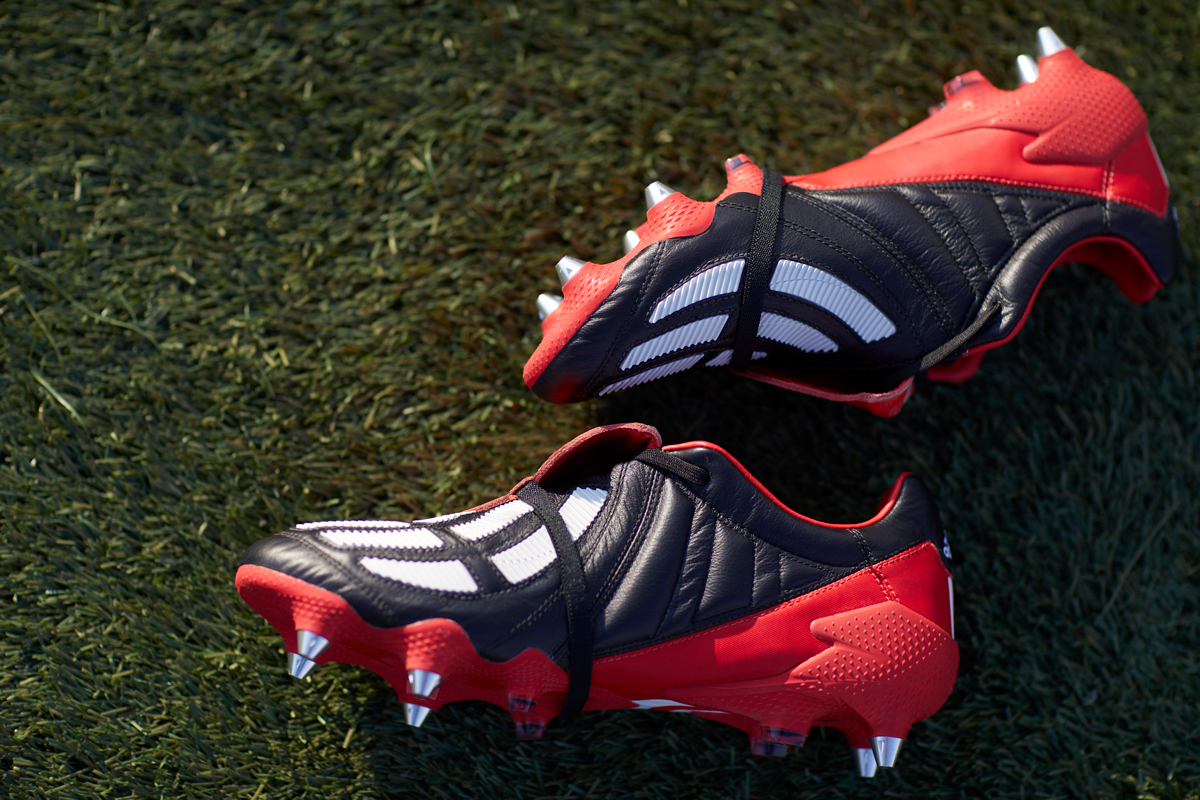
The Adidas Predator Mania was released in 2002 for the FIFA World Cup in South Korea and Japan. By this point, the Predator line had already established itself as a control-focused boot family. The Mania did not introduce a new philosophy. It refined an existing one.
The rubber control zones were more precisely placed than in earlier models. The upper structure balanced flexibility with firmness more effectively. The soleplate offered stability without excessive stiffness. These adjustments were incremental rather than revolutionary, but they produced a boot that many players considered the most balanced Predator ever made.
Zinedine Zidane wore the Predator Mania during the 2002 World Cup. David Beckham used it extensively in both club and international football. Alessandro Del Piero, Raúl, Michael Ballack, Xavi, and Patrick Vieira also wore Mania models across Europe’s top leagues.
The breadth of player adoption is significant. The Mania was not limited to one positional profile. It was worn by playmakers, strikers, and midfield organisers. This suggests that the boot achieved a level of design neutrality that earlier Predators had not fully reached.
The Mania is often described as the peak Predator because later models pursued more aggressive visual and structural experimentation. Those later designs divided opinion. The Mania, by contrast, maintained broad professional trust.
From a technical standpoint, the Mania represents design maturity. It demonstrates how an innovative concept can evolve into a balanced tool rather than remain permanently experimental.
The Predator Mania is iconic because it represents the moment when the Predator concept stopped proving itself and simply functioned.
9. Nike Phantom
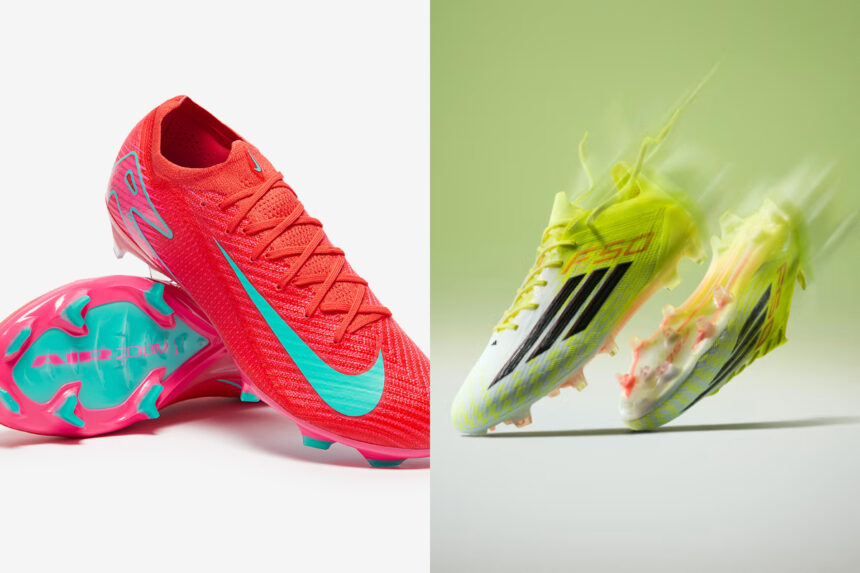
The Nike Phantom series represents how football boots continue to evolve in the modern game through performance technology and adoption by elite players. Nike’s official Phantom line emphasises precision striking zones, engineered grip, and agile movement rather than a single exaggerated performance trait.
Modern Phantoms, such as the Phantom 6 range, use advanced knit materials branded as Tuned Gripknit that aim to provide a close, adaptive fit while enhancing the contact area between the boot and ball. These uppers incorporate textured surfaces and a refined stud layout to enhance rotational traction and change of direction at speed on multiple surfaces, such as firm and soft ground.
Nike’s product pages and launch materials show that Phantoms are positioned as tools for precision and sharp offensive play. According to Nike’s official descriptions, the boots are intended to support attacking movements that require clean contact under varied match conditions, aiming for placement and execution rather than pure speed or power alone.
Erling Haaland has been closely associated with the Phantom line in recent seasons, to the point that Nike released signature-style editions of the Phantom GX II tailored to his image and playing style. These include versions with thematic graphics and branding inspired by Haaland’s identity, suggesting a performance and aesthetic alignment with his role as a prolific striker. This specialisation reflects how contemporary football boot culture supports personalised versions for elite players and embeds boot design within the identity of these stars.
Beyond Haaland, the Phantom series appears in professional contexts with a broad range of contemporary elite players, including those who value precision passing and attacking play. Nike’s own presentation of the Phantom line includes imagery and testimonials from attacking players who emphasise striking accuracy and game impact, underlining the model’s positioning as a versatile performance boot for the modern game rather than a single narrow technical niche.
In this context, the Phantom line demonstrates how football boots have shifted from single-feature innovation to systems of integrated performance characteristics. Modern football requires players who can accelerate, control, and execute precise technical actions within a tactical structure. Products like the Phantom reflect this need by combining adaptive materials, grip technology, and outsole configurations designed for multi-directional play.
This model family may not yet be considered historic in the way that earlier classic boots are. It belongs in discussions of iconic boots because it reflects the latest phase of football boot evolution, one where performance tools integrate fine-tuned engineering and elite endorsement to address contemporary tactical demands across global leagues.
10. Adidas F50


The Adidas F50 range originated in the early 2000s as Adidas’s answer to increased emphasis on lightweight performance and acceleration, a priority that had earlier been championed by models such as the Nike Mercurial. Reviews and historical retrospectives on the F50 model note that the original boot family launched around 2004 and was introduced just ahead of major tournaments like UEFA Euro 2004, positioning it as a speed-oriented design built from synthetic materials that reduced weight significantly compared with earlier leather constructions.
The F50’s defining technical features included a focus on minimal mass, agile soleplate geometry, and upper materials designed for quick cut and acceleration patterns. Sprintframe plates and Sprintweb texturing are part of these designs, aiming to balance structural support with lightness to assist rapid movement and sustained pace over match durations.
The F50 line became closely associated with speed-oriented players throughout its commercial lifetime. Early versions of the boot were famously worn by Lionel Messi, including the F50 Tunit models he used during the 2006 FIFA World Cup when he first emerged on the global stage. These boots gained recognition for their lightweight feel and were part of Messi’s early identity as a quick, deceptively agile forward. The original F50 Tunit boots were sufficiently culturally significant that Adidas, decades later, re-released a commemorative edition paying tribute to that period of Messi’s career, acknowledging both his legacy and the boot’s place in football history.
More recently, Adidas released the F50 Salah edition, a special-edition boot inspired by Mohamed Salah’s heritage and playing identity ahead of major continental competition. This edition uses visual and cultural motifs connected to Salah while retaining the underlying F50 speed-oriented architecture.
Independent reviews and gear guides also highlight that contemporary iterations of the F50 maintain the series’ speed-centric focus, often featuring sprint-oriented soleplates and traction designed to assist rapid acceleration and tight manoeuvres. These technical choices remain aligned with the original design goals while incorporating updated materials and structural elements appropriate for modern elite play.
The F50 line’s cultural legacy comes from its role in pushing lightweight design into the mainstream and challenging competitors’ approaches to speed boots. It represents a phase in boot evolution when acceleration and attack-oriented play became measurable priorities in design, reflecting broader tactical changes in the sport over the early twenty-first century.
Taken together, the Phantom series and the F50 illustrate how football boots continue to evolve in response to changes in professional playstyles and technical demands. The Phantom’s precision and integrated performance technologies intersect with the F50’s enduring narrative of speed-focused design, a narrative that continues to unfold as the game itself changes.
Conclusion
A football boot becomes iconic through a combination of functional relevance, historical visibility, and sustained cultural memory. Innovation alone does not guarantee longevity. Neither does association with a single player. Iconic status emerges when design, performance, and historical context align repeatedly over time.
The Puma King achieved permanence through stability and refinement rather than technical disruption. The Adidas Copa Mundial earned its place through reliability and cross-generational usage. The Predator reshaped expectations by introducing visible technical purpose. The Mercurial redefined speed as a design identity. The Total 90 represented a period when controlled power dominated boot philosophy.
The Umbro Speciali preserved classical craftsmanship during an era of rapid commercial change. The Lotto Stadio reflected Italian manufacturing tradition and understated quality. The Predator Mania demonstrated how a technical concept could mature into a balanced performance tool. The Nike Phantom shows how modern boots now rely on data, biomechanics, and player-specific feedback. The Adidas F50 confirmed that speed could become a permanent category rather than a temporary trend.
These boots are not remembered because they were perfect. They are remembered because they were present during defining periods of football history. They were worn in World Cups, league titles, finals, and individual careers that shaped how the game is recalled. Iconic football boots do not exist outside football history. They exist inside it.