Habeeb Hamzat, widely known as Peller, has in recent months faced a series of controversies spanning legal disputes, public backlash, and regulatory scrutiny.
Between mid-2025 and early 2026, the content creator has been linked to multiple incidents involving private individuals, traditional institutions, and government agencies. The issues have ranged from lawsuits and legal threats to tax disputes and enforcement actions.
While some of the claims remain contested or based on Peller’s own public statements, others have resulted in formal legal action, drawing sustained attention to his conduct both online and offline.
This report outlines, in chronological order, the key moments Peller has found himself in trouble.
Who is Peller?


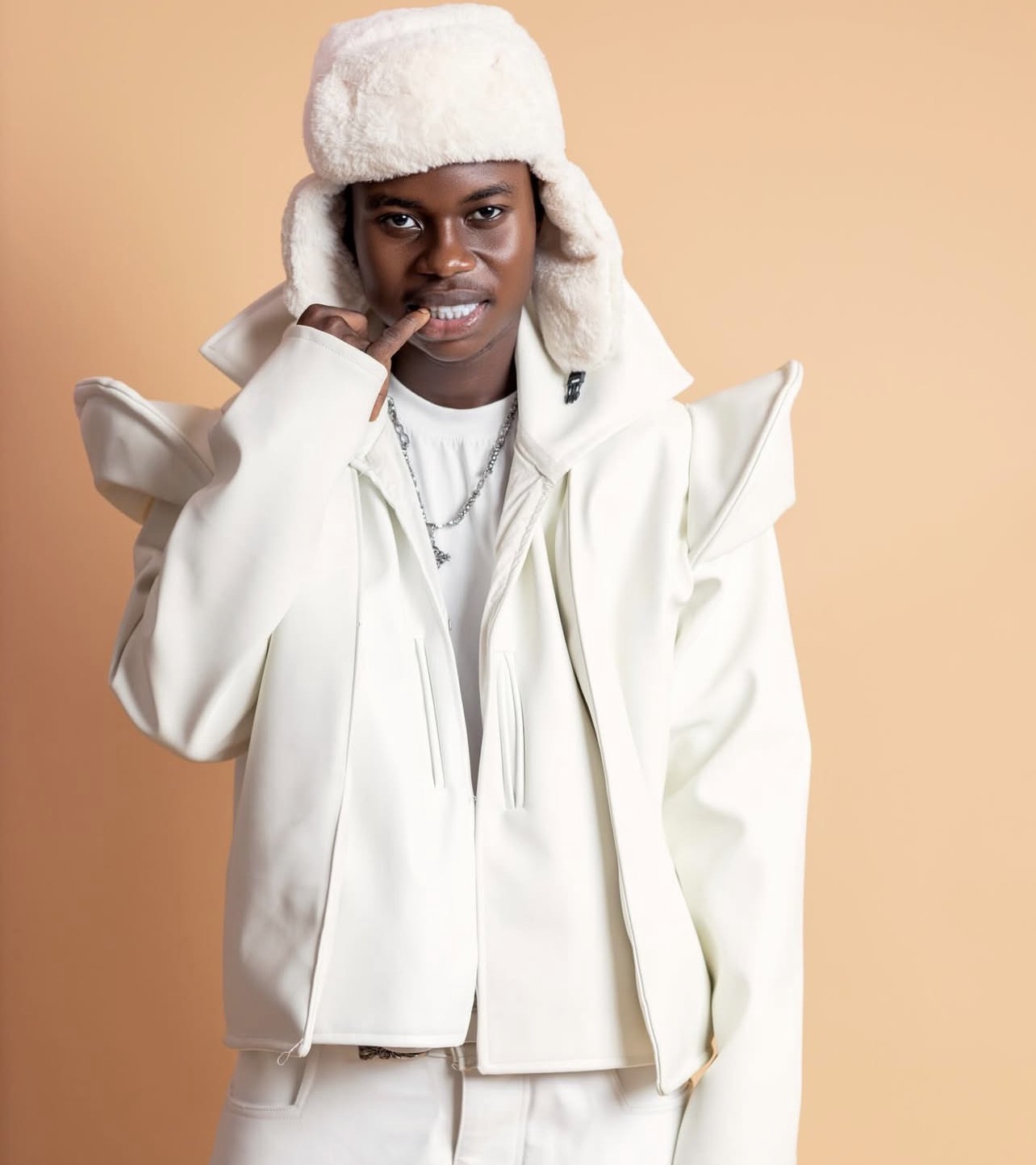
Habeeb Hamzat, popularly known as Peller, is a Nigerian online streamer and content creator who rose to prominence through TikTok live streams and short-form video content.
Born in 2005 and raised in Ikorodu, Lagos, he began experimenting with content creation as a teenager before gaining wider attention around 2023.
His breakthrough came through a style that stood out in Nigeria’s crowded creator space: unscripted livestreams marked by sarcasm, exaggerated reactions, and a deliberate mix of Pidgin English and Yoruba. His often chaotic and unpredictable approach quickly attracted a young, highly engaged audience.
By 2024, his visibility had expanded significantly. Collaborations with other creators and appearances featuring high-profile figures including rapper Olamide, helped push his streams to record-breaking numbers, with one session drawing over 200,000 live viewers, one of the highest for an African streamer.
His growing influence translated into industry recognition. Peller won “Best Content Creator” at the Trace Awards Africa in 2024, cementing his position among Nigeria’s most visible digital entertainers.
Beyond the content itself, part of his appeal lies in personality. His livestreams often blur the line between performance and reality. It usually features spontaneous interactions, controversial statements, and moments that regularly spill beyond his core audience into wider public conversation.
That unpredictability is also what kept people watching. And, increasingly, what has placed him at the center of repeated controversy.
The Bouncer’s Lawsuit (April 2026)
On April 6, 2026, Peller publicly claimed he was facing a ₦400 million lawsuit from a bouncer who had worked with him during a recent state tour.
According to Peller, the dispute stems from an incident in which the bouncer allegedly fell from a moving vehicle while on duty. He said the individual was immediately taken to the hospital and that he covered the initial medical expenses.
Despite this, Peller claimed the bouncer is now seeking ₦400 million in damages for injuries and their long-term impact.
Speaking during a livestream, he expressed frustration over what he described as a growing pattern of legal pressure. He said:
“Everybody is suing me, I’m tired. My bouncer from my last state tour is suing me after he fell from a car during the tour. He was rushed to the hospital immediately and I paid all his bills, but now he’s demanding ₦400 million in damages. E wan use me escape poverty.”
ROYAL HOUSES

Benin Traditional Council Legal Threat (March 2026)
In March 2026, Peller faced backlash from the Benin Traditional Council following a visit to the palace of the Oba Ewuare II on March 6.
The council accused Peller and his entourage of gaining unauthorised access to the palace and engaging in conduct it described as inappropriate for a sacred institution.
In a statement, the council cited multiple breaches, including filming content within the palace, making remarks considered disrespectful, and treating the premises as a setting for entertainment. It emphasised that the palace is a spiritual and cultural seat, not a venue for “frivolous content creation.”
The fallout extended beyond Peller. Reports indicated that individuals linked to the visit, including the Queen, faced internal disciplinary measures, while a staff member was detained and charged for allegedly facilitating the unauthorised entry.
Peller, however, denied intentional wrongdoing. He stated that he acted on his management’s instructions and was unaware of the protocols governing access to the palace. His management also maintained that a prior request had been submitted and described any perceived misconduct as unintentional.
Alake of Egbaland’s Palace Incident (March 2026)
Days after the Benin controversy, Peller was involved in another incident at the palace of the Adedotun Gbadebo III in Abeokuta.
During the visit, palace officials reportedly denied him an audience and ordered him to leave the premises, citing a lack of prior appointment and concerns over the manner of his entry.
Videos circulating online showed palace chiefs expressing displeasure over what they described as a disruptive and inappropriate approach to a traditional institution.
Peller and his entourage were subsequently escorted out of the compound.
He later reacted with visible frustration, stating that he was no longer interested in meeting the monarch and noting that he had previously visited other royal institutions across the country.
Osarobo Odigie – ₦395 Million Lawsuit (March 2026)


In March 2026, Peller was sued for ₦395 million by Lagos-based woman Osarobo Odigie over an incident that occurred on January 6 at a lounge in Lekki.
According to court filings, Odigie alleged that a confrontation began after she asked Peller to lower his voice during what she described as a loud outburst. She claimed he responded aggressively, using derogatory language and insults during the exchange.
Her legal team, led by Bola Osineye of FA Garrick & Co., further accused Peller of recording the incident without her consent and distributing the footage across social media platforms, where it went viral.
The suit argues that the publication of the video exposed Odigie to widespread harassment, including cyberbullying, reputational damage, and threats to her safety. Odigie is seeking damages totalling ₦395 million, including:
• ₦200 million for alleged defamation and reputational harm
• ₦100 million for emotional trauma
• ₦75 million for distress linked to online harassment
• ₦20 million to cover legal costs
Reacting, Peller acknowledged the altercation and issued a public apology days after the incident, describing his conduct as out of character.
However, he has since disputed the financial claims, stating publicly that he does not have the capacity to pay the amount and suggesting that he is being unfairly targeted.
Prior to the lawsuit, Odigie’s lawyers issued a pre-action notice demanding the removal of the video and a public apology in national newspapers. Following the expiration of the ultimatum without settlement, legal proceedings were set in motion.
Federal Road Safety Corps (FRSC) Prosecution (December 2025)
In December 2025, Peller came under investigation by the Federal Road Safety Corps (FRSC) following a viral video showing him involved in an “intentional” car crash during a livestream on the Lekki–Epe Expressway.
The FRSC subsequently directed that he be prosecuted for multiple traffic-related offences, including reckless driving, distracted driving, and the use of a mobile device while operating a vehicle.
Following the incident, Peller was arrested by the Lagos State Police Command and detained for one week, as authorities examined the circumstances surrounding the crash.
Officials also indicated that the case could extend beyond traffic violations, with investigators considering whether the incident involved broader criminal liability under existing laws.
Reacting to this in early 2026, Peller publicly criticised what he described as inconsistent enforcement, pointing to a separate incident involving fellow creator Shank Comics and questioning why similar actions did not attract the same level of immediate legal response.
Aiso Entertainment Threat (November 2025)
In November 2025, Peller faced a legal threat from Aiso Entertainment, the management company representing his content creator girlfriend, Jarvis.
The dispute followed comments made by Peller, in which he accused some TikTok creators of using the platform’s gifting feature for money laundering. This claim was widely interpreted as including Jarvis.
In response, Aiso Entertainment issued a formal 48-hour ultimatum demanding a public apology and retraction, describing the allegation as defamatory and damaging to their client’s reputation.
The company warned that failure to comply would result in legal action.
LIRS – ₦36 Million Tax Bill (August 2025)
In August 2025, Peller became the subject of a tax dispute with the Lagos State Internal Revenue Service (LIRS) after he was issued a personal income tax assessment reportedly valued at ₦36 million.
He rejected the figure publicly during a livestream, questioning both its accuracy and the basis on which it was calculated.
Peller argued that the assessment was triggered by a televised appearance on TVC’s E-Splash, where he had spoken about earning significant income from TikTok. He later described those statements as exaggerated, explaining that the claims were “packaging” intended to project success rather than reflect his actual earnings.
He also maintained that the tax demand did not reflect the nature of his income, stating that his earnings are largely derived from foreign-based digital platforms rather than traditional employment within Nigeria. In addition, he criticised the demand on broader grounds, arguing that the government had not played a role in supporting his career or the wider ecosystem for content creators.
Officials, however, pushed back. A representative of the Lagos State Government reiterated that taxation is a constitutional obligation for individuals earning income within the state, regardless of the source. The clarification also pointed to evolving tax frameworks designed to capture earnings from digital activities, including content creation, virtual transactions, and foreign income streams.
The issue drew further public attention when singer Peruzzi weighed in during a livestream, warning that failure to comply with tax obligations could carry legal consequences, including potential imprisonment, and advising Peller to seek a negotiated resolution.
The dispute unfolded against the backdrop of broader reforms that took effect in January 2026, expanding Nigeria’s tax net to include remote workers and digital earners, with higher rates applied to top-income brackets.
Nkese Eyo – ₦500 Million Lawsuit (July 2025)
In July 2025, Peller faced a ₦500 million lawsuit filed by Nkese Eyo following a livestreamed recruitment exercise.
The case arose from a session in which Peller advertised a cameraman or photographer role with a monthly salary of ₦500,000, attracting multiple applicants.
Eyo alleged that the process was not a legitimate job interview but a staged event designed for online content. According to her claim, the session was recorded and broadcast to a live audience without the applicants’ consent, exposing them to public scrutiny.
She further alleged that she was subjected to ridicule during the interaction, including remarks about her background and appearance, which she argued violated her dignity and fundamental rights.
A suit was then filed before a Lagos High Court, centring on alleged violations of Eyo’s fundamental human rights, including dignity and protection from degrading treatment.
She is seeking ₦500 million in damages for distress, reputational harm, and what she describes as exploitation for content.
In response, Peller defended the livestream, stating that the recruitment process was genuine and that at least two applicants were selected and paid.
Conclusion
Taken individually, each incident involving Peller can be explained away as an argument here, a misstep there, or a controversy amplified by the speed of social media.
However, when taken together, they tell a completely different story.
From private disputes and courtroom battles to confrontations with traditional institutions and government agencies, the pattern is not just frequency, but range. The issues span personal conduct, cultural boundaries, public safety, and financial accountability, which are areas that extend far beyond the internet spaces where his influence was built.
At the centre of it all is a style of content that thrives on immediacy and unpredictability, but increasingly collides with systems that demand structure, responsibility, and restraint.
Whether these incidents mark a temporary phase or a defining trajectory remains to be seen.
But for now, the timeline is still growing.