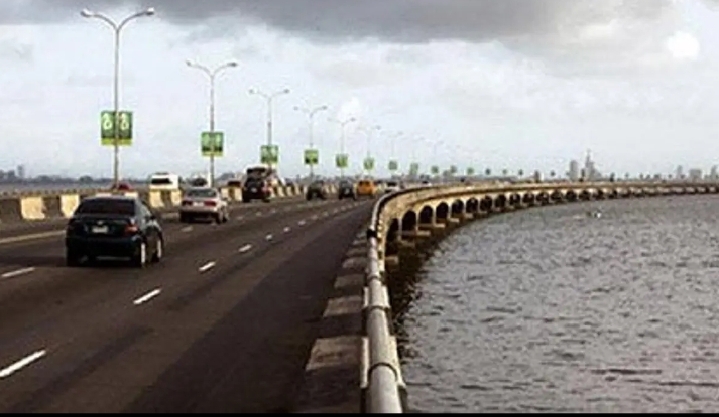
The city had never been this quiet. Dawn hovered over the Lagoon like a curtain refusing to rise, its surface trembling with a strange anticipation. The sound of water lapping beneath the bridge mingled with the distant hum of engines idling in wait. From Oworonshoki to Lagos Island, thousands of eyes turned toward a line of concrete that shimmered faintly against the grey horizon. Something immense, invisible yet immediate, was about to shift in Lagos’ rhythm. For once, time itself seemed to hesitate.
Before the first convoy emerged, there was only wind, smell, and silence. The air carried salt from the Lagoon and the residue of diesel from sleepless nights of construction. Somewhere beneath the bridge’s 11.8-kilometre span, fishermen anchored their canoes and watched the stillness turn sacred. Above them stood the symbol of a promise—steel, concrete, and persistence stretched across water that once divided an entire city. It wasn’t just another bridge. It was the day Lagos prepared to cross itself.
Then, from the mainland end, the first sound rolled—a low growl of engines arranged in ceremonial precision. The convoy that would mark the bridge’s opening was approaching.
Lagos was about to witness not only the unveiling of a structure but the rewiring of its daily heartbeat. When the first tyres touched the smooth, untested surface, history began to move, and Lagos moved with it.
A Dream Suspended Over Water
Long before the ribbons and convoys, the idea had lived in sketches and blueprints, passed between engineers, ministers, and dreamers. Lagos had grown impatient with itself. By the late 1970s, Carter Bridge and Eko Bridge were groaning under the weight of a rapidly expanding population. The mainland was swelling with workers; the island was tightening under commerce. Every morning, traffic became a negotiation with exhaustion. The city needed relief, and it needed it fast.
The concept of a third bridge was not born of luxury but survival. Planners under General Olusegun Obasanjo had already begun imagining it—a massive span connecting Oworonshoki on the mainland to Adeniji Adele on Lagos Island. Construction was later contracted to Julius Berger Nigeria PLC, a company whose reputation had been forged on the nation’s toughest terrains. Yet even for them, this would be unlike anything attempted before. Building over the unpredictable waters of Lagos Lagoon demanded faith and precision in equal measure.

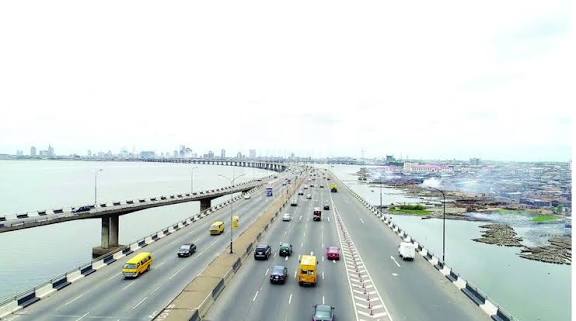
By 1980, under President Shehu Shagari’s civilian government, the first foundation piles were driven deep into the Lagoon’s bed. But Nigeria’s politics was never a stable bridge. The 1983 coup that toppled Shagari stalled progress. For years, the project lingered between governments, budgets, and regimes. When General Muhammadu Buhari came to power, austerity overshadowed ambition. It would take another coup, another leader, and another decade for Lagos’ dream to take shape above the water.
General Ibrahim Babangida inherited a half-built bridge and a restless nation. Yet within his administration, the 3rd Mainland Bridge found renewed urgency. It was no longer just an infrastructural necessity—it became a statement of continuity in a country fractured by transitions. For Babangida, who saw modernization as the theatre of legitimacy, the completion of that bridge became both mission and metaphor.
The Engineering Feat Beneath the Lagoon
Before the speeches and convoys, before Lagos stood to applaud its own reflection, there was only mud, current, and faith. The Lagoon, wide and unpredictable, had always resisted permanence. Beneath its calm surface lay layers of soft clay and silt, restless materials that could not bear weight easily. To build a bridge across it was to challenge nature’s patience. Engineers knew the risk—one miscalculation and the entire structure could sink into the water it was meant to master.
When Julius Berger took the contract in 1980, it faced an almost poetic contradiction: to build stability on movement. The company deployed teams of marine engineers, divers, and geotechnical experts who spent months studying the Lagoon’s rhythm. They measured its depth, its currents, its seasonal mood swings. Barges floated like temporary islands, carrying heavy machinery that bored deep into the earth below water. Piles of reinforced concrete—some stretching over 40 meters—were driven into the seabed until they struck firm ground.
The work unfolded in stages. First came the segment linking Lagos Island to Ebute Metta, then the midsection hovering over the Lagoon, and finally the stretch toward Oworonshoki. Floating cranes lifted precast concrete sections, aligning them one by one, a slow ballet of metal and precision. The challenge wasn’t only technical—it was emotional. Every worker knew they were part of something that would outlast them. They labored through rainstorms and heat waves, some sleeping in temporary camps near the water. Many never saw the bridge completed.
By 1985, about half the span was ready, its skeletal frame visible from Yaba and Iddo. At night, the bridge lights shimmered faintly, teasing a future Lagos could almost touch. The engineers understood they weren’t just connecting land—they were connecting generations. What they were building was not only infrastructure but memory, a monument to persistence cast in concrete and steel.
The Politics Beneath the Concrete
The story of the 3rd Mainland Bridge is also a story of Nigeria’s political turbulence. It was first conceived in the late 1970s under the military government of General Olusegun Obasanjo. His administration had prioritized urban infrastructure to cope with Nigeria’s oil boom population surge. Plans for the new bridge were drafted during that era, as Lagos—then the federal capital—struggled to breathe under its own weight.
But democracy interrupted the blueprint. When President Shehu Shagari assumed power in 1979, the bridge’s construction finally took a tangible form. It symbolized optimism, the civilian government’s attempt to modernize a country returning from years of military rule. Yet, the optimism was short-lived. The 1983 military coup dissolved Shagari’s government and froze countless projects mid-construction, including the 3rd Mainland Bridge.
Under General Muhammadu Buhari, priorities shifted toward austerity. The economy was shrinking, the nation’s debts rising. The bridge project slowed to a crawl, with contractors uncertain about payments. Steel shipments delayed at ports, machinery abandoned near Oworonshoki. Lagosians watched their dream structure stand half-finished—a colossal metaphor for Nigeria’s interrupted ambitions.
Then came the regime of General Ibrahim Babangida in 1985. Where others saw a stalled project, he saw an opportunity for symbolism. Lagos, though no longer the capital (as the seat of government had moved to Abuja), remained the nation’s pulse. Reviving the bridge meant reviving confidence. Babangida reauthorized funding, re-engaged Julius Berger, and ordered that the bridge be completed by the end of the decade.
The decision carried weight beyond Lagos. It sent a message that Nigeria could still finish what it started. Each budget cycle brought new allocations. Engineers returned, cranes roared again, and the hum of progress rolled across the Lagoon. By 1989, the finishing touches were underway. When Babangida later inaugurated it in 1990, it wasn’t just a ribbon-cutting—it was a performance of power, continuity, and redemption after years of military volatility.
The bridge, like the regime itself, became a statement: that even amid coups and uncertainties, something grand could rise above the water.
The Lives That Built It
Beneath the grandeur of concrete and statecraft were ordinary men and women whose sweat sealed the bridge’s story. The newspapers would later celebrate the leaders and engineers, but the bridge was also the work of hundreds of anonymous hands. Laborers from across Nigeria—Maiduguri, Ibadan, Onitsha, and Benin—came to Lagos in search of daily wages. They worked on the Lagoon’s edge, sometimes knee-deep in mud, guiding cement mixers and positioning steel rods in the punishing heat.
Accidents were inevitable. Rumors circulated of workers falling into the water, of machines toppling from barges, of nights when the Lagoon seemed to swallow tools and men alike. These stories were rarely documented, yet they formed the invisible human layer beneath the bridge’s foundation.
Local communities around Oworonshoki and Yaba felt the tremors of transformation. Some lost farmlands and fishing spaces; others gained small fortunes by selling food, supplies, and labor to the project teams. Children watched from wooden canoes, memorizing the sight of cranes that sliced the skyline. For them, the bridge wasn’t abstract—it was adventure, spectacle, and a lesson in patience.
The bridge was also built during an era without the safety or environmental standards common today. Workers often improvised tools, and supervisors learned to balance efficiency with survival. But the shared belief that this bridge would change Lagos kept them going. When the final segment was laid, some wept quietly. Their names would not appear in headlines, but they had built something that would carry millions long after they were gone.
The Opening Day
The date was early 1990, the sky undecided between sunshine and drizzle. At the Oworonshoki approach, soldiers stood at intervals, their uniforms bright against the new concrete. A brass band rehearsed quietly near the staging area, the notes of the national anthem echoing awkwardly against the wind. The invited guests began to arrive—federal ministers, military officers, journalists, engineers. Then came the motorcade that would anchor the moment. General Ibrahim Babangida stepped out, his face composed, his uniform immaculate. Lagos had its audience; history had its witness.
The ceremony was deliberately modest. A few speeches, a ribbon, a prayer for safety. Babangida spoke of unity, progress, and the audacity of engineering. When he cut the ribbon, applause rippled down the bridge’s spine. The first car—a dark Mercedes from the presidential fleet—rolled forward, followed by a convoy of black sedans. Cameras clicked, capturing what would later appear on front pages nationwide: the moment Lagos conquered its own geography.
As the vehicles glided toward Lagos Island, something intangible shifted. Workers cheered from the sidelines. Fishermen paused their nets to watch the procession. From high-rise balconies on the island, people waved, recognizing that the line of vehicles crossing the water symbolized far more than transport—it was mobility in its purest national sense. The 3rd Mainland Bridge was no longer an idea; it was motion, speed, and connection embodied.
By afternoon, ordinary Lagosians were allowed to drive on it. For many, the first ride was an act of disbelief. Families piled into cars, leaning out of windows to see water racing below. The bridge became a spectacle—a road that seemed to float. It didn’t just shorten distances; it compressed Lagos itself, folding hours into minutes, turning isolation into access. For a city built on hustle, that was nothing short of magic.
When Time Shortened in Lagos
After the inauguration, Lagos didn’t change overnight—it adjusted in pulses. For the first few weeks, the bridge was almost ceremonial. Drivers crossed it slowly, savoring the view of the Lagoon and the skyline. But soon, the city discovered its true power. Commutes that had once lasted two hours now took forty minutes. Businesses on the mainland saw a surge of new clients from the island, and vice versa. The bridge condensed the city’s geography into a single motion.
Time itself seemed to shrink. The morning rush began to form new rhythms—engines humming before sunrise, radios tuned to traffic reports, children reciting homework in the back seats of taxis. The bridge became part of Lagosian life, both blessing and paradox. It offered speed but also birthed congestion. It connected opportunity but invited overpopulation. Lagos was evolving faster than its infrastructure could contain.
Still, for those who lived through its opening, the bridge became the city’s defining image. Postcards, newsreels, and tourism ads carried its photograph—a wide expanse of gray stretching endlessly over blue water. It was no longer just a structure but a landmark of identity. Lagos could point to it and say, We built this.
As the years passed, poets and musicians referenced it. Filmmakers used its expanse to capture the essence of motion, migration, and madness. For commuters, it became a daily test of endurance. For dreamers, a reminder that even chaos could produce order. And for the city’s historians, it marked the line where old Lagos ended and modern Lagos began.


The Afterlife of the Bridge
Time tests everything that dares to defy it. By the late 1990s, cracks began to appear—literally and symbolically. The bridge that once embodied progress now groaned under the weight of millions. Expansion joints loosened, deck segments shifted, and corrosion whispered from beneath. Maintenance became a recurring national conversation. Every closure for repair reignited nostalgia and fear—nostalgia for the bridge’s glorious debut, and fear that it might one day fail.
The early 2000s saw periodic shutdowns for reinforcement. Each time the government announced an inspection, Lagosians braced for gridlock. Yet, paradoxically, these closures reminded everyone of the bridge’s importance. Its absence slowed Lagos to a crawl, exposing how central it had become to the city’s anatomy.
By the 2010s, it had transcended utility—it had become myth. Social media timelines filled with aerial photographs of the bridge, often captioned as symbols of Lagos’ relentless motion. Music videos shot along its expanse captured both the beauty and chaos of urban life. When repair projects resumed again in the 2020s, younger Lagosians experienced a déjà vu of history repeating itself. The same bridge that once represented speed now stood for patience.
And yet, every reopening rekindled the memory of 1990—the ribbon, the convoy, the applause echoing over water. The bridge had grown old, but its legend never aged. It carried not just vehicles but decades of stories—of workers, leaders, and dreamers who had built, crossed, and depended on it.
A Symbol That Refuses to Rust
Few structures in Nigeria hold such emotional gravity. The 3rd Mainland Bridge is more than a road—it’s Lagos’ autobiography cast in concrete. It witnessed every chapter of the city’s evolution: from the oil boom to the era of democratic rebirth, from analog mornings to digital commutes. Even when it closes for repairs, it remains the city’s spine, the one line every Lagosian eventually traces.
What makes it extraordinary is not its length or design, but its persistence. It continues to function in a city that reinvents itself every decade. Beneath its surface runs a hidden metaphor—that Lagos, despite its noise and chaos, keeps moving. The bridge stands as proof that progress in Nigeria is rarely linear; it comes in fragments, in delayed triumphs, in structures that creak yet never collapse.
When visitors drive across it today, they often notice the view—water stretching endlessly, the skyline of Lagos Island ahead, the shimmer of sunlight reflecting off distant boats. Few realize they are gliding over history, over the layered work of politics, ambition, and human hands. Every vibration under their tyres is a memory speaking: the hum of engines from that opening morning, the laughter of children by the Lagoon, the determination of builders who believed Lagos deserved speed.
When the City Crossed Itself (Conclusion)
That morning in 1990, when General Ibrahim Babangida’s convoy first rolled across the bridge, something unspoken happened between the city and its water. Lagos had always been a paradox—divided yet inseparable, chaotic yet coordinated. The 3rd Mainland Bridge allowed it to finally meet itself halfway. It became a mirror where the mainland saw its reflection on the island and realized they were one.
Every day since, millions have crossed that bridge carrying dreams, fatigue, and the unyielding rhythm of survival. It has outlasted governments, endured floods, survived neglect, and remained loyal to the motion it promised. Even as new highways rise and the city’s skyline expands, nothing replaces the feeling of driving above the Lagoon, watching the city breathe on both ends.
When Lagos finally found a way to shorten time, it did so not through technology, but through sheer belief in connection. The 3rd Mainland Bridge remains that belief—an idea cast into form, a road suspended between two worlds, and the reminder that sometimes, the greatest distance a city can cross is between what it dreams and what it dares to build.