Tensions within the African Democratic Congress (ADC) deepened after the emergence of a new leadership group claiming authority over the party’s national structure.
The development has further complicated the party’s internal situation, with three separate factions now asserting legitimacy ahead of the 2027 general elections.
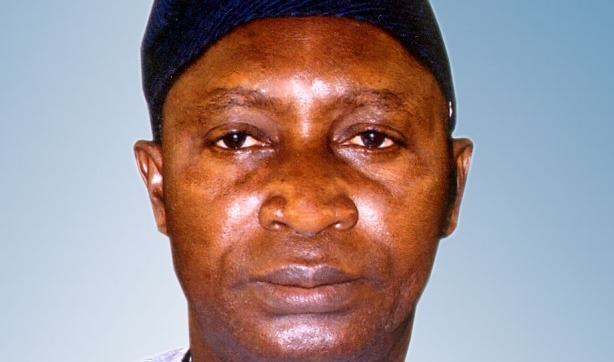
The latest group is led by the party’s 2023 presidential candidate, Dumebi Kachikwu, who announced plans to organise a national convention.
The faction also disclosed its intention to set up an interim leadership to oversee party activities.
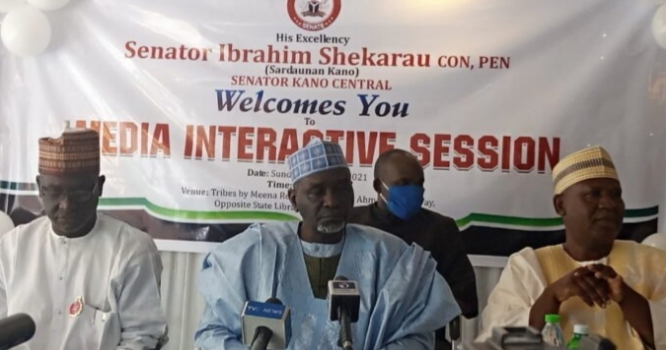
Speaking at a media briefing, the group’s spokesperson, Norman Obinna, rejected the authority of other factions and distanced the group from rival claims.
The party, once considered a possible platform for opposition collaboration, is now dealing with competing leadership structures.
The roots of the disagreement can be traced to July 2025 when the long-serving national chairman, Ralph Nwosu, stepped down from his position.
Following his exit, an interim leadership arrangement was introduced as part of efforts to reposition the party.
The move was linked to broader political discussions involving opposition figures seeking a common platform.
However, the transition was immediately challenged by some members of the party.
A former deputy national chairman, Nafiu Bala, argued that the party’s constitution provided for his succession after the chairman’s resignation.
At the same time, Dumebi Kachikwu and his supporters questioned the legality of the transition process.
They described the arrangement as a takeover that did not reflect internal party procedures.
The situation prompted the involvement of the Independent National Electoral Commission, which initially interacted with one of the factions.
Subsequently, the commission withdrew recognition from the rival leadership groups.
The electoral body cited ongoing legal proceedings and directed that the status quo be maintained pending court decisions.
This position has left the party without a generally accepted leadership structure.
The absence of a recognised authority has affected preparations for key party activities across different levels.
The first faction is associated with the former senate president, David Mark, who heads an interim caretaker arrangement.
This group includes figures such as former vice-president Atiku Abubakar, former Anambra State governor Peter Obi, and former Kano State governor Rabiu Kwankwaso.
Other members include the former Osun State governor, Rauf Aregbesola, and the former minister of youth and sports, Bolaji Abdullahi.
The faction emerged from the leadership transition announced in July 2025 and positions itself as the structure responsible for guiding the party.
Supporters of this group maintain that the process followed established procedures within the party.
The group had previously conducted activities and was initially acknowledged by the electoral commission before recognition was withdrawn.
The second faction is led by Nafiu Bala, who maintains that he remains the rightful leader of the party.
He has the backing of some members of the former national working committee and supporters at the state level.
Bala insists that he did not resign from his position and that he is entitled to assume leadership based on constitutional provisions.
The dispute involving his claim has been taken to court for determination.
The third faction is led by Dumebi Kachikwu, who was the party’s presidential candidate in the 2023 election.
His group includes individuals who identify with the party’s earlier structure prior to the 2025 leadership changes.
This faction rejects both the Mark-led arrangement and Bala’s claim to leadership.
The group has stated that Bala did not occupy the position he claims within the party structure.
At the media briefing, the spokesperson of the faction outlined its position on the crisis.
“The ADC remains a party of and for all Nigerians, and not just for former political office holders and the elites,” Obinna said.
“The ADC is also not for sale,” he added.
The group called on the electoral commission to recognise its structure and support its activities.
It also emphasised the need to prevent further decline within the party.
The current situation has placed the party in a state of uncertainty.
The electoral commission has stated that it will not recognise any faction pending the resolution of court cases.
It also indicated that it would not monitor meetings, congresses, or conventions organised by any of the groups.
This position has created challenges for internal organisation and planning.
The ongoing legal and administrative processes are expected to determine the direction of the party.
Observers note that the outcome of the dispute may influence broader political alignments ahead of the next election cycle.
For now, the party continues to operate without a unified leadership structure as the competing factions maintain their respective claims.