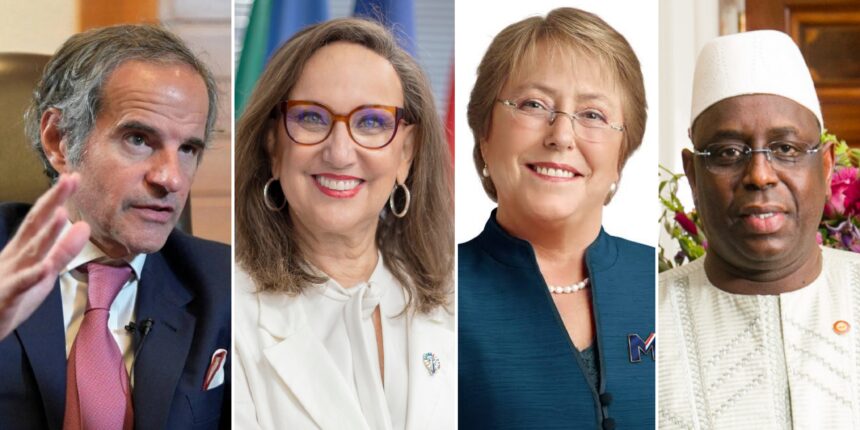
The selection of the next Secretary General of the United Nations is never a loud public contest, yet it is one of the most consequential leadership transitions in global governance. As the tenure of António Guterres moves toward its scheduled conclusion on 31 December 2026, diplomatic conversations across capitals have already begun to intensify around who will take the role starting 1 January 2027. The position carries influence over global peacekeeping, humanitarian coordination, climate diplomacy, and international conflict mediation, making it one of the most sensitive appointments in the world.
Unlike national elections, this process is not decided through public voting or campaigns. It is shaped by negotiation, consensus building, and ultimately the approval of the five permanent members of the United Nations Security Council. These five states, namely the United States, China, Russia, the United Kingdom, and France, each hold veto power that can end any candidacy regardless of global support. This structure makes the process less about popularity and more about geopolitical acceptability, strategic balance, and diplomatic trust.
The 2026 to 2027 cycle is drawing attention because it reflects multiple competing global expectations at the same time. There is pressure for regional rotation, growing calls for gender representation at the highest level, and increasing demand for leadership capable of managing global crises that range from armed conflicts to climate instability. Against this backdrop, four names have emerged as leading contenders shaping diplomatic discussions across multiple regions.
How the United Nations selection process actually works
The appointment of António Guterres provides the framework for understanding how the next selection will unfold. The process formally begins with informal consultations among Security Council members, followed by the circulation of candidate names supported by member states. Candidates are then evaluated through a series of closed door discussions where their acceptability is tested across political, strategic, and regional lines.
Once the Security Council reaches consensus on a single candidate, the recommendation is forwarded to the General Assembly for formal appointment. While the General Assembly represents all member states, its role is largely procedural because the Security Council decision determines the outcome. The veto power of the permanent five members remains the most decisive factor, as even broad international support cannot override a single rejection from any of these states.
The selection is guided by unwritten traditions rather than strict legal rules. These include regional rotation, preference for candidates with diplomatic neutrality, and an expectation that the Secretary General will not act as a representative of any single bloc. The role requires balancing competing global interests while maintaining credibility as an independent international mediator.
The geopolitical environment shaping the 2026 to 2027 race
The upcoming transition is taking place during a period of significant global instability. Conflicts across different regions, ongoing debates about reforming international institutions, and tensions among major powers all influence how the next Secretary General will be selected. The role is no longer viewed only as administrative leadership but as active crisis management in a fragmented world order.
The Security Council remains divided on several major issues, which makes consensus building more complex than in previous decades. This division directly affects candidate selection because any nominee must be acceptable to all permanent members. This requirement often eliminates highly qualified individuals if they are perceived as politically aligned with opposing blocs.
At the same time, there is growing pressure from developing regions for more representation in global leadership roles. Latin America and Africa have both expressed interest in stronger representation at the highest level of the United Nations system. These regional expectations are shaping the diplomatic positioning of candidates entering the race.
Candidate one: Michelle Bachelet and the human rights centered profile


One of the most prominent names in discussions is Michelle Bachelet whose background combines national leadership experience with extensive international service. She previously served two terms as President of Chile and later held the position of United Nations High Commissioner for Human Rights, as well as leading UN Women during its early development phase.
Her candidacy is often associated with a strong human rights oriented vision of global leadership. Supporters view her as someone who understands both political governance and humanitarian responsibility, making her a strong candidate for addressing global inequality and conflict driven crises. Her executive experience as a head of state also strengthens her credibility in managing large scale international systems.
However, her candidacy is not without political complexity. While she enjoys recognition in many diplomatic circles, she also faces varying levels of geopolitical resistance depending on regional alignments. The Security Council veto structure means that even strong international reputation does not guarantee advancement if key powers raise objections during closed negotiations.
Her status in the race is therefore considered influential but politically sensitive, with her potential success depending heavily on behind the scenes consensus building rather than public endorsement.
Candidate two: Rebeca Grynspan and the consensus builder approach


Another leading figure is Rebeca Grynspan who is widely regarded as a strong internal United Nations system candidate. Her experience spans both national government and senior positions within UN agencies, particularly in development and economic coordination.
Her leadership style is often described as diplomatic and consensus driven. Rather than representing a strong political bloc, she is viewed as someone capable of balancing competing interests within the international system. This makes her particularly attractive in situations where major powers seek a neutral figure who can maintain institutional stability without shifting geopolitical balance.
Her background in development economics and global trade positions her as a candidate focused on structural inequality, global finance reform, and sustainable development goals. These areas align closely with ongoing United Nations priorities, particularly in addressing economic disparities between regions.
Her strength lies in her acceptability rather than political dominance, which in UN selection processes can often be more important than visibility or national prominence.
Candidate three: Rafael Grossi and the crisis management profile


A different type of candidate shaping the race is Rafael Grossi who currently leads the International Atomic Energy Agency. His professional background is deeply rooted in nuclear diplomacy, international security monitoring, and crisis negotiation.
Grossi is widely viewed as a security focused candidate, particularly suited for an era defined by geopolitical tension and nuclear related concerns. His leadership at the IAEA has placed him at the center of sensitive negotiations involving nuclear oversight and international compliance issues, giving him experience in high stakes diplomatic environments.
Supporters argue that his technical expertise and crisis management background make him uniquely qualified for a world facing renewed security risks. His ability to navigate complex negotiations between conflicting states is considered one of his strongest assets.
However, his association with politically sensitive nuclear issues also introduces challenges. Certain member states may view his background as too closely tied to contentious geopolitical disputes, which could affect consensus during Security Council deliberations. Despite this, he remains one of the strongest contenders in discussions centered on global security leadership.
Candidate four: Macky Sall and the African rotation argument


A significant regional contender in the race is Macky Sall who brings extensive experience in both national leadership and continental diplomacy. His tenure as President of Senegal and his leadership role within the African Union position him as a representative of African political interests at the global level.
His candidacy is often discussed within the context of regional rotation expectations, as Africa has long been considered underrepresented in the Secretary General position. Supporters argue that his experience in managing regional cooperation and diplomatic negotiation across African states makes him a strong candidate for global leadership.
His strengths lie in political balance and regional legitimacy. However, compared to other candidates, he has less direct experience within the internal United Nations system, which may influence how some member states evaluate his suitability for the role.
His position in the race depends heavily on bloc support and the ability of African states to consolidate backing behind a single candidate in order to strengthen negotiating power within the Security Council process.
Structural forces shaping the final decision
The selection process for the next Secretary General is influenced by several structural factors that go beyond individual qualifications. One of the most significant is regional rotation, which often guides informal expectations about which part of the world should produce the next leader. In this cycle, both Latin America and Africa are considered strong contenders for representation.
Another major factor is gender representation. There is increasing global advocacy for the appointment of the first female Secretary General in United Nations history. This trend places candidates such as Michelle Bachelet and Rebeca Grynspan in a strategically favorable position.
However, the most decisive factor remains the Security Council veto system. Regardless of regional balance or global support, any candidate can be eliminated by a single permanent member. This makes the process highly dependent on private negotiations, diplomatic assurances, and geopolitical compromise rather than public campaigning.
How the real decision will likely unfold
The final stage of the selection will take place through quiet negotiations among the five permanent members of the Security Council. These discussions will focus on identifying a candidate who is acceptable to all parties rather than one who is universally preferred. This often leads to compromise selections rather than obvious front runners.
While public analysis highlights individual strengths, the actual decision will depend on which candidate can navigate geopolitical sensitivities most effectively. The ideal candidate will need to demonstrate neutrality, crisis management ability, and willingness to engage with ongoing reform debates within the United Nations system.
At this stage, the race remains open, with no guaranteed outcome. Each of the four leading candidates brings a different strength profile, and each reflects a different vision of what global leadership should look like in the coming decade.
Final reflection: A leadership decision that will shape global direction
The transition following the tenure of António Guterres represents more than a routine administrative change. It reflects shifting global expectations about leadership, diplomacy, and international cooperation in a world facing increasing fragmentation.
The candidacies of Michelle Bachelet, Rebeca Grynspan, Rafael Grossi, and Macky Sall represent four distinct visions of global governance. Each reflects different priorities including human rights, economic development, security management, and regional representation.
As 2026 progresses toward the final selection, the outcome will depend less on public visibility and more on diplomatic alignment behind closed doors. The world may not see the negotiations, but the decision reached will shape global governance for years to come.