- Operational activities of anti-graft agency, EFCC commenced
- Funmilayo Ransome-Kuti’s death
According to George Santayana, history is nothing but assisted and recorded memory.
There is a common consensus that those who acknowledge their past failures, triumphs, and shortcomings rather than seeking to ignore them are more likely to succeed.
As a culture of knowledge and insight, we must share our tales and reflect on both good and bad times.
In an effort to raise the level of awareness for enlightenment and educational purposes, WITHIN NIGERIA hereby highlights two notable events that occurred on April 13 in the history of this country, Nigeria.
Operational activities of anti-graft agency, EFCC commenced
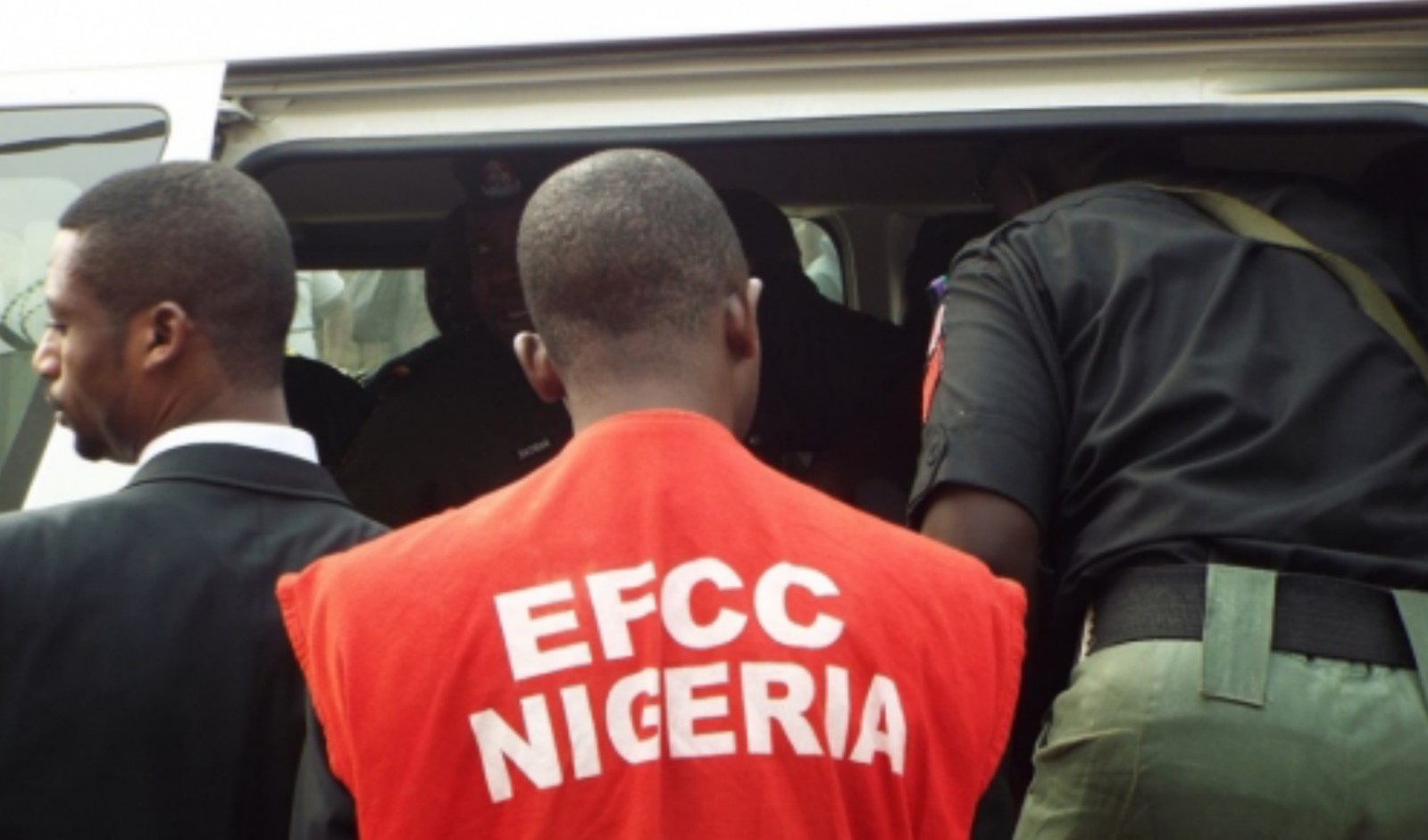
On this day, April 13 in 2003, the Economic and Financial Crimes Commission (EFCC) commenced operational activities following the appointment and confirmation of the pioneer Executive Chairman, Mallam Nuhu Ribadu and other administrative officers.
The Economic and Financial Crimes Commission, EFCC, was established by an Act of the National Assembly on 12th December, 2002 by the administration of President Olusegun Obasanjo.
The establishment of the Commission was partly in response to pressure from the Financial Action Task Force (FATF) on Money Laundering, also known by its French name, Grouped’actionfinancière (GAFI).
Information on the anti-graft agency’s website disclosed thus;
GAFI is an intergovernmental organisation founded in 1989 on the initiative of the G7 (Group of Seven), an inter-governmental political forum consisting of Canada, France, Germany, Italy, Japan, the United Kingdom and the United States of America to develop policies to combat money laundering.
FATF had ranked Nigeria as one of the 23 countries that were non-cooperative in the combined efforts to fight money laundering globally. Due to identified inadequacies in the 2002 Establishment Act, the national Assembly repealed it and re-enacted the 2004 Establishment Act was signed into law on 4th June 2004 by President Obasanjo.
Mallam Ribadu, the pioneer chairman of the EFCC, was handed the monumental task to midwife the agency. Within a few months of its emergence on the scene, the Commission had forced itself into public consciousness having taken out of circulation all the 419 kingpins (419 in Nigerian parlance, means offenders whose crimes are contrary to Section 419 of the 1999 Constitution of the Federal Republic of Nigeria (as amended). These where people hitherto considered untouchable. The Fred Ajuduas, the Emmanuel Nwudes, the Maurice Ibekwes, the Ade Bendels, the AmakaAnajembas and the NzeribeOkolis among many others were all arrested and prosecuted.
During his term, outside of the headquarters located in Abuja, the Lagos, Port Harcourt, Enugu, Kano and Gombe Commands were established each representing the geo-political zones of the country, for ease of operation.
Funmilayo Ransome-Kuti’s death
On this day, April 13 in 1978, Chief Funmilayo Ransome-Kuti, Nigerian educator, political campaigner and women rights activist died.
According to details culled from Wikipedia, she was hospitalized which lapsed into a coma before she died as a result of injuries she allegedly sustained when military men attacked his son’s popular highlife artiste, Fela Anikulapo Kuti’s home.
Funmilayo Anikulapo-Kuti often visited her son at his compound, and she was there on 18 February 1977 when close to 1,000 armed soldiers surrounded and stormed the property. As soon as the soldiers broke inside they began destroying property and assaulting the residents.
Fela and Bekolari were beaten and severely injured. Anikulapo-Kuti was thrown from a second-floor window.
Anikulapo-Kuti’s remains were interred in Abeokuta in the same vault as her husband. Her funeral services were attended by thousands, and many market women and traders shut down shops and markets across the city to mark her death. Major Nigerian news outlets published eulogies, naming the activist “a progressive revolutionary” and “a Pan-African visionary”.
On the one-year anniversary of Anikulapo-Kuti’s death, Fela took a coffin and travelled nearly 20 kilometres to Dodan Barracks in Lagos (then Nigeria’s Supreme Military Headquarters), leaving the coffin at the gate in an attempt to shame the government. The invasion, her death, and the movement of the coffin is detailed in his song “Coffin for Head of State”