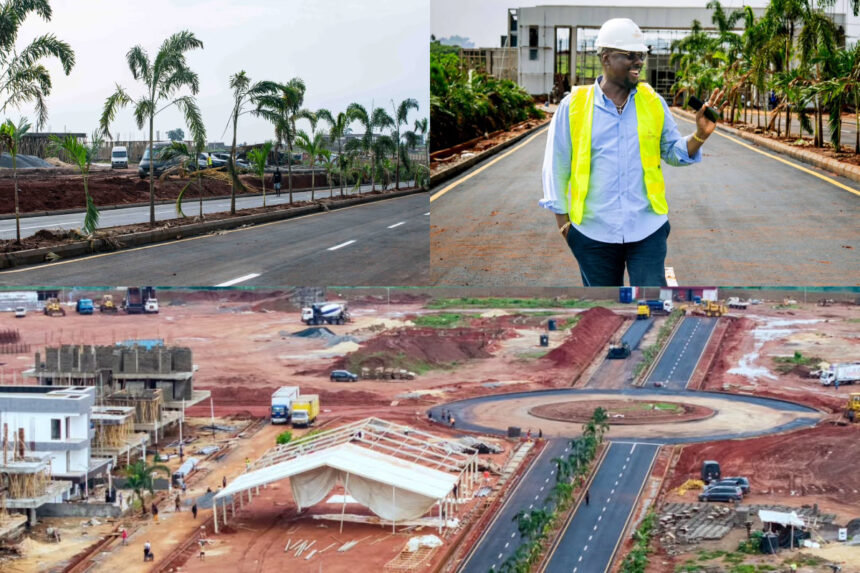
There is a hill in Asaba where something big is happening. Not big in a vague, press-release sense. Big in the way cranes, concrete, and real money make something undeniably real. That place is Cubana Millennium City and if you follow Nigerian real estate, you have probably heard the name by now.
If you have not, here is the full picture: where it is, what it offers, who is behind it, and what it means for Asaba and the broader South-South real estate market.
Who Is Obi Cubana — and Why Does His Name Matter Here?
Chief Obinna Iyiegbu, known everywhere as Obi Cubana, is a businessman from Oba, Anambra State, who built a small fortune in the hospitality and nightlife business before becoming one of the most recognisable entrepreneurs in Nigeria. The Cubana Group, which runs hotels, lounges, and event spaces across the country, made him a celebrity long before real estate entered the picture.
What he understood early, and many investors are only now catching on to, is that a strong personal brand in Nigeria is a commercial asset. When he announced Cubana Millennium City, people paid attention not just because of the project’s specs but because his name was attached. In a market where real estate scams have made buyers cautious, the Obi Cubana brand acts, as one analyst put it, as a “social guarantee”, a shorthand for credibility that marketing money alone cannot buy.
That is the business logic behind why this project moved fast. Not just due to construction speed but because trust existed before a single block was laid.


What Is Cubana Millennium City Asaba?
At its core, Cubana Millennium City (CMC) is a master-planned, mixed-use luxury development on over 66 hectares of hilltop land in Asaba, Delta State. The site is along the Benin–Onitsha Expressway at Witchtech Junction, a location that matters more than it might seem.
Obi Cubana described the vision simply: he wants to build “the Banana Island of the South-South and South-East.” That comparison is intentional. Banana Island in Lagos is the benchmark for ultra-premium residential living in Nigeria. Replicating that standard outside Lagos, in a city more accessible, less congested, and politically and physically safer for many Igbo and South-South residents, is not just a real estate pitch. It is a statement about where wealth is moving.
The development is not purely residential. It combines luxury homes, commercial office space, hospitality facilities, entertainment zones, retail outlets, and green areas into one integrated ecosystem. Think less “estate” and more “city within a city.”
Location: Why Asaba, and Why This Spot
Asaba has quietly grown into one of the most investable cities in southern Nigeria for several years. The completion of the Second Niger Bridge changed the geography dramatically. What was once a bottleneck between the South-East and South-South is now a smooth corridor.
Cubana Millennium City sits close to all of it. The estate is five minutes from Asaba International Airport. It sits along the Benin–Asaba–Onitsha Expressway, which feeds into major commercial routes extending through Oba and Okija toward Owerri and Port Harcourt. The Second Niger Bridge is accessible from the same road.
That connectivity is not incidental. It is why the project makes economic sense. Businesses, families, and investors who want to be at the centre of the Eastern economic corridor without dealing with Lagos traffic, land prices, or security concerns now have a compelling alternative.
Delta State Governor Sheriff Oborevwori, who attended the official groundbreaking and later the unveiling of the Signature Home, called the location a natural fit for private-sector-led development, noting that the state had deliberately maintained a stable investment environment to attract projects like this.
What Is Being Built: The Features and Property Types
The development includes a range of residential options:
- Detached Luxury Villas — available in two configurations, Type A and Type B
- Detached 5-Bedroom Duplexes
- Semi-Detached Duplexes
- 4-Bedroom Terrace Duplexes
- Apartment Blocks with elevators
Beyond the residential units, the master plan includes smart-city infrastructure, green spaces, centralised security with 24-hour surveillance and controlled access, smart home automation, parking, commercial districts, and entertainment clusters.
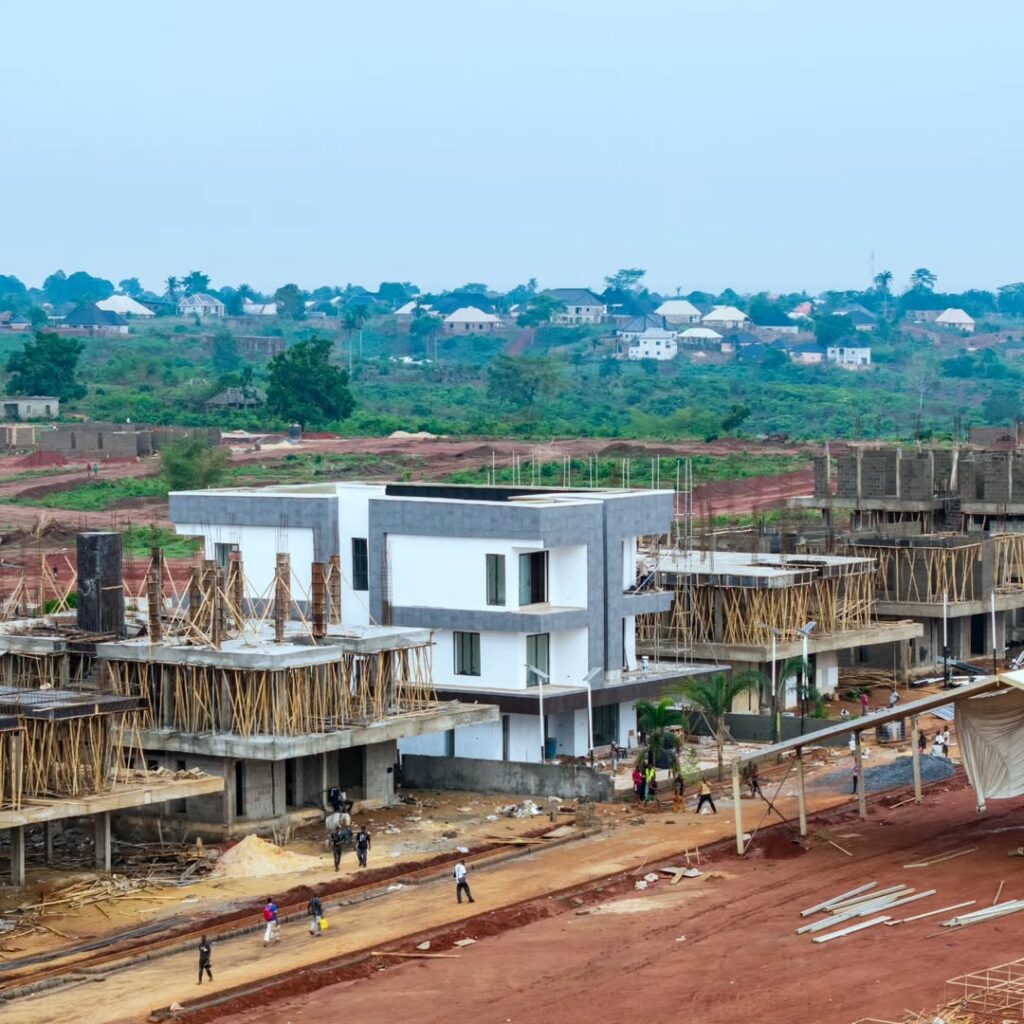
The Signature Home, unveiled on April 12, 2026, as part of Obi Cubana’s 51st birthday celebrations, was built to showcase to buyers and investors what the finished product would look like. It features contemporary smart fittings, premium architectural detailing, and a level of finishing that Obi Cubana wants to set as the tone for the rest of the development. “The Signature Home represents more than just a structure; it is a statement of intent,” he said at the unveiling, attended by government officials, traditional rulers, and real estate investors from across the country.
The groundbreaking ceremony was held in December 2025. Construction has moved quickly since, with Obi Cubana committing to first residents moving in by summer 2026 and full completion before December 2026.
The Investment Case
The honest investment case is this: Asaba is underpriced relative to where it is heading. Land and property values have been rising but have not yet reached the premium levels of Lagos or Abuja. That gap is closing.
CMC is positioned to capture the appreciation curve. Buyers who enter early, before full completion and occupancy, typically see the strongest returns. The combination of location, branding, and infrastructure makes it a project that attracts other value. Top-tier banks, retail brands, and hospitality operators tend to follow where serious money goes. That multiplier effect is already part of the calculus for committed investors.
For diaspora buyers, the project addresses a real anxiety. Igbo Nigerians and South-South indigenes who have historically bought property in Lagos are increasingly questioning whether that investment is as secure as it once seemed. CMC in Asaba offers an alternative: a premium address on home soil with international-standard infrastructure in a state that has been stable and actively courting private investment.
Reactions from Nigerians online have been candid on both sides. Enthusiasts highlight the job creation potential and the confidence a project of this scale sends to the region. Critics question whether luxury housing is what Asaba needs most or if the focus on high-end buyers bypasses lower-income residents who need affordable options. Both points are fair. What is beyond debate is that the project is real, construction is visible and ongoing, and the financial commitment behind it is substantial.
What the Government Has Said
Delta State, under Governor Oborevwori, has been notably supportive. Speaking at the Signature Home unveiling in April 2026, the governor said: “This development is not just about housing, it is about creating a new economic ecosystem.” He also tied the investment directly to the state’s deliberate work to maintain security and attract business.
That state-level backing matters. Private developers in Nigeria often face friction from government agencies and bureaucratic delays that can kill timelines. The public support Cubana Millennium City has received, from groundbreaking to Signature Home unveiling, both attended by the governor, suggests alignment that reduces some execution risk common in projects of this scale.
What Makes This Different From Other Luxury Estates in Nigeria
The honest answer is a few things, and not all are architectural.
First, the brand. CMC carries the weight of the Cubana name, which in Nigeria has a particular cultural clout, aspirational, high-profile, and associated with success at scale. That branding drives demand even before a single buyer visits the site.
Second, the location strategy. Most premium developments in Nigeria cluster around Lagos or Abuja. Building a Banana Island equivalent in Asaba is a direct bet that economic weight is dispersing south-eastward, and that early movers in Asaba get the returns that early movers in Lagos got two decades ago.
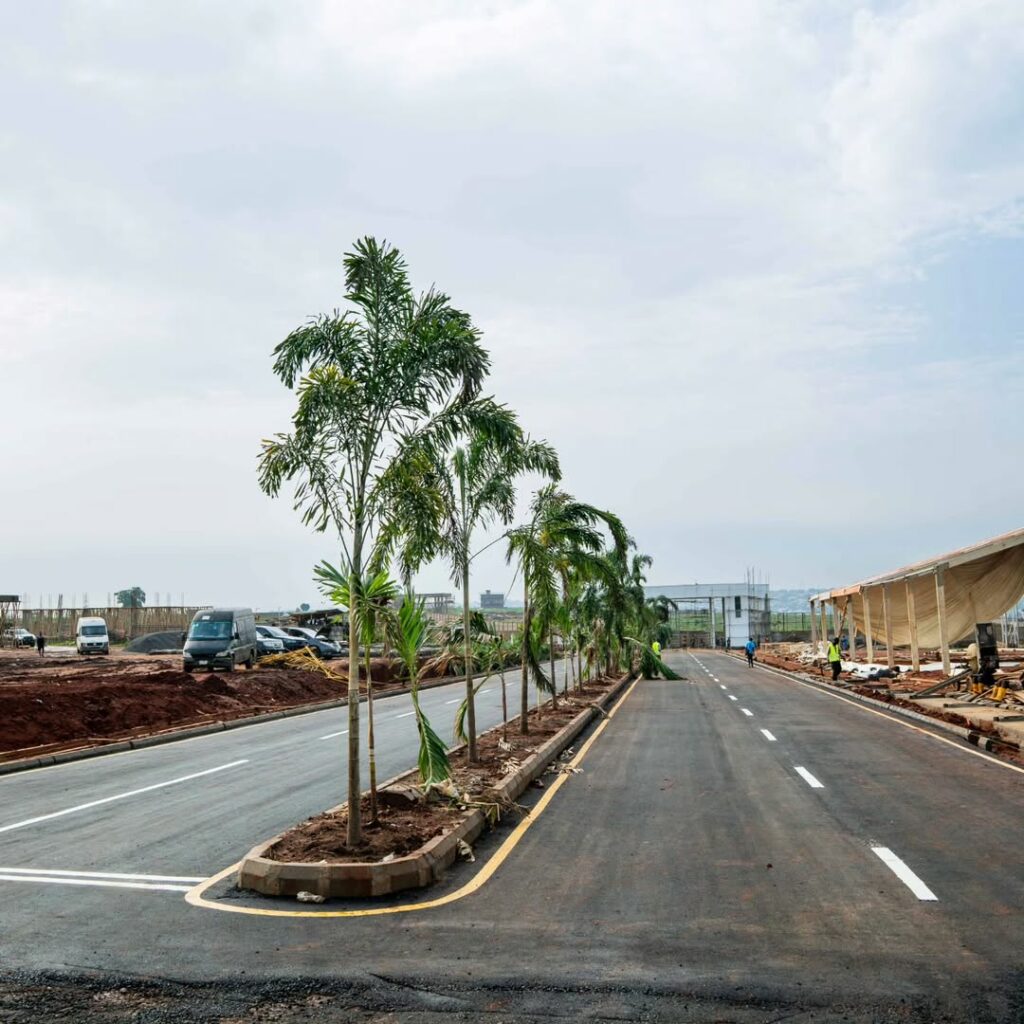
Third, the completion timeline. The commitment to a December 2026 deadline, backed by visible construction, sets CMC apart from developments that linger in presales for years. Obi Cubana has publicly staked his reputation on the timeline, and reputation for him is a financial asset he cannot afford to damage.
The Bigger Picture
Cubana Millennium City is one data point in a larger story. Asaba’s real estate market is changing. The Second Niger Bridge, the Asaba Ring Road Bypass, the airport’s growing traffic, and now a flagship luxury development all compound. The city is attracting capital and attention that tend to drive sustained appreciation over time.
Whether CMC delivers on every promise remains to be seen. Construction is ongoing. Full completion is months away. But the groundwork, literally and figuratively, is in place.
For anyone watching Nigerian real estate, Asaba is the city to watch. And within Asaba, Cubana Millennium City is the development that put it on the map for buyers and investors who were previously looking no further than Lagos Island.