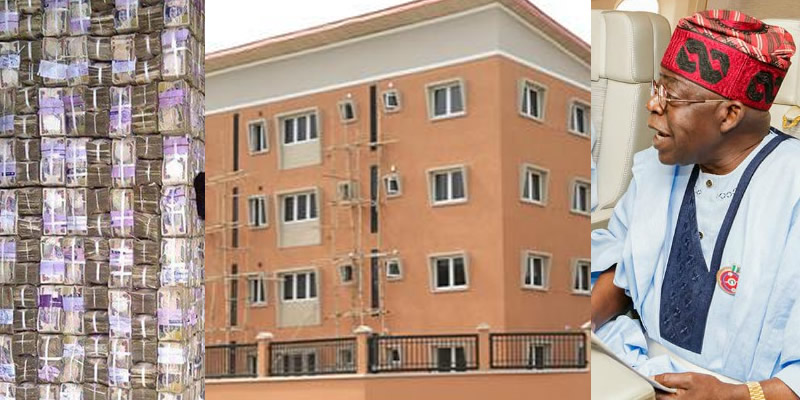
On March 31, 2026 the Senate approved President Bola Tinubu’s request to secure fresh external loans totalling $6 billion, aimed at plugging fiscal gaps and financing key infrastructure projects.
WITHIN NIGERIA gathered that the approval followed the presentation and consideration of a report by the Chairman of the Senate Committee on Local and Foreign Debts, Senator Aliyu Wamakko an APC senator from Sokoto North.
It was also gathered the decision came just hours after the President formally wrote to the Senate seeking legislative backing for the facilities, underscoring the Executive’s push to secure funding for priority sectors.
In a letter addressed to the President of the Senate, Godswill Akpabio, and read during plenary, Tinubu sought approval to borrow $5 billion from Abu Dhabi Bank to support budget deficit financing and meet existing debt obligations.

In a separate communication, the President also requested approval to obtain a $1 billion loan facility from UK Export Finance through Citibank in London to fund the rehabilitation of critical port infrastructure.
Tinubu noted that the projects—covering the Lagos Port Complex and Tin Can Island Port—are designed to tackle longstanding operational challenges and reposition Nigeria’s maritime sector.
According to the President, the projects aim to address critical deficiencies, improve efficiency, enhance safety standards, support non-oil trade diversification, and position Nigeria as a trade hub.
Following the reading of the requests, Akpabio referred both letters to the Senate Committee on Local and Foreign Debts, directing the panel to expedite consideration and report back promptly—a directive that culminated in Tuesday’s approval.
The latest borrowing request comes amid the Federal Government’s continued reliance on a mix of domestic and external loans to finance budget deficits and critical infrastructure.
Just four months ago, the National Assembly approved Tinubu’s request to raise N1.15tn from the domestic debt market to fund the 2025 budget deficit, effectively completing the government’s financing plan for the year.
Both chambers endorsed the borrowing after considering reports from their respective committees on local and foreign debts.
At the Senate, the approval followed the adoption of a report presented by Wamakko’s committee, which highlighted key provisions of the 2025 Appropriation Act.
The panel noted that the 2025 budget provides for a total expenditure of N59.99tn—an increase of N5.25tn from the initial N54.74tn proposed by the Executive—highlighting the widening fiscal gap and the government’s reliance on borrowing to bridge the deficit.
However, less than one month after that loan approval, President Bola Tinubu again wrote to the Senate, seeking approval to borrow a fresh $516,333,070 loan.
In a letter to the President of the Senate, Senator Godswill Akpabio, which was read on Thursday during plenary, the loan will be obtained from Deutsche Bank, and it is aimed at financing the already approved borrowing plan for it which is Sokoto-Badagry 1,000 Super Highway.
Our reporter equally gathered that the President Tinubu in the letter is asking for an expeditious passage.
Akpabio referred the letter to the Committee on Local and Foreign Debts for legislative action and a report back in one week.
Nigeria Debt Profile

As of April 2026, Nigeria’s total public debt has reached N159.28 trillion ($110.97 billion) by the end of 2025, according to Debt Management Office (DMO) data.
In any case, Nigeria increasing debt profile is said to be driven by high domestic borrowing, this debt averages approximately ₦724,000 per citizen.
It was also gathered that debt servicing obligations are unsustainable, with ₦15.81 trillion projected for 2026, creating a severe fiscal emergency.
Atiku, others tackle Tinubu on orrowing
Former Vice-President Atiku Abubakar has raised serious concerns about Bola Ahmed Tinubu’s request for Senate approval of a new $516 million loan to help fund parts of the Sokoto–Badagry Superhighway project.
In a statement from his Senior Special Assistant on Public Communication, Phrank Shaibu, Atiku pointed out that building infrastructure, especially one that connects the Northwest and Southwest is both important and beneficial.
He believes no region in Nigeria should be overlooked as the country strives for unity and economic growth. However, good intentions cannot justify poor financial decisions.
“At a time when Nigeria is already struggling with excessive debt, turning to another foreign loan, without clear terms, a thorough cost-benefit analysis, and a reliable repayment plan raises serious concerns about responsibility and accountability,” Atiku said.
He stressed that this issue is not just about one region, nor should it be seen that way.
“What Nigerians want is not only ambitious projects but also responsible funding. Development should not become a way to create deeper debt burdens that future generations will have to pay off,” he added.
The former Vice President emphasized that while building strategic infrastructure can create economic opportunities, it should be done with careful financial planning, clear priorities, and transparency.
“Borrowing should never replace creativity in governance or effective resource management.”
Atiku expressed serious worries about reports stating that the project was given to Hitech Construction Company Limited without a fair and open bidding process.
He called this a troubling continuation of issues seen before with the Lagos-Calabar Coastal Highway.
“Nigerians remember the problems linked to the Lagos-Calabar Coastal Highway, where the proper procedures and competitive bidding were heavily criticized. It is very concerning that a similar unclear method seems to be happening again, this time using borrowed funds,” Atiku cautioned.
He questioned both the reasoning and ethics behind borrowing public money for projects supposedly awarded to friends without following proper procedures.
“What kind of leadership takes out loans in the name of the Nigerian people just to funnel that money into contracts given without transparency to friends and insiders? This isn’t true governance; it’s a betrayal of public trust,” he remarked.
He stressed that the Sokoto–Badagry project should not turn into another case of favoritism or insider deals.
“Public infrastructure should not be a private market for friends and those with connections. Every kobo borrowed on behalf of the Nigerian people must come with transparency, accountability, and strict following of procurement laws,” he said.
He urged the National Assembly to carefully examine the loan request, ensuring that the terms benefit the Nigerian people and that the project provides clear economic value.
“Nigeria needs to build, but we should not borrow carelessly. Progress based on secrecy and piling up debt is not true progress or leadership, it only delays a crisis,” Atiku concluded.
We are heading to disaster–Obi
As the criticism continues to grow, the former presidential candidate of the Labour Party, Peter Obi, has criticised the administration of President Bola Tinubu over Nigeria’s rising debt profile, warning that the country is heading to disaster.
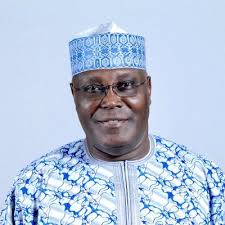
The African Democratic Congress (ADC) chieftain made the remarks recently at the party’s national convention in Abuja.
Obi explained that the removal of the petrol subsidy by the previous administration was intended to reduce borrowing and redirect funds towards national development.
He argued that the current government has increased borrowing despite maintaining the subsidy removal policy.
In his words, “when this government came into being, they removed subsidy on petroleum. The reason was to stop borrowing to service it and use the resources to develop the country. But today, despite that removal, the government has continued borrowing.
“The previous administration left a debt of about ₦87 trillion. Today, we are close to ₦200 trillion. That means they have borrowed over 130 per cent more, despite removing subsidy. At the same time, contractors are being owed, and no projects in the 2025 budget have been funded. We have huge debt and have borrowed more on everything. We are heading to disaster,” he said.
He stated that the figures were intended to highlight what he described as the country’s economic drift, urging Nigerians to take collective responsibility.
“The reason I used these figures is to show that we are drifting. We all have to work hard and do whatever is possible. Anarchy consumes everybody. We must make sacrifices for the sake of our children. If we do not act, what is happening now will have consequences for us and future generations,” he stated.
According to him, “we need to work as a united Nigeria. The country is so divided, and unity is important. The present government has ensured that we remain more divided. If we allow this to continue, it will get worse,” Obi said.
Sanusi questions the borrowings
However, in his assessment of Nigeria’s current fiscal trajectory, the Emir of Kano, Muhammadu Sanusi II, has questioned the Federal Government’s continued reliance on borrowing despite the removal of the petrol subsidy.
In an interview with newsmen on Friday, the former Governor of the Central Bank of Nigeria, stated that while the removal of fuel subsidy and the liberalisation of the exchange rate were necessary, the timing and lack of fiscal discipline are threatening to erase the potential benefits.
In his words, “I have always said the subsidy regime was unsustainable. We cannot continue supporting foreign refineries. We’re an oil-producing country. Keeping refineries open abroad while we’re not doing our own,” Sanusi said.
He further stressed that “today, we have a situation where we have our own domestic refinery. We’re not importing petroleum products. We’re even exporting to Europe, and this is very good for the economy,” he added.
He said, “Artificial exchange rates, especially when you’re printing money, cannot work. There was going to be a devaluation.
“For me, removing subsidy or liberalising exchange rates, these are good interventions. Were they done at the right time? Those are certain questions. Were there other things that should be done that have not been done? These are other issues.”
He argued that liberalising the exchange rate in a “loose monetary environment” contributed to the currency’s rapid depreciation.
“It’s not enough to say, oh, they removed subsidy. You had to. When you get to a point where 100% of your revenue goes into debt service, you cannot continue. Where is the money going to come from?
“However, if you decide to remove subsidy and liberalise exchange rates in an environment of very loose monetary conditions, before you have tightened money supply, the Naira drops to a bottomless pit. That was a timing issue.”
Sanusi went further to challenge the Federal Government’s continued borrowing despite eliminating subsidy payments.
“We’ve removed the subsidy. We’re now spending it. What we should not see is fiscal consolidation. You cannot remove wastages and continue borrowing. I’ve said this before. You need to see the benefits.