The morning of April 29 to 30 2026 began like any other along one of the most active travel corridors linking Kwara State to the northern edge of Oyo State, with buses moving steadily, traders returning from markets, and heavy duty trucks stretching the road under the weight of national commerce. Nothing about the atmosphere suggested that a major structural failure was about to unfold at a critical crossing point near the Ilorin South axis, a structure many commuters had crossed countless times without a second thought. Yet beneath that routine movement, pressure had been building silently on a bridge already known among locals for years of strain, patchwork repairs, and growing concern over its endurance.
What followed that day was not just a sudden infrastructure failure but a disruption that instantly reshaped travel, trade, and safety conversations across two major states in Nigeria. The story that emerged in the hours and days that followed was layered with confusion, urgent rescue efforts, and unanswered questions about how a key transport link reached such a breaking point at the exact moment it mattered most.
As details gradually surfaced, it became clear that this incident would not be understood through a single explanation but through a sequence of events, human decisions, structural limitations, and the realities of an overburdened transport system that many had long warned about.
Bridge Location Strategic Importance
The bridge at the center of this incident sits along a vital corridor connecting Ilorin axis in Kwara State to communities stretching toward the Oke Ogun region in Oyo State. This route is not a minor feeder road but a heavily used passage for agricultural distribution, passenger travel, and long distance freight movement across the western region of Nigeria. Towns such as Igbeti, Igboho, Kisi, and Saki rely heavily on this connection for daily economic survival, with produce moving outward and manufactured goods moving inward through the same stretch. For many travelers, the bridge was more than a physical structure, it represented continuity between rural farming communities and urban commercial hubs.
Over time, increased traffic volume turned what was once a manageable crossing into a heavily stressed point of infrastructure, especially as heavy duty trucks became more frequent due to expanding trade demands. Local users had often described visible vibrations and audible stress sounds when large vehicles passed, observations that, while informal, reflected underlying structural pressure that would later become central to understanding the collapse.
Sequence of Events Leading Collapse
On the morning of April 29 2026, movement across the bridge continued under normal conditions until a heavy duty truck approached the structure carrying what multiple early accounts described as a significantly overloaded cargo. Witnesses along the route recalled that the vehicle moved at a steady pace before entering the bridge, with no immediate indication of mechanical failure or external disturbance. As the truck advanced onto the central section, a sudden structural reaction occurred beneath its weight, followed by an abrupt failure that caused a portion of the bridge to give way. The collapse happened within moments, leaving vehicles behind the truck stranded and others approaching the scene forced to halt unexpectedly.
The timing created confusion among motorists who initially struggled to understand the scale of what had just occurred, with darkness further complicating visibility and immediate response. By the early hours of April 30 2026, reports had begun circulating through local channels describing a bridge section that had completely caved in, effectively cutting off one of the most important travel arteries between the two states.
Immediate Human Response at Scene
As news of the collapse spread, residents and motorists nearby quickly converged at the scene before formal emergency teams fully arrived. The initial response was driven largely by ordinary commuters who attempted to assist injured individuals trapped in or near affected vehicles. Darkness and unstable ground conditions made early rescue efforts difficult, yet individuals used vehicle headlights and mobile phone flashlights to navigate the area and reach those in need. Within a short time, emergency responders and transport officials began to coordinate evacuation efforts, prioritizing injured passengers and ensuring they were transported to medical facilities in Ilorin.
The scene was described by witnesses as tense and disorganized at first, with conflicting information about the safety of surrounding sections of the bridge. Despite these challenges, coordinated efforts gradually stabilized the situation, allowing structured rescue operations to take over from spontaneous civilian intervention.
Casualties Medical Response Update
Medical reports confirmed that several individuals sustained injuries ranging from moderate to severe, with victims transported primarily to University of Ilorin Teaching Hospital and Kwara State University Teaching Hospital located within the state capital region. Hospital sources indicated that patients arrived in waves as rescue teams extracted them from the scene, with initial treatment focused on stabilizing trauma related injuries. As of the most consistent reports available in the immediate aftermath, no official mass fatality figure had been confirmed by authorities, although investigations and assessments were still ongoing.
The absence of a confirmed death toll did not reduce the seriousness of the incident, as medical personnel continued to monitor patients whose conditions required extended observation. Families of affected commuters gathered at hospital premises throughout the day following the collapse, seeking updates while waiting for identification and discharge information.
Transport Paralysis: Kwara to Oyo Travelers
The collapse instantly disrupted movement between Kwara State and Oyo State, effectively cutting off one of the busiest inter state travel routes in the region. Commuters who had planned journeys found themselves stranded on both sides of the bridge, while commercial transport operators were forced to redirect or suspend services entirely. For many travelers, this meant unexpected delays extending into several hours or even days depending on their destination. Routes that typically carried daily flows of passengers and goods became inaccessible, leading to congestion on alternative paths that were not designed to handle such sudden traffic volume.
Local transport unions attempted to organize rerouting systems, but the lack of immediate infrastructure alternatives created bottlenecks that affected both short distance and long distance travel. The disruption highlighted how dependent surrounding communities had become on a single structural link, and how quickly mobility could collapse when that link failed.
Economic Disruption – Agriculture Trade Flow
The affected corridor serves as a major agricultural distribution channel, linking farming communities in Oyo North with markets in Ilorin and beyond. Following the collapse, traders reported immediate increases in transportation costs as goods had to be diverted through longer and less efficient routes. Perishable goods faced heightened risk of spoilage due to extended travel time, while bulk agricultural products experienced delays in reaching buyers. Market prices in some locations began to reflect these disruptions within days, as supply chains adjusted to reduced flow efficiency.
Farmers who depend on timely transportation to urban centers experienced uncertainty regarding delivery schedules, which in turn affected income stability. The broader economic impact extended beyond immediate trade losses, raising concerns about how long the disruption would persist and what alternative infrastructure support would be mobilized to restore normal commercial activity.
Government Intervention Response Timeline
Following the incident, state and federal authorities initiated emergency response protocols aimed at restoring safety and mobility in the affected area. Traffic management teams were deployed to redirect vehicles away from the collapsed section while engineers conducted initial structural assessments. Temporary palliative measures were introduced on surrounding routes to accommodate diverted traffic flow, although these measures were limited in capacity. Authorities also announced plans to fast track ongoing bridge construction projects in nearby locations to provide alternative crossing points.
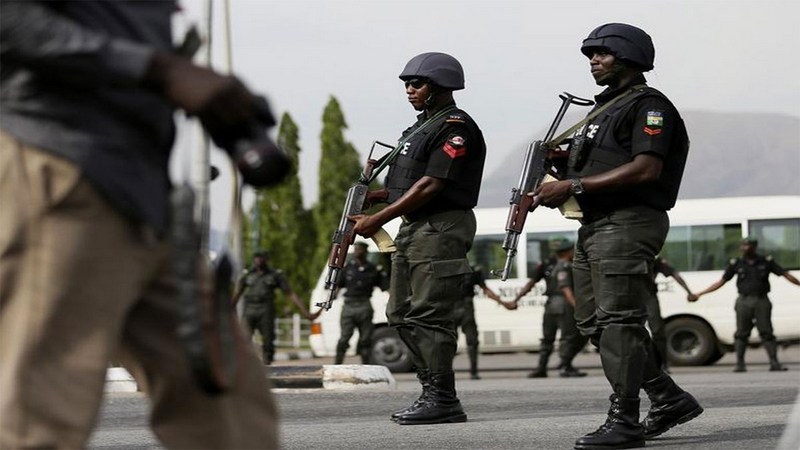
Coordination between transport agencies and security personnel was established to prevent unauthorized movement near the collapsed structure, ensuring public safety during the early stages of recovery operations. The response emphasized both immediate containment and longer term reconstruction planning, although timelines for full restoration remained uncertain in the initial phase.
Structural Failure Technical Assessment
Preliminary engineering observations pointed toward a combination of excessive load pressure and long term structural fatigue as contributing factors to the collapse. The bridge, identified as an older iron based structure, had undergone repeated exposure to heavy traffic beyond its original design capacity. Heavy duty trucks passing through the corridor frequently exceeded recommended weight limits, placing continuous stress on foundational supports. Over time, this repeated pressure likely weakened critical sections, reducing the bridge’s ability to withstand sudden heavy impact loads.
The incident involving the truck on April 29, 2026 appears to have acted as the immediate trigger that pushed an already weakened structure beyond its limit. Engineers reviewing the site emphasized the importance of load regulation enforcement and timely infrastructure renewal to prevent similar failures in other high traffic corridors.
Eyewitness Accounts
Eyewitness accounts from commuters and local residents added a deeply human dimension to the incident, describing moments of confusion, fear, and urgent reaction as the collapse unfolded. Several individuals reported hearing a loud structural sound moments before the bridge section gave way, followed by sudden movement that forced vehicles to stop abruptly. Those closest to the point of collapse described efforts to assist injured passengers despite limited visibility and unstable footing.
Some commuters who narrowly avoided crossing at the exact moment of failure later described their experience as narrowly escaping a potentially life threatening situation. These personal accounts underscored the unpredictability of infrastructure failure and the immediate human vulnerability that follows such events.
Wider Infrastructure Concerns
Beyond the immediate location, the Moro bridge collapse reignited broader discussions about infrastructure resilience across Nigeria’s transport network. Many observers pointed to the increasing pressure placed on aging bridges and roads due to rising freight demand and insufficient maintenance cycles. The incident became a reference point in conversations about regulatory enforcement for truck loading, infrastructure investment priorities, and the sustainability of existing transport corridors.
It also highlighted the interconnected nature of regional economies, where a single structural failure can produce ripple effects across multiple states. The situation served as a reminder of how essential infrastructure reliability is to both economic stability and public safety.
Recovery Efforts Rehabilitation Outlook
As emergency response transitioned into recovery planning, attention shifted toward rehabilitation of the affected corridor and restoration of safe travel conditions. Engineers began detailed assessments to determine whether repair or complete reconstruction would be required for the damaged section. Authorities also evaluated the performance of alternative routes to manage long term traffic redistribution.
While temporary measures provided short term relief, long term solutions were expected to involve significant investment in modern bridge construction capable of handling increased freight demands. The recovery phase was positioned not only as a restoration effort but also as an opportunity to reassess infrastructure standards across similar transport corridors in the region.
Concluding Lens
The Moro bridge collapse of April 29 to 30 2026 stands as a defining moment in the ongoing conversation about infrastructure safety and transport reliability between Kwara State and Oyo State.. What began as a routine night of movement quickly turned into a major disruption affecting commuters, traders, and entire communities dependent on a single critical link.
While injuries were confirmed and emergency responses activated swiftly, the deeper impact extended into economic disruption, mobility paralysis, and renewed scrutiny of structural maintenance practices. The incident continues to serve as a reminder that infrastructure is not merely a physical construct but a lifeline whose stability directly shapes daily life, commerce, and regional connection.