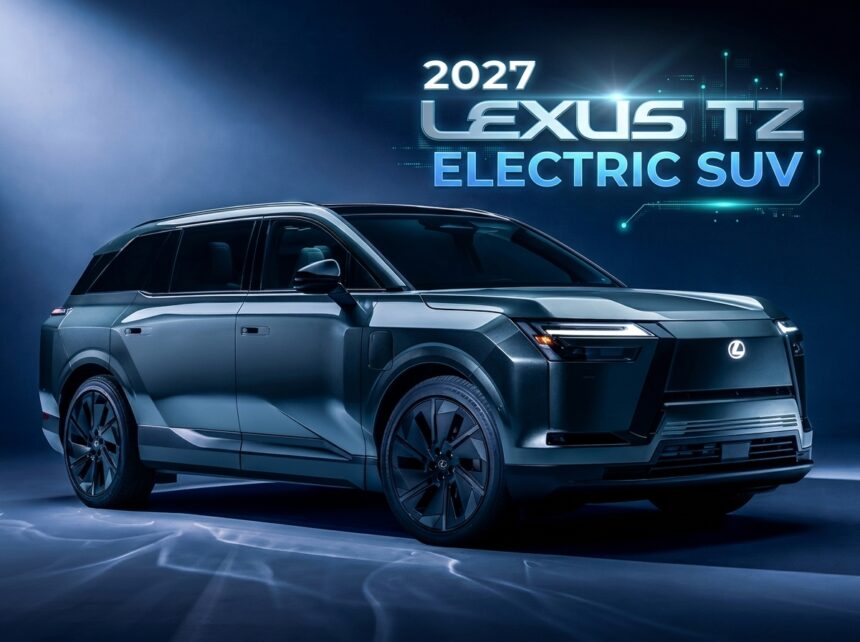
Lexus has spent years catching heat for lagging behind on electric vehicles. Fair criticism, honestly, while rivals like BMW, Mercedes, and Cadillac were rolling out EV after EV, the Japanese luxury brand was still leaning hard on its hybrid heritage. That changes with the 2027 Lexus TZ.
Officially revealed on May 6, 2026, the TZ is Lexus’s first three-row, all-electric SUV, and it doesn’t look like they’ve rushed it. Two battery options, standard all-wheel drive, a cabin that borrows design cues from the brand’s best sedans, and one of the more unusual feature additions in recent memory: a simulated V10 soundtrack straight from the Lexus LFA. There’s a lot to cover.
What Is the 2027 Lexus TZ?
The TZ slots above the two-row RZ in the Lexus lineup and fill a gap the brand has been slowly walking toward since debuting EV concept sketches back in 2023. It’s the luxury cousin of the Toyota Highlander EV (and, oddly enough, the Subaru Getaway), all three sitting on Toyota’s TNGA platform with shared battery technology but distinctly different builds.
Calling it a badge-engineered Highlander would be lazy. Lexus stretched the body to 200.8 inches overall, two inches longer than the Highlander, and gave the TZ a completely different exterior identity: a closed spindle grille, twin-L LED signatures front and rear, a blacked-out C-pillar that makes the roofline look like it’s floating, and your choice of 20- or 22-inch wheels depending on trim. The profile has an almost geometric quality to it, blocky in a way that feels deliberate rather than accidental.


Unlike the Highlander, which is available with a single front motor, the TZ comes exclusively with dual-motor all-wheel drive. That matters for both performance and brand positioning, this is a Lexus, and Lexus doesn’t do front-wheel-drive-only anything in this segment.
2027 Lexus TZ: Full Specs
Here’s the full picture on powertrain and hardware:
| Spec | Details |
|---|---|
| Powertrain | Dual-motor electric, DIRECT4 AWD |
| Output | 402 hp / 369 lb-ft torque |
| 0–62 mph | 5.4 seconds |
| Battery Options | 76.96 kWh or 95.82 kWh |
| Max Range | ~300 miles (larger pack, EPA est.) |
| DC Fast Charging | 150 kW (10–80% in ~35 minutes) |
| Charge Port | NACS (Tesla Supercharger compatible) |
| Length | 200.8 inches |
| Wheelbase | 120.1 inches |
| Towing Capacity | 3,500 lbs |
| Seating | 6 (captain’s chairs in row two) |
| Cargo (behind row 3) | 13.8 cubic feet |
| Rear-Wheel Steering | Up to 4 degrees (optional) |
The 402-horsepower figure makes the TZ one of the more potent three-row EVs in its price range. For context, the Hyundai IONIQ 9 and Volvo EX90 sit in similar territory, though the Lexus edges them out slightly on acceleration. The 5.4-second 0–62 time isn’t quick enough to turn heads at a track day, but it’s plenty fast for a six-seat family hauler.
The DIRECT4 all-wheel-drive system is worth noting, it dynamically distributes torque front-to-rear anywhere from 60:40 to 0:100, which gives the TZ a more rear-biased feel during spirited driving than most crossovers in this class.


Battery and Charging: The 300-Mile Question
The headline number is 300 miles, and that’s for the larger 95.82 kWh battery. Lexus hasn’t published range figures for the smaller 76.96 kWh pack yet, though the equivalent Highlander EV with that battery does around 270 miles, so expect something in that ballpark.
Both packs support 150 kW DC fast charging, putting the TZ on par with most premium EVs rather than the 350 kW ceiling some competitors now offer. At 150 kW, a 10-to-80% charge takes about 35 minutes, fine for a road-trip stop, though buyers cross-shopping the Hyundai IONIQ 9 (which supports up to 350 kW) will notice the gap.
What the TZ does get right on the charging front: NACS port as standard on US-spec models. No adapter required for Tesla Superchargers, which remain the most reliable fast-charging network in North America. Battery preconditioning is also standard, which means the pack automatically warms or cools to optimal charging temperature before you arrive at a station, a feature that sounds minor until you’ve sat at a cold-weather charging stop watching your speed crawl.
Vehicle-to-load (V2L) capability is included, letting owners draw power from the battery through a dedicated adapter to run appliances, tools, or camping gear. It’s increasingly standard on Korean EVs, and it’s good to see Lexus include it here.
Interior: The Quietest Lexus Ever Built
Lexus calls the TZ cabin the quietest of any SUV the brand has made, including the full-size LX. That’s a bold claim, but the engineering backs it up. Sound-absorbing materials are layered throughout the structure, climate fans are redesigned for reduced noise, aerodynamic mirrors cut wind intrusion, and thicker glass runs the full perimeter. In a class where the absence of engine noise actually exposes every other rattle and whoosh, that attention to acoustic detail matters.
The layout follows what Lexus calls a “Driving Lounge” concept, a low floor, long wheelbase, and slim instrument panel that together create more cabin space than the exterior dimensions suggest. The digital gauge cluster sits behind the steering wheel; a central touchscreen with the updated Lexus Interface system handles navigation and controls. Hidden touch switches illuminate only when your hand passes near them, which is either an elegant design or a genuine frustration, depending on your patience for proximity-based interfaces.

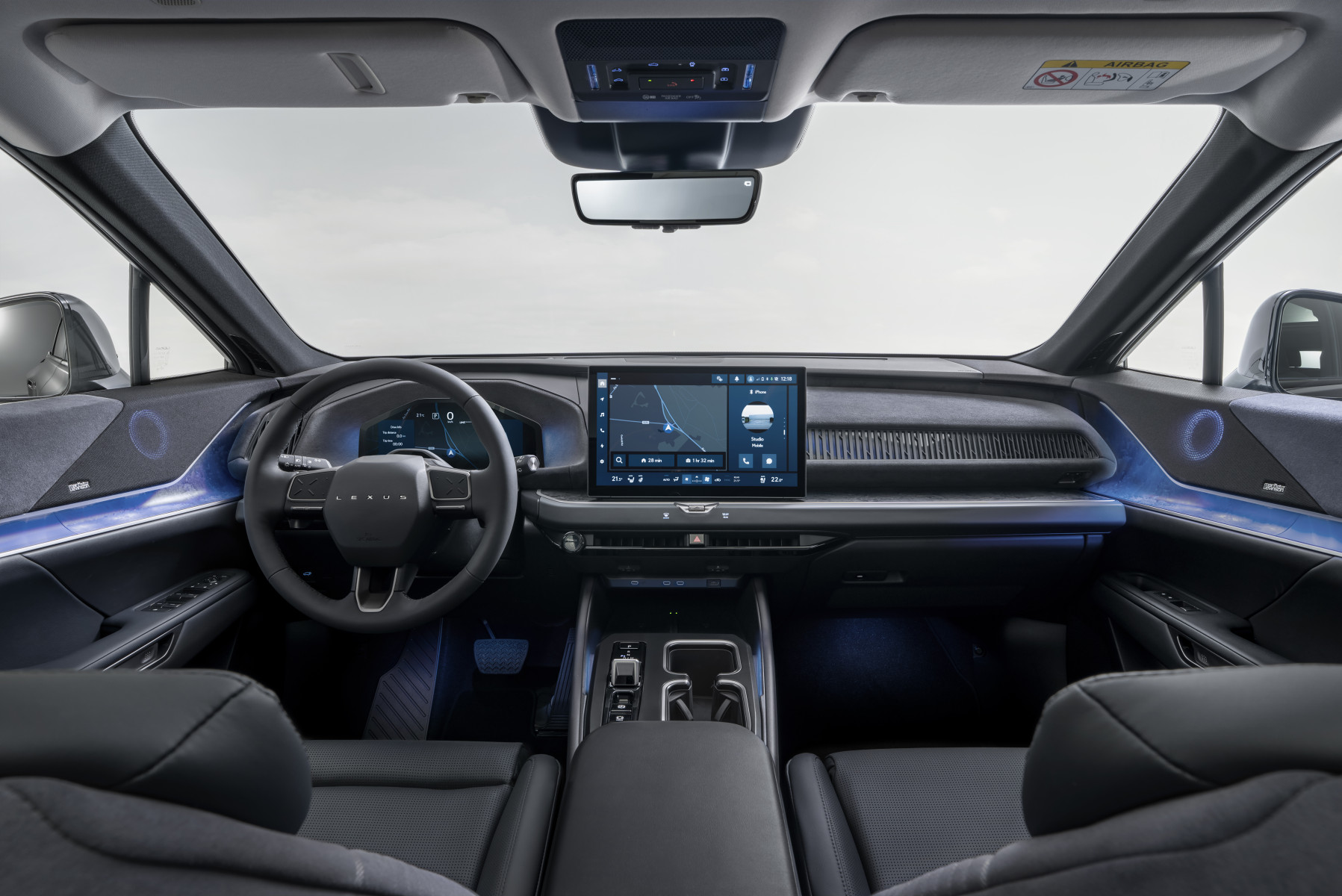
Every single TZ is configured as a six-seater. Second-row captain’s chairs are standard, there’s no bench option, and those chairs offer ventilation, heating, and, in a first for a Lexus SUV, power-adjustable ottomans. The third row has heated seats and adult-friendly headroom, which genuinely puts it ahead of many competitors where the third row is treated as an afterthought. A walk-in button on the second row slides the seat forward even with a child seat installed, which any parent of young children will tell you is not a trivial convenience.
The panoramic roof runs over all three rows. Material highlights include forged bamboo trim sourced from Shikoku Island, processed so fibres blend into resin support, making the trim both durable and sustainably sourced, along with bio-based UltraSuede upholstery throughout. It’s a considered choice of materials for a luxury brand trying to differentiate on sustainability without making it the entire personality of the car.
Audio is handled by a 21-speaker Mark Levinson system that can tune itself specifically for rear-seat passengers, which is the kind of feature that sounds indulgent until you’re in the back seat and it actually sounds better than most home hi-fi setups.


The LFA Easter Egg
Here’s the feature that’s gotten the most attention since the reveal: the Active Sound Control system.
Lexus spent considerable effort making the TZ its quietest SUV ever. Then, apparently deciding that was too quiet, they built in a system that pipes in artificial engine sounds linked to accelerator inputs. The options include a “musical chord sequence” mode and, this is real, the V10 wail of the Lexus LFA supercar.
The LFA’s naturally aspirated 4.8-litre V10 is widely considered one of the greatest engine sounds ever recorded. Hearing it on demand through a family electric SUV is either brilliant or absurd, and the truth is probably both. It’s opt-in, it enhances “driver awareness,” and it will absolutely confuse people at school drop-off.
Five levels of regenerative braking are available via steering wheel paddles, though Lexus hasn’t confirmed whether a full one-pedal mode is included.
Safety: Lexus Safety System+ 4.0
The TZ debuts Lexus Safety System+ 4.0 as standard across all trims. The update expands object detection range and width over the previous generation, adds broader coverage on urban roads, and refines the intervention behavior to feel less abrupt, Lexus describes it as “more natural and human-like,” which is a phrase that presumably makes more sense to engineers than to drivers, but the outcome is a system that responds to hazards without the sudden braking jolt that makes earlier generations feel intrusive.
Release Date and Pricing
US sales begin near the end of 2026. European, Japanese, and Chinese markets follow in early 2027.
Full pricing will be announced closer to launch. Early industry estimates peg the starting figure around $60,000, which would put the base TZ below the Volvo EX90 (from around $80,000) and the Cadillac Vistiq (from around $78,000) while sitting above non-luxury three-row EVs like the Hyundai IONIQ 9 and Kia EV9. That’s a reasonable price window if the estimate proves accurate, though Lexus has said nothing official yet.

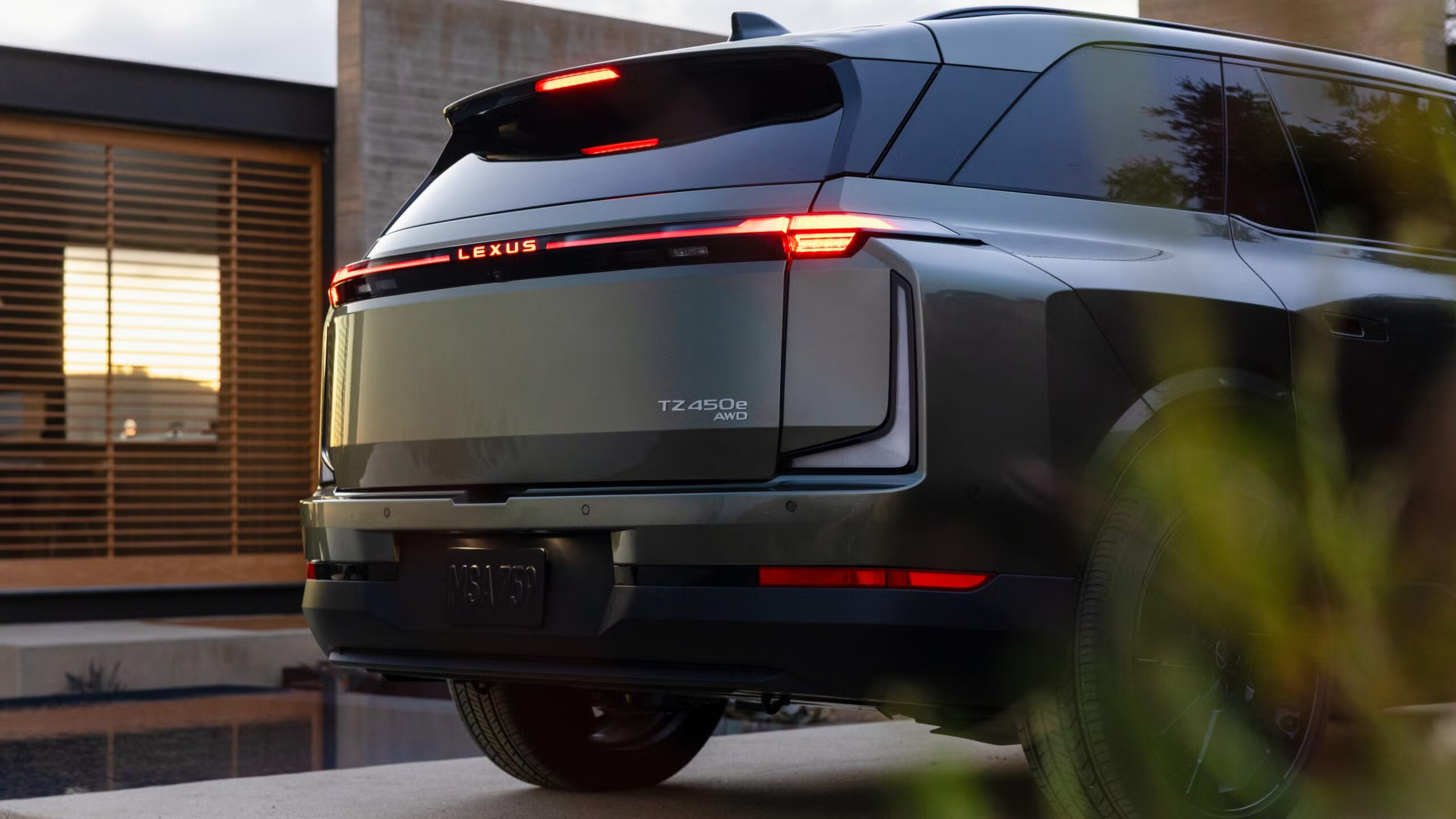
How It Stacks Up
The three-row electric SUV segment is more competitive than it’s ever been, so the TZ is entering a real fight:
Hyundai IONIQ 9 — More range on paper (up to 350 miles), faster charging (350 kW), bench or captain’s seating. Lacks the Lexus interior quality and the brand cachet some buyers care about.
Volvo EX90 — Strong safety credentials and Scandinavian design, but pricier at entry and less powerful.
Cadillac Vistiq — American luxury alternative with strong Super Cruise integration. Rear-seat experience not quite at the TZ level.
Kia EV9 — Excellent value, solid range, but a different buyer profile. Not really a direct competitor at the luxury tier.
The TZ’s strongest argument is the combination of genuine performance (402 hp, rear-wheel steering), an unusually well-appointed interior across all three rows, and Lexus’s reputation for long-term reliability, something that still counts for buyers coming from GX or LX ownership.
Final Take
The 2027 Lexus TZ is the vehicle the brand needed. Not because it’s the most capable three-row EV on sale, it probably isn’t, but because it’s a proper Lexus version of one, rather than a rebadged compromise. The interior is genuinely impressive, the 300-mile range is competitive, and the NACS port means real-world charging is less complicated than it’s been for Lexus EV buyers historically.
The 150 kW charging ceiling will frustrate some buyers, and the six-seat-only configuration closes out families who need a seven-seat bench option. Those are real trade-offs.
But if you’ve been waiting for a Lexus you can actually charge at a Tesla Supercharger, seat your family in actual comfort across all three rows, and, if the mood strikes, pretend you’re driving a million-dollar V10 sports car on the school run, the wait is nearly over.
US deliveries start late 2026.