Africa’s richest man has his eye on Mombasa, and the implications stretch across every fuel pump from Nairobi to Kampala.
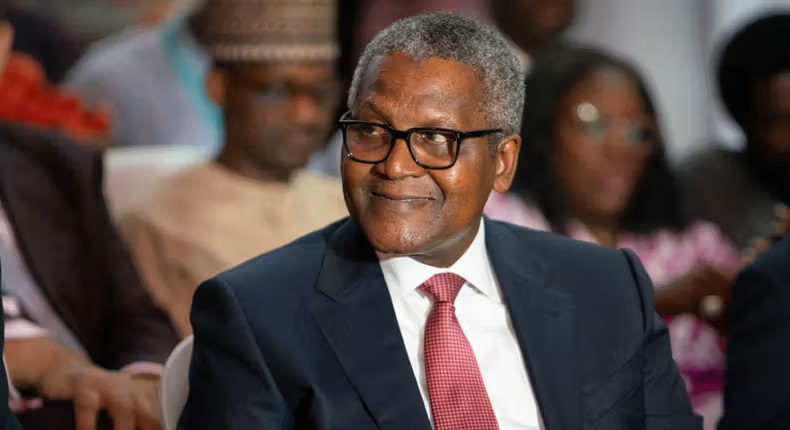
Aliko Dangote, the Nigerian billionaire who built what is now the world’s largest single-train oil refinery in Lagos, is actively weighing a $15 billion to $17 billion investment to construct a near-identical facility in Kenya’s port city of Mombasa. If it goes ahead, the refinery would process 650,000 barrels of crude oil every single day, enough to fundamentally reshape how East Africa fuels itself.
This is not idle talk. Dangote made his preference public in a May 2026 interview with the Financial Times, and the commercial logic behind his Mombasa choice is straightforward: deeper port, larger market, and a government that appears ready to deal.
How This Started: The Africa We Build Summit
The story really begins on April 23, 2026, at the JW Marriott in Nairobi, during the inaugural Africa We Build Summit hosted by the Africa Finance Corporation. Dangote appeared on a panel alongside Kenya’s President William Ruto and Uganda’s President Yoweri Museveni, and made a bold statement that caught the room off guard.
“My commitment is, if we agree here with the three or four governments, we will lead and make sure that the refinery is built within the next four to five years,” Dangote told the assembled heads of state. “Even now, I can give commitment to the two presidents who are here; if they will support the refinery, we will build an identical one to what we have in Nigeria.”
At that point, the location being discussed was Tanga, a port city in northeastern Tanzania. President Ruto publicly backed the Tanga proposal that day, framing it as a joint regional project that would process crude from the Democratic Republic of Congo, South Sudan, Uganda, and Kenya. The plan included a pipeline connecting Tanga to Mombasa, feeding into the existing shared Kenya Pipeline Company infrastructure.
The catch? Tanzania’s President Samia Suluhu Hassan was apparently not in the loop. She later revealed publicly that she had neither been consulted nor informed about the project before Ruto went public.
That diplomatic awkwardness surfaced again during Ruto’s state visit to Dar es Salaam on May 4, 2026, where President Suluhu publicly rebuked him, a rare and notable moment of regional friction.
Why Dangote Pivoted to Mombasa
Less than three weeks after the Nairobi summit, Dangote’s preferred location had shifted. In his Financial Times interview on May 10, 2026, he made clear that Mombasa had overtaken Tanga in his calculations.
The reason is simple infrastructure math. Mombasa port is deeper and has greater cargo handling capacity than Tanga, a critical consideration for a refinery that needs to receive very large crude carriers (VLCCs) on a daily basis at this kind of processing scale. Dangote put it plainly: “I’m leaning more towards Mombasa because Mombasa has a much larger, deeper port.”
But the port is only part of it. Dangote also pointed to Kenya’s market size and consumption levels. “Kenyans consume more. It’s a bigger economy,” he said, framing Kenya as a more commercially attractive anchor for the project than Tanzania.
There is also the matter of Kenya’s existing petroleum infrastructure, pipelines, storage facilities, and established fuel distribution networks, which would reduce the logistical groundwork needed before the refinery could operate at scale.
As for who makes the final call? Dangote was blunt about that, too: “The ball is in the hands of President Ruto. Whatever President Ruto says is what I’ll do.”
What the Refinery Would Actually Do
To understand the scale of what’s being proposed, it helps to look at what Dangote already built in Nigeria.
The Dangote Petroleum Refinery near Lagos, which began operations in 2024 after years of construction, is the world’s largest single-train refinery. It processes 650,000 barrels of crude oil per day and has already begun reshaping Africa’s fuel import dynamics, expanding petroleum product exports across the continent.
The proposed Mombasa facility would be a direct replica, same capacity, same model, tailored to East Africa’s geography and crude supply mix.
The crude feedstock for the refinery would come from multiple regional sources: Kenya’s onshore oil finds, Uganda’s fields in the Albertine Graben (which connect to the East African Crude Oil Pipeline), South Sudan’s prolific oilfields, and potentially the DRC. Processing this crude domestically rather than shipping it to the Middle East for refining and buying it back as finished product is precisely the kind of import substitution East Africa has long needed but never managed to execute.
The Africa Finance Corporation’s State of Africa’s Infrastructure Report 2026, released at the same summit, put the urgency of this in stark terms: Africa’s fuel import shortfall is projected to reach 86 million tonnes by 2040, roughly equivalent to three Dangote-sized refineries.
East Africa’s Fuel Problem in Plain Terms
Right now, East Africa imports virtually every litre of refined petroleum it consumes. Most of it comes from the Middle East, refined in facilities in the UAE, India, and Saudi Arabia, then shipped across the Indian Ocean.
This arrangement has always been fragile. When global oil markets are disrupted, whether by conflict in the Gulf, shipping lane bottlenecks, or foreign exchange shortages, East African fuel prices spike hard and fast. Supply shortages become a real and recurring problem.
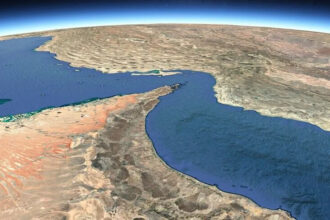
The situation grew more acute in early 2026, as tensions linked to the US-Israeli conflict with Iran disrupted Strait of Hormuz traffic. East African fuel markets felt the knock-on effects through higher prices and supply uncertainty, accelerating the urgency of conversations that had previously moved slowly.
For Kenya specifically, the refinery proposal also carries a touch of historical symbolism. Mombasa once had a functioning oil refinery, the Kenya Petroleum Refinery Limited at Changamwe, which processed crude for decades before closing due to economic unviability. The proposed Dangote project would be orders of magnitude larger than that old facility, but would restore Mombasa’s status as a regional petroleum hub.
The Investment Case: $17 Billion and Counting
At its upper estimate of $17 billion, roughly Ksh 2.2 trillion, this would rank among the most expensive private infrastructure investments ever proposed in East Africa. There is no comparable private sector bet on the region’s energy sector.
Dangote’s approach is built on what might be called demand-side confidence. East Africa’s fuel consumption is growing steadily, driven by rising urbanisation, industrial expansion, and a young population. A refinery serving Kenya, Uganda, Tanzania, South Sudan, and the DRC would have one of the most favourable demand profiles of any industrial project on the continent.
The project also fits within Dangote’s broader $40 billion investment plan across Africa through 2030, which spans petrochemicals, fertilisers, and infrastructure. He has signalled intent to launch around 20 fertiliser blending plants across Africa by 2028, and the Kenya refinery, were it to proceed, would anchor the eastern leg of that continental industrial strategy.
For Dangote Group, the financial foundation exists. The Dangote Petroleum Refinery in Nigeria is reportedly raising up to $5 billion through a continental public share offering, which would provide capital to fund expansion projects.
The Political Geometry
Three governments are central to whether this project gets built.
Kenya is the most important. Ruto has spoken enthusiastically about regional industrialisation and has already pledged KSh 500 billion in energy sector investment. His track record with large infrastructure ambitions is mixed, but Dangote has explicitly placed the decision in his hands. If Ruto moves decisively and offers credible policy guarantees, the Mombasa refinery has a real chance.
Uganda has skin in the game from two directions. President Museveni was sitting beside Dangote at the Africa We Build Summit, and Uganda has a separate $4 billion refinery project of its own in Hoima City, with its final investment decision expected in July 2026. Dangote’s proposal complicates Uganda’s refinery calculus but also potentially unlocks a larger regional market for Ugandan crude.
Tanzania is now the awkward variable. The original Tanga proposal has been effectively set aside, and President Suluhu’s public displeasure at not being consulted remains unresolved. Whether Tanzania participates in a Mombasa-centred arrangement, perhaps through crude supply from its own prospective fields or pipeline routing, will depend on diplomatic repair work that hasn’t clearly happened yet.
What Needs to Go Right
The conditions Dangote has attached to the project are not unreasonable, but they are genuinely demanding.
He has called for policy guarantees on investment stability, meaning no sudden regulatory changes, no arbitrary taxation, and protection against political interference. Kenya’s investment climate has improved in recent years, but major foreign investors have historically asked for precisely this kind of assurance, and delivering it credibly is harder than promising it.
The project would also require significant upgrades to the regional pipeline and storage infrastructure. Mombasa port itself may need berth and capacity upgrades to handle the volume of crude imports that a 650,000 bpd refinery demands. That’s additional capital expenditure before a barrel of oil is processed.
And then there is crude sourcing. The regional supply picture is promising but not yet proven at scale. Uganda’s oil production is years from peak output, South Sudan’s fields have suffered from conflict-related disruption, and Kenya’s commercial crude production has moved slowly since the Lokichar basin discoveries. A refinery of this scale may need to import crude from external markets, at least initially, which changes the economics significantly.
None of these is an impossible problem. They are the normal list of challenges that accompany any mega-project. Whether the right combination of political will, financial commitment, and infrastructure planning comes together in time is the real question.
Where Things Stand
As of May 2026, the Dangote Kenya refinery project is a serious proposal from a credible industrialist who has already built exactly what he’s describing, but it has not moved to formal agreement, let alone groundbreaking.
Dangote has offered a four-to-five-year delivery timeline, conditional on government backing. That would put completion somewhere around 2030 or 2031, an ambitious schedule for a $17 billion industrial facility, but not impossible given that the Lagos refinery, despite its delays, was eventually built.
The immediate next step is a decision from President Ruto. If Kenya’s government commits formally, moves to negotiate investment protections, and begins infrastructure preparatory work, the project could enter a development phase relatively quickly. If the discussions stay at the level of summits and press interviews, the timeline slips.
What is already clear is that Dangote’s intervention has shifted the terms of the conversation about East African energy. Before April 2026, the region’s fuel import dependence was a policy problem with no credible private sector solution attached to it. Now there is at least one person with the money, the experience, and the stated intention to change that, and he has told East Africa’s governments exactly what he needs from them.
The question is whether they’ll answer.