When countries are discussed in global conversations, attention is often drawn to large territories with huge populations and extensive economic influence, yet a number of sovereign states occupy land areas smaller than many cities around the world.
Although these nations are limited in geographical size, they continue to maintain distinct political systems, historical identities and economic relevance on the global stage.
From religious city-states to isolated Pacific islands, these countries have carved out unique places in international affairs despite their tiny physical footprints.
SAN MARINO’S LONG DEMOCRATIC HISTORY
San Marino ranks as the fifth smallest country globally and remains one of the oldest surviving republics in the world.

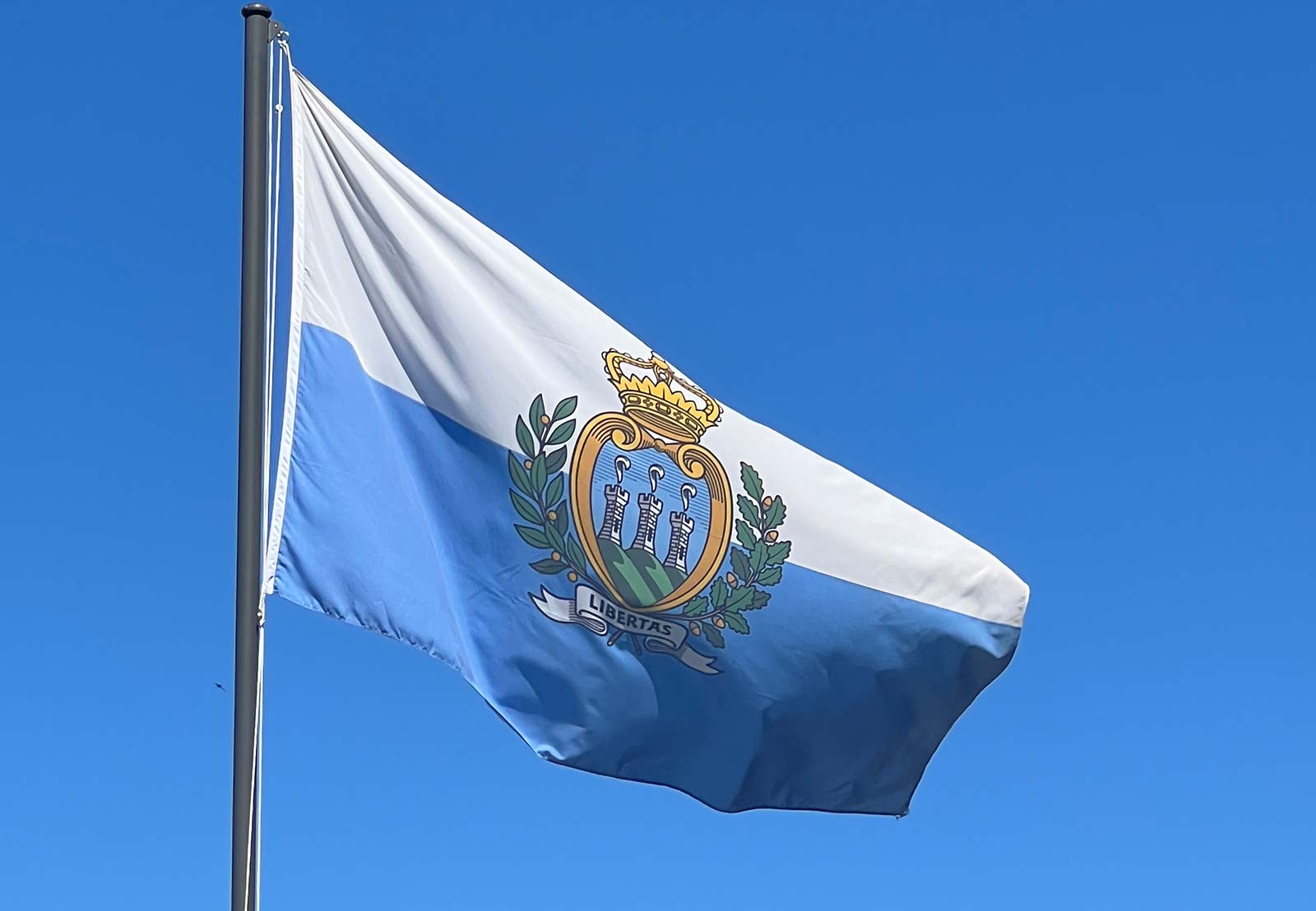
The microstate, which is completely surrounded by Italy, traces its origin to 301 CE when it was reportedly founded by Saint Marinus, a stonemason who sought refuge on Mount Titano.
San Marino is also recognised as one of the few countries entirely enclosed within another sovereign nation, alongside Lesotho and Vatican City.
Despite its modest land size, the republic has built a stable economy supported by tourism, finance and manufacturing activities.
The country equally maintains one of Europe’s lowest unemployment rates and consistently records high living standards among its citizens.
One of the most notable moments in San Marino’s diplomatic history came in 1861 when former US President Abraham Lincoln received honorary citizenship from the republic.
San Marino covers approximately 61.2 square kilometres and has a population of about 33,300 people.
TUVALU’S STRUGGLE AGAINST RISING SEA LEVELS


Tuvalu occupies the fourth position among the world’s smallest countries and is located in the Pacific Ocean between Hawaii and Australia.
The island nation, formerly known as the Ellice Islands, is made up of nine coral islands and atolls.
Because of its remote location and limited transport links, Tuvalu receives relatively few international visitors each year.
The country has also become central to global discussions surrounding climate change because of fears linked to rising sea levels.
Its highest natural elevation reportedly stands at roughly 15 feet above sea level, raising concerns about long-term environmental vulnerability.
There have been previous discussions involving possible relocation support arrangements with nearby countries such as Fiji and New Zealand.
Cash transactions remain common in Tuvalu as card payment systems are still limited across much of the country.
Tuvalu has a land area of approximately 26 square kilometres and a population estimated at around 11,200 people.
NAURU’S SHIFT FROM WEALTH TO ECONOMIC STRAIN
Nauru is regarded as the world’s smallest independent island nation and ranks third among the smallest sovereign states by land mass.


Located in the Pacific region of Micronesia, the country was once referred to as Pleasant Island by early European visitors.
Nauru experienced major economic prosperity during the 1970s and 1980s because of extensive phosphate mining activities.
At the height of that boom, the country was considered one of the wealthiest nations globally on a per capita basis.
However, declining phosphate reserves later contributed to significant economic difficulties for the island nation.
Today, Nauru relies heavily on financial and administrative support linked to Australia.
Tourism remains limited because of the country’s remote location and minimal infrastructure, with reports indicating that only a few hotels operate within the island state.
The late British monarch, Queen Elizabeth II, visited Nauru in 1982 during a South Pacific tour.
Nauru covers about 21 square kilometres and has a population estimated at roughly 10,700 people.
MONACO’S LUXURY IMAGE AND DENSE POPULATION
Monaco is the second smallest country in the world and also one of the most densely populated nations globally.


Situated along the French Riviera, Monaco was established in 1297 after François Grimaldi reportedly seized a fortress overlooking the Mediterranean coast.
The Grimaldi family has remained closely linked to the leadership of Monaco for centuries.
Monaco is internationally recognised for its luxury lifestyle, wealthy residents and high-end tourism industry.
A significant portion of the country’s population consists of millionaires, while unemployment and poverty levels remain relatively low.
At the same time, housing and living expenses rank among the highest in the world because of the country’s limited land area.
Although Monaco is famous for the Monte Carlo casino district, citizens of the principality are prohibited from gambling under local regulations.
Monaco occupies approximately 2.1 square kilometres and has a population of about 38,300 residents.
VATICAN CITY’S GLOBAL RELIGIOUS SIGNIFICANCE
Vatican City remains the smallest sovereign nation on earth by total land area.


The independent city-state, which is surrounded by Rome, also holds the distinction of being recognised entirely as a UNESCO World Heritage Site.
Although Vatican City officially became an independent state in 1929, its religious influence and historical significance stretch back many centuries.
Structures such as St Peter’s Basilica, the Apostolic Palace and the Sistine Chapel continue to attract millions of visitors annually.
Tourism plays a major role in the Vatican economy despite the country having fewer than 1,000 permanent residents.
The country is often compared in size to a fraction of New York City’s Central Park because of its extremely small territory.
Vatican City occupies approximately 0.49 square kilometres and has an estimated population of about 825 people.