Something shifted across Nigerian campuses in April 2026, not with a single loud moment but with a slow tightening of tension that students could feel even before it was spoken aloud. Lecture halls that usually carried the familiar rhythm of academic routine began to echo uncertainty, while corridors once filled with casual conversations started reflecting a more cautious silence. Across different regions of the country, universities that normally operated on predictable academic calendars found themselves pulled into overlapping crises that did not seem connected at first glance.
By mid April 2026, what appeared like isolated disruptions had begun forming a broader picture that students, staff, and administrators could no longer ignore. Security concerns, labour disputes, and student welfare protests emerged almost at the same time, creating a situation where learning was repeatedly interrupted by forces outside the classroom. The story of this period is not just about academic calendars being shifted or lectures being paused, it is about institutions struggling to hold steady while pressure mounted from multiple directions at once.
What unfolded at University of Jos, Obafemi Awolowo University, and other federal institutions during this period reveals a deeper strain within the higher education system. Each event carried its own trigger, yet together they pointed toward a growing instability that shaped the entire academic atmosphere of early 2026. The sequence of events that followed from April into May 2026 would leave a lasting mark on how campus life was experienced across the country.
UNIJOS Crisis Escalation Plateau Security Tensions

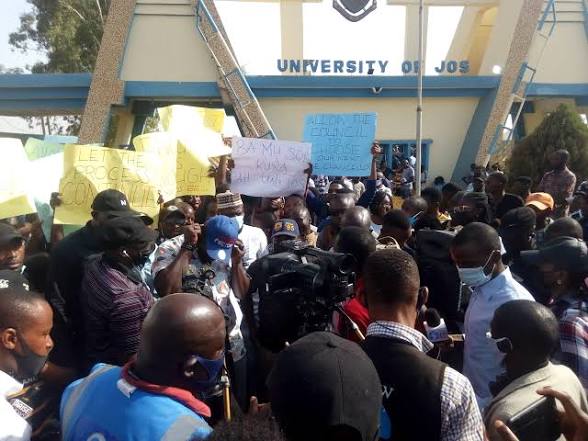
University of Jos became one of the earliest and most discussed points of concern during April 2026 after events linked to wider insecurity in Plateau State affected the campus environment. Reports confirmed the death of two students connected to violent incidents within the state, a development that immediately changed the emotional atmosphere of the university community. The news did not remain external for long as it quickly settled into campus conversations, shaping fear, caution, and uncertainty among students and staff.
By April 10 2026, administrative responses had begun to reflect the seriousness of the situation as heightened security measures were introduced across key entry points within the institution. Patrol activities increased, and internal monitoring became more visible as the university attempted to maintain order while still continuing academic activities. The presence of security personnel became part of daily campus life, altering the familiar openness that students were used to.
The emotional impact of the incident extended beyond immediate safety concerns as academic planning also began to feel the pressure. Adjustments to the academic calendar were introduced temporarily as the university leadership assessed the stability of the environment. Lectures and scheduled assessments were reviewed, postponed, or reorganized depending on departmental decisions, creating a fragmented academic rhythm that students had to adapt to quickly.
ASUU University of Jos branch later intensified the situation when it declared an indefinite strike over unpaid March 2026 salaries and unresolved allowances. By April 18 2026, lecture halls were already experiencing reduced academic activity, and the strike action brought a more formal halt to teaching processes. Staff withdrawal from academic duties meant that even departments not directly affected by security concerns were drawn into the disruption.
The combination of insecurity and labour unrest created a layered crisis that was difficult to separate into individual causes. Students found themselves navigating both emotional uncertainty and academic delay at the same time. The university eventually announced steps toward resumption of full academic activities after tensions showed signs of easing, yet the experience of this period remained a defining moment for the institution in 2026.
OAU Student Mobilization Transport System Protest at Ile Ife
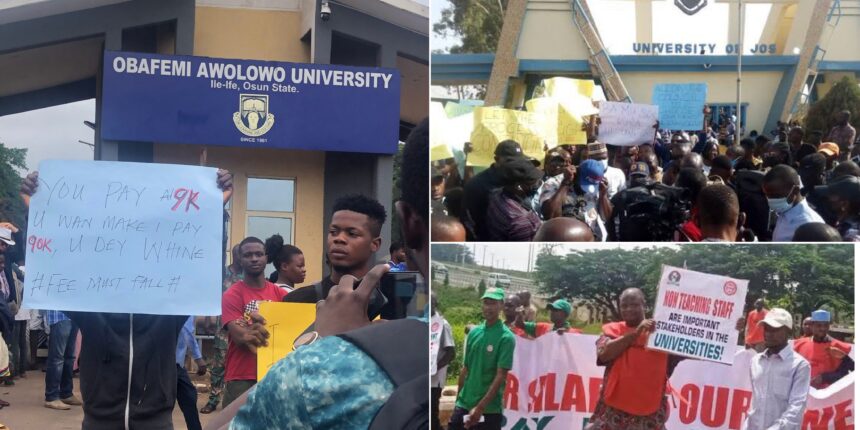
Obafemi Awolowo University in Ile Ife became another focal point of national attention during mid April 2026 when students initiated a coordinated protest over internal transportation challenges. The Students Union declared a 72 hour boycott of lectures following repeated complaints about inadequate campus buses and inefficient mobility systems within the university environment. What began as everyday frustration over transportation gradually evolved into an organized expression of dissatisfaction.
By April 15 2026, student movement across campus had noticeably slowed as many participants complied with the boycott decision. Academic spaces that normally experienced heavy foot traffic during lecture hours appeared unusually quiet as students refrained from attending classes. The protest was not characterized by confrontation but rather by absence, a deliberate withdrawal that signaled collective frustration with daily logistical struggles.
Students explained that the transport challenges had gone beyond inconvenience and had begun affecting punctuality, concentration, and overall academic engagement. Long walking distances between faculties, combined with limited shuttle availability, created a pattern of lateness and missed lectures. Over time, what seemed like a logistical issue transformed into a broader concern about student welfare and institutional responsiveness.

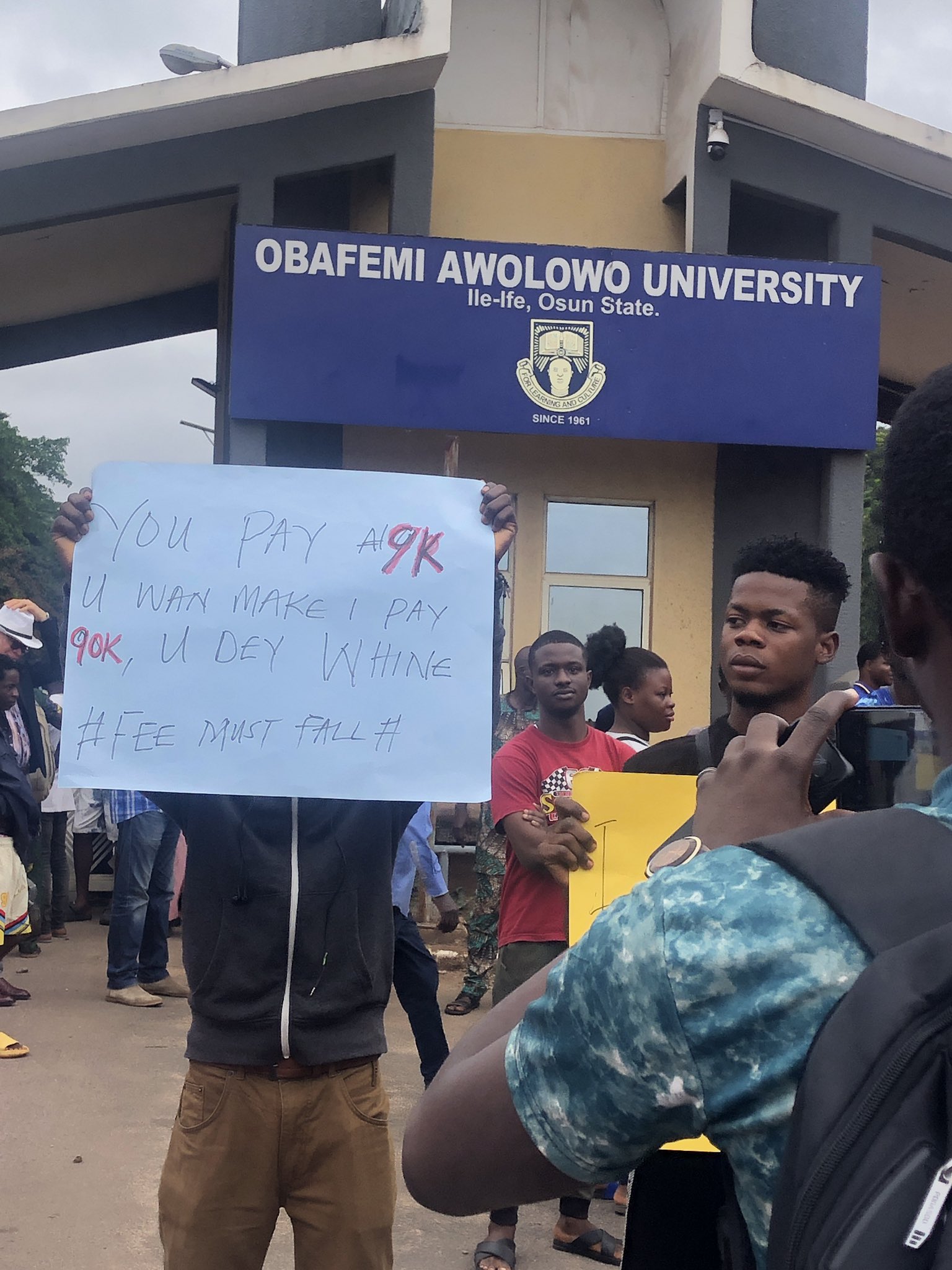
University management engaged with student representatives during this period to assess the situation and explore possible solutions. Discussions focused on improving transport allocation, increasing the number of functional buses, and reviewing scheduling systems that could better serve high traffic periods. Although negotiations were ongoing, the protest had already succeeded in drawing national attention to infrastructure concerns within federal universities.
The situation at OAU highlighted how internal campus systems can influence academic stability just as much as external pressures. While there was no physical confrontation, the organized withdrawal from lectures demonstrated the power of collective student action in shaping institutional priorities. The impact of the protest lingered beyond the 72 hour period as conversations about campus infrastructure continued within and outside the university.
NASU, SSANU Industrial Action Nationwide Academic Disruption May 1 2026
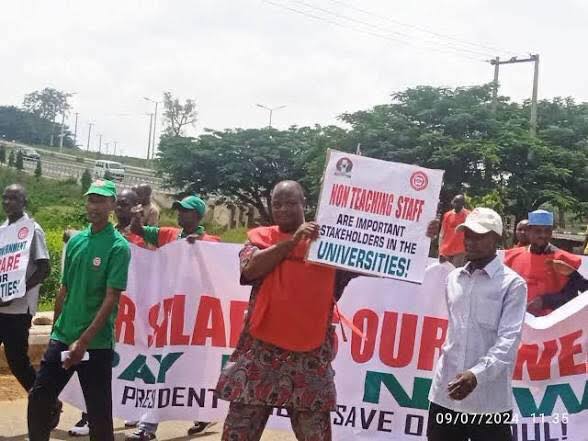
A wider wave of disruption emerged toward the end of April 2026 when NASU and SSANU announced plans for a nationwide strike scheduled to begin on May 1 2026. The announcement followed failed negotiations with the Federal Government regarding unpaid allowances, working conditions, and long standing administrative concerns affecting non academic staff across federal universities. The timing of the announcement immediately raised concerns about the stability of university operations across the country.
By April 28 2026, universities had already begun preparing for possible shutdown scenarios as administrative staff expressed readiness to comply with the strike directive. Offices responsible for student records, examinations, admissions, and general coordination signaled potential suspension of services once the action commenced. This created uncertainty even before the official start date, as universities rely heavily on non academic staff for daily functioning.
The anticipated strike was not limited to lecture disruptions alone but extended to administrative paralysis, which posed a broader threat to institutional continuity. Without non academic personnel, essential processes such as transcript processing, examination scheduling, and internal communication would face significant delays. This raised concerns among students who were either preparing for examinations or awaiting critical academic updates.
By May 1 2026, the nationwide effect began to materialize as multiple federal universities reported partial or complete suspension of administrative services. Academic activities in some institutions continued in limited form, but the absence of supporting staff created operational gaps that could not easily be filled. The situation revealed how interconnected university systems are and how disruption in one category of staff can affect the entire structure.
The strike period reinforced ongoing debates about funding, welfare, and sustainability within Nigeria’s higher education system. While negotiations remained ongoing at different levels, the immediate impact was felt most strongly by students who found their academic schedules increasingly uncertain. The ripple effect of the industrial action extended beyond classrooms into every aspect of campus administration.
UTME 2026 Examination Security Nationwide Campus Pressure
Another layer of tension emerged during the April 2026 UTME examination period as universities hosting examination centres were placed under heightened security arrangements. The Nigeria Police deployed additional personnel to selected campuses following concerns about safety in certain northern and north central locations. These measures were introduced to ensure that candidates could sit for examinations without disruption.
By April 12 2026, several university campuses had already begun implementing strict access control measures during examination days. Entry points were monitored more closely, and movement within examination areas was restricted to authorized personnel and candidates only. This changed the usual openness of campus environments, turning them into controlled spaces during examination hours.
Universities that regularly serve as UTME centres experienced increased coordination demands as staff worked closely with examination bodies and security agencies. Administrative units were required to adjust schedules, allocate spaces, and ensure compliance with national examination standards. These adjustments placed additional pressure on already strained academic calendars.
Students and candidates participating in the UTME process were directly affected by these changes as they navigated unfamiliar security protocols alongside academic expectations. While the measures were intended to ensure safety, they also introduced a heightened sense of caution across participating campuses. The presence of armed security personnel became part of the examination environment in many locations.
The broader implication of this period was the integration of national security considerations into academic spaces. Universities were no longer functioning solely as educational institutions during this time but also as controlled environments for national assessment processes. This dual role contributed further to the complexity of campus operations in April 2026.
Broader Academic Climate Institutional Strain Nigeria
Across April and May 2026, Nigerian universities collectively experienced a convergence of pressures that reshaped the academic environment. Security concerns, labour disputes, infrastructure challenges, and examination demands did not occur in isolation but overlapped in ways that intensified their overall impact. The result was a period marked more by adjustment than continuity.
By early May 2026, many institutions were still attempting to stabilize operations following the introduction of the NASU and SSANU strike action. Academic departments were adjusting calendars repeatedly, while students tried to adapt to shifting schedules that often changed without long notice. This created a sense of unpredictability that affected both academic planning and personal routines.
The combination of student protests, staff industrial actions, and external security interventions revealed structural weaknesses within the system that had been building over time. Universities were repeatedly required to respond to immediate crises while also maintaining long term academic standards. This dual pressure created an environment where stability was difficult to maintain for extended periods.
Student experiences during this time reflected a mixture of resilience and fatigue as they navigated interruptions across different levels of academic life. Lectures, examinations, and administrative processes were all affected in varying degrees depending on institution and location. Despite these challenges, academic communities continued to seek ways to adapt and continue learning under constrained conditions.
The events of April to May 2026 ultimately illustrated how interconnected and sensitive the higher education system had become to broader national developments. Each disruption, whether local or nationwide, contributed to a wider pattern that defined this period in Nigerian university history.