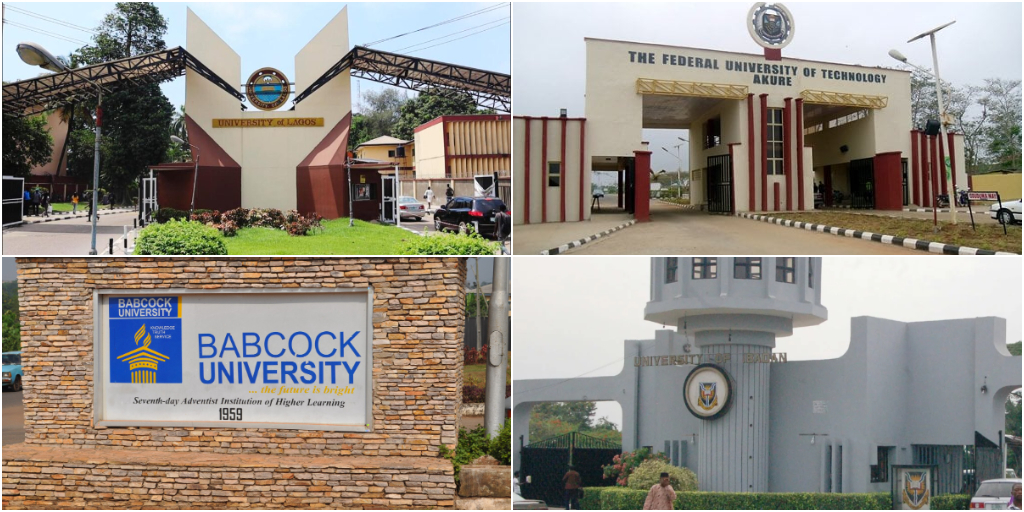
There is a quiet revolution happening in the corridors of Nigerian higher education. For decades, stories about Nigerian universities in global rankings were sparse, sporadic, often framed as the exception rather than the rule. Now, in January 2026, the Times Higher Education World University Rankings by Subject released a milestone report. For the first time, 24 Nigerian universities have been recognized across eleven subject areas, from the arts to engineering.
This is not just a list; it is a statement, a declaration that Nigeria is asserting its presence in global scholarship. The rankings reveal more than numbers. They illuminate decades of research effort, teaching innovation, and the determination of institutions to produce knowledge that competes on the world stage.
The rankings do not simply measure popularity or name recognition. They dissect the academic ecosystem with surgical precision, weighing teaching environment, research output, research influence, international outlook, and even industry income. The methodology is exacting, and the global bands in which universities are placed are fiercely competitive.
From Legacy Halls to Global Visibility: University of Ibadan and UNN
The University of Ibadan, Nigeria’s oldest university, has long been a symbol of academic resilience. Established in 1948, it has nurtured generations of scholars who shaped Nigeria’s intellectual and policy landscape. In the 2026 THE subject rankings, UI now appears in the 301–400 global band for both Law and Medical and Health Sciences. It is a remarkable achievement that signals a continued capacity to compete at the global level. Its recognition in Arts and Humanities and Social Sciences adds dimension, showcasing that its excellence is not isolated to traditional fields of prestige but is multidimensional. These placements speak to decades of sustained research output, faculty development, and strategic international engagement. The University of Ibadan has managed to evolve without losing its identity, translating its historical strengths into contemporary global competitiveness.
Similarly, the University of Nigeria, Nsukka, emerges as a formidable contender. Its 301–400 banding in Law and 501–600 placement in Psychology illustrate a focused excellence in select disciplines while also maintaining a broader research presence. Founded in 1960, UNN was envisioned as a university that would integrate education with nation-building. Today, its representation in multiple subjects signals a realization of that vision in the global arena. These rankings validate efforts to internationalize research, attract global partnerships, and cultivate a student body capable of competing on multiple fronts.
The performance of these institutions cannot be reduced to mere numbers. Each global band represents an intricate combination of faculty achievements, citation impact, teaching infrastructure, and research influence. For Nigerian universities, inclusion in these bands has strategic importance. It helps attract faculty talent from across Africa and the world, bolsters student enrollment in competitive programs, and strengthens funding opportunities for research projects that might have previously been inaccessible. Recognition at this level also reinforces national pride, establishing a clear narrative that Nigerian intellectualism can thrive globally without losing its local relevance.
Yet the challenges remain. Sustaining and improving global competitiveness requires ongoing investment in research infrastructure, faculty development, and international partnerships. For UI and UNN, the 2026 rankings are both a celebration and a call to action. They highlight achievements in law, medical sciences, psychology, and social sciences while emphasizing that continuous growth is essential to retain and improve these positions. These universities have set a benchmark, and the rest of the country is now responding, creating an ecosystem where performance, visibility, and ambition feed each other.
Breaking Ground in Science and Technology: UNILAG, Landmark, and Covenant
The University of Lagos has also made its mark in Medical and Health Sciences, earning a placement in the 401–500 band globally. UNILAG’s growth in research capacity reflects decades of investment in laboratories, faculty development, and international collaborations. Its position demonstrates that Nigerian universities can produce work on par with institutions in Europe, Asia, and the Americas. For students considering careers in medicine, biomedical research, or health policy, UNILAG is no longer just a national option; it is a credible contender on the global map.
Landmark University and Covenant University, younger institutions with distinct educational philosophies, also demonstrate the diversification of Nigerian higher education. Landmark appears in the 501–600 band for Computer Science and the 601–800 range for Physical Sciences. Covenant University follows a similar trajectory, placing in the 601–800 band for Computer Science and 501–600 for Social Sciences. These rankings are particularly notable because they reflect institutions that have developed robust research outputs in a compressed timeframe, often with fewer resources than older universities. Their ascent signals a shift in the higher education landscape where excellence is no longer the sole domain of legacy institutions.
Both Landmark and Covenant exemplify the combination of strategic leadership, curriculum design, and research prioritization. They show that universities can achieve international visibility without decades of historical advantage if research strategies are coherent and globally connected. These placements indicate a maturing approach to education management in Nigeria, one that blends teaching, research, and industry engagement to meet global standards. In doing so, they redefine what it means to be competitive in higher education in Sub-Saharan Africa.
The implications of these achievements extend beyond institutional pride. They signal to policymakers, funders, and global collaborators that Nigerian universities can be trusted partners. They also highlight emerging hubs of innovation in the country, particularly in technology and science disciplines, where local solutions to regional and global problems are increasingly produced. This new era of recognition challenges old assumptions about Africa’s role in global knowledge production, positioning Nigeria as a leading force in subject-specific academic excellence.
Engineering and Physical Sciences: Pushing Boundaries
Engineering has long been a field where Nigerian universities aspire to global recognition, and the 2026 subject rankings show tangible progress. Institutions such as the Federal University of Technology campuses in Minna, Akure, and Owerri have begun establishing research footprints in engineering and physical sciences, appearing in global bands from 601–800 to 1000+. These placements indicate that Nigerian engineering programs are producing research that resonates beyond national borders. Laboratory upgrades, faculty specialization, and targeted international collaborations have collectively strengthened the sector. The results reveal a generation of engineers capable of addressing both regional infrastructural challenges and global technological problems.
Physical sciences, including physics, chemistry, and material sciences, are also gaining traction. Landmark University’s placement in the 601–800 band shows an ability to compete internationally despite its relative youth. University of Ibadan and University of Lagos maintain steady representation, demonstrating consistency in producing high-quality research outputs that attract citations worldwide. These rankings highlight that Nigeria is developing the capacity not only to teach these disciplines but also to create knowledge that influences global scientific conversations
Computer Science and Emerging Technologies
Computer science is perhaps the most rapidly evolving discipline globally, and Nigerian universities are beginning to stake a claim in this competitive arena. Landmark University and Covenant University appear in the 501–600 and 601–800 bands, signaling early success in research, innovation, and global collaboration. The placement of Nigerian universities in these bands is particularly significant because computer science research is intensely competitive and highly technical, demanding consistent output, collaboration, and industry engagement.
The emergence of Nigerian universities in computer science reflects both curriculum innovation and research investment. Faculty are increasingly publishing in high-impact journals, attending international conferences, and developing solutions for challenges in artificial intelligence, software engineering, and data science. Universities are also forming partnerships with technology companies, start-ups, and government programs to foster research translation, ensuring that academic discoveries move into practical application.
Law and Governance: Establishing Global Legal Scholarship
Nigeria’s universities have a long-standing tradition in legal education, and the 2026 Times Higher Education subject rankings reaffirm their global relevance. University of Ibadan and University of Nigeria, Nsukka, both appear in the 301–400 global band for Law, marking them as top performers in the region. This recognition underscores decades of excellence in teaching, research, and legal scholarship. Nigerian legal institutions have produced jurists, policymakers, and academics who shape national legislation, regional law practice, and increasingly contribute to comparative law scholarship on the global stage.
The strength of Nigerian law programs is measured not only by their curriculum but also by research output. Universities now publish analyses on constitutional law, human rights, environmental law, and corporate governance in peer-reviewed journals with global reach. Faculty members collaborate with international partners, contributing to studies that influence law reform and policy development. This global engagement helps Nigerian law programs align with contemporary trends while maintaining deep knowledge of domestic legal frameworks.
Diverse Representation: The Broader 24 Universities
Beyond the top performers, the remaining universities listed in the 2026 rankings demonstrate the breadth of Nigeria’s academic ecosystem. Institutions such as Ahmadu Bello University, Zaria, Bayero University Kano, University of Benin, University of Jos, University of Ilorin, Babcock University, Ladoke Akintola University of Technology, Lagos State University, Nnamdi Azikiwe University, University of Calabar, University of Port Harcourt, and the Federal University campuses in Minna, Akure, and Owerri contribute to the diverse global footprint. Each of these universities appears in various bands from 601–800 to 1000+, illustrating engagement across a wide array of disciplines.
Federal University of Agriculture, Abeokuta, and Federal University, Oye-Ekiti, along with Delta State University, Abraka, expand the recognition into specialized and regional-focused institutions. Their presence signals that quality research and teaching is not concentrated in a few metropolitan universities. Instead, Nigeria’s academic excellence is widely distributed, with multiple centers of influence across the country contributing to the national research output. The breadth of representation across subject areas and geographical locations reinforces the idea that Nigeria is building an inclusive, competitive higher education system capable of delivering international quality education from multiple fronts.
These rankings also underscore the growing importance of global benchmarking. Nigerian universities are increasingly evaluated on the same metrics as institutions in Europe, Asia, and the Americas. This means research must not only meet local needs but also address questions of global relevance. It is a transformation from insular academic production to outward-facing scholarship that engages in international discourse. The 2026 subject rankings, therefore, reflect a complex interplay of local focus and global reach.
Finally, this broader representation creates opportunities for collaboration and benchmarking within the country. Universities now have tangible reference points to measure progress against peers. It also fosters competition, motivating institutions to improve teaching methods, invest in faculty development, and prioritize research impact. With 24 universities participating at the global level, Nigeria is no longer a spectator but a serious actor in shaping subject-specific knowledge worldwide.
Key Takeaways: Nigeria’s Rise in Global Academic Recognition
The 2026 Times Higher Education World University Rankings by Subject reveal a milestone for Nigerian higher education. Twenty-four universities have secured placements across eleven major disciplines, signaling an era of unprecedented global visibility. This achievement reflects decades of dedication, strategic investment, and innovative approaches to teaching, research, and collaboration. Nigerian universities are no longer peripheral players but active contributors to global knowledge production.
The breadth of subject coverage is striking. From law to medicine, computer science to the arts, Nigerian universities demonstrate that excellence is not confined to a few fields. Legacy institutions such as University of Ibadan, UNN, and UNILAG maintain strong positions, while younger institutions like Landmark University and Covenant University show that innovation, focus, and strategy can accelerate international recognition. The rankings reflect diverse strengths, multiple centers of research excellence, and the emergence of new hubs of intellectual influence.
Global competitiveness is now tangible. Nigerian universities have achieved measurable recognition in research output, teaching quality, international collaboration, and industry engagement.
These achievements position Nigeria as the leader in Sub-Saharan Africa in subject-specific rankings, providing students, researchers, and policymakers with concrete evidence of academic progress. The milestone is also a call to maintain momentum, invest strategically, and deepen global engagement to secure and enhance these positions in future rankings.