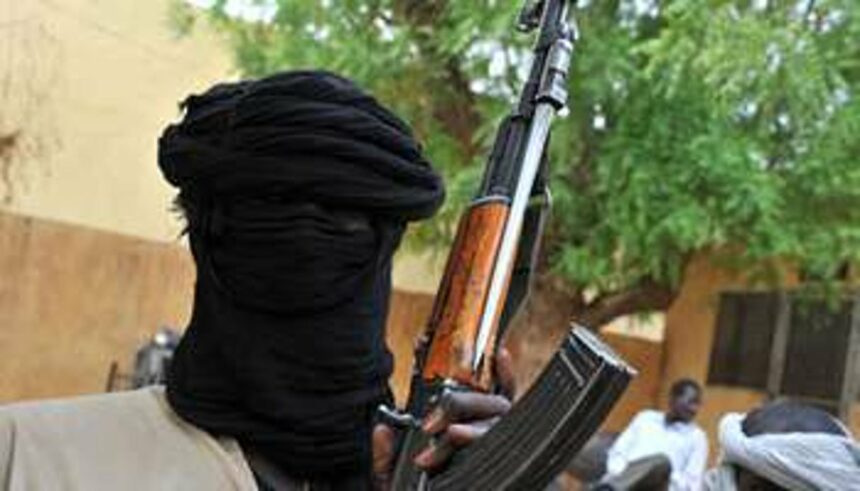
The U.S. and Nigerian governments announced the killing of Abu-Bilal al-Minuki, identified as ISIS’s second-in-command globally.
Al-Minuki, who was born in Borno State, rose through extremist ranks to become a key link between ISIS central leadership and its regional affiliates.
He coordinated operations across West Africa and the Sahel, and held significant influence within the Islamic State West Africa Province (ISWAP) due to his strategic role and hardline stance.
27 Things You Probably Did Not Know About Abu-Bilal al-Minuki, Late Second-in-Command of ISIS
1. He was born in 1982 in Borno State, Nigeria.
2. He was a Nigerian national who later rose through militant ranks to gain global recognition within ISIS.
3. His background in northeastern Nigeria placed him at the centre of extremist activities linked to the Lake Chad Basin.
4. He rose to prominence following the execution of Mamman Nur.
5. Al-Minuki became a key figure in ISIS’s General Directorate of Provinces — the body responsible for coordinating global operations, providing funding, logistical support, and offering strategic direction to ISIS affiliates worldwide.
6. According to the Counter Extremism Project, he led officials within ISIS’s provincial structure.
7. He maintained links between ISWAP and ISIS central command.
8. He was seen as a bridge between ISIS core leadership and regional affiliates, particularly in Africa.
9. He played a central role in Islamic State West Africa Province (ISWAP).
10. He served as a top commander in the Lake Chad area, overseeing operations across borders.
11. He oversaw administrative and operational functions in the Lake Chad division.
12. As a leading ISWAP figure, he helped shape the group’s operational strategies.
13. He coordinated militant activities across multiple countries in West Africa.
14. He coordinated operations across West Africa and the Sahel.
15. He was known for strategic planning, expanding ISIS’s footprint in Africa, and coordinating cross-border insurgent operations.
16. He was known for his hardline ideology and strict adherence to ISIS directives.
17. Al-Minuki had a complicated and often tense relationship with Abubakar Shekau.
18. Around 2015–2016, ISIS requested fighters be deployed to Libya; Shekau refused the directive.
19. Al-Minuki, then a commander within ISWAP, complied and sent fighters instead.
20. The move deepened divisions between Boko Haram and ISIS-aligned factions, reinforced his image as a loyal ISIS operative, and contributed to long-standing rivalry within extremist groups in the region.
21. According to the U.S. State Department, Al-Minuki is a Sahel-based senior ISIS leader with influence beyond West Africa, as described in 2023.
22. In 2023, he was officially designated a global terrorist by the United States.
23. He was named a Specially Designated Global Terrorist under the administration of Joe Biden.
24. He was sanctioned by the Office of Foreign Assets Control (OFAC), which froze any assets linked to him and criminalized financial or material support.
25. He maintained a low profile but operated through trusted networks and intelligence channels, making him difficult to track.
26. The U.S. government cited his role in terrorist financing, operational leadership within ISIS, and influence across multiple regions.
27. He was considered one of the most active and dangerous ISIS operatives globally.