Nigeria had just secured a bronze medal at the 2025 Africa Cup of Nations in Morocco, scoring 14 goals in the tournament, more than any Super Eagles side in AFCON history. The squad was brimming with talent, the coach appeared settled, and the football was, by most accounts, the best Nigerian supporters had seen in years. Then came the draw for the 2027 AFCON qualifiers, conducted on May 19, 2026, at the Egyptian Football Association headquarters in Cairo, and it handed Nigeria a group that, on paper, looks straightforward but carries its own quiet dangers.
- Back-to-Back World Cup Absences: What Went Wrong
- Eric Chelle and the Stability Nigeria Finally Found
- Group L: The Draw Nigeria Got
- Tanzania: The Co-Host Complication
- Madagascar: African Football’s Most Uncomfortable Reminder
- Guinea-Bissau: Small Nation, Familiar Problem
- The Squad Nigeria Brings Into This Campaign
- Where Nigeria Could Struggle
- What Qualification Would Mean for Nigerian Football
- A Manageable Group With Unforgiving Margins
Super Eagles 2027 AFCON Qualification
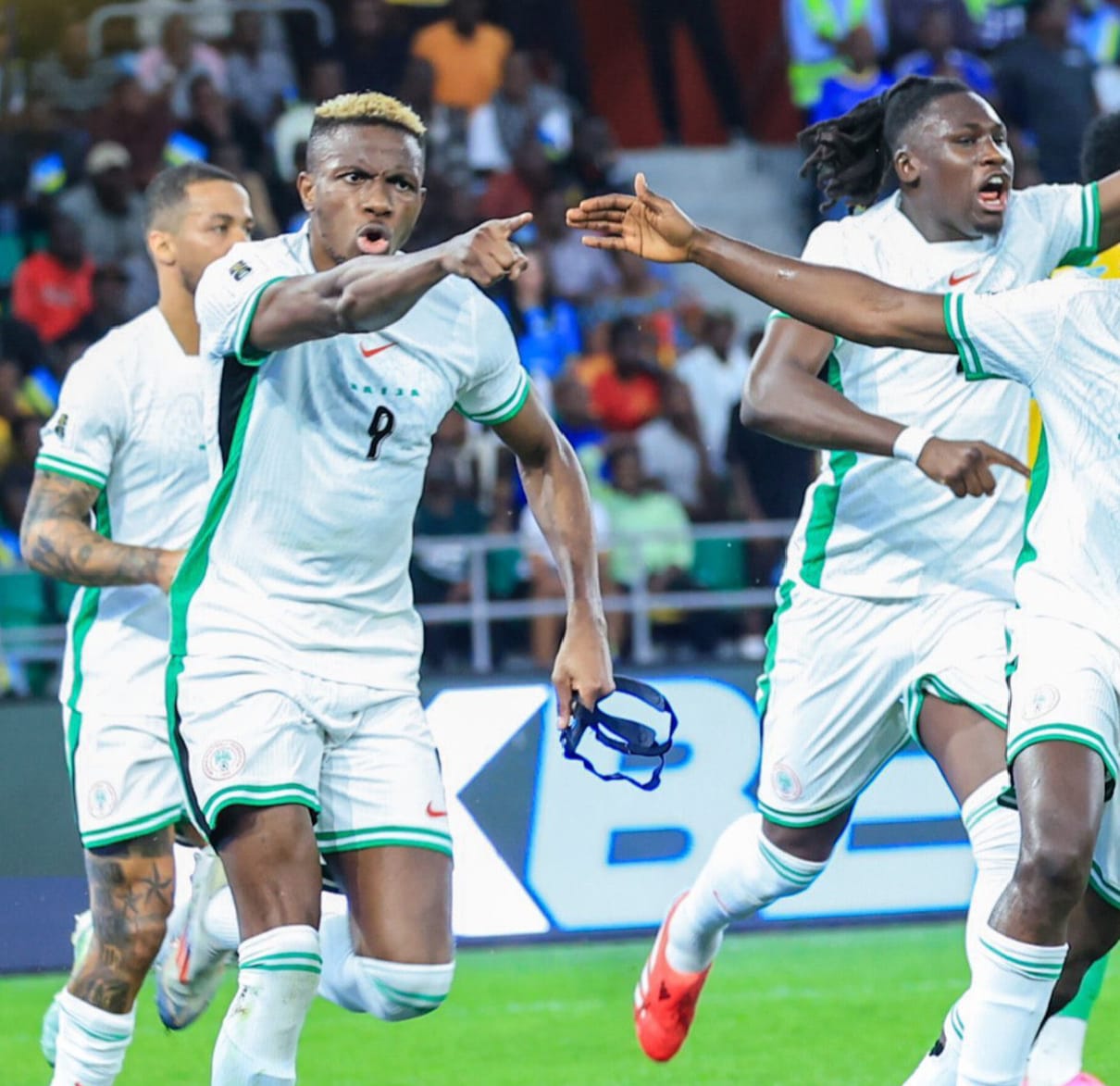

The Super Eagles 2027 AFCON qualification campaign begins against a backdrop that is at once optimistic and complicated. Nigeria missed the 2026 FIFA World Cup, their second consecutive absence from the global tournament. The AFCON bronze in Morocco softened the blow somewhat, but softening a blow is not the same as removing it. What happens in the September-to-March qualifying window will define whether this squad can translate its undeniable attacking quality into the kind of consistency that champions require.
Back-to-Back World Cup Absences: What Went Wrong
Nigeria’s failure to reach the 2026 FIFA World Cup in the United States, Canada, and Mexico was, statistically at least, the worst result the federation could have managed given the circumstances. Africa received nine automatic slots for the expanded 48-team tournament. Nigeria did not take any of them.
The qualifying campaign in Group C was undermined almost from the first whistle. Draws against Lesotho, Zimbabwe, and South Africa in the opening matches left the team chasing points that should have been gathered already. A loss to Benin compounded the damage, and by that stage, Benin and South Africa had seized control of the group. The issues, as most analysts identified, were not primarily about individual quality, which Nigeria had in abundance, but about structural problems. Coaching instability played a significant role, with the team cycling through Jose Peseiro, Finidi George, Augustine Eguavoen (in an interim capacity), and finally Eric Chelle between December 2021 and January 2025.
Nigeria eventually reached the CAF playoff stage after recovering enough to finish third in Group C. They defeated Gabon 4-1 in the semi-final of the African play-offs but lost 4-3 on penalties to DR Congo in the final in Rabat in November 2025, after the match finished 1-1 following 120 minutes of play. That defeat confirmed back-to-back World Cup absences, following Qatar 2022. Financially, it meant Nigeria forfeited a guaranteed minimum of around $10.5 million in FIFA prize money, and lost significant commercial and visibility value on the global stage.
Eric Chelle and the Stability Nigeria Finally Found
Appointed by the NFF on January 7, 2025, Eric Chelle was the first non-Nigerian African to coach the Super Eagles. Born in Ivory Coast to a French father and a Malian mother, Chelle had represented Mali as a player and later guided the Malian national team to the quarter-finals of the 2023 AFCON before being dismissed in June 2024.
He arrived in Nigeria with the World Cup qualifiers already in disarray and the team sitting fifth in Group C. The task looked close to impossible. What followed was a gradual reconstruction. Chelle imposed a tactical identity built on aggressive pressing, fluid attacking combinations, and, eventually, defensive organisation that had been largely absent. The squad did not make the World Cup, but Chelle kept his job, and the NFF’s faith in him was vindicated at the 2025 AFCON in Morocco.
Nigeria recorded a perfect nine points in the group stage, reached the semi-finals for the second consecutive AFCON, and finished third after defeating Egypt 4-2 on penalties in the bronze play-off on January 17, 2026. Goalkeeper Stanley Nwabali saved penalties from Mohamed Salah and Omar Marmoush to seal the result. Victor Osimhen, Ademola Lookman, and Calvin Bassey were all named in CAF’s Team of the Tournament. The Super Eagles scored 14 goals across the competition, more than any previous Nigerian side in AFCON history.
Chelle’s side remains in place heading into the 2027 qualification campaign. That continuity matters more than most external commentary has acknowledged.
Group L: The Draw Nigeria Got
On May 19, 2026, Nigeria were placed in Group L of the AFCON 2027 qualifiers alongside Madagascar, Tanzania, and Guinea-Bissau. The draw was conducted in Cairo, with former Super Eagles defender William Troost-Ekong serving as one of the draw assistants.
In standard qualifying format, the top two teams from each group advance to the 24-team tournament, which is scheduled to run from June 19 to July 17, 2027, and will be jointly hosted by Kenya, Tanzania, and Uganda. Group L, however, operates differently from most others. Tanzania, as one of the co-hosts, qualifies automatically regardless of where they finish. That means only one additional spot is available from this group, and the realistic competition is between Nigeria, Madagascar, and Guinea-Bissau for that single place.
Qualifying matches will be played across three FIFA windows: September 21 to October 6, 2026; November 9 to 17, 2026; and March 22 to 30, 2027. Six matchdays in total, home and away.
Tanzania: The Co-Host Complication
Having Tanzania in the group is unusual in ways that extend beyond the automatic qualification rule. Tanzania are not a dominant side, ranked approximately 113th in the FIFA rankings as of April 2026, but they bring tactical structure and the advantage of home environment. The Nigeria and Tanzania sides met at the 2025 AFCON in Morocco, with the Super Eagles winning 2-1 in the group stage.
The main complication Tanzania creates is mathematical rather than technical. Their presence means that even if Nigeria and Madagascar or Guinea-Bissau both perform well, only one of the remaining three nations goes through. Nigeria begin as strong favourites, but the margin for error in a six-game window is genuinely thin. One poor result in Dar es Salaam, where Tanzania’s home support is considerable, could reshape the entire group.
Madagascar: African Football’s Most Uncomfortable Reminder
For Nigerian supporters, the name Madagascar carries specific weight. At the 2019 AFCON in Egypt, Madagascar, appearing in only their first-ever Africa Cup of Nations finals, defeated Nigeria 2-0 in the group stage, one of the tournament’s genuine upsets. That result contributed to Nigeria’s early elimination from that edition.
Madagascar ranked around 104th in the FIFA rankings as of April 2026, above both Tanzania and Guinea-Bissau in this group. They have shown consistent improvement since their 2019 debut, developing a team identity based on collective discipline and organised pressing. They are not the kind of opposition Nigerian fans should take lightly, and the historical precedent of 2019 provides a reminder that reputations mean very little once a game begins.
Guinea-Bissau: Small Nation, Familiar Problem
Guinea-Bissau have qualified for four consecutive AFCON tournaments, an achievement that reflects genuine progress for a small West African nation. They made their debut in 2017 and have been present at every edition since. Their highest FIFA ranking was 68th, reached in November 2016, and though they currently sit closer to 132nd, they have demonstrated an ability to organise defensively and absorb pressure from technically superior opposition.
Nigeria and Guinea-Bissau have met several times in recent competitions, including the 2021 AFCON group stage, the qualifiers for the 2023 edition, and the tournament itself in Ivory Coast in 2024, where Nigeria won 1-0. The Djurtus, as they are known, will not offer Nigeria many openings, and their compact shape can frustrate teams that do not press and rotate quickly enough. The away leg in Bissau, in particular, will require focus.
The Squad Nigeria Brings Into This Campaign
On pure talent, Nigeria’s position in this group is comfortable. Victor Osimhen, who finished as the Super Eagles’ top scorer at the 2025 AFCON with four goals, remains the focal point of the attack. Ademola Lookman, who contributed three goals and four assists during that tournament and was named best playmaker in the CAF awards, provides the creative engine behind him. Akor Adams gave Nigeria pace and directness as a complementary forward option.
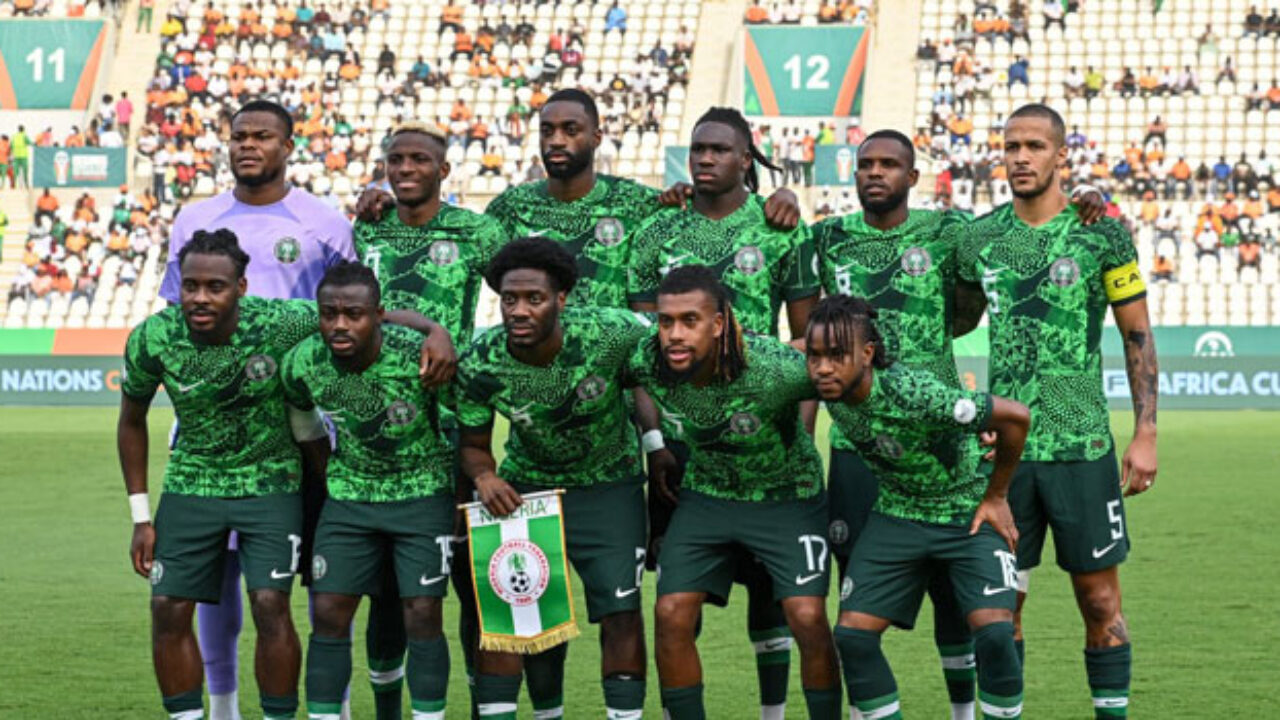

The defensive unit, anchored by Calvin Bassey and with Stanley Nwabali in goal, showed genuine improvement across the AFCON campaign, keeping four consecutive clean sheets during the knockout rounds of that tournament. Alex Iwobi and Wilfried Ndidi provide stability in midfield, and Moses Simon continues to be a reliable presence on the wings.
What Chelle’s squad demonstrated in Morocco is that the talent, when properly organised and given tactical clarity, can compete at the highest level on the continent. The question heading into qualification is whether that level of focus can be sustained across a compressed six-game window with lower-profile opposition, often the more difficult test psychologically.
Where Nigeria Could Struggle
The history of Nigerian qualifying campaigns shows a consistent pattern of dropped points against opponents ranked significantly below them. In the 2026 World Cup qualifiers, early draws against Lesotho, Zimbabwe, and South Africa, teams Nigeria was expected to beat comfortably, ultimately cost the campaign. The issue is not always quality; it is application and collective concentration across matches that carry less prestige.
Tanzania’s automatic qualification means every point Nigeria drops to Madagascar or Guinea-Bissau has amplified consequences. There is no margin to recover from an early defeat the way a five-team group might allow. Chelle has shown he can prepare Nigeria for high-profile knockout matches, the Gabon and DR Congo play-off games and the AFCON knockout rounds demonstrated that. The test in Group L is slightly different: maintaining intensity and focus across home-and-away legs against defensive sides who will not be intimidated by Nigeria’s name.
Home matches will be crucial. Nigeria’s home record in qualifying has been generally strong, but the NFF and the federation’s ongoing administrative challenges can affect preparation, player availability, and the general environment around the team.
What Qualification Would Mean for Nigerian Football
Two consecutive World Cup absences have shifted how Nigerian football is perceived across the continent. The AFCON bronze in Morocco was a genuine positive, but the tournament was won by Senegal, with Morocco as runners-up, and Nigeria was eliminated by the hosts in the semi-final, finishing behind both. The narrative of Nigerian football as an automatic qualifier for major tournaments no longer holds.
A clean, efficient qualification for AFCON 2027 would serve several purposes. It would provide continuity for Chelle’s setup and give the squad another major tournament cycle to develop further. It would also put Nigeria in position to genuinely compete for a fourth AFCON title, something the three-time champions have not managed since 2013. The 2027 tournament in East Africa, co-hosted by Kenya, Tanzania, and Uganda, will itself be a significant event for continental football, and Nigeria’s presence would carry weight commercially and culturally.
Beyond the squad’s aspirations, there is a broader institutional argument. Consistent qualification stabilises the federation’s finances, maintains player morale, and keeps Nigeria in the conversation at CAF level. Missing another major tournament, particularly one on the African continent itself, would represent a deepening of a crisis that has been building since 2022.
A Manageable Group With Unforgiving Margins
On the surface, Group L presents Nigeria’s most navigable path to a major tournament in several years. Madagascar and Guinea-Bissau are beatable, Tanzania is not the primary obstacle, and the squad Chelle has assembled is, by all objective measures, the strongest in the group. The case for confident qualification is straightforward.
What the recent history of Nigerian football argues, however, is that paper strength and tournament performance do not always align. The World Cup qualifying collapse happened with broadly the same pool of players. The AFCON semi-final exit in Morocco came against hosts playing in front of their own crowd, with Nigeria suffering what Chelle himself described as physical and mental fatigue at a critical moment.
Qualification from Group L is achievable and, in all likelihood, probable. But probable is different from guaranteed. Nigeria’s coaching staff knows that. The fans know that. The real question is whether the institutional memory of dropped points, penalty shoot-out exits, and narrow defeats has been addressed at a structural level deep enough to prevent repetition. If the answer is yes, the Super Eagles head to East Africa in 2027. If not, the post-mortems will be painful.