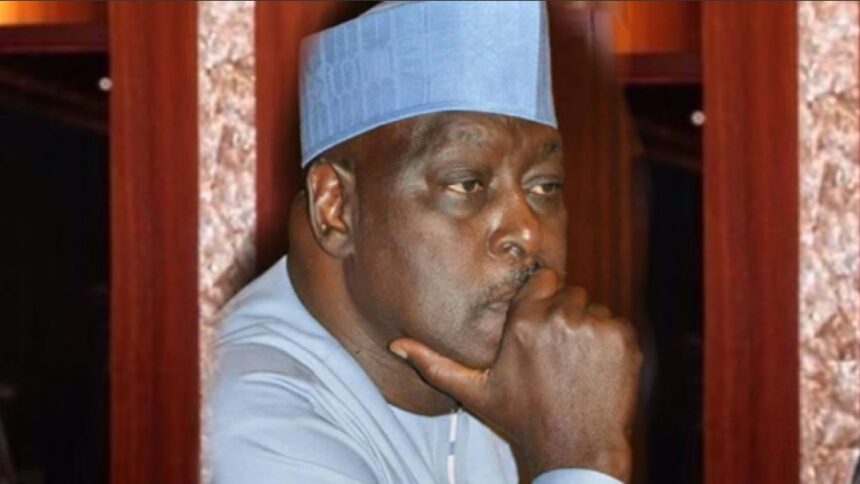
Former secretary to the government of the federation (SGF), Babachir Lawal, has once again found himself at the centre of political controversy following his resignation from the African Democratic Congress (ADC) over the conduct of the party’s presidential primary.
The development has reignited discussions about a political career marked by changing alliances, public disagreements and repeated departures from political camps he once actively supported.
Lawal announced his exit from the ADC on Monday, alleging that the party’s presidential primary was manipulated in favour of former Vice-President Atiku Abubakar.
In explaining his decision, the former SGF claimed the electoral process was compromised from start to finish.
“Everybody in ADC knows that the primary was manipulated, rigged massively. The result was doctored, and everybody who participated knew it,” he said.
From APC insider to Tinubu critic
For many years, Lawal was regarded as one of the influential northern figures within the All Progressives Congress and a strong ally of President Bola Tinubu.
His prominence increased during the administration of former President Muhammadu Buhari, where he served as Secretary to the Government of the Federation.
The former SGF had previously acknowledged the role played by Tinubu and former interim APC National Chairman, Chief Bisi Akande, in supporting his appointment under the Buhari administration.
However, the relationship later became strained ahead of the 2023 presidential election.
The turning point emerged after Tinubu selected former Governor Kashim Shettima of Borno State as his running mate.

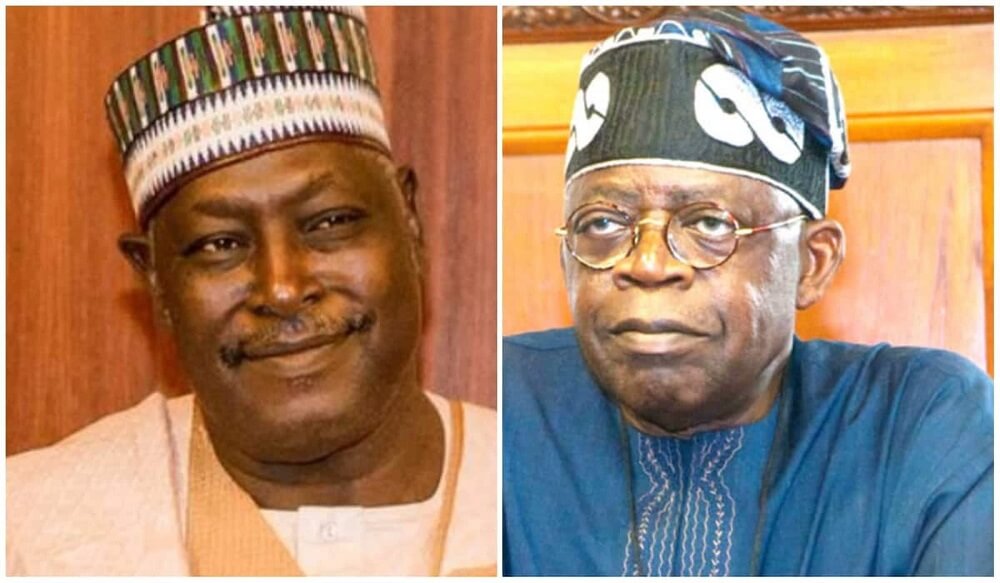
Lawal publicly opposed the APC’s Muslim-Muslim ticket and subsequently withdrew his support for Tinubu’s presidential bid.
As the election approached, he became one of the most outspoken northern politicians backing the candidacy of former Governor Peter Obi of Anambra State.
The Obi alliance and a new political destination
Lawal’s association with Obi initially appeared to strengthen efforts aimed at expanding the Labour Party candidate’s influence in northern Nigeria.
He consistently praised Obi and participated in campaigns designed to attract support for the former Anambra governor.

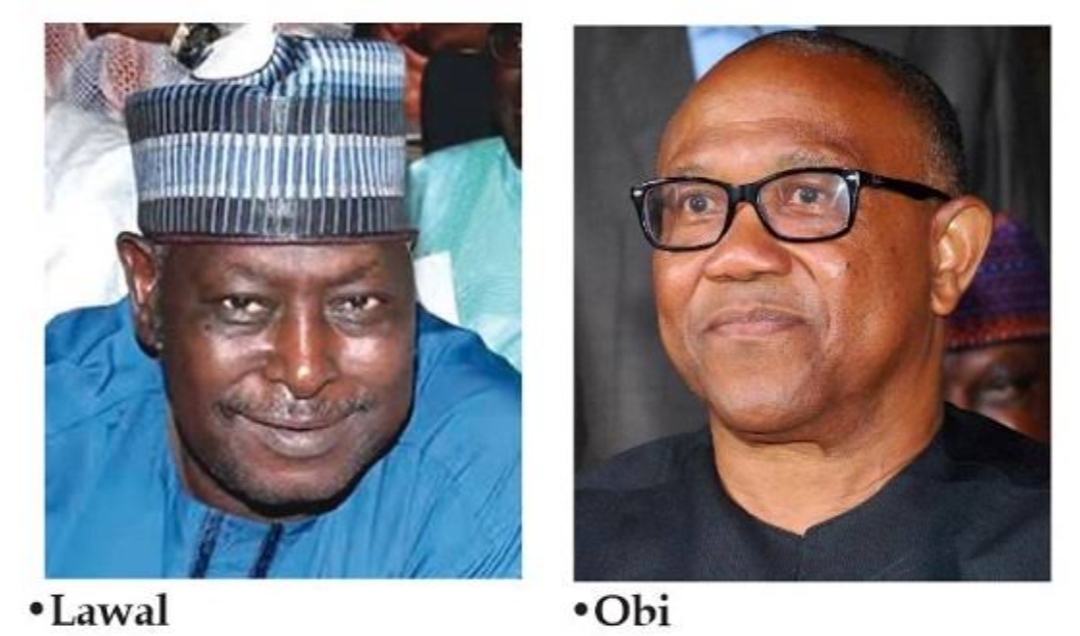
The alliance, however, gradually weakened as opposition realignments intensified ahead of the 2027 election cycle.
Lawal eventually aligned with the ADC coalition, which attracted several opposition figures seeking a common platform.
The coalition later produced Atiku as its presidential candidate after a contested primary election.
Fallout with Atiku
One of the striking aspects of Lawal’s latest political dispute is that both he and Atiku are from Adamawa State.
Before the primary, Lawal was actively involved in ADC affairs and was considered one of the party’s prominent opposition figures.

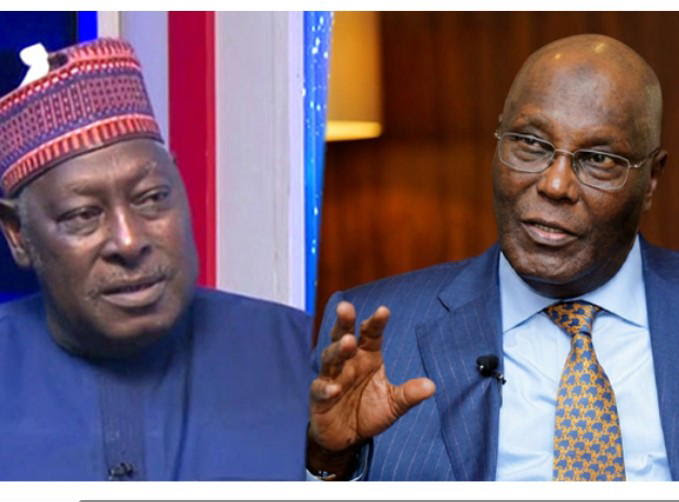
Following Atiku’s victory with 1,846,370 votes ahead of former Governor Rotimi Amaechi of Rivers State and businessman Mohammed Hayatu-Deen, Lawal openly challenged the legitimacy of the process.
He alleged that the exercise had been influenced by Atiku’s supporters.
“Surprisingly, all over the place, Atiku and his people compromised almost everybody, and the results were doctored,” he said.
“Where there were primaries at all, they changed. Where the result didn’t favour them, they wrote what they wanted and declared the result.”
Lawal also questioned Atiku’s suitability for the presidency.
“I know Atiku. I’ve said his antecedents. I have known his capabilities, and I realised that his presidency will be worse than Bola Tinubu,” he said.
The former SGF subsequently declared his intention to oppose Atiku’s presidential ambition.
Fresh controversy and strong reactions
Following his resignation from the ADC, Lawal appeared on Channels Television’s Politics Today, where he launched further criticism against both Atiku and the current political system.
Asked whether President Tinubu had effectively secured victory ahead of 2027, Lawal replied, “Landslide. He will outrig everybody. If the parameter for winning the election in Nigeria is rigging, nobody can face Bola Tinubu in this.”
He also compared Atiku’s political approach to Tinubu’s influence in electoral contests.
“If Atiku’s strength is in manipulating results, I wish him luck. He will meet the master rigger in the front,” he said.
Lawal generated additional controversy by repeatedly referring to Atiku as “Kachalla”.
“That is the title people like Turji are calling their local leaders,” he said.
When challenged over the remark, the former SGF questioned whether Atiku had done enough to condemn insecurity-related incidents across the country.
Defending the primary outcome
Atiku’s camp has rejected the allegations made by Lawal and insisted that the primary process was credible.
Atiku’s spokesperson, Phrank Shaibu, accused the former SGF of making claims without supporting evidence.
“He has produced no documents, no verifiable facts, no credible witnesses, and no proof whatsoever to support his sensational allegations,” Shaibu said.
Shaibu also questioned Lawal’s acceptance of the emergence of his cousin, Omar Suleiman, as the ADC governorship candidate in Adamawa State.
“If the ADC primaries were truly the sham Mr Lawal now portrays them to be, intellectual honesty would require him to reject every outcome arising from that exercise, including the emergence of his cousin,” he said.
ADC chieftain Dele Momodu also dismissed Lawal’s criticisms.
“He was rambling and sounded a bit confused about the subject matter,” Momodu said.
A reputation for political unpredictability
Throughout his political journey, Lawal has repeatedly shifted from ally to critic across multiple political relationships.
He moved from being a supporter of Tinubu to becoming one of his opponents, backed Obi before distancing himself from that camp, and later joined the ADC coalition before publicly challenging Atiku.
Whether those transitions reflect adherence to personal convictions or a pattern of political restlessness remains a matter of interpretation among observers.
What remains evident is that Lawal continues to occupy a unique place in Nigeria’s political landscape as a figure whose alliances and disagreements often generate significant attention.
His latest departure from a political camp adds another chapter to a career that has frequently defied predictable political loyalties.