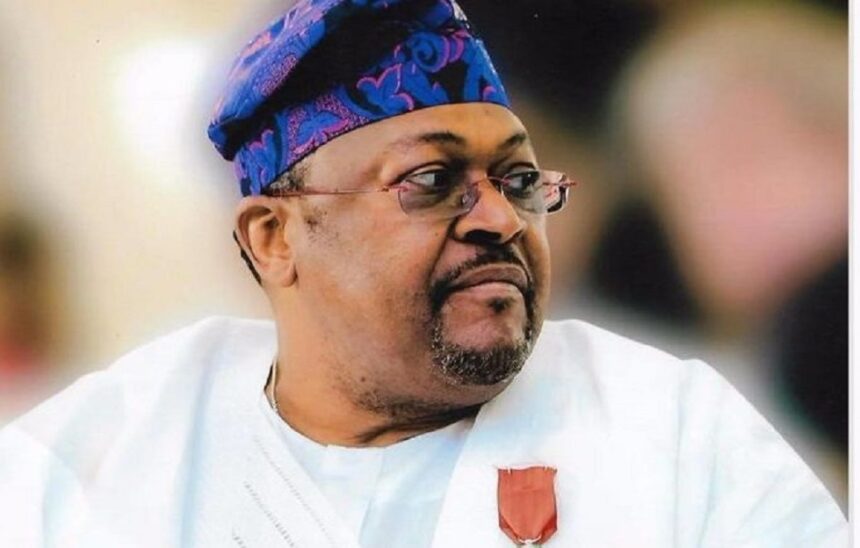
When Globacom launched in August 2003, the Nigerian telecom market had just two mobile operators and SIM cards sold for as much as N25,000. The man who changed that was Mike Adenuga, a Yoruba businessman from Ibadan who had already struck oil, built banks, and quietly accumulated one of the largest private fortunes on the continent. What he did to the telecom industry in the years that followed reshaped how ordinary Nigerians communicate and made him a billionaire whose wealth Forbes now tracks in the billions of dollars.
- Before Telecom: The Business Foundation Adenuga Built
- The GSM License Drama: Revoked and Reinstated
- Per-Second Billing and the Price War That Forced MTN to Follow
- The Glo-1 Submarine Cable: Adenuga’s Biggest Infrastructure Bet
- Competing Against MTN: Strategy, Scale, and Structural Disadvantage
- Adenuga’s Wealth and the Empire Beyond Globacom
- The Nigerian Context: Why Globacom’s Story Matters
- Challenges and the Road Ahead for Glo
- Conclusion
How Mike Adenuga Built Globacom to Compete With MTN and Became a Billionaire

The story of how Mike Adenuga built Globacom into a company capable of going toe-to-toe with MTN is also a story about price, access, and what happens when a well-capitalised indigenous entrepreneur decides to play the long game in a capital-intensive industry. From his first conditional GSM license in 1999 to Globacom’s current position as Nigeria’s second-largest telecom operator, the journey spans regulatory setbacks, infrastructure bets that cost hundreds of millions of dollars, and a competitive philosophy that remains distinctly different from that of its multinational rivals.
Before Telecom: The Business Foundation Adenuga Built
Michael Adeniyi Agbolade Ishola Adenuga Jr. was born on April 29, 1953, in Ibadan, to a schoolteacher father and a businesswoman mother of royal Ijebu descent. He did his secondary education at Ibadan Grammar School before travelling to the United States, where he studied business administration at Northwestern Oklahoma State University and Pace University in New York. By most accounts, he drove a taxi and worked other jobs to fund his studies, a detail that has become central to how his story is told in Nigerian business circles.
When he returned to Nigeria in the mid-1970s, he noticed gaps that others overlooked. He began trading in lace and distributing soft drinks, and by 1979, at age 26, he had made his first million naira. That early instinct to identify undersupplied markets and move quickly would define his approach to larger bets that came later.
The more consequential move came in 1990, when Adenuga secured a drilling license. In December 1991, his company Consolidated Oil, later rebranded Conoil, became the first indigenous Nigerian firm to strike crude oil in commercial quantities, doing so in the shallow waters of Ondo State. That achievement established his credibility with banks, regulators, and fellow investors, and positioned him to take risks of a different scale when the telecom window opened later in the decade.
The GSM License Drama: Revoked and Reinstated
Nigeria’s GSM era officially began in 2001, but Adenuga had been working toward it since 1999. That year, through his company Communications Investment Limited (CIL), he was issued a conditional GSM license. It was revoked before the network could launch, a setback attributed at the time to regulatory and compliance issues, though Adenuga has never publicly detailed what happened.
The revocation meant he watched from the sidelines as MTN and the company that would eventually become Airtel (then called Econet) entered the market in 2001. For two years, those two operators effectively controlled Nigeria’s mobile sector. SIM cards remained expensive, call rates were steep, and per-second billing, a concept that would become Glo’s signature competitive weapon, was dismissed as commercially unviable by both incumbents.
Adenuga got his second chance in 2003 when the Nigerian Communications Commission held another licensing round. He acquired a fresh license, and on August 29, 2003, Globacom launched as Nigeria’s first indigenous GSM operator. The timing was deliberate: by entering two years after the market opened, he had watched the incumbents’ pricing strategies closely and identified exactly where to hit them.
Per-Second Billing and the Price War That Forced MTN to Follow
Globacom’s market entry was built around two disruptions. The first was SIM card pricing. MTN and the incumbent operators had kept SIM card prices in the range of N25,000, a figure that effectively excluded the majority of Nigerians. Glo slashed its SIM price to N200, making mobile access genuinely affordable across income levels for the first time.
The second disruption was per-second billing (PSB). Nigeria’s existing operators insisted that PSB was commercially impossible, that the cost of infrastructure and licenses made it unworkable at profitable margins. Glo launched with PSB from day one. Call rates dropped from as high as N50 per minute to as low as a few kobo per second. The impact was immediate: ordinary Nigerians flooded into the market, and MTN and the others had no choice but to follow.
This moment is difficult to overstate in terms of its effect on the broader Nigerian economy. Active phone lines in Nigeria stood at roughly 400,000 in 2001. The entrance of competition, largely triggered by Glo’s aggressive pricing, drove that number toward 150 million over the following two decades, and ultimately beyond 200 million. Broadband penetration, near zero in 2003, crossed 55 percent by the early 2020s. Glo did not do this alone, but it lit the match.
The Glo-1 Submarine Cable: Adenuga’s Biggest Infrastructure Bet
By the late 2000s, Adenuga had decided that Globacom could not remain just a voice and SMS operator. Data was coming, and bandwidth was the constraint. His answer was Glo-1, a 9,800-kilometre submarine fibre-optic cable connecting the United Kingdom to Nigeria via Portugal and Ghana. The project cost in the range of $800 million to $1.5 billion depending on the accounting, and it made Globacom the first single telecommunications company in the world to own its own high-capacity submarine cable.
Glo-1 became operational in 2009 and immediately reduced the cost of international bandwidth in West Africa. Other operators benefited indirectly because its presence created competitive pressure on wholesale bandwidth pricing. But Globacom benefited directly: it could offer data plans at prices that infrastructure-constrained rivals struggled to match, and it positioned itself as a broadband player rather than just a voice carrier. The company would later market itself as the ‘Grandmaster of Data’, a brand positioning rooted in this infrastructure advantage.
Competing Against MTN: Strategy, Scale, and Structural Disadvantage
The honest picture of Globacom’s competitive standing in 2025 is more complicated than the origin story suggests. MTN Nigeria remains the dominant operator by a wide margin. As of January 2025, MTN held roughly 52 percent of Nigeria’s mobile subscriber market with approximately 87.5 million subscribers, while Globacom held around 12 percent with roughly 20 million subscribers. Airtel, which grew aggressively over the same period, sits at approximately 34 percent.
Globacom’s market share peaked at around 27 to 28 percent during the mid-2010s and contracted sharply following the Nigerian Communications Commission’s NIN-SIM verification exercise in 2024, which removed millions of unverified subscribers from operator rolls. The company lost a substantial portion of its registered subscriber base in that process. Recovery has been gradual.
Analysts point to a widening spectrum gap as a structural challenge. MTN has pursued an aggressive spectrum acquisition strategy, including purchases in the 2.6GHz band and a lease arrangement with NTEL in 2024, that has given it faster data speeds and greater network capacity in dense urban areas. Globacom, by contrast, has taken a more restrained approach to spectrum investment, which industry observers link either to capital constraints or a deliberate philosophy of cost control. The result is a growing perception gap in network quality between the two operators.
Where Globacom continues to differentiate is in fibre backhaul. The company has built nationwide fibre rings that support its LTE base stations, enabling competitive flat-rate data pricing particularly in secondary cities and towns where MTN’s urban infrastructure advantages are less pronounced. Its Glo-1 submarine cable remains a genuine asset, and its MoneyMaster Payment Service Bank, launched in October 2022 with 100,000 agents, is a serious push into financial inclusion territory that extends Glo’s footprint beyond pure telecom.
Adenuga’s Wealth and the Empire Beyond Globacom
Telecom is the most visible part of Mike Adenuga’s portfolio, but it is not the only one. His net worth has fluctuated significantly with the performance of Globacom and macroeconomic conditions in Nigeria. Forbes estimated his fortune at $6.8 billion as of December 2024, which placed him as the third-richest Nigerian behind Aliko Dangote and Abdulsamad Rabiu, and among the wealthiest individuals in Africa.

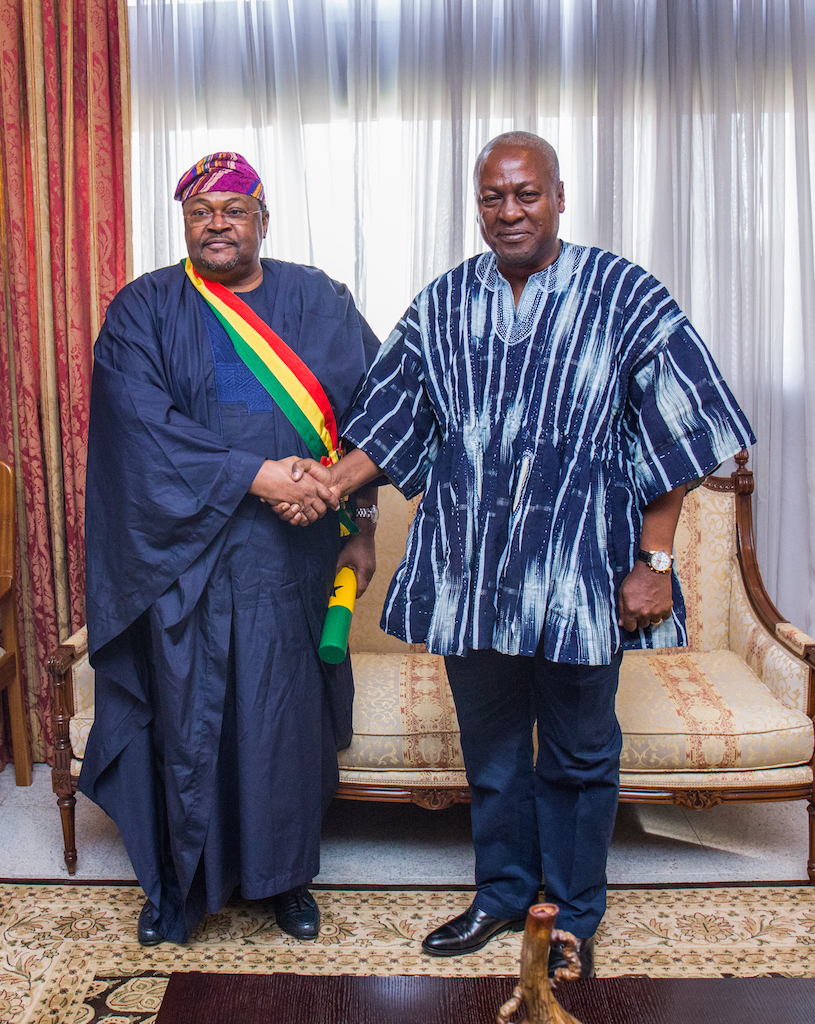
His oil interests operate through Conoil Producing, which manages six oil blocks in the Niger Delta. The company produces around 20,000 barrels of oil per day and holds roughly 400 million barrels of recoverable reserves along with 1.8 trillion cubic feet of gas reserves. He also holds a significant stake in Conoil Plc, the publicly traded petroleum marketing company, as well as positions in Sterling Financial Holdings and construction giant Julius Berger. His real estate portfolio includes the 1004 Estates in Lagos.
The wealth trajectory has not been a straight line. Adenuga’s fortune peaked at approximately $10 billion in 2015, dropped to around $3.6 billion in a difficult period, and has since recovered. The volatility reflects how heavily his valuation is tied to Globacom, a privately held company where revenue figures are not publicly disclosed. When analysts revise their estimates of Globacom’s value, Adenuga’s Forbes ranking moves accordingly.
The Nigerian Context: Why Globacom’s Story Matters
For Nigerians, the significance of Globacom is partly about price and partly about identity. Every telecom operator active in Nigeria before 2003 was foreign-owned. MTN is South African. The company that became Airtel is ultimately Indian. Glo was born locally, capitalised locally, and built by a man who had grown up in Ibadan and made his first money trading lace.
That identity has shaped how Globacom positions itself culturally. The company has sponsored the Ojude Oba Festival in Ijebu-Ode, the Ofala Festival in Onitsha, the Nigerian Premier League, and the CAF African Player of the Year Award over various periods. It backed the Super Eagles in ways that kept the national team visible, and its talent shows produced musicians and entertainers who went on to international careers. These are not incidental marketing choices, they are a consistent articulation of a brand philosophy that says Nigerian telecom wealth can be reinvested in Nigerian culture.
The Mike Adenuga Foundation has channelled resources into education scholarships, healthcare support, and community development. During the COVID-19 pandemic, Adenuga donated N1.5 billion split between the Lagos State Government and the federal government. His philanthropy is conducted with minimal public profile, consistent with a man who, despite being one of Africa’s wealthiest individuals, has given almost no formal media interviews across a career spanning four decades.
Challenges and the Road Ahead for Glo
Globacom’s position in 2025 is stable but under pressure. The spectrum gap with MTN is a real technical constraint. Subscriber numbers have not recovered to their pre-2024 levels. The company faces foreign exchange headwinds on dollar-denominated infrastructure costs, a challenge shared with every Nigerian telecom operator but felt more acutely by one that has committed to submarine cable maintenance obligations. The naira’s sharp depreciation from N481 per dollar in 2023 to an average of N1,508 per dollar in 2024 has significantly increased operating costs across the sector.

At the same time, Glo’s fibre infrastructure, its submarine cable, its fintech play through MoneyMaster, and its footprint in Ghana and Benin give it genuine assets that smaller operators lack. The company has also invested in digital innovation hubs, with a first hub opening in Lagos in late 2024 and additional hubs planned for Port Harcourt, Ibadan, and Abuja, as part of a stated commitment to Nigeria’s tech ecosystem.
Whether Globacom can recover meaningful market share against a well-capitalised MTN that now controls more than half of Nigeria’s mobile market is an open question. What is not in question is the historical contribution: by entering in 2003 with pricing that incumbents claimed was impossible, Globacom broke a duopoly and put mobile phones within reach of tens of millions of Nigerians who had previously been priced out. That is Mike Adenuga’s most consequential achievement, and it happened long before anyone tallied up his net worth.
Conclusion
Mike Adenuga built Globacom through a combination of calculated timing, disruptive pricing, and infrastructure bets that most competitors lacked the appetite to match. The per-second billing model that launched in 2003, the Glo-1 submarine cable completed in 2009, and the MoneyMaster fintech push of the 2020s all reflect the same operating logic: identify where the market is underserving Nigerians, invest heavily, and force the competition to respond. His net worth, estimated by Forbes at $6.8 billion at the end of 2024, is the result of those compounding decisions across telecoms, oil, banking, and real estate. Globacom’s current challenges are real, but they do not change the origin story: a Nigerian businessman who looked at MTN’s pricing structure and decided it could be beaten.