Every year, Nigeria spends billions of naira importing liquefied petroleum gas, the cooking gas that millions of households depend on, from countries like the United States, Algeria, and Equatorial Guinea. That fact alone would be unremarkable if Nigeria were a small or resource-poor country. But Nigeria holds the largest proven natural gas reserves on the African continent, estimated at over 211 trillion cubic feet as of 2024 according to OPEC. The country ranks eighth globally in proven gas reserves, yet it ranks only twelfth in production. Something is deeply broken in that gap.
- The Scale of What Nigeria Is Sitting On
- Gas Flaring: Burning Wealth in Plain Sight
- The Infrastructure Gap That Makes Imports Inevitable
- Pipeline Vandalism and Security: The Hidden Tax on Gas Supply
- Export Contracts Locked In Before Domestic Needs Were Served
- The Pricing Distortion That Discourages Domestic Supply
- The Role of International Oil Company Divestments
- What Nigeria Has Done, and What Remains Unfinished
- What This Means for Ordinary Nigerians
- The Answer Is Structural, Not Simply Political
The contradiction runs deeper than simple irony. While Nigeria LNG Limited (NLNG) at Bonny Island exports millions of tonnes of liquefied natural gas to France, Spain, China, and India each year, Nigerians at home queue for cooking gas and absorb price shocks driven by import costs, foreign exchange volatility, and a pipeline network that has never been fully built. Understanding why this happens requires looking at infrastructure failures, policy misalignment, security crises, and decades of prioritising export revenue over domestic supply.
Reasons Why Nigeria Imports Gas Despite Having Africa’s Largest Natural Gas Reserves
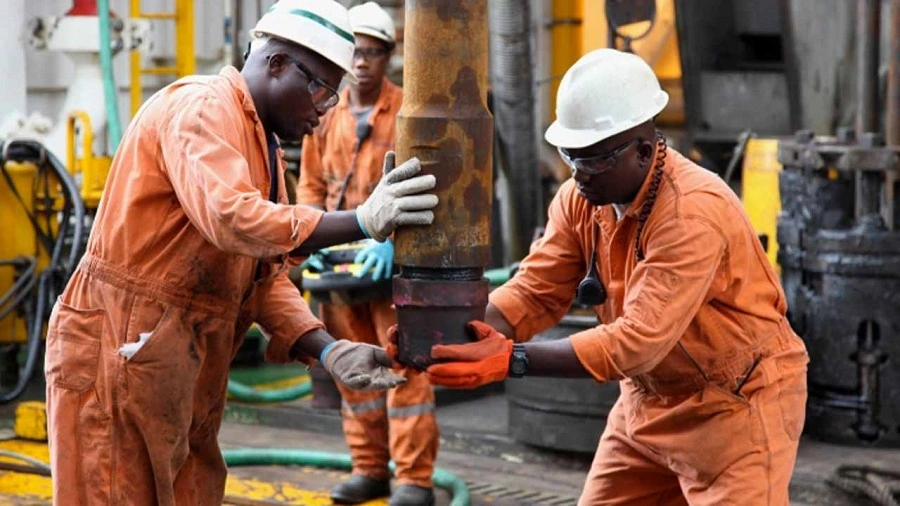

The short answer is that reserves underground mean very little without the infrastructure and incentive structures to bring gas from the wellhead to a kitchen stove in Kano or a factory in Ogun State. Nigeria’s gas import problem is not a resource problem. It is a delivery problem, compounded by security threats, regulatory distortions, financing gaps, and a longstanding institutional bias toward LNG export over domestic consumption.
The Scale of What Nigeria Is Sitting On
To understand the paradox, start with the numbers. According to OPEC’s 2025 Annual Statistical Bulletin, Nigeria held approximately 211.1 trillion cubic feet of proved natural gas reserves in 2024. The Nigerian Upstream Petroleum Regulatory Commission (NUPRC) put the figure slightly higher at 210.54 Tcf as of January 2025. Either way, only Algeria and Egypt come close on the continent, and both fall well short.
Total gas production runs at roughly 8 billion cubic feet per day. Of that, about 3 billion cubic feet per day is exported as LNG, and only 1.5 billion cubic feet per day is used domestically. The rest is either re-injected into oil fields, lost to pipeline inefficiencies, or burned off through gas flaring. For a country with over 200 million people and persistent energy poverty, that domestic allocation is nowhere near sufficient.
Gas Flaring: Burning Wealth in Plain Sight
Gas flaring is one of the most visible symbols of Nigeria’s gas governance failure. For decades, oil companies operating in the Niger Delta have burned off associated gas, the natural gas that emerges alongside crude oil, because it was cheaper to flare than to capture, process, and transport it. The infrastructure required to do so simply was not built.
Between 2022 and 2024, Nigeria flared an average of roughly 187 billion standard cubic feet of gas annually, according to energy sector analysts. The National Oil Spill Detection and Remediation Agency (NOSDRA) reported that Nigeria lost approximately $443.8 million to gas flaring in just the first four months of 2025 alone, nearly 20 percent higher than the same period in 2024. That wasted volume, if captured and used, could theoretically generate between 27 and 29 terawatt-hours of electricity per year, dwarfing Nigeria’s current average electricity generation of roughly 4,000 to 4,500 megawatts.

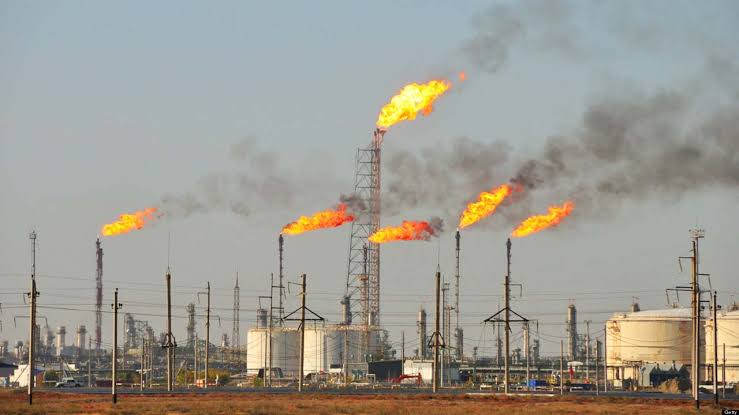
The government has tried. The Nigeria Gas Flare Commercialisation Programme was launched in 2016, targeting an end to routine flaring by 2020. That deadline passed quietly. NUPRC now publicly targets ending routine flaring by 2030. Progress has stalled due to what regulators themselves describe as weak community governance, currency risk, financing barriers, and slow policy execution.
The Infrastructure Gap That Makes Imports Inevitable
Reserves underground become usable energy only through processing plants, pipelines, storage facilities, and distribution networks. Nigeria’s domestic gas infrastructure has historically been underfunded, poorly maintained, and geographically concentrated in ways that leave most of the country underserved.
There are only three major gas transmission networks in Nigeria, all owned by the Nigerian Gas Processing and Transportation Company Limited (NGPTC): the Eastern network, the Western network, and the Ajaokuta-Kaduna-Kano (AKK) pipeline which was still being activated for use into 2026. Many oil fields lack the equipment to capture associated gas at all. Where capture infrastructure exists, it often runs into pipeline bottlenecks before gas reaches processing or distribution points.
For liquefied petroleum gas specifically, the cooking gas that households buy in cylinders, the situation is particularly stark. Industry analysts have pointed out that Nigeria has only two fully functional LPG landing jetties, both located in Lagos. Bulk storage terminals are inadequate across most of the country, and distribution networks thin out rapidly outside major urban centres. An energy sector expert cited in the Nigerian press noted that Saudi Arabia has a per capita LPG consumption rate of nearly 500 kilograms, while Nigeria’s rate remains a fraction of that, not because demand does not exist, but because supply cannot reach consumers reliably or affordably.
Pipeline Vandalism and Security: The Hidden Tax on Gas Supply
Even where gas infrastructure exists, it operates under constant threat. The Niger Delta, where virtually all of Nigeria’s oil and gas production is concentrated, has experienced decades of pipeline vandalism driven by community grievances over resource allocation, poverty, and environmental degradation. Between 2018 and 2023, security researchers documented over 7,000 cases of pipeline vandalism in the region, resulting in substantial losses of crude and gas supply.

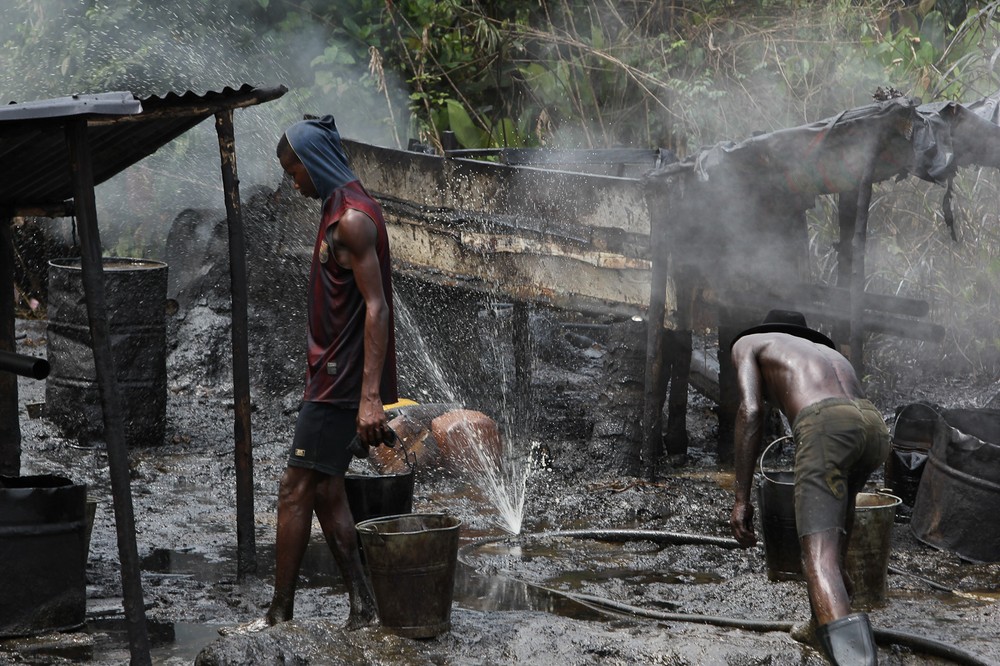
Pipeline attacks do not just reduce volumes. They shut down operations for weeks or months while repairs are completed, deter long-term investment in new infrastructure, and create persistent uncertainty for industrial gas buyers who cannot rely on steady supply. This unreliability pushes manufacturers, power generators, and gas distributors toward imported alternatives or more expensive backup sources.
The upstream security problem also directly affects LNG output. Unplanned shutdowns and supply interruptions have historically reduced Nigeria’s LNG export volumes below its installed capacity, and when production dips, domestic supply is often the first casualty, since export contracts carry stronger legal and financial enforcement mechanisms than domestic delivery obligations.
Export Contracts Locked In Before Domestic Needs Were Served
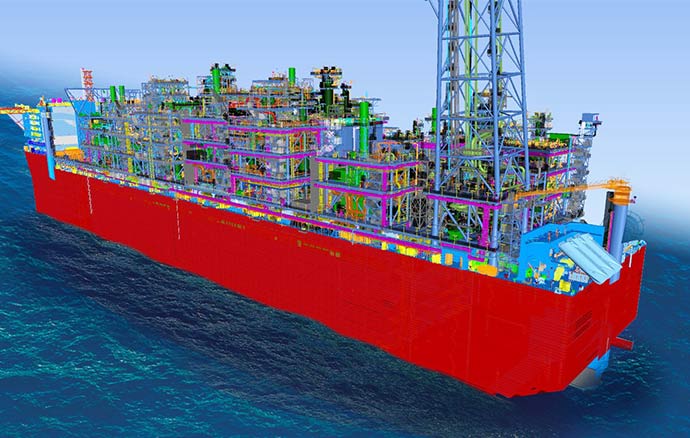
Nigeria’s primary LNG operator, NLNG Limited, a joint venture between NNPC, Shell, TotalEnergies, and Eni, operates six liquefaction trains at Bonny Island with a combined capacity of 22 million tonnes per year. The facility was built with a clear commercial mandate: export gas to global markets and earn foreign exchange. Its long-term supply agreements are with European and Asian buyers. According to the Energy Institute’s 2025 Statistical Review of World Energy, Nigeria ranked sixth globally among LNG exporters in 2024.
For years, this export orientation meant that the NLNG facility served as a pipeline to Rotterdam and Tokyo while Nigerians imported cooking gas from Algeria and Equatorial Guinea. The domestic LPG market, which depends on the same natural gas feedstock, received secondary priority. The NLNG does produce LPG as a by-product of its liquefaction process, and the government has in recent years directed NLNG to prioritise the domestic market for its LPG output. But NLNG’s LPG volumes are not sufficient alone to meet national demand, especially as the country’s population and domestic consumption have grown.
The Pricing Distortion That Discourages Domestic Supply
Gas producers in Nigeria face a structural disincentive when it comes to selling into the domestic market. International LNG prices, linked to global energy markets, are substantially higher than the regulated domestic base price that Nigerian regulations require producers to offer local buyers. Under the Petroleum Industry Act (PIA) of 2021 and subsequent regulatory determinations, the domestic base price for gas sold to the power sector was set at $2.42 per million British thermal units (MMBTU) for 2024. For industrial users, the floor price can drop as low as $0.9 per MMBTU.
Compare that with international spot prices or even the long-term contract prices that NLNG commands from European buyers, and the incentive calculation is obvious. Producers earn far more selling to NLNG’s export stream than to domestic buyers. Without sufficiently strong enforcement of domestic delivery obligations or higher domestic pricing that reflects actual market values, producers will rationally orient gas toward export. The PIA did introduce Domestic Gas Delivery Obligations, requiring upstream lessees to meet domestic quotas before export, but enforcement and compliance monitoring remain ongoing challenges.
The Role of International Oil Company Divestments
A further complication has been the withdrawal of major international oil companies from Nigerian onshore and shallow water assets. Shell has been divesting its onshore operations as part of a global strategy to shift toward lower-carbon projects. ExxonMobil and Eni have pursued similar moves. These companies have been among the primary operators of gas-producing assets in the Niger Delta.
As they exit, their assets are acquired by indigenous Nigerian companies, often with less capital, less technical capacity, and limited access to international financing. This transition has created investment gaps that slow the development of gas capture and processing infrastructure. Financing constraints have compounded the infrastructure deficit, particularly for the midstream and downstream facilities needed to move gas from wellheads to consumers.
What Nigeria Has Done, and What Remains Unfinished
The Nigerian government has not been passive. The ‘Decade of Gas’ policy, championed under successive administrations, positioned gas as a transition fuel for both domestic industrialisation and export growth. The Petroleum Industry Act of 2021 restructured the regulatory framework, created new enforcement bodies, and formalised domestic delivery obligations. An executive order signed by President Tinubu in February 2024 introduced fiscal incentives for non-associated gas projects, including tax credits for qualifying upstream operators.

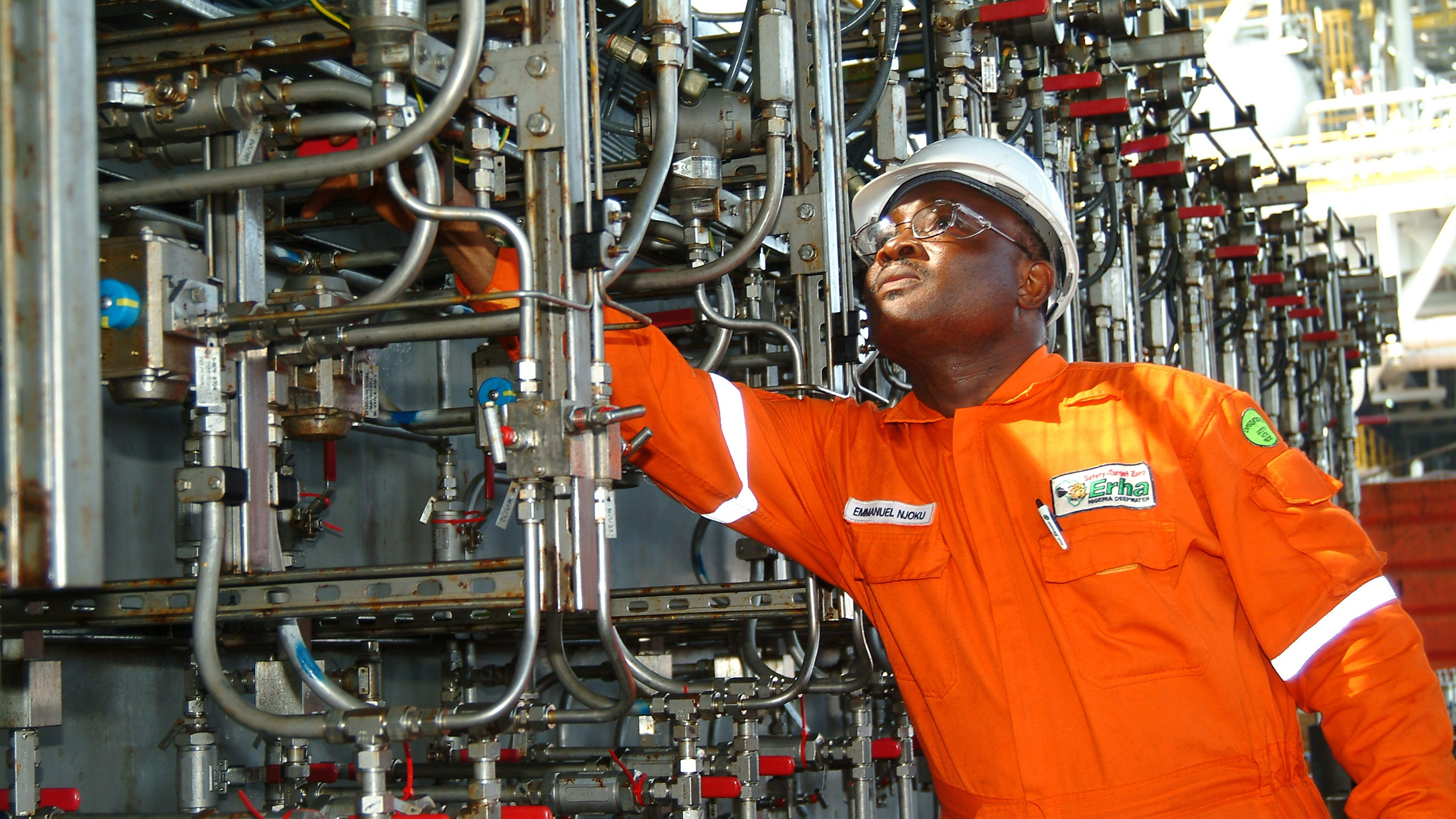
Infrastructure projects have moved forward, though slowly. The Ajaokuta-Kaduna-Kano (AKK) pipeline, which is designed to carry gas from the Niger Delta into northern Nigeria, was progressing toward full activation into 2026. The Nigeria-Morocco Gas Pipeline project, which would eventually link Nigerian gas to markets across West Africa and potentially into Europe, broke ground in July 2025. NLNG’s seventh liquefaction train, expected to expand capacity from 22 to 30 million tonnes per year, is under construction, though debate continues over how much of that additional output should serve domestic LPG needs versus export contracts.
The 2024 VAT Modification Order exempted LPG from value-added tax in an effort to reduce retail costs. Gas marketers have set ambitious targets for scaling domestic supply toward six million tonnes annually. These are real policy steps. But infrastructure, physical pipelines, storage depots, filling plants, and distribution networks, takes years and billions of dollars to build. Policy announcements do not move gas.
What This Means for Ordinary Nigerians
For the average household in Lagos, Abuja, or Ibadan, the abstract paradox of exporting LNG while importing LPG translates into practical hardship. Retail cooking gas prices are denominated in naira but exposed to dollar-linked import costs, meaning naira depreciation directly inflates what consumers pay at the refilling station. Industry sources cited in Nigerian media in late 2025 put average retail LPG prices at between N1,200 and N1,500 per kilogram, depending on location.
Supply reliability compounds the price problem. Regional shortages persist because storage infrastructure is thin outside Lagos and Port Harcourt. When supply disruptions hit, whether from upstream security incidents, foreign exchange shortfalls for importers, or logistical breakdowns, households that cannot afford periodic price spikes fall back on firewood and charcoal, with associated health and environmental costs.
Industrial users face similar constraints. Gas-dependent manufacturers, power generators, and fertiliser producers cannot expand output or plan reliably when gas supply is uncertain. The power sector, Nigeria’s largest domestic gas consumer, has long suffered from gas shortfalls that contribute directly to the country’s chronic electricity crisis. The NUPRC has warned that demand for gas could outpace supply by 2030 even if major infrastructure projects come online on schedule, a timeline that has historically been optimistic.
The Answer Is Structural, Not Simply Political
Nigeria imports gas not because it lacks gas, but because decades of underinvestment, security instability, export-oriented infrastructure, regulatory pricing distortions, and institutional inertia have created a domestic supply system unable to efficiently convert vast underground reserves into affordable energy for citizens and industries.
The resources exist. The production exists, in part. What has not kept pace is the web of physical and institutional infrastructure needed to capture, process, transport, and price gas in a way that makes domestic supply commercially viable and geographically accessible. Fixing that requires capital, security, consistent policy enforcement, and time, not just announcements.
Until that gap closes, Nigeria will continue the uncomfortable reality of being one of the world’s most gas-rich countries while importing cooking gas from its neighbours. The contradiction is not permanent, but resolving it demands more than policy documents.