She was fourteen years old when armed men came for her in the night. She was a student at a government boarding school in a small town in Yobe State, sitting for classes she hoped would give her a future. On February 19, 2018, that future was interrupted, possibly forever. Her name is Leah Sharibu, and she has now spent more than eight years as a captive of the Islamic State West Africa Province, the faction commonly known as ISWAP, which grew out of the Boko Haram insurgency. Every major chapter of her life since that night has unfolded in captivity: her fifteenth birthday, her eighteenth, her twenty-first. On May 14, 2026, she turned twenty-three. She remains unreleased.
- Early Life and Family Background
- The Dapchi Abduction: February 19, 2018
- Why She Was Not Released: The Faith Question
- Years in Captivity: Reports, Children, and Uncertain Conditions
- Two Presidencies, Two Sets of Promises
- International Attention and Advocacy
- The Dapchi Attack in the Context of Nigeria’s Kidnapping Crisis
- The Leah Foundation and Ongoing Advocacy
- Conclusion: Eight Years and Still Waiting
The Biography of Leah Sharibu


Leah Sharibu’s story has become one of the most prolonged and painful symbols of Nigeria’s jihadist kidnapping crisis. She is the only girl from the 2018 Dapchi abduction who was never brought home, singled out, according to multiple accounts, for refusing to renounce her Christian faith. Understanding who she is, what happened to her, and why she is still being held requires moving through the full arc of a life that has been largely defined by captivity.
Early Life and Family Background
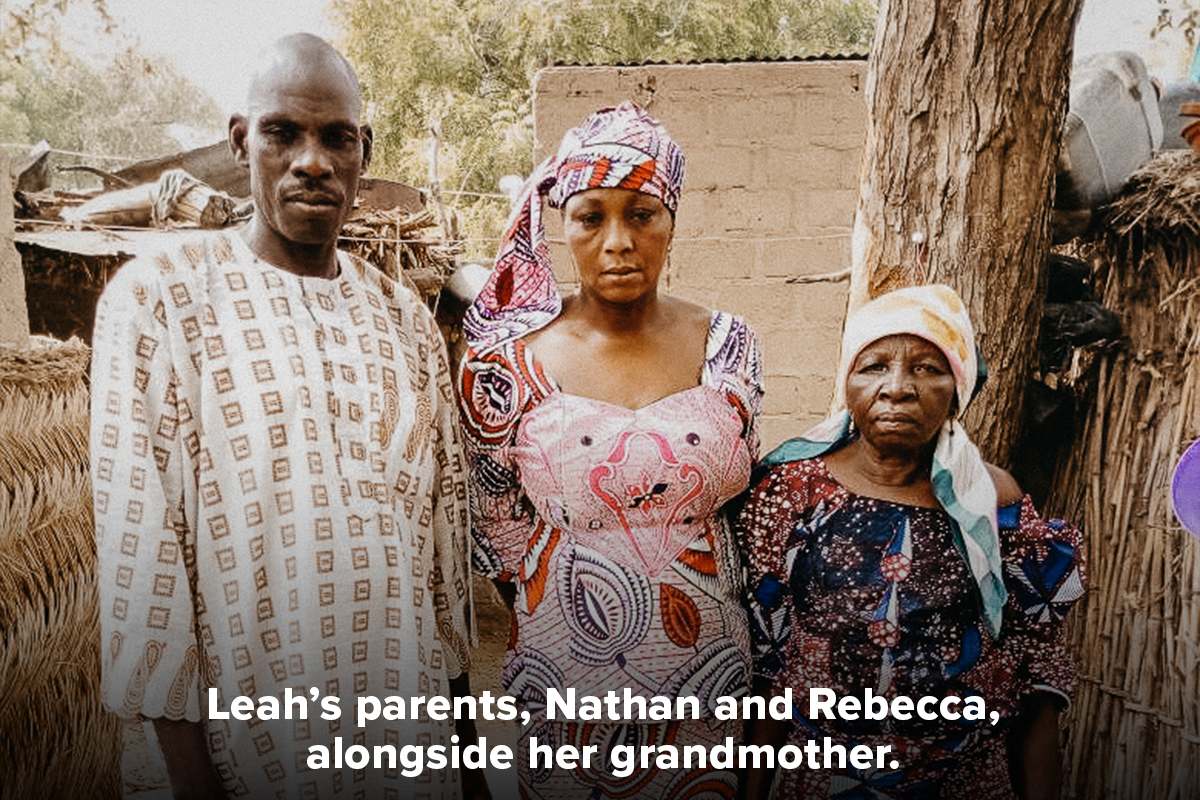
Leah Sharibu was born on May 14, 2003, in Nigeria. Her parents are Nathan Sharibu and Rebecca Sharibu, a Christian family from the Evangelical Church Winning All (ECWA) denomination. Her father, Nathan, has been one of the most publicly vocal advocates for her release, regularly speaking to Nigerian and international media, while her mother, Rebecca, has repeatedly described the years since the abduction as a sustained emotional trauma.
By all accounts from family, church community, and advocacy groups, Leah was described as a bright, helpful, and deeply faithful child. Her mother said in an interview that when Leah was home, she took on most of the household chores willingly. She was enrolled at the Government Girls’ Science and Technical College in Dapchi, in Yobe State, a boarding school in northeast Nigeria, in a region that had already seen years of Boko Haram activity. She was fourteen years old at the time of the attack and in her second year at the school.
The Dapchi Abduction: February 19, 2018
In the early hours of February 19, 2018, ISWAP militants stormed the Government Girls’ Science and Technical College in Dapchi. They moved through the school’s hostels and dragged out 110 schoolgirls. Five of the girls died during or shortly after the abduction, according to accounts from classmates who later returned. The attack bore visible similarities to the 2014 Chibok kidnapping, which had brought global attention to Boko Haram’s targeting of students, and the Nigerian government’s inability to stop it.

About five weeks after the attack, on March 21, 2018, the federal government announced the release of 104 of the abducted girls following negotiations with the insurgent group. The release was widely reported as the result of direct talks between the Nigerian government under then-President Muhammadu Buhari and ISWAP representatives. The girls returned visibly shaken, having been forced to recite the Shahada, the Islamic declaration of faith, as a condition of release, according to reports from the girls and their families.
One girl was not among those released. Leah Sharibu, the only confirmed Christian among the abducted students, was held back. According to her father, Nathan Sharibu, and reports from freed classmates, ISWAP fighters told her she would be released only if she converted to Islam. She refused. Her father told USA Today at the time: “They told her they would release her if she converted, but she said she will never become a Muslim. I am very sad, but I am also overjoyed because my daughter did not denounce Christ.”
Why She Was Not Released: The Faith Question
Leah’s continued captivity has consistently been attributed to her refusal to convert to Islam. ISWAP’s stated ideological framework treats Christian women and girls as property who must either convert, submit to permanent captivity, or die. In Leah’s case, that framework translated into her being retained while 104 classmates went home.
In October 2018, ISWAP executed Hauwa Liman, a Red Cross aid worker who had been taken separately, and issued a statement declaring that Leah would remain as what they described as a “slave for life.” The threat underscored that her detention was ideologically driven, not incidental. It also illustrated the broader pattern across the insurgency in which Christian women are treated as targets specifically because of their faith.
In August 2018, approximately six months into her captivity, a video was released in which Leah appealed directly to the Nigerian government and to the Christian Association of Nigeria to act on her behalf. The video is among the last confirmed direct communications from her that have been made public. In it, she spoke of her faith and asked to be brought home.
Years in Captivity: Reports, Children, and Uncertain Conditions
What has happened to Leah inside ISWAP captivity is drawn largely from accounts by former captives who lived alongside her, rather than from direct contact or verified government intelligence. The picture is difficult and incomplete.
In January 2020, reports citing sources close to ISWAP claimed that Leah had been forced into marriage with an ISWAP commander, had converted to Islam under duress, and had given birth to a son. Her father publicly disputed the conversion reports at the time. By 2023, reports from Aid to the Church in Need (ACN), based on testimony from five former captives who were released, stated that Leah was pregnant with a third child and delivered that baby around April 2023. The sources confirmed they had lived with Leah and fellow captive Alice Ngaddah, a Christian nurse taken by ISWAP on March 1, 2018, between late 2020 and early 2023.
In September 2023, a Daily Trust report cited local security sources as saying Leah had been “remarried” to a second ISWAP commander, Ali Abdallah, in the Lake Chad area, after a purported divorce from the first man she had been forced to marry. None of these reports can be independently verified, and Leah’s family has consistently described confusion and pain over the flow of unconfirmed information from various sources while the government has produced no direct proof of life in years.
In October 2024, Alice Ngaddah escaped from ISWAP captivity after six years. According to Open Doors, Ngaddah told Leah’s mother that Leah was “doing well” and urged the family to keep praying. This account represented one of the most recent indicators that Leah was still alive.
Two Presidencies, Two Sets of Promises
Leah Sharibu’s captivity has outlasted two presidential administrations in Nigeria. Under Muhammadu Buhari, who was president at the time of the abduction, the government repeatedly assured the public that it was working to secure her release. Those assurances produced no results. Presidential spokesman Garba Shehu issued statements as late as 2021 affirming that Leah was alive and that negotiations were ongoing, but no tangible progress was communicated to the family.
When Bola Tinubu became president in May 2023, the family and advocacy groups publicly called on him to treat Leah’s rescue as an urgent priority. In letters written through their spokesperson, Dr. Gloria Samdi Puldu, president of the LEAH Foundation, Nathan and Rebecca Sharibu urged the Tinubu administration to move beyond the inaction of the Buhari years. As of 2026, no publicly announced rescue operation, proof-of-life communication, or recovery timeline has been produced by the Tinubu administration on Leah’s case.
In July 2025, Nigeria’s National Counter Terrorism Centre (NCTC) acknowledged Leah’s case publicly, noting that the government had not forgotten her and citing a Multi-Agency Anti-Kidnap Fusion Cell established in December 2024. The comments offered little concrete information to the family. A government official said: “It doesn’t mean we don’t care. It doesn’t mean we’ve forgotten about them. We are still on it.”
International Attention and Advocacy
Leah Sharibu’s case has attracted consistent attention from international religious freedom organizations, human rights bodies, and foreign governments. The United States Commission on International Religious Freedom (USCIRF) has repeatedly named her in annual reports and issued statements on her behalf at each birthday and abduction anniversary. In 2023, USCIRF specifically called for her rescue on her twentieth birthday.
Open Doors, which tracks the persecution of Christians globally, has cited Nigeria in its World Watch List as the country with the largest number of faith-related kidnappings in the world. During the 2025 reporting period, the organization estimated at least 2,830 Christians were kidnapped in Nigeria. Leah’s case sits at the center of that wider pattern.
Human rights lawyer Emmanuel Ogebe, who has worked closely with the family, disclosed that intermediaries once made contact with ISWAP over her release. Ogebe told TruthNigeria that the ransom amount demanded for Leah was nearly triple the amount reportedly paid for the Chibok girls who were eventually released. No payment or deal has been publicly confirmed.
The Dapchi Attack in the Context of Nigeria’s Kidnapping Crisis
The abduction of the Dapchi schoolgirls in 2018 occurred four years after the more widely reported Chibok kidnapping of April 2014, in which 276 girls were taken from their school in Borno State. The Chibok abduction sparked the global #BringBackOurGirls campaign and drew presidential-level responses from foreign governments. By the time of the Dapchi attack, the public and political appetite for sustained pressure had visibly diminished.
According to Amnesty International figures cited by Open Doors, more than 1,700 children have been abducted in Nigeria over the decade since the Chibok kidnapping. In conflict-affected northeast Nigeria, the pattern has been consistent: schools are raided at night, students are taken in large numbers, girls are often forcibly married to fighters, and the government’s response has been characterized by slow negotiations, missed opportunities, and eventual public silence on individual cases.
Leah Sharibu has become, in the words of advocacy groups, the single most visible face of this crisis, not because her situation is uniquely exceptional within the broader pattern, but because it has endured so publicly and so long.
The Leah Foundation and Ongoing Advocacy
The LEAH Foundation, established in memory of and advocacy for Leah Sharibu, has been one of the central organizations driving public attention to her case. Dr. Gloria Samdi Puldu, who serves as the spokesperson for Leah’s parents as well as president of the Foundation, has regularly issued statements, organized advocacy events, and engaged Nigerian and international media at each anniversary.
In February 2026, on the eighth anniversary of the Dapchi abduction, the Foundation organized a virtual global prayer session themed “From Glory to Glory, Eight Years, One Faithful God.” The event drew participants from multiple countries. Puldu said in a statement: “As Leah enters her ninth year in unimaginable hardship, she is reported to have endured forced marriage, multiple childbirths, and ongoing suffering.”
Dr. Gideon Para-Mallam, a Nigerian Christian minister who has served as a public advocate close to the family, has repeatedly called on Nigerian leaders, the Christian Association of Nigeria, and global church bodies to maintain pressure. He has described the situation as a failure not just of government but of collective national conscience.
Conclusion: Eight Years and Still Waiting
Leah Sharibu was fourteen when she was taken. She is now twenty-three. In those nine years, Nigeria has had two presidents, multiple national security advisers, and dozens of rounds of official assurances. None of it has brought her home.
What makes her case particularly striking is not simply its duration but the clarity of why she is still being held. She was not kept for ransom alone, or as a hostage in a complex political negotiation. By all available accounts, ISWAP held her because she would not give up her faith, and continued to hold her under conditions of forced marriage and servitude. Her family’s last reliable update, via Alice Ngaddah who escaped in October 2024, was that she was alive.
That is where things stand. A young Nigerian woman who turned twenty-three in captivity, whose story has drawn international attention for years, who has become a symbol invoked in speeches and reports while the political machinery required to actually bring her home has not moved decisively in her direction. Whether that changes remains, like so much of Leah Sharibu’s life since February 2018, uncertain.