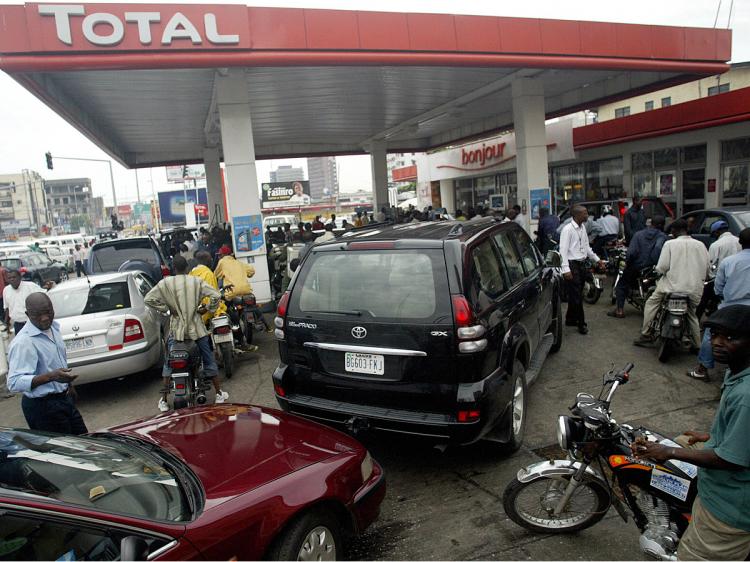
Nigeria has been through a year of dramatic petrol price swings. From the record low of N699 per litre at the Dangote Refinery gantry in December 2025, prices have climbed sharply through early 2026, peaking at N1,364 per litre at NNPCL outlets in Abuja by the end of April. As June approaches, the question most Nigerians are asking is the same one that haunts every month: is another increase coming?
- Where Fuel Prices Stand Right Now
- How We Got Here: The 2026 Price Trajectory
- The Three Forces That Drive Nigeria’s Pump Prices
- What the Global Crude Oil Outlook Says About June
- What Energy Analysts Are Saying
- Nigeria’s Own Production: A Complicating Factor
- Three Scenarios for June 2026
- What This Means for Nigerian Households and Businesses
- The Bottom Line
The answer, based on current market data and expert outlook, is: it depends on what happens with global crude oil prices over the next few weeks.
Will Fuel Prices Increase Again in June 2026?


Nigeria’s fuel price movement in 2026 has been almost entirely driven by forces outside its borders. With the deregulated downstream sector now directly tied to global crude benchmarks, every shift in Brent crude, and every geopolitical shock in the Middle East, feeds into what Nigerians pay at the pump. Understanding whether fuel prices will increase again in June 2026 requires reading those upstream signals as clearly as possible.
Where Fuel Prices Stand Right Now
As of late May 2026, petrol prices across Nigeria sit within a range of N1,100 to N1,400 per litre depending on location and filling station. NNPCL outlets in Lagos were selling at N1,320 per litre following a hike on April 30, while Abuja outlets moved to N1,364 per litre in the same adjustment. Independent marketers in Abuja, including MRS and BOVAS, were selling between N1,365 and N1,370 per litre around the same period.
The Dangote Refinery, which remains the dominant domestic supply source, had its gantry price at N1,275 per litre as of late April, the level that triggered the pump price hike by NNPCL and independent marketers. By early May, the refinery cut its price by N75, bringing the gantry rate down to N1,200 per litre, offering some breathing room to marketers. GlobalPetrolPrices.com recorded Nigeria’s octane-95 petrol at approximately N1,271.88 per litre as of May 18, 2026.
Diesel (AGO) tells a different story. GlobalPetrolPrices.com tracked diesel at approximately N1,962.50 per litre as of early May, reflecting the continued exposure of that product to import parity pricing.
How We Got Here: The 2026 Price Trajectory
Dangote Refinery adjusted its petrol gantry price at least nine times in the first few months of 2026 alone, six upward revisions and three downward cuts. At its December 2025 low of N699 per litre, the refinery had delivered a genuine shock to the market, forcing NNPCL and independent stations to compete below N800 per litre for the first time in months.
That relief was short-lived. By January 2026, NNPCL was already selling at N835 per litre in Lagos and N839 in Abuja. By March, as escalating Middle East tensions pushed Brent crude above $100 per barrel and toward $115, the refinery’s gantry price surged to N1,175 per litre, its highest level since September 2024. The Channels TV report from March 21, 2026 documented one such price revision, where the refinery cited “fluctuations in crude oil prices and increased shipping costs” as factors beyond its control.
A brief reversal came in April. Crude prices softened, and Dangote cut its gantry price by N85 to N1,200 from N1,285. NNPCL followed. But within days, crude surged again, reportedly crossing $115 per barrel, and the April 30 hike brought prices back up.
The Three Forces That Drive Nigeria’s Pump Prices
Nigeria’s downstream sector is fully deregulated, which means pump prices move with the market. Three variables determine where they land.
Global crude oil prices. Dangote Refinery prices its petrol based on the cost of crude procurement, which is indexed to global benchmarks. When Brent crude climbs, gantry prices follow, typically within days. The Middle East conflict that shut down significant portions of Strait of Hormuz traffic earlier in 2026 pushed Brent to its highest sustained levels since 2022, according to the U.S. Energy Information Administration (EIA).
The naira-dollar exchange rate. Even with local refining, crude is priced in dollars. The naira, which traded around N1,374 to the dollar at the official NFEM window as of May 26, 2026, has stabilised compared to its January 2026 rate of approximately N1,421. Any depreciation from here would directly push up the naira cost of crude procurement and refining.
Dangote Refinery’s pricing decisions. With the refinery now accounting for the dominant share of domestic supply, reportedly around 80% of retail fuel, its gantry pricing is effectively the market rate. NNPCL and independent marketers typically adjust within 24 to 48 hours of any Dangote revision.
What the Global Crude Oil Outlook Says About June
The EIA’s May 2026 Short-Term Energy Outlook provides the clearest available window into where crude is headed. The agency projected Brent crude to average around $106 per barrel in May and June 2026, driven by large global oil inventory draws estimated at 8.5 million barrels per day in Q2 2026. The report assumed the Strait of Hormuz would remain effectively closed until late May, with shipping traffic beginning to recover in June, though the EIA noted that production disruptions in the Middle East would continue to pressure supply even as flows improve.
Critically, the EIA forecast a decline in crude prices from Q3 2026, projecting an average of $89 per barrel in Q4 2026 and $79 per barrel through 2027 as Middle East production recovers. This trajectory, sustained high prices through June followed by an easing, has direct implications for Nigerian pump prices.
On the more bullish side of forecasts, one projection tracked by Naga.com cited WTI crude fluctuating around $115 per barrel in 2026, with a June high of $125.28 possible. Brent, under that model, could reach $132 in June before declining. These are not consensus projections, but they represent the upside risk that Nigerian fuel market analysts are watching closely.
What Energy Analysts Are Saying
Vanguard reported in May 2026 that energy analysts were cautioning that “prolonged volatility in global crude oil prices could eventually push domestic pump prices higher” while acknowledging that Nigeria’s pricing remains relatively lower than global averages. Nigeria’s petrol was tracking at approximately $0.90 per litre, still below the global average of around $1.50 per litre. Analysts cited the Dangote Refinery’s improved supply volumes as a key buffer against the immediate transmission of international price shocks to consumers.

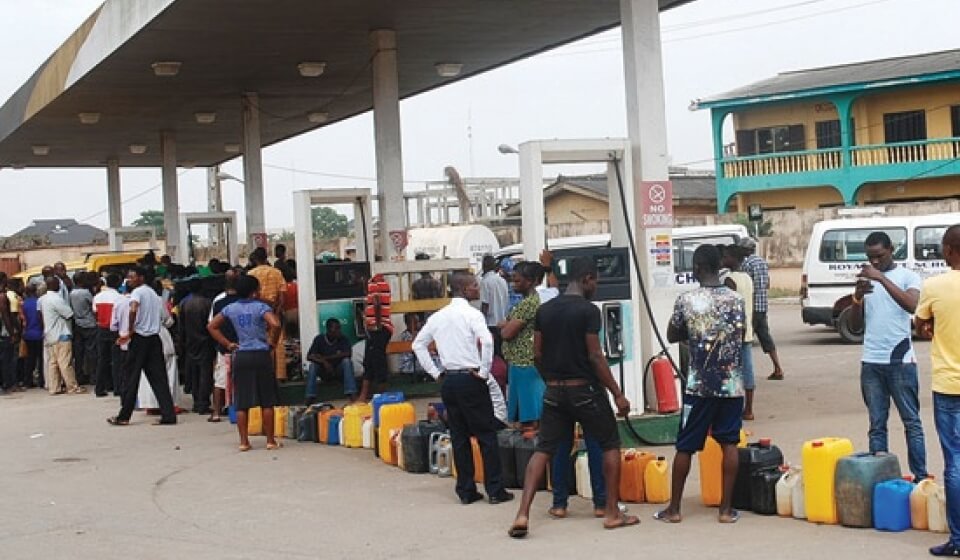
The Central Bank of Nigeria’s 2026 economic forecast, published in January, projected petrol prices hovering around N950 per litre for the year, a projection that has already been significantly exceeded. The CBN acknowledged that heavy reliance on a single dominant refining source exposes the market to volatility, a concern echoed by PETROAN (Petroleum Products Retail Outlets Owners Association of Nigeria) during the March supply disruption when loading at Dangote halted briefly.
PETROAN’s national president, Dr Billy Gillis-Harry, put it plainly at the time: “The price of crude is not stable; it can go up or come down.”
Nigeria’s Own Production: A Complicating Factor
Nigeria continues to fall short of its OPEC production quota of 1.5 million barrels per day. Data from February 2026 showed output at approximately 1.31 million bpd. This matters because the country’s ability to supply the Dangote Refinery with naira-denominated crude, under the crude-for-naira arrangement, is limited when domestic production underperforms.
When the domestic crude supply falls short, the refinery turns to more expensive dollar-denominated imports, which raises procurement costs and feeds directly into gantry price increases. This structural weakness in upstream output is one of the less-discussed but more significant risks to fuel price stability in Nigeria going into mid-2026.
Three Scenarios for June 2026
Scenario 1, Prices hold or ease slightly. If the Strait of Hormuz reopens on schedule and crude prices begin their projected decline toward $89–95 per barrel, Dangote Refinery may hold or reduce its gantry price. In this case, pump prices could remain in the N1,200–N1,320 range through June. The May 8 gantry cut of N75 is a signal that the refinery will pass savings on when crude permits.
Scenario 2, Moderate increase. If crude stabilises around $106 per barrel through June as the EIA projects, without major new supply disruptions, prices may see a modest upward adjustment of N50–N100 per litre, bringing Lagos pump prices toward N1,350–N1,420 per litre at most retail outlets.
Scenario 3, Sharp increase. If Middle East tensions escalate further, crude pushes toward $120–125 per barrel, or if Nigeria’s domestic crude output deteriorates further, pump prices could retest and potentially exceed N1,400 per litre. This is the scenario PETROAN and independent marketers were warning about as recently as March 2026.
What This Means for Nigerian Households and Businesses
Fuel price increases in Nigeria have downstream consequences that go well beyond the pump. Transportation costs, food prices, and electricity generation costs from generators all move in the same direction as petrol. During the March 2026 surge, logistics companies and food vendors across Lagos and Abuja reported immediate adjustments to their service fees.
For households in cities like Lagos, Ibadan, Kano, and Port Harcourt that depend heavily on PMS-powered generators, any move above N1,400 per litre would represent a meaningful additional burden on already stretched budgets. The naira has held relatively steady in May 2026, trading around N1,375 at the official NFEM window, providing one stabilising factor, but not enough to neutralise a sharp crude price shock.
Diesel users, including manufacturers, hospitals, and data centres, face a separate and arguably worse situation. With AGO already around N1,962.50 per litre, any crude-driven increase would push industrial energy costs into territory that some smaller businesses cannot absorb.
The Bottom Line
The balance of available evidence points to continued price volatility in June 2026 rather than a decisive move in either direction. The most credible scenario, based on EIA projections, is that crude prices remain elevated in the $100–110 per barrel range through early June, keeping Nigerian pump prices near current levels or marginally higher.
A significant easing is unlikely until the second half of 2026, when crude prices are projected to soften as Middle East production recovers. The Dangote Refinery’s demonstrated willingness to pass on both increases and decreases means that any sustained drop in crude will eventually reach consumers, but it will not happen overnight.
For now, Nigerians should plan around a petrol price range of approximately N1,200 to N1,400 per litre through June, with the risk skewed toward the upper end if geopolitical conditions worsen.