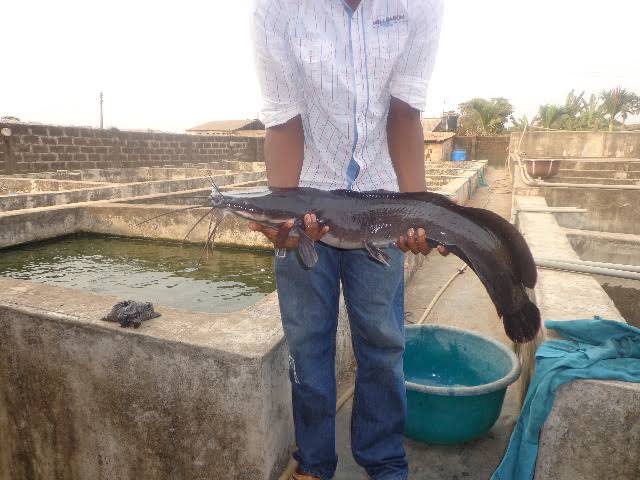
Every year, thousands of fish farmers across Nigeria harvest tonnes of catfish and tilapia that go nowhere beyond their local markets. Not because buyers don’t exist elsewhere but because the paperwork was never done. The fish sits. The market waits. And someone in Toronto or South London drives to a Ghanaian grocery store instead.
- Why Fish Farmers Specifically Need NEPC Registration
- CAC Registration: The Step That Has to Come First
- How to Register on the NEPC Portal
- NAFDAC Certification: What Fish Farmers Often Miss
- The Form NXP and Your Bank’s Role in Every Export
- The EU and US Market Reality for Nigerian Fish Exporters
- Other Documents You Need Before Your First Shipment
- Costs to Budget Before You Register
- What Getting Registered Actually Unlocks
Nigeria is the second largest aquaculture producer in Africa and the leading producer of African catfish on the continent. Farmers in Ogun, Oyo, Delta, and Anambra produce at scale. Yet the gap between what is farmed and what is formally exported keeps widening, mostly because the registration process intimidates people who have never navigated government bureaucracy for a business purpose. The Nigerian Export Promotion Council is the gateway. Most people who farm fish don’t know how to use it.
This guide covers the full process: from the initial corporate registration at the Corporate Affairs Commission to getting your NEPC Exporter’s Certificate, the NAFDAC certification your processed fish needs, the Form NXP your bank must raise, and the specific market realities that determine where your product can actually go.
How to Register Your Fish Farm with NEPC Nigeria


Registering your fish farm with NEPC is not one step; it’s a chain of steps involving multiple federal agencies, and the order matters. Skipping any of them doesn’t just slow you down, it can get your shipment held at the port, rejected at customs in the destination country, or flagged by the Central Bank of Nigeria when your export proceeds land. The good news is that the entire process is now done online, and a farmer who is properly organised can get through it in under two weeks.
Why Fish Farmers Specifically Need NEPC Registration
Plenty of people sell fish outside Nigeria without NEPC registration. They’re operating informally, usually through cargo agents who move small parcels disguised as personal goods. That works until it doesn’t, and when it doesn’t, the consequences can include seizure at the port of entry, fines, and a permanent record with Nigerian Customs that makes future exports harder.
NEPC registration is mandatory for any formal export from Nigeria involving non-oil products. Fish falls squarely within that category. The Exporter’s Registration Certificate issued by NEPC is the foundational document that authorises your business to export. Without it, Nigerian Customs will not process your export documentation, your bank cannot legally raise the Form NXP for foreign exchange proceeds, and the Nigerian Export Promotion Council cannot offer you access to its trade linkage programmes, international buyer databases, or export capacity support.
For fish farmers specifically, the commercial case is clear. The Nigerian diaspora in the United Kingdom, Canada, and the United States consumes large volumes of smoked and dried catfish every year. An FAO study on West African fish exports estimated the quantity of dried and smoked catfish and tilapia exported from West Africa to the United Kingdom alone at over 500 tonnes per year, with a retail value approaching $20 million. Nigeria alone was shipping roughly five tonnes of smoked fish per month via airfreight at the time of that study. Formal registration is what separates farmers who tap that revenue stream from those who watch others do it.
Beyond the diaspora trade, NEPC registration opens access to the Council’s official support services: export capacity training, business-to-business trade matchmaking, and access to NEPC’s market information database. Fish farmers who want to connect with a buyer in London or Edmonton are far more likely to get there through NEPC’s trade linkage infrastructure than through cold outreach.
CAC Registration: The Step That Has to Come First
Before NEPC will accept any application, your business must be registered with the Corporate Affairs Commission. This is non-negotiable. NEPC requires either a Certificate of Incorporation for a limited liability company or a Certificate of Registration for a business name. If you’re farming and selling as an individual with no business structure, you cannot apply for NEPC registration until you formalise.
The key thing to note here, and this catches a lot of applicants, is that your CAC registration must include a relevant export clause in your company’s objects. The objects clause is the section of your Memorandum and Articles of Association that describes what your company is incorporated to do. If it says only ‘fish farming’ or ‘sale of agricultural produce’ without mentioning export, NEPC will reject the application. It should say something like: the exportation of fish and fishery products, or the export of agricultural and aquaculture products. If your company is already registered but the objects don’t include this, you’ll need to make a formal alteration with the CAC before proceeding.
For a limited liability company, the documents you’ll need from CAC are the Certificate of Incorporation, a certified true copy of the Memorandum and Articles of Association, and a current certified true copy of Form CAC 1.1 Section C, which contains the particulars of directors. This form was formerly called Form C07 or Form CAC 7. You’ll also need a Tax Identification Number from the Federal Inland Revenue Service and a company letterhead that reflects your business name and address.
Once your CAC documents are in order, prepare a Board Resolution letter stating the company’s decision to register with NEPC. The resolution must be on the company’s letterhead, signed by a director, and stamped with your official company seal. The date of the resolution needs to appear on the letter. This is a simple document but many people don’t know it’s required until they’re already partway through the online form.
How to Register on the NEPC Portal
NEPC registration is online only. The Council discontinued physical certificate collection, which means there is no NEPC office you walk into to submit papers or pick up a certificate. Everything happens through the e-registration portal at nepc.gov.ng. The portal has had periodic maintenance windows, so if it’s inaccessible when you try, check back within a day or two.


Create an account on the portal using your company email address, fill in your company details including your CAC registration number, TIN, and the nature of your export product (fish and fishery products), then upload scanned copies of your documents. For a limited liability company, those documents are the Certificate of Incorporation, Memorandum and Articles of Association, Form CAC 1.1 Section C, the Board Resolution letter, and your TIN certificate.
Payment is made through the Remita platform. The NEPC registration fee has been cited across multiple verified sources in the range of N18,500 to N25,000 for the initial certificate. Third-party agents who handle the registration on your behalf typically charge an additional N50,000 to N150,000 in professional fees depending on the service provider. If you’re doing it yourself and your documents are in order, you do not need an agent. The portal is designed for direct applicants.
Once payment is confirmed and your application is reviewed and approved, the certificate is issued electronically and you download it directly from your portal account. For applications where everything is in order, the turnaround is typically three to five working days. The Exporter’s Registration Certificate is valid for an initial period of two years and is renewable annually after that. The certificate must not be allowed to lapse if you intend to keep exporting, because an expired certificate creates problems at the bank when the NXP form is being raised.
NAFDAC Certification: What Fish Farmers Often Miss
NEPC registration makes you a legal exporter. It doesn’t certify your product. For fish, that distinction matters more than in most other export categories because fish is a perishable protein food regulated under food safety law. If you are exporting processed or semi-processed fish, meaning smoked catfish, dried fish, frozen fish, or any packaged fish product, NAFDAC certification is required.
NAFDAC is designated as the competent authority under the Codex Alimentarius framework for processed and semi-processed food exports from Nigeria. Specifically, NAFDAC issues the health certificate and the certificate of manufacture and free sale, which are the documents destination country customs authorities use to verify that your product has passed food safety inspection. These certificates are separate from your NEPC Exporter’s Certificate and require their own application process with NAFDAC directly.
What this means practically is that your processing facility must be registered with NAFDAC, your product must pass laboratory analysis for microbial and chemical safety standards, and your packaging and labelling must meet NAFDAC requirements. The labelling requirements include the product’s brand name in bold, the manufacturer’s name and full address showing country of origin, batch or lot number, date of manufacture and best before date, net content in metric weight, and a full ingredient list in order of prominence by weight. Products that do not meet labelling requirements will not get a NAFDAC export certificate regardless of how well the fish itself tests.
For fish farmers who are not yet at commercial processing scale, NAFDAC requirements can feel like a significant jump. The practical path is to get your processing registered at the smallest viable unit, even if it’s a small smoking or drying facility, document your hygiene practices, and use NAFDAC-accredited laboratories for product testing. Contact NAFDAC directly at nafdac.gov.ng or their Apapa office in Lagos for current fees applicable to fish and fishery products.
The Form NXP and Your Bank’s Role in Every Export
When most fish farmers think about export documentation, they think about the NEPC certificate and NAFDAC approval and stop there. What they often don’t account for is the Form NXP, the Nigerian Export Proceeds form. This form is what links your export activity to the foreign exchange system and is required for every commercial export shipment regardless of the product.
The Form NXP is processed through your bank, not through NEPC or customs. You must have a domiciliary account maintained with an authorised dealer bank to handle export transactions. When you’re ready to ship, your bank raises the NXP form in six copies. One stays with the bank, one goes to the Central Bank of Nigeria, and the remaining copies go to Nigeria Customs, NEPC, and you as the exporter. The form records the value of your export, the destination country, the product description, and the terms of the transaction.
The CBN requires that proceeds from the export be repatriated into your domiciliary account within ninety days of shipment. If proceeds are not repatriated within the stipulated period, it can trigger regulatory issues with the CBN and your bank. This is why it’s worth being clear with your foreign buyer upfront about payment terms. Documentary letters of credit, confirmed by your bank before shipment, are the safest option for new export relationships. For a first shipment, a confirmed LC protects everyone.
The EU and US Market Reality for Nigerian Fish Exporters
Many Nigerian fish farmers ask about exporting to Europe or the United States, and the honest answer requires acknowledging a specific regulatory situation that affects both those markets. Nigeria is currently working to regain and expand its access to EU and US seafood markets, and this process is ongoing.
In 2018, the US Food Safety and Inspection Service suspended imports of catfish and other fish products from Nigeria. The suspension followed Nigeria’s failure to fully supply information in the FSIS self-reporting tool by the required deadline. The tool is used by the FSIS to obtain documentation from exporting countries demonstrating that their food safety inspection systems meet an equivalent standard to FSIS requirements. According to reporting by SeafoodSource, the NEPC has been working with players in the seafood value chain to address the issues raised by the FSIS, but the restriction on formal commercial catfish exports to the US remained in place as of 2023.
The EU situation has similar dynamics. EU regulations governing fish and seafood imports require that Nigeria be listed as an approved third-country supplier on the EU TRACES NT system before Nigerian companies can ship aquaculture products commercially to EU member states. The approval process involves commitments at the national regulatory level, not just individual businesses. Nigeria has been working toward this approval, but it requires coordination across the Federal Ministry of Agriculture, NAFDAC, and other bodies.
None of this means Nigerian fish cannot reach buyers in the UK, Europe, or the US. It means the pathway at scale is through diaspora-specific trade channels rather than formal commercial food retail. For fish farmers aiming to build a formal export business, the more immediately accessible markets are Canada (historically the top destination for Nigerian dried catfish exports), neighbouring West African countries, the Middle East, and informal UK diaspora trade channels through specialised cargo operators who ship smoked fish regularly.
Other Documents You Need Before Your First Shipment
The NEPC certificate, NAFDAC documentation, and Form NXP form the core of your export compliance, but a complete export file for fish requires several more documents before you can clear the port.
The Certificate of Origin is issued by the Nigerian Chamber of Commerce, Industry, Mines and Agriculture (NACCIMA) or by your state chamber of commerce. It certifies that your product originated in Nigeria and is required by most importing countries for customs clearance. The certificate typically takes a few days to obtain and requires you to present your NEPC certificate and basic shipment information.
The phytosanitary certificate comes from the Nigeria Agricultural Quarantine Services (NAQS), the designated competent authority under the International Plant Protection Convention for agricultural exports from Nigeria. NAQS inspects the consignment and certifies that it meets the pest and disease requirements of the destination country. For dried or smoked fish, NAQS assesses the product to confirm it meets applicable standards before issuing the certificate.
For commercial shipments, you’ll also need a bill of lading or airway bill from your shipping agent, a commercial invoice stating the value and description of the goods, a packing list, and marine or cargo insurance. The insurance document protects your goods against loss or damage during transit. Smoked and dried catfish can be damaged by moisture if packaging fails. Buyers in diaspora markets will reject consignments that arrive broken, mouldy, or infested. Packaging that prevents moisture entry is not a cosmetic detail; it’s what separates one shipment from many.
Costs to Budget Before You Register
Anyone approaching fish farm export registration without budgeting carefully is likely to stall midway. Here is a realistic breakdown of what registration and first-export readiness costs.
If your company is not yet registered with the CAC, incorporation for a limited liability company runs from approximately N60,000 to N80,000 depending on share capital and whether you’re using an agent. The NEPC registration fee itself is in the N18,500 to N25,000 range based on currently available information from multiple verified sources, not including Remita or bank charges. If you use a professional agent, add between N50,000 and N150,000 for their service fee.
NAFDAC product registration costs vary by product category. Contact NAFDAC directly for current fees applicable to fish products, as these change periodically and figures quoted by third parties are not always current. Allow time in your planning for this process since NAFDAC lab testing and product inspection are not instantaneous.
The Certificate of Origin from your chamber of commerce is relatively inexpensive. Cargo insurance for a first shipment depends on the value of the consignment and your shipping method. Air freight is faster but significantly more expensive per kilogram than sea freight. For small first shipments, many operators use air cargo through Lagos, Abuja, or Port Harcourt to diaspora markets. As volume grows and you’re working with an established buyer on regular orders, sea freight becomes the more economical option.
What Getting Registered Actually Unlocks
There’s a version of the Nigerian fish export story that’s just bureaucratic paperwork, and there’s a version where it’s a real market with real buyers who are already spending money and will keep spending it whether or not you’re formally in the game. Right now, much of that spend goes to Ghanaian, Ivorian, and Cameroonian exporters simply because their documentation is in place and Nigerian competitors haven’t formalised.
The process described here is not quick, and it is not free. Between CAC registration, NEPC certification, NAFDAC product registration, your bank setup, and first-shipment documentation, a realistic budget for getting export-ready runs into several hundred thousand naira before any fish moves. But that’s a one-time fixed cost against a recurring revenue stream. Once the infrastructure is in place, every subsequent export is smoother than the first.
NEPC also provides services that go beyond the certificate itself. The Council runs export capacity building programmes, connects exporters to verified international buyers through its trade linkage service, and offers market information that can help you decide whether your first target should be a Canadian buyer, a West African regional buyer, or a specialist African food retailer in the UK. Use those services. The registration fee buys access to them.
Fish farming in Nigeria is serious commercial agriculture. It feeds the country and it can earn foreign exchange. The farmers who formalise their export operations are the ones who will be supplying the next generation of African grocery chains in diaspora markets rather than watching it happen from the sidelines.