The japa wave did not just drain Nigeria of its graduates and professionals. It separated couples. Wives watched their husbands board planes to Canada. Boyfriends counted down months while their partners settled into London flats. The geography shifted, but the relationship was still supposed to continue, powered by WhatsApp calls and the fragile belief that things would eventually sort themselves out. For a lot of those couples, they did not.
- Why the Japa Wave Turned Distance Into a Relationship Test
- The Numbers Behind Long Distance Relationships
- What Actually Breaks These Relationships
- The Visa Wall: When Immigration Systems Hold Love Hostage
- Time Zones, Loneliness, and the Quiet Erosion of Connection
- What the Couples Who Made It Actually Did
- The Reunion Problem Nobody Warns You About
- Making a Decision: When to Stay In It and When to Walk Away
- Distance Is a Test, Not a Verdict
Since the acceleration of Nigerian emigration from around 2020, long distance has stopped being a temporary inconvenience for some couples and become a permanent condition for others. Between June 2022 and June 2023, 141,000 Nigerians migrated to the UK alone, making Nigeria the second-largest source of immigration into that country after India, according to UK Office for National Statistics data. By the year ending December 2024, that number had slowed to 52,000, partly because of tightening UK policies, partly because Canada had become the new preferred destination. The point is that the movement has been massive, and love has had to negotiate with geography in ways that previous generations of Nigerians largely did not face at this scale.
The question is real and it deserves a real answer: do these relationships actually survive? And for the ones that do make it, what is the difference between them and the ones that quietly collapsed?
Long Distance Relationships and the Nigerian Diaspora


Long distance relationships for Nigerian diaspora couples sit at a specific crossroads of love, economics, immigration bureaucracy, and cultural expectation. They are not the same as two university students in different cities; the stakes are higher, the timelines are less predictable, and the emotional weight of living in a foreign country adds its own pressure to the relationship equation. The evidence shows that these relationships can and do work, but the conditions that determine success are specific, and most couples discover them the hard way.
Why the Japa Wave Turned Distance Into a Relationship Test
Nigeria’s emigration wave is not purely driven by wanderlust. It is driven by economic exhaustion, professional frustration, and the kind of infrastructure collapse that makes daily life genuinely difficult. When someone secures a visa and a path out, the decision to go is rarely negotiable in their mind. What becomes complicated is what happens to the person they are leaving behind.
For many Nigerian couples, migration did not happen as a joint decision. One person got the opportunity, the job offer, the study admission, the visa. The other stayed behind, either because their own documentation was not ready, the finances were not available to relocate both, or the partner was not at a stage where they could leave. This asymmetry creates a specific kind of tension that couples in the same city do not experience: one person is living a new life, expanding their world, adapting to a new country, while the other is navigating Nigeria largely unchanged except for the absence of their partner.
That gap in experience is what makes japa-era long distance relationships different. The person abroad is confronting a completely new social environment, sometimes dating cultures wildly different from what they knew. A Nigerian woman who moved to the UK described the culture shock on dating norms in a Zikoko feature from March 2025, noting that everything about romance abroad felt different from the dynamic she had known in Lagos, where expectations around courtship and commitment were more familiar. For the partner still in Nigeria, there is very little reference point for what their significant other is now living, and that gap in shared experience is one of the slow, quiet things that erodes connection.
Divorce counsellor Aronke Omame, popularly known as Sisi Lawyer, made this point plainly in a Punch Newspaper feature on long distance relationships in Nigeria. In her words, paraphrased from that interview, LDRs are generally thrust on couples by circumstances rather than chosen, and her position is that couples who are genuinely happy should not be separated. That view might sound conservative, but it contains a practical truth: no one enters this arrangement because it is ideal. They enter it because they have to, and that framing matters for how you approach it.
The Numbers Behind Long Distance Relationships
The instinct is to assume these relationships are mostly doomed. The actual research disagrees. A meta-analysis of long distance relationship studies published in the Journal of Communication found that 58% of long distance relationships succeed, meaning the couple either stays together across the distance or successfully closes it. When you narrow that to couples who have a concrete plan for reunification with a specific timeline, the success rate rises to 71%. For couples with no defined end date, the number drops sharply to 37%.
That single finding is one of the most consistent across LDR research: the difference between relationships that survive distance and those that collapse under it often comes down to whether there is a shared, clearly defined plan for what happens next. Not a vague assurance that things will work out. An actual timeline: when the visa application will be filed, which country they are moving toward, what the criteria for reunification are.
There is also a paradox buried in the research. Studies have found no meaningful difference in relationship satisfaction between couples in long distance arrangements and those who live near each other. The assumption that proximity automatically equals connection is not borne out by the data. What does predict satisfaction is the quality of communication, not the frequency, and the sense that both partners are investing in the relationship with equal seriousness.
For Nigerian diaspora couples specifically, those numbers should be read alongside a context that existing research does not always account for: immigration timelines in Nigeria are rarely predictable. A couple might have a plan that says ‘six months and then you join me,’ and then the visa gets delayed or denied, the finances take longer than expected, or policy changes in the destination country alter the entire path. The plan exists, but the ability to execute it is not always within the couple’s control.
What Actually Breaks These Relationships
People tend to assume infidelity is the main thing that ends long distance relationships, and sometimes it is. But the more common cause of collapse is quieter: communication that deteriorates not because of dishonesty but because of life. The person abroad is busy adjusting. They have a new job, new city logistics to figure out, a whole unfamiliar system to navigate. The person back home has their own pressures. The calls start becoming shorter. Then they start skipping days. Then one person starts checking whether the other has been online and working themselves up about the silence. That slow erosion is harder to stop than a dramatic fight.
Research from LDR studies consistently identifies trust and communication as the two pillars of survival in these relationships. One study found that 85% of LDR couples who stayed together reported trust as the foundation of what they had built, while 82% emphasised that clear, honest communication was non-negotiable for them. That data tracks with what Nigerian couples who have navigated long distance describe in their own words: the ones who make it are not the ones who never fight or never felt insecure. They are the ones who developed a reliable rhythm for staying in contact and refused to let silence become the norm.
There is also the issue of unspoken expectations that do not survive the transition to long distance. A relationship that worked in Lagos, where both people could show up for each other in tangible ways, may not automatically translate to one where the primary medium is a screen. The love language dynamics often shift. Someone who expressed care through physical presence has to learn how to replicate that through messages, calls, and occasional packages. The partner receiving those shifts has to recalibrate what support looks and feels like. Couples who never negotiate those shifts explicitly often find themselves drifting apart without a clear moment they can point to as the turning point.
Family pressure is another factor specific to the Nigerian context. For couples who are not yet married, relatives on both sides will eventually form opinions about whether the arrangement makes sense. A man who has been abroad for two or three years without returning to formally progress the relationship will start hearing from his family. A woman waiting for her partner to sort out documentation may face pressure from her own people to reconsider. Nigerian families, for all their warmth, are not always patient with romantic arrangements that feel unresolved, and that external pressure adds a layer of strain that the couple itself has to absorb.
The Visa Wall: When Immigration Systems Hold Love Hostage
If there is one factor that distinguishes long distance relationships in the Nigerian diaspora context from almost everywhere else, it is immigration policy. In 2025 and into 2026, tightening visa restrictions in major destination countries have made family reunification timelines genuinely unpredictable for Nigerian couples.
The United States has moved to suspend most new visa issuances for Nigerian citizens as of 2025, citing national security considerations. Tourist and student visa applications are either paused or facing near-certain rejection. Even spousal applications, which theoretically fall under exceptions, have seen significant delays according to immigration tracking data. For a Nigerian couple whose reunification plan depended on one partner obtaining a US visa, that plan is now suspended indefinitely.
The UK has its own complications. After the expansion of restrictions on dependants accompanying students, introduced in 2024, the pathway for bringing a partner to the UK became significantly more complicated for Nigerian students who had expected to do exactly that. Meanwhile, one of the most painful accounts of this reality was told in a Guardian Nigeria feature in 2022: a Nigerian woman described marrying her husband who was based abroad, only to spend over a year fighting through documentation delays, watching other couples travel while she waited, and feeling the relationship erode under the weight of administrative frustration that had nothing to do with her love for her husband.
Canada remains the most accessible pathway for Nigerian couples seeking reunification, with its spousal open work permit programme allowing partners of permanent residents to arrive and work while full permanent residence applications are processed. That policy difference is part of why Canada has been absorbing a growing share of Nigerian emigration. But even there, timelines have extended as application volumes have surged.
The broader point is that couples who build their reunification plan around a specific visa pathway are building on ground that can shift under them. Immigration law changes without notice. The couples who manage this best tend to have multiple contingency paths, legal advisers familiar with Nigerian applications, and the emotional resilience to treat delays as a problem to solve rather than a sign that things are falling apart.
Time Zones, Loneliness, and the Quiet Erosion of Connection
A five-hour time difference does not sound catastrophic until you are living inside one. Nigeria is ahead of the UK by one hour, behind the US East Coast by five, and behind Canada’s West Coast by nine. What that means in practice is that when a Nigerian woman finishes work at 6pm in Lagos and wants to talk to her partner in Vancouver, it is 9am there and he is just starting his workday. When he is free in the evening, it is past midnight in Lagos and she has to be up at 6am. The windows where both people are awake, free, and not exhausted are narrower than they look on paper.
The Guardian Nigeria japa love feature captured this precisely. The woman in that account described how, after the initial months, time zones started feeling longer than they were. Calls that used to last hours became shorter because both people were falling asleep mid-conversation from exhaustion. The physical distance was always there, but it was the time-zone mismatch that made the daily effort of staying connected feel like an actual effort.
Loneliness operates differently in these arrangements. For the partner abroad, it shows up in unfamiliar ways: you are in a new country, surrounded by people, managing a whole new life, and still feeling the absence of the person who knows you best. For the partner in Nigeria, loneliness can look like being at an event, a function, a birthday party, and being the only one without someone beside them. Both experiences are real. Neither partner has the worse version. But they can misread each other’s loneliness as emotional unavailability if they are not communicating about it clearly.
Research on LDR emotional dynamics shows that 34% of long distance couples report significant anxiety specifically around future reunion plans, according to 2025 data published by relationship research platforms. For Nigerian couples, where that reunion depends on immigration systems that are not always predictable, that anxiety can run even higher. The uncertainty is not just emotional; it has a bureaucratic dimension that neither partner controls.
What the Couples Who Made It Actually Did
The Nigerian couples who have successfully maintained long distance relationships and eventually closed the gap share some patterns that are consistent across their accounts. None of what they describe is glamorous. Most of it is just discipline applied to a situation that does not reward improvisation.
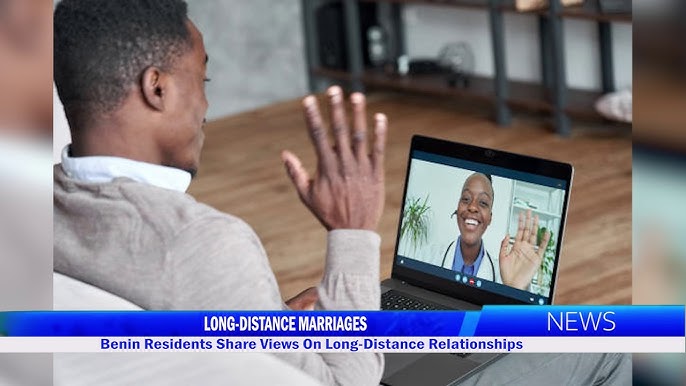

Structured communication routines are the most common thread. Not just ‘we talk whenever we can’ but an actual agreed-upon schedule: a morning check-in message, a video call two or three times per week at a time that works for both time zones, and a rule that neither person lets more than 24 hours pass without meaningful contact. Virtual date nights, where both people cook at the same time and eat together over video, appear repeatedly in accounts of what kept couples feeling connected across distance. These are not grand gestures. They are just reliability, and reliability over time builds the kind of trust that distance tries to corrode.
Couples who succeeded also invested in physical presence whenever they could. Research on long distance relationships shows that couples who plan visits and have concrete dates to look forward to report significantly higher relationship satisfaction than those without upcoming plans. For Nigerian diaspora couples, visits home are often expensive and dependent on visas and leave from work, but the couples who prioritise them, even if it means months of saving, report that the physical reunion resets something in the relationship that no amount of video calling can fully replicate.
Honest conversations about what each person was finding difficult were also a distinguishing feature of couples who survived. Not bottling up the frustrations of long distance until they became resentments, but naming them in real time. The person abroad saying ‘I am lonely and I am struggling here’ instead of projecting capability. The person in Nigeria saying ‘I feel left out of your new life’ instead of performing unbothered. That level of emotional honesty is harder than it sounds, particularly in a Nigerian cultural context where strength is often performed, but it is consistently what the couples who lasted describe as the thing that kept them from drifting.
The diaspora community itself can be a resource here. Nigerian communities in the UK, US, and Canada are large enough to offer the partner abroad a social environment that is familiar in culture even if foreign in geography. Being around other Nigerians, attending church, Nigerian events, or just having friends from home in the same city reduces the sense of total displacement that can sometimes make the distance feel more overwhelming than it needs to be.
The Reunion Problem Nobody Warns You About
One of the more surprising findings in LDR research is that reunification, the thing couples spend years working toward, is itself a significant risk period. According to multiple studies, 37% of long distance couples separate within three months of finally becoming geographically close. The reasons are not hard to understand when you think them through, but most couples are so focused on closing the distance that they do not prepare for what happens after.
During a long distance relationship, both people grow independently. The person abroad adapts to a new country, develops new habits, new friend groups, new ways of living. The person in Nigeria does the same, navigating life without their partner in ways that require self-sufficiency. When they finally live together again, they are not the same two people who separated. The dynamic that worked across distance, structured calls, shared independence, deliberate communication, does not automatically translate to cohabitation. Suddenly being together all the time after years of distance can expose compatibility issues that the distance had kept dormant.
For Nigerian couples specifically, reunion often involves one partner relocating to an entirely new country, which adds a layer of adjustment on top of the relationship readjustment. The partner who has been abroad for years knows the system, the neighbourhood, the local dynamics. The newly arrived partner is starting from zero. That power imbalance, even when both people have good intentions, can introduce friction that neither of them anticipated.
Couples who navigate reunification well tend to have discussed these dynamics before the relocation happened. They have talked about how decisions will be made in the shared household, how the arriving partner will build their own identity and independence in the new country, and how each person’s pace of adjustment will be respected. The couples who struggle are often the ones who assumed the relationship would just click back into place once the distance was gone.
Making a Decision: When to Stay In It and When to Walk Away
Not every long distance relationship is worth preserving at any cost, and Nigerians who are in these situations benefit from being honest with themselves about what they are actually working with. There is a difference between a relationship going through the genuine difficulty of distance and one where the distance has simply exposed that the relationship was not as solid as it appeared.
A long distance relationship that has no defined plan for closure, where ‘eventually’ is the only timeline on offer, deserves scrutiny. The research is clear that couples without a concrete end-date have a significantly lower success rate, and the emotional toll of indefinite distance is not neutral. People lose years to arrangements where one partner is not genuinely committed to reunification, and in a Nigerian cultural context where age-related social pressures around marriage are real, particularly for women, those years carry weight.
There are also relationships where the partner abroad has effectively started a new life and the long distance arrangement is functioning more as a placeholder than a genuine commitment. The signs are usually there: communication that keeps reducing, visits that keep getting postponed, a reluctance to make concrete plans. These are not always signs of infidelity. Sometimes they are signs that the person has emotionally moved on without having the difficult conversation, and their partner is still operating on the assumption that things are fine.
On the other side of that, there are couples where the commitment is mutual and real, where the distance is genuinely circumstantial and both people are working toward each other. Those relationships are worth fighting for, even when the fight is exhausting. The Nigerian diaspora sends nearly $21 billion in remittances home annually, a figure confirmed by CBN data for 2024. The movement of people and money between Nigeria and its diaspora destinations is one of the most significant economic relationships in the country’s modern history. Embedded inside those billions of dollars sent home is also the human story of people who loved someone enough to try to hold it together across continents.
Distance Is a Test, Not a Verdict
The research on long distance relationships is more optimistic than the prevailing assumption. More than half of these relationships succeed when both people are genuinely committed. The ones that fail typically fail not because distance is insurmountable, but because the distance revealed something that was already missing: a shared timeline, mutual investment, or honest communication.
For Nigerians in diaspora relationships, the conditions are more complex than the general research captures. Immigration timelines are unpredictable. Policy changes happen without warning. Cultural expectations from both families add pressure that purely Western studies on LDRs do not account for. The asymmetry between the experience of the partner abroad and the partner in Nigeria is real and requires active management, not passive hope.
What works is what has always worked in relationships: honesty about what you are feeling, reliability in how you show up, a clear plan that both people are genuinely moving toward, and the willingness to have the hard conversation before the problems compound. Long distance does not automatically end Nigerian diaspora relationships. It just accelerates the visibility of what was always there.