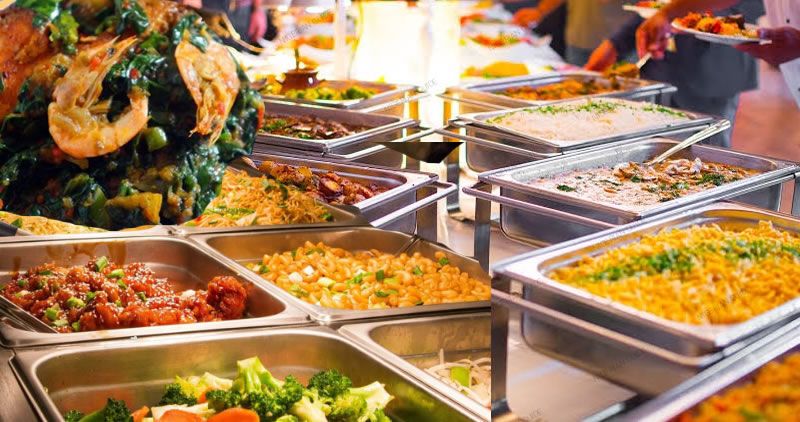
Nigeria’s party culture has no off-season. Weddings come in clusters, birthdays run through the week, naming ceremonies overlap with burials that are somehow just as festive. Somewhere inside all of this, food is the constant. The moment guests walk into an owambe and the smell of party jollof rice hits them, a decision has already been made about whether the host did a good job.
- What Owambe Catering Actually Means as a Business
- How to Register Your Catering Business in Nigeria
- Startup Capital: What a Catering Business in Nigeria Actually Costs
- Building an Owambe Catering Menu That Works
- How to Price Your Catering Services for Nigerian Events
- Staffing and Event-Day Operations
- How to Get Your First Catering Clients in Nigeria
- Building a Catering Brand That Clients Remember
- Mistakes That Kill New Catering Businesses in Nigeria
- Starting Strong: What the First Year Really Looks Like
Catering for owambe events is one of the most quietly lucrative businesses in Nigeria’s informal economy. The demand is perpetual. The margins are real. And unlike a physical shop that needs walk-in traffic to survive, an event caterer builds a reputation job by job, table by table, pot by pot. But the business has layers that first-timers consistently underestimate, from equipment costs and regulatory requirements to the subtle art of pricing an event without losing money.
This guide covers the full process of starting a catering business in Nigeria that specifically serves the owambe market, from registration and equipment to menu structure, pricing, and the client relationships that keep the bookings coming.
A Complete Guide to Starting a Catering Business in Nigeria for Owambe Events

Starting a catering business in Nigeria for owambe events is not simply about knowing how to cook. The infrastructure behind any successful Nigerian caterer includes proper business registration, the right commercial equipment, a clear service menu, a functional pricing model, and enough network capital to get the first few bookings. This guide breaks all of it down in practical terms.
What Owambe Catering Actually Means as a Business
The term owambe refers broadly to Nigerian social events, most commonly Yoruba celebrations, though the concept has expanded across ethnic lines to include any large, festive gathering. Weddings, naming ceremonies, 50th and 60th birthday parties, housewarming celebrations, and burial receptions all fall under this umbrella. What distinguishes owambe catering from corporate or institutional feeding is the expectation around abundance, presentation, and variety.
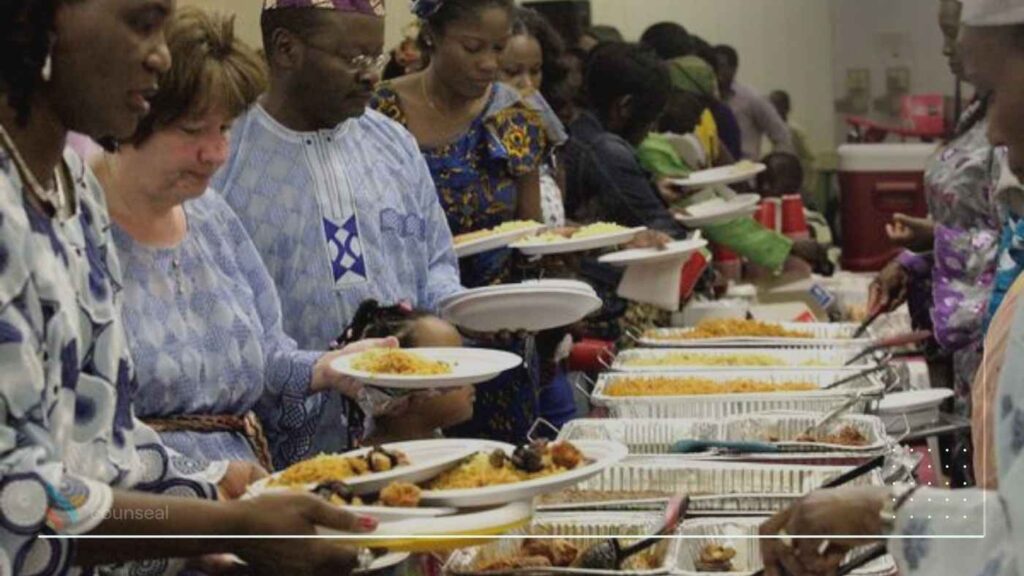
Guests at a typical Lagos or Ibadan owambe expect at minimum two types of rice (usually jollof and fried), a swallow option, a soup, proteins ranging from chicken to assorted meat, small chops circulating through the crowd, and drinks. The caterer is expected to feed everyone who comes, including those who were not on the original guest list, because Nigerian celebrations routinely exceed their confirmed headcount.
This has real business implications. Owambe catering requires a buffer mindset: your procurement, your staffing, and your pot sizes all need to account for an event that may be larger than what was agreed on paper. This is one of the reasons experienced caterers price events with a margin for variance built into the headcount estimate.
How to Register Your Catering Business in Nigeria
Before taking a single paid booking, the business needs to be legal. The Corporate Affairs Commission (CAC) is where this starts. For a small to mid-scale catering operation, registering as a business name is the most practical entry point. The official process, which can be done through the CAC online portal, involves name reservation followed by filing fees.
Based on verified 2025 data, business name registration through CAC costs between approximately ₦15,000 and ₦25,000 when official fees and typical agent handling costs are combined. If you choose to file independently through the CAC portal, the official fees are lower, around ₦11,000 covering name reservation and filing. Processing typically takes one to three working days for straightforward applications. For a Limited Liability Company structure, costs generally run higher, from around ₦50,000 to ₦100,000 depending on share capital and complexity.
Caterers who produce packaged food items for sale, such as branded small chops packs, bottled zobo, or pre-packaged chin-chin sold commercially, will also need to engage NAFDAC. However, for caterers who prepare food exclusively for events and do not sell packaged consumer goods through retail channels, NAFDAC product registration is not the immediate priority. What matters more operationally is a State Ministry of Health food handler’s permit and compliance with local government sanitation requirements, which vary by state.
Some local government areas in Lagos, Abuja, and other cities require food service businesses to obtain a trade permit or premises registration certificate before operating. It is worth confirming the specific requirements of your LGA before your first commercial event.
Startup Capital: What a Catering Business in Nigeria Actually Costs
The honest answer is that the capital range is wide, and it depends almost entirely on the scale you intend to start at. A home-based caterer focused on small chops and basic event food for gatherings of under 100 guests can start with far less than someone who wants to handle weddings of 500 guests from day one.
Based on verified market data, event catering startup costs in Nigeria generally fall between ₦300,000 and ₦5 million for a reasonably equipped operation. This range reflects equipment procurement, basic inventory, registration costs, and the logistical infrastructure needed to execute real events. Below is a breakdown of the major cost categories.
Equipment
Industrial gas cookers and high-pressure burners are the foundation. Heavy-duty pots and pressure cookers suitable for batch cooking party jollof, egusi, and pepper soup are next. A deep fryer for small chops, a food warmer or bain-marie for keeping dishes at serving temperature, cold storage, and serving equipment (chafing dishes, ladles, trays) round out the core setup. Prices for industrial kitchen equipment vary significantly by brand and source, but verified listings on Nigerian marketplaces show gas burners starting from under ₦100,000 for basic models, with commercial-grade setups running considerably higher. The total equipment budget for a professional setup capable of handling large events can range from ₦300,000 to ₦800,000 or more.
Procurement and Working Capital
Food ingredients are a recurring cost, not a startup cost, but your first few events will require procurement funding before client payments come in. Budget enough working capital to cover at least two to three events’ worth of ingredient costs before you expect to be in positive cash flow.
Transportation
One of the most underestimated costs in Nigerian catering is logistics. Getting your food and equipment from your kitchen to the event venue and back, on time, in usable condition, requires either owning a vehicle or consistently budgeting for hire. For caterers in Lagos, transportation costs for an event can range widely depending on distance, number of trips, and whether you are transporting equipment as well as food.
Building an Owambe Catering Menu That Works
The owambe menu has a core that almost never changes and an extended layer that varies by client budget and event type. Understanding this structure helps you price intelligently and communicate your packages clearly.
The reliable core of any Nigerian party menu includes jollof rice, fried rice or ofada rice (for events with Yoruba clientele), a swallow (most commonly amala, pounded yam, or eba depending on region and preference), egusi or efo riro soup, chicken and assorted meat, and moi moi. This combination covers the majority of what guests expect and what most Nigerian clients will budget for as the base package.
Small chops operate as a separate service line that many clients add on. Puff-puff, samosa, spring rolls, gizdodo (gizzard and dodo), and stick meat are the standard offerings. These items circulate among guests before the main service opens and are priced separately from the seated meal.
Premium additions that command higher pricing include pepper soup, asun, suya, peppered turkey, whole fish, and cocktail or drinks service. Larger weddings may also request a dessert station or after-party catering as an entirely separate budget item.
A practical starting point is to define two or three clear packages rather than building a bespoke quote from scratch for every client. A standard package covers jollof rice, fried rice, chicken, moi moi, and basic drinks. A premium package adds amala with egusi or efo, assorted meat, and small chops. An executive package includes all of the above plus additional proteins, a cocktail or zobo station, and upgraded presentation. Clients understand packages. They also make your procurement and staffing more predictable.
How to Price Your Catering Services for Nigerian Events
Pricing is where most new caterers either undersell themselves or lose clients by quoting without structure. The per-head model is the most practical framework for owambe events.
Based on verified market pricing data, catering charges for Nigerian events generally fall within the range of ₦3,000 to ₦10,000 per guest for the main meal, depending on the menu tier, city, and service level. An African menu without extras typically runs from around ₦4,500 to ₦5,500 per head. A continental or mixed menu with upgraded protein starts from ₦6,500 and above. These figures are not fixed and vary based on vendor relationships, ingredient cost fluctuations, and event specifics.
Amala and soup service is often quoted separately at roughly ₦2,500 to ₦4,500 per head depending on the protein. Small chops packages typically run from ₦1,200 to ₦2,500 per head. These additions stack on top of the main meal charge.
When building your quote, your per-head food cost should not exceed 35 to 40 percent of what you are charging the client. If ingredient costs for a plate of jollof rice with chicken and moi moi come to ₦2,000, you should not be charging ₦2,500 for that plate. You also need to cover labour, gas, transportation, consumables (plates, foil, serving packs), and your own margin. Factor all of this before arriving at a client-facing price.
One operational reality to address in your contract: always quote based on a confirmed headcount and include a clause for what happens when attendance exceeds that number significantly. Some caterers charge a premium per additional head above a threshold, others include a standard buffer of 10 to 15 percent above the confirmed count. Either approach is fine, but leaving this undefined leads to disputes and losses.
Staffing and Event-Day Operations
You cannot run a serious owambe event alone. Nigerian celebrations of any meaningful size require at minimum a kitchen team for cooking and portioning and a serving team for distribution and crowd management. The number of staff scales with the number of guests.
A practical rule used by experienced caterers is one serving staff member for every 50 to 80 guests, depending on the service format. Buffet service is less labour-intensive than plated service but still requires people managing the serving stations, replenishing food, handling waste, and supervising the flow. If you are also managing small chops circulation, you need additional staff for that function separately.
Many caterers in Nigeria build a network of part-time event staff rather than maintaining a large full-time payroll. Trusted servers and kitchen assistants get called on a per-event basis. This model keeps fixed costs low while allowing you to scale for large bookings. The risk is reliability, which is why building relationships with a stable pool of familiar workers over time matters more than simply hiring cheaply.
Event-day preparation almost always starts the night before or very early on the morning of the event. Rice for 300 guests is not a two-hour job. Marinades, stocks, and prep work that can be done in advance should be. Arriving at the event venue already significantly ahead on preparation reduces the pressure of on-site cooking and gives your team time to set up properly before guests arrive.
How to Get Your First Catering Clients in Nigeria
The first few clients almost always come from personal networks. This is not a weakness of the business, it is how most service businesses in Nigeria start and grow. Tell people what you do. Offer a family member’s event as a trial run at a reduced rate in exchange for photos, testimonials, and referrals. That documentation becomes your portfolio.
Instagram and WhatsApp are the two most effective platforms for building a catering client base in Nigeria right now. Visuals drive decisions. If your jollof rice looks the way it tastes, that photo is marketing. Post consistently, show behind-the-scenes preparation, share event setups, and let the food speak. Clients who find caterers through social media often make decisions based on what they see before they ever have a conversation.
Event planners and hall managers are structural partners worth building relationships with early. Planners are often the first point of contact for anyone organising a wedding or major celebration, and they frequently recommend caterers directly. A hall manager who knows your work will mention your name when someone books their venue without a caterer. These referral relationships compound over time.
Joining professional associations like the Association of Professional Party Organisers and Event Managers of Nigeria (APPOEMN) or registering with verified vendor platforms extends your visibility to clients actively searching for caterers. Attending wedding fairs and bridal exhibitions in Lagos, Abuja, and Port Harcourt puts your food in front of people who are actively planning events and comparing vendors.
Building a Catering Brand That Clients Remember
The food itself is the product, but the brand is what gets you repeat bookings and referrals. In Nigeria’s owambe market, reputation travels fast. A single well-executed wedding of 400 guests can generate three to five future bookings through word of mouth alone if the food and service were good and the experience was smooth.
Your brand starts with a name that is easy to remember and easy to find. A clear logo, a consistent visual identity on social media, branded packaging where relevant, and professional-looking invoices and contracts all contribute to how clients perceive the seriousness of your business before they even taste your food.
Testimonials matter enormously. After every successful event, ask for a written or voice note review. Ask the client if you can use photos from the event. If the planner was pleased with your professionalism, ask them to refer you. This sounds basic, but most caterers do not do it consistently, which is exactly why those who do it gain a compounding advantage.
Consistency is the most underrated element of a food brand. Clients who love your jollof rice should get the same jollof rice every time. Standardise your recipes, your proportions, your seasoning ratios. Write them down. The moment quality becomes unpredictable, referrals stop.
Mistakes That Kill New Catering Businesses in Nigeria
Underpricing is the most common. New caterers, anxious to secure bookings, quote below their actual cost to appear competitive. The event goes well, the client is happy, and the caterer makes a loss or barely breaks even. This is unsustainable and teaches clients to expect low prices going forward. Price correctly from the start, justify the price with quality, and trust that the right clients will pay it.
Overbooking without the capacity to deliver is the second major error. Taking two large events on the same day, or agreeing to a guest count you cannot genuinely feed at the quality you promised, damages your reputation in ways that are very hard to recover from. Nigerian social networks are dense. News of a catering failure at a wedding travels faster than the celebration itself.
Ignoring cash flow management creates crises even in profitable businesses. Clients frequently pay deposits that cover procurement but settle the balance only after the event. If you have multiple events in a short window, the gap between what you need to spend and what has been received can strain operations significantly. Keep a clear record of what is owed and when payments are due, and build your operating model around the expectation that some payments will come late.
Not having a written contract is a risk that catches up with caterers eventually. An agreement that covers the confirmed headcount, menu specifics, deposit and balance payment schedule, cancellation terms, and what happens when attendance exceeds projections protects both you and the client. Keep it simple, but keep it written.
Starting Strong: What the First Year Really Looks Like
A catering business for owambe events in Nigeria does not need to start big to grow well. Most caterers who build lasting, profitable operations started with a small number of carefully executed events, invested those earnings back into better equipment, and expanded their capacity gradually as their reputation and client base grew. The economics of the business favour those who start lean, deliver consistently, and price their work honestly.
The infrastructure layer, registration, equipment, packaging, and a clear service menu, can be set up within a few weeks with the right capital. The harder and more valuable work is building the network of clients, planners, and vendors that keeps the bookings coming. That takes time, every event is part of it, and it compounds.
For anyone serious about entering this market, the owambe season never really ends. There is always a wedding being planned, always a birthday being budgeted for, always a family somewhere in Lagos, Ibadan, Abuja, or Port Harcourt who needs someone to cook for 300 people and make the food taste like it came from somebody’s mother’s kitchen. That need is the business.