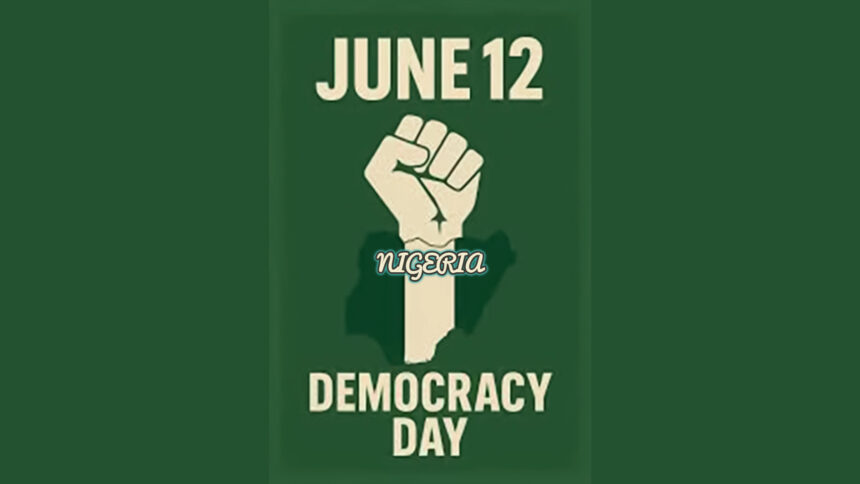
Every June 12, Nigeria pauses. Schools and federal offices close, the president addresses the nation, and across social media, Nigerians share photos of a man who never got to sit in the office he won. That man is Chief Moshood Kashimawo Olawale Abiola, and the story of how his stolen mandate became a national holiday is one of the most consequential chapters in Nigeria’s democratic history.
But to understand why June 12 matters, you need to start with why May 29 stopped mattering.
For 18 years, from 2000 to 2018, Nigerians observed Democracy Day on May 29. The date commemorated May 29, 1999, when Olusegun Obasanjo was sworn in as the country’s first civilian president after 16 continuous years of military rule. It marked the end of a bruising era, one that included the annulment of the 1993 election, the death of Abiola in custody, and the brutal Abacha years.
Obasanjo’s administration instituted May 29 as a public holiday the following year, and for nearly two decades, it stuck. The logic was straightforward: May 29 was the day democracy was actually restored, the day a civilian took the oath of office, the day Nigerians could finally exhale.
The problem, critics argued, was that it honoured the return of democracy without acknowledging the people who bled for it.
June 12, 1993: The Election That Changed Everything
On June 12, 1993, Nigeria held a presidential election widely regarded as the freest and fairest in the country’s history. Two parties competed under a military-designed transition programme: the Social Democratic Party (SDP) and the National Republican Convention (NRC). The SDP’s candidate was Chief MKO Abiola, a Yoruba billionaire and philanthropist who had built a business empire spanning publishing, telecommunications, and football. The NRC fielded Bashir Tofa.
What made the election remarkable was not just its conduct, but its outcome. Abiola won convincingly, polling 8,341,309 votes against Tofa’s 5,952,087, but more importantly, he won across geographic and religious lines that had historically divided Nigeria. He secured votes in Kano, a northern Muslim stronghold. He won despite running on a Muslim-Muslim ticket, with ex-diplomat Baba Gana Kingibe as his running mate, something political observers had long considered electoral suicide in Nigeria.
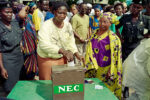
Nigerians turned out in numbers. They voted across ethnic, religious, and regional boundaries. Even Muhammadu Buhari, who would later recognise the election’s legitimacy as president, acknowledged it as free, fair, and peaceful.
Then, eleven days later, the military government of General Ibrahim Babangida annulled it.
The Annulment: June 23, 1993
On June 23, 1993, the Babangida regime voided the entire election without declaring a winner, citing vague allegations of irregularities. The announcement stunned Nigeria and the international community. There had been no significant credible complaints about the election’s conduct. The National Electoral Commission, headed by Professor Humphrey Nwosu, had supervised polls across 110,000 polling booths nationwide.
Protests erupted immediately, particularly in Lagos and the South West. The annulment triggered a political crisis that would last six years, claim dozens of lives, and leave Nigeria internationally isolated. The United Kingdom, United States, and European Union suspended aid and imposed diplomatic sanctions. The Commonwealth condemned the decision.
Babangida, under mounting pressure, resigned from the presidency in August 1993 and handed power to an interim government under Ernest Shonekan. Shonekan lasted three months before General Sani Abacha ousted him in November 1993 in a palace coup.
Abiola, unwilling to walk away from a mandate he had legitimately won, declared himself President of Nigeria on June 11, 1994, at Epetedo in Lagos Island, a day before the first anniversary of the election. Abacha’s government arrested him for treason hours later. He spent the next four years in solitary confinement.
He died in detention on July 7, 1998, just weeks after Abacha himself died suddenly, and just days before he was to be released.
The circumstances of Abiola’s death remain disputed to this day.
The Long Fight to Recognise June 12
The struggle to have June 12 formally recognised did not begin with Buhari. Pro-democracy groups, civil society activists, and opposition figures had been demanding recognition for years. In the South West, some state governments had already declared June 12 a public holiday at the state level, sometimes called “Abiola Day.”
Figures like Chief Gani Fawehinmi, a human rights lawyer who was arrested and harassed repeatedly under Abacha, had kept the memory of June 12 alive through decades of legal battles and public advocacy. The National Democratic Coalition (NADECO), formed in 1994, brought together politicians, activists, and civil society voices who refused to let the annulment be normalised.
Their argument, consistently repeated across every administration from Obasanjo to Jonathan, was that May 29 could not tell Nigeria’s full democratic story. May 29 came because of June 12. The 1999 transition was, in many ways, a belated attempt to honour what Abiola’s election had represented.
June 6, 2018: Buhari Changes the Date
On June 6, 2018, just eight days after that year’s May 29 celebrations, President Muhammadu Buhari signed a presidential proclamation declaring June 12 as Nigeria’s new Democracy Day. The announcement came after what his office described as consultations with relevant stakeholders, though critics noted there had been no public debate.
Buhari’s reasoning was direct. In his own words: “June 12, 1993 was far more symbolic of democracy in the Nigerian context than May 29 or even October 1.”
He conferred on Abiola a posthumous award of Grand Commander of the Federal Republic (GCFR), Nigeria’s highest national honour, typically reserved for sitting presidents. It was a belated but explicit acknowledgement: Abiola had won. Abiola’s running mate, Baba Gana Kingibe, received the Grand Commander of the Order of the Niger (GCON). The late Chief Gani Fawehinmi, who had spent years fighting for democracy from the streets and in courtrooms, also received a posthumous national honour.
Professor Nwosu, the electoral commission chairman who had supervised the 1993 polls, welcomed the announcement. In a letter to the Secretary to the Government of the Federation, he said the recognition would “rekindle the national consciousness of all Nigerians for a better nation.”
The first official Democracy Day celebration on June 12 took place in 2019. May 29 of that year passed without fanfare.
32 Years Later: IBB Finally Admits the Truth
The story acquired one more significant chapter in February 2025. General Ibrahim Badamasi Babangida, the man who signed the annulment, admitted in his autobiography, A Journey in Service, that Abiola won the 1993 election.
The 420-page memoir, launched on February 20, 2025, at the Transcorp Hilton in Abuja, contained an acknowledgment that had been 32 years in the making. Through his book reviewer, former Vice President Yemi Osinbajo, Babangida stated: “There was no doubt in my mind; MKO Abiola won the election. He satisfied all the requirements.”
He cited Abiola’s final tally, 8,128,720 votes against Tofa’s 5,848,247, and confirmed that Abiola had secured the constitutionally required one-third of votes in 28 states, including Abuja. Babangida described the annulment as the most difficult decision of his life, shifting blame for its execution onto forces within his government led by then-Chief of Army Staff General Sani Abacha. He claimed he had feared Abiola would be assassinated if he assumed office, given the opposition within military circles.
The admission was welcomed by some as long-overdue closure, and condemned by others as self-serving revisionism. Human rights activist Omoyele Sowore accused Babangida of using the autobiography to deflect blame onto Abacha, who died in 1998 and could not respond. Either way, the concession, made in print, under his name, closed a long chapter of official denial.
Why June 12 Over May 29?
The core argument has always been about what each date actually represents.
May 29, 1999 was the end of a process, the final handover from a military government that had already agreed to leave power. It happened because Abacha died, because international pressure had become unbearable, because the country was economically collapsing. The democratic transition of 1999 was real, but it was also negotiated. The military left on its own terms.
June 12, 1993, by contrast, was Nigerians themselves speaking, eleven million of them, crossing every fault line the country has ever had to vote for a candidate they chose. The fact that their choice was overruled did not erase the choice. If anything, it made the act of voting more meaningful, not less.
Buhari put it plainly when he made the declaration: that the outcome not being upheld does not detract from its democratic credentials.
There is also the question of sacrifice. The June 12 struggle was not bloodless. Activists were killed, journalists were harassed, Abiola’s wife Kudirat was assassinated in Lagos in 1996 — shot in broad daylight, widely believed to have been targeted for her role in the pro-democracy movement. Abiola himself died in custody. To mark Democracy Day on May 29 without acknowledging any of that felt, to many Nigerians, like celebrating the result while ignoring the price.
June 12 Today
Democracy Day is now an established public holiday observed on June 12 each year. Presidents address the nation. Civil society holds events. Abiola’s image appears on merchandise, in school curricula, and in the national discourse every June.
The MKO Abiola Stadium in Abuja, one of Nigeria’s major sporting venues, was renamed in his honour. His face appears on the new redesigned ₦200 note introduced by the Central Bank of Nigeria.
But the recognition has not been without critics. Some argue that the change was partly political, that Buhari, who needed votes in the South West ahead of the 2019 election, timed the announcement strategically. Others question whether renaming a date and distributing posthumous honours truly does justice to what Abiola represented, or whether it papers over deeper structural failures in Nigerian democracy that persist today: election manipulation, weak institutions, and the continued influence of military-era figures in civilian politics.
Those are legitimate questions. But they do not erase what June 12 means to the millions of Nigerians who stood in those queues in 1993 and watched their votes disappear.
Every year on this date, Nigeria is reminded of a simple, uncomfortable fact: the country’s most credible election was the one that never produced a winner. What Nigerians do with that reminder, whether it sharpens their demands for accountability or merely becomes a date on a calendar, is still being decided.