Most Nigerian workers who fall sick still reach for their wallets first. The bill comes before the care. Despite having a law on the books since 2022 that mandates health insurance for virtually every formal-sector employee in the country, coverage gaps remain wide and awareness is inconsistent. The result is that millions of workers who should already be enrolled are either uninformed, unregistered, or relying on employers who have not yet complied.
- What the NHIA Act 2022 Actually Changed
- The Three Main Programmes for Nigerian Workers
- How OPSSHIP Registration Works for Private Sector Employers
- Registration Requirements at a Glance
- What the NHIA Health Insurance Actually Covers
- The Lagos State Dimension: Ilera Eko and the Executive Order
- What Happens If an Employer Does Not Comply
- Choosing an HMO: What Workers Should Know
- Adding Dependants and Managing Your Enrolment
- Where Things Stand and What Workers Should Do Now
That is changing. In September 2025, President Bola Tinubu directed all Ministries, Departments, and Agencies to enrol their employees without further delay. Lagos State had already moved in July 2024, issuing an executive order making health insurance subscription compulsory for all residents and workers. And in October 2025, the House of Representatives mandated the National Health Insurance Authority to compile defaulting private companies and impose sanctions. The enforcement machinery is now running.
This guide explains, in practical terms, how NHIA health insurance registration works for Nigerian workers in 2026, which programme applies to you, what documents you need, how contributions are calculated, and what happens to your coverage once you are enrolled.
A Complete Guide to NHIA Health Insurance Registration for Nigerian Workers
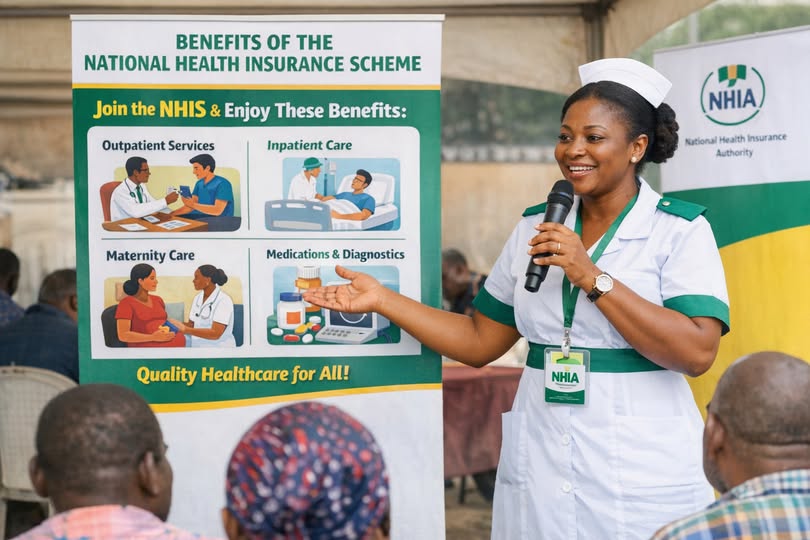

Understanding NHIA health insurance registration is not simply a legal formality. For workers in both the public and private sectors, it determines how healthcare costs are handled when illness arrives, and for employers, non-compliance now carries real regulatory consequences. The National Health Insurance Authority manages the framework that routes contributions, accredits the Health Maintenance Organisations workers are assigned to, and enforces the mandate set out in the NHIA Act 2022.
What the NHIA Act 2022 Actually Changed
Nigeria’s first health insurance law, the National Health Insurance Scheme Act of 1999, spent over two decades failing to enrol more than a small fraction of the population. Participation was largely voluntary, enforcement was weak, and the scheme never reached scale. By the time the NHIA Act was signed into law on 19 May 2022, approximately 97% of Nigerians had no form of health insurance coverage.
The 2022 Act replaced the old framework with a mandatory model. Sections 3 and 14 of the Act require health insurance for all Nigerians and legal residents. Employers with five or more staff members are legally required to enrol those employees in an NHIA-approved health insurance plan. This threshold captures most formal-sector businesses. The law also mandates each state to establish or align with a State Health Insurance and Contributory Scheme.
The NHIA itself was restructured. It now operates as a regulatory and supervisory authority, accrediting Health Maintenance Organisations, approving benefit packages, overseeing state schemes, and managing funds for vulnerable populations through the Basic Health Care Provision Fund (BHCPF).
The Three Main Programmes for Nigerian Workers
The NHIA administers different programmes depending on whether a worker is in the public sector, the organised private sector, or outside formal employment. Understanding which one applies to you determines the entire registration process.
Formal Sector Social Health Insurance Programme (FSHIP)
This is the primary plan covering employees of the federal government and public institutions. Civil servants, employees of federal agencies, and staff of government-owned entities fall under FSHIP. Enrollment for public sector workers is handled directly through their employer, typically the human resources or accounts department coordinates with the NHIA for bulk registration. The worker does not initiate this process independently.
Under FSHIP, the employer pays 10% of each employee’s basic monthly salary as a contribution, and the employee contributes an additional 5% of their basic salary. This combined contribution, 15% of basic salary, is remitted to the NHIA Fund Account and forms the pool from which healthcare costs are settled. For public sector workers, the NHIA contribution replaces any medical allowance that would otherwise have been paid.
Organised Private Sector Social Health Insurance Programme (OPSSHIP)
OPSSHIP covers employees of private companies that meet NHIA registration requirements. The contribution structure mirrors FSHIP: employers contribute 10% of basic monthly salary and employees contribute 5%. There is, however, a minimum basic salary threshold for participation in OPSSHIP, the NHIA requires that the worker’s basic monthly salary be at least N30,000 for the employer to qualify for this programme.
Private sector employers must initiate registration on behalf of their staff. Individual employees do not register directly for OPSSHIP, the employer applies, submits documentation, and NHIA coordinates the enrolment visit.
Group, Individual and Family Social Health Insurance Programme (GIFSHIP)
GIFSHIP was designed for Nigerians outside formal employment, the self-employed, traders, artisans, informal sector workers, and individuals who want coverage outside of an employer-sponsored plan. It has also become an option for small businesses, associations, and groups. In March 2026, Ultimate Health HMO announced a GIFSHIP premium of N38,718 per person annually, with the NHIA describing the minimum group payment as N220,000 for a 10-person package, with additional members at N22,000 each per year.
GIFSHIP enrolees must provide their National Identification Number (NIN) and pay a one-time N1,500 fee for their NHIA ID card. Payment is made through the Remita platform, with a 24-hour bank payment window after registration generates a Retrieval Reference number. Enrolees under GIFSHIP can choose their own HMO and Primary Healthcare Provider, which is a flexibility not always available through employer-sponsored plans.
How OPSSHIP Registration Works for Private Sector Employers
For a private company registering employees under OPSSHIP, the process begins with the employer, not the individual worker. Here is how it unfolds in practice, based on the NHIA’s published requirements.
The employer submits a letter of interest to the NHIA expressing intention to enrol staff under OPSSHIP. Along with this letter, the organisation provides its current nominal roll and three months of verifiable salary schedules, stamped by the bank. These documents allow the NHIA to calculate contribution amounts before any payment is made.
The NHIA then computes the required initial contribution, a minimum of 12 months’ contributions upfront, and payment is made to the NHIA Fund Account via the Remita platform. Evidence of payment must be submitted to the Authority. Each employee being enrolled must provide their NIN as part of the process.
Once payment is confirmed, NHIA staff visit the organisation to carry out the actual enrolment, capturing employee information, assigning HMOs, and issuing enrolment records. Coverage extends to the enrollee, one spouse, and up to four biological children under the age of 18.
Registration Requirements at a Glance
The documents and information required differ slightly by programme, but certain elements are common across all of them.
For public sector (FSHIP) workers, registration is led by the employer’s HR or accounts department. Individual employees typically need to provide their NIN and personal details for the enrolment process, including information on their spouse and eligible children.
For private sector employers registering under OPSSHIP, the required documentation includes: a letter of interest addressed to the NHIA; the organisation’s current nominal roll; three months of bank-stamped salary schedules; evidence of payment to the NHIA Fund Account via Remita; and NIN for each employee being enrolled.
For individuals or groups enrolling under GIFSHIP independently, the requirements include: a formal application or group document listing the names of persons to be enrolled (a minimum of 10 people for a group); payment via Remita or at a bank using the generated RRR number; NIN for each enrolee; and N1,500 per person for the NHIA ID card.
What the NHIA Health Insurance Actually Covers
The NHIA’s standard benefit package applies across FSHIP, OPSSHIP, and GIFSHIP, though the level of comprehensiveness can vary across specific plans. At its core, the package is structured around primary and secondary healthcare services.
Covered services under the standard NHIA benefit package include outpatient consultations, laboratory diagnostic tests, prescribed medications, maternity care at all stages of pregnancy including premature births and stillbirths, eye care and basic eyewear, dental care within the prescribed limits, and emergency care. For dependants, the coverage applies to the enrollee’s registered spouse and up to four biological children under 18.
There are exclusions. The NHIA confirms that not all conditions and treatments are covered, there are both full exclusions and partial exclusions within the benefit package. Enrollees are directed to consult their assigned HMO for the specific scope of coverage. Importantly, treatment is cashless at the point of care, except for a 10% co-payment on drugs at the pharmacy. This means the enrollee does not need to pay out of pocket for covered consultations or procedures at accredited facilities.
Only NHIA-accredited healthcare facilities can be used. An enrollee who visits a non-accredited hospital will not be able to claim coverage for that visit.
The Lagos State Dimension: Ilera Eko and the Executive Order
Across Nigeria, implementation is uneven. Lagos State is currently among the most active in enforcement. On 16 July 2024, the Lagos State Governor issued an executive order making subscription to a Social Health Insurance Scheme compulsory for all residents, employers, and workers in the state, regardless of whether they were already covered by federal NHIA plans.
Under the Lagos order, residents and workers must subscribe through either the Lagos State Health Management Agency (LASHMA) or an NHIA-accredited private health insurance provider registered with the Lagos State Government. LASHMA’s health insurance product is marketed as “Ilera Eko” and offers plans including a Standard Plan, Senior Plan, Diaspora Plan, and Telemedicine Plan.
Notably, the Lagos State Government made the channel optional, workers already covered by a private HMO accredited by both the NHIA and the Lagos State Government can remain with their existing provider. The contribution structure under the Lagos scheme follows the same 10% employer and 5% employee split of basic monthly salary.
Lagos State MDAs are required to request proof of social health insurance registration before providing services to residents. This means registration is not only about healthcare access, it affects administrative interactions with government offices as well.
What Happens If an Employer Does Not Comply
Enforcement of the NHIA Act was slow in the years immediately following enactment, but the pressure has increased significantly since 2024. The NHIA Act 2022 carries statutory penalties for non-compliance, though the specific penalty amounts are applied on a case-by-case basis.
In September 2025, President Tinubu’s directive added a practical enforcement mechanism: a valid NHIA certificate is now required for procurement eligibility by federal contractors, and for the issuance and renewal of government licences and permits. This means a private company without NHIA compliance may find itself unable to participate in federal tenders or renew certain government approvals.
In October 2025, the House of Representatives went further, directing the NHIA to compile a list of defaulting private companies and impose appropriate sanctions. The House Committee on Healthcare Services was mandated to ensure compliance and report within four weeks.
For employers concerned about the financial burden, particularly smaller businesses, the NHIA Act sets the qualifying threshold at five or more employees. Sole operators and micro-businesses with fewer than five staff are not currently required to enrol under the OPSSHIP framework, though their workers can still access GIFSHIP individually.
Choosing an HMO: What Workers Should Know
In both GIFSHIP and some private sector plans, enrollees have the right to choose their Health Maintenance Organisation and their Primary Healthcare Provider. Under employer-led programmes like OPSSHIP, the employer may make this selection, but workers should confirm which HMO they have been assigned to and what healthcare facilities are accredited under that HMO in their area.
HMOs in Nigeria are accredited and regulated by the NHIA. In 2024, the NHIA released updated guidelines for HMO accreditation that set financial thresholds, governance requirements, and quality standards that HMOs must meet to remain licensed. An enrollee whose HMO loses accreditation would need to be transferred to a compliant provider.
If a worker has a complaint about care at a healthcare facility, or a dispute with their HMO over coverage, the NHIA provides a complaints process through its offices, through the HMO directly, and through its national call centre. Disputes that are not resolved by the HMO can be escalated to the NHIA for adjudication.
Adding Dependants and Managing Your Enrolment
Once enrolled, workers can register their spouse and up to four biological children under 18 as dependants. Adding a dependant beyond the standard six covered family members (the contributor, spouse, and four children) is possible but comes at a cost, the NHIA charges N15,000 per additional dependant, renewable annually. This fee applies to extra dependants such as parents or additional children above the four covered.
Extra dependants are added by visiting a physical NHIA office, providing the dependant’s photograph and personal details, generating a Remita code, paying at a bank, and returning to the NHIA office with the payment evidence. The processing timeline for adding an extra dependant is approximately three months.
Workers who need to remove a dependant, due to the death of a spouse, divorce, or a child turning 18, must submit a written application to the NHIA Director-General along with supporting documentation (death certificate, divorce certificate, or similar proof). This process ensures the contribution pool reflects the actual coverage in place.
Where Things Stand and What Workers Should Do Now
The NHIA health insurance registration system has moved well beyond the voluntary, largely ignored scheme that preceded it. The legal obligation is clear, the enforcement mechanisms are now active, and both federal and state governments are using access to services and contracts as leverage to push compliance.
For workers in the public sector, the most useful step is to confirm with your human resources or accounts department whether your organisation has completed enrolment and what HMO you have been assigned. For private sector employees, the same check applies, but it is worth also verifying whether your employer meets the five-staff threshold and has submitted the required documents to the NHIA.
If you are self-employed, a freelancer, or working in an informal arrangement, GIFSHIP is the route built for you. It requires a minimum group of 10 for the standard package, but the NHIA also allows individuals to approach HMOs that have adopted the GIFSHIP product. The process involves a Remita payment, an NIN, and an N1,500 ID card fee. You get to choose your HMO and your primary healthcare facility.
Healthcare costs in Nigeria remain heavily weighted toward out-of-pocket spending, research published in late 2025 pegged this figure at around 70% of total health expenditure. Registration is how that changes, worker by worker, employer by employer. The infrastructure exists. The legal obligation is in place. The question now is execution.