
Political tension in Abuja reached a new peak when court proceedings involving a well known activist suddenly escalated into custody inside one of Nigeria’s most secure correctional facilities. The atmosphere around the Federal High Court shifted quickly as legal arguments, past controversies, and fresh allegations converged into a single decisive ruling that altered the direction of an already sensitive case. Observers who had followed earlier developments noticed that this moment did not emerge in isolation but rather grew from months of legal friction, public statements, and repeated court appearances that shaped the courtroom atmosphere.
Attention sharpened further when the name of Omoyele Sowore became central once again in discussions about digital speech, state authority, and the boundaries of lawful expression in Nigeria’s evolving cybercrime framework. What unfolded inside the courtroom on 22 June 2026 was not merely a procedural update but a turning point that triggered immediate reactions across political circles, activist networks, entertainment spaces, and online communities. Each side interpreted the ruling through sharply different lenses, turning a legal decision into a national conversation that extended far beyond the courtroom walls.
EARLY LEGAL BACKGROUND
Legal filings initiated by the Department of State Services placed the foundation for what later became a widely discussed court process involving Omoyele Sowore and the Federal Government of Nigeria. The allegations centered on statements made on social media platforms in 2025, where remarks attributed to Sowore referenced President Bola Tinubu in a manner the prosecution described as criminal defamation under provisions of the Cybercrimes Act. The case was filed under the authority of the DSS, marking it as part of a broader enforcement approach toward digital speech regulations.
At the center of the legal interpretation was Section 24 of the Cybercrimes Act as amended, which government lawyers argued provided grounds for prosecuting statements considered false, offensive, or capable of inciting public disorder. The prosecution maintained that the content of the post crossed legal boundaries established under Nigerian cyber regulation, while defense arguments previously raised concerns about constitutional protections for expression and political criticism. These competing interpretations formed the legal tension that persisted throughout earlier hearings.
Court records show that the matter did not begin as a detention based case but evolved gradually as procedural requirements intensified. Initial appearances were followed by bail conditions that later became central to the dispute. The progression of filings and responses established a pattern of non linear courtroom engagement that eventually set the stage for stronger judicial measures when attendance conditions became contested.
COURT ORDER TRIGGER
On 22 June 2026, proceedings at the Federal High Court in Abuja reached a decisive stage when the presiding judge issued an order directing that Omoyele Sowore be remanded at Kuje Correctional Centre under the custody of the Nigerian Correctional Service. The order followed arguments regarding compliance with earlier bail terms and attendance obligations tied to ongoing trial schedules. The courtroom atmosphere reflected the culmination of earlier procedural disagreements that had remained unresolved across previous sittings.
The legal justification presented by the court referenced the revocation of earlier bail arrangements after concerns were raised about failure to consistently appear for scheduled proceedings. A bench warrant had reportedly been issued prior to the remand decision, establishing the legal basis for enforcement action. When the matter returned to court on 22 June, the judge reviewed motions challenging procedural fairness, but ultimately ruled that custody should continue until the next scheduled hearing.
The court further fixed 24 June 2026 as the next hearing date, making the remand a temporary custodial arrangement linked directly to ongoing judicial review. This classification placed the detention within the category of custody pending trial continuation rather than a conviction outcome. The decision immediately shifted the legal status of the case from open courtroom participation to custodial presence at Kuje Correctional Centre, located within the Federal Capital Territory Abuja.
LEGAL POSITION EXPLAINED
The Department of State Services maintained that the case should be understood strictly within the boundaries of cybercrime enforcement and defamation law. According to the prosecution framework, the statements attributed to Sowore were considered potentially false and capable of provoking unrest or undermining public trust in leadership institutions. The DSS position emphasized that enforcement actions were guided by statutory obligations rather than political considerations.

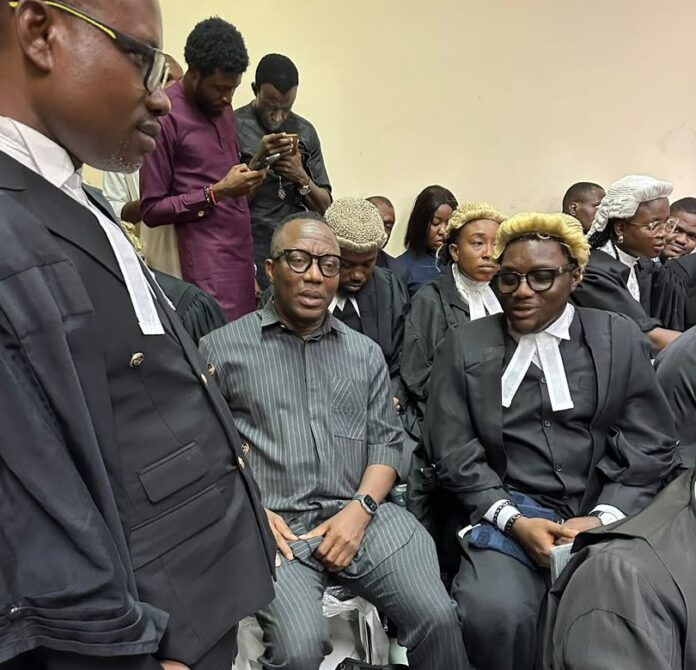
Legal representatives supporting the state argued that compliance with court procedures formed a critical part of judicial order, particularly where prior bail conditions were involved. The court’s authority to enforce attendance requirements was presented as central to maintaining procedural integrity. From this perspective, the remand was framed as a necessary step within the legal process rather than an extraordinary measure.
At the same time, arguments raised in earlier stages of the case highlighted ongoing national debate about the scope of cybercrime legislation in relation to political speech. These arguments often returned to questions about how digital expression is regulated and how legal thresholds are interpreted when public figures engage in critical commentary on governance.
ENTRY INTO KUJE CORRECTIONAL CENTRE
Following the court order issued on 22 June 2026, Omoyele Sowore was transferred into custody at Kuje Correctional Centre under standard detention procedures administered by the Nigerian Correctional Service. The facility, located within the Abuja metropolitan region, is one of the country’s most secured correctional institutions and has previously housed individuals involved in high profile legal cases.
The transfer marked a significant shift in the trajectory of the case as it moved from courtroom freedom to custodial supervision. Administrative procedures at the correctional facility placed the detainee under standard intake protocols pending the next court appearance scheduled for 24 June 2026. The detention status remained formally linked to ongoing judicial review rather than a completed trial judgment.
Observers noted that this stage of the process often reflects procedural enforcement rather than final legal determination. The distinction between remand custody and conviction based imprisonment remained central to legal commentary surrounding the case, particularly in discussions involving civil liberties and judicial procedure in Nigeria.
SOWORE RESPONSE MOMENT
Following the remand decision, Omoyele Sowore addressed the situation with remarks that reflected familiarity with repeated legal encounters. He indicated that he anticipated the outcome of the ruling and prepared accordingly, suggesting awareness of the possible custodial decision prior to its execution.
His statement was:
“I came prepared. I brought my prison bag.”
He characterized the situation as part of a broader struggle involving political expression and state response to criticism. The tone of his remarks reflected long standing involvement in legal disputes connected to activism and public commentary.
He also stated:
“I expected this ruling.”
COURT RESERVES RULING
Another major twist emerged in the case on 24 June 2026 when proceedings resumed before Justice Mohammed Umar at the Federal High Court in Abuja. During the sitting, lawyers representing Omoyele Sowore urged the court to restore his earlier bail conditions and set aside the bench warrant that paved the way for his remand. The defence argued that the application was necessary in the interest of justice and asked the court to exercise its discretion in favour of the activist.
Counsel for the Federal Government opposed the application and insisted that there were no sufficient grounds to grant the request. After listening to arguments from both parties, Justice Umar reserved his decision and fixed 30 June 2026 for ruling on the application. Sowore’s lawyers also made an oral request seeking his temporary release to the legal team pending the ruling, citing concerns over his health while in custody. However, the judge declined the request, explaining that granting such relief before delivering a decision on the substantive application would defeat the purpose of the adjournment. Consequently, the court ordered that Sowore be returned to Kuje Correctional Centre, where he will remain in custody pending the outcome of the ruling scheduled for 30 June 2026.
ALLEGATIONS OF MANHANDLING INSIDE COURT PREMISES
Another layer of controversy emerged shortly after the remand order was issued on 22 June 2026, when allegations surfaced that Omoyele Sowore was physically rough handled by operatives while being taken into custody. Videos circulating online captured tense scenes around the Federal High Court in Abuja, with supporters and associates accusing security personnel of using excessive force during the process.

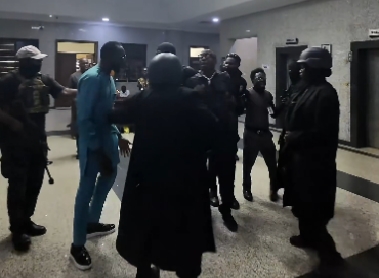
Human rights lawyer Deji Adeyanju publicly condemned what he described as Sowore’s “abduction” and manhandling within the court premises, arguing that the treatment amounted to a violation of the rule of law. The South East chapter of the African Action Congress also alleged that the activist was subjected to rough treatment during the commotion that followed the remand proceedings.
Fresh tension resurfaced on 24 June 2026 when heavily armed DSS operatives reportedly restricted access to the courtroom, preventing some lawyers, supporters, and associates from entering the proceedings. Witnesses described an atmosphere of intimidation around the court complex, while members of the African Action Congress challenged the restrictions, insisting that court proceedings should remain open to the public.
ACTIVIST REACTIONS CHAIN
Human rights lawyers and civil society actors responded quickly following confirmation of the remand order. Several legal commentators described the development as part of an ongoing national debate about freedom of expression under cybercrime enforcement frameworks. Concerns were raised regarding how digital speech laws intersect with political criticism and whether enforcement practices maintain consistent thresholds.

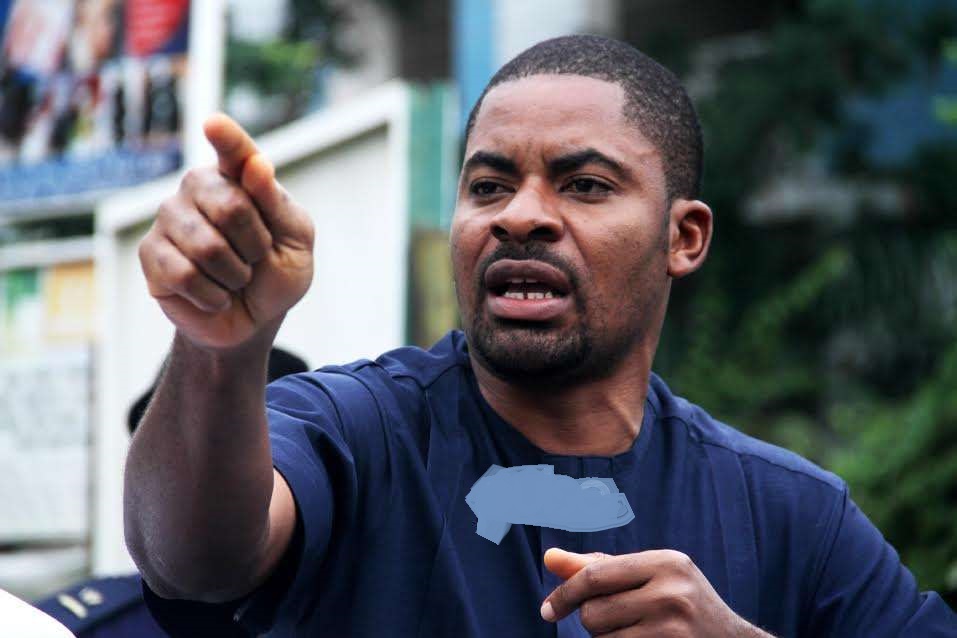
Deji Adeyanju, known for involvement in previous legal defense cases involving activists, was among those who again reiterated concerns about political motivation narratives often associated with similar prosecutions. His position has repeatedly aligned with legal resistance to perceived overreach in state enforcement actions involving activists and journalists.
Activist groups aligned with free speech advocacy also described the development as a test case for constitutional interpretation in digital communication environments. Their responses focused on how legal frameworks are applied in cases involving public figures and online statements.
POLITICAL REACTIONS STREAM
Political reactions emerged rapidly across opposition circles and allied activist networks. Members associated with the African Action Congress and related political structures described the remand as part of a wider struggle over democratic expression and civic space in Nigeria. Their statements framed the situation as part of a broader political environment where legal mechanisms intersect with public dissent.
Supporters of these views emphasized concerns about the use of cybercrime provisions in regulating political speech, arguing that such laws require careful application to avoid overreach. The discussion quickly expanded beyond the immediate case into wider debates about governance, accountability, and digital rights in Nigeria.
ENTERTAINMENT VOICES RESPONSE


Within entertainment and celebrity circles, reactions also emerged prominently on social media platforms. Nollywood actress Doris Ogala publicly criticized the ruling, expressing concern about what she described as predetermined judicial outcomes.
Her statement was:
“They already planned this, and they knew they were going to do this, but Sowore is not afraid to go to Kuje prison.”
She further added:
“This is totally wrong. The judicial system has failed us in Nigeria.”
She also stated:
“They already planned to take him to Kuje, we only came here to finish the drama.”
Her comment circulated widely on Instagram where she emphasized dissatisfaction with the outcome and expressed concern about institutional credibility.
SOCIAL MEDIA DISCOURSE WAVE
Digital platforms such as X formerly Twitter, Instagram, and Facebook became central spaces for public reaction following the court order. Two dominant perspectives emerged across discussions. One group framed the remand as an issue of political targeting and suppression of dissenting voices, while another group emphasized adherence to court procedures and legal compliance.


VeryDarkMan contributed indirectly through commentary on related legal controversies. His reported statement included the following claim:
“Sowore was arrested because of his persistent criticism of President Tinubu, including referring to him as a thief.”
He reportedly stated:
“Nigerians have been deprived of economic opportunities and public resources under the current administration, and citizens are increasingly finding it difficult to cope with rising living costs and worsening economic conditions.”
GOVERNMENT POSITION FRAMEWORK
The Department of State Services maintained a consistent position throughout the developments, reiterating that the case falls within cybercrime and defamation enforcement structures. According to the DSS framework, the case does not represent political targeting but rather enforcement of existing legal provisions governing digital communication.
The government position emphasized the importance of regulating false or harmful online content under established legal statutes. Officials argued that enforcement actions are guided by statutory obligations designed to maintain order and protect institutional integrity in public communication spaces.
NATIONAL SIGNIFICANCE DISCUSSION
The remand has become a focal point in national discourse due to its intersection with several broader issues including digital speech regulation, judicial authority, political expression, and enforcement of cybercrime laws. The case has drawn attention from legal analysts, activists, political actors, and cultural commentators due to its implications for online communication boundaries in Nigeria.
The combination of courtroom proceedings, public reactions, and digital discourse has transformed the case into a wider reference point for ongoing debates about governance and civil liberties. Each development continues to generate discussion across multiple sectors of society, reflecting the broader relevance of legal interpretation in digital age communication environments.