
Legacies often appear larger than life. Over time, iconic figures become so monumental that the forces, people, experiences, and sacrifices that shaped them gradually fade into the background. Names become symbols, while the stories behind those symbols are quietly pushed aside.
Few names in African history command the kind of reverence associated with Fela Anikulapo Kuti. Decades after his death on August 2, 1997, his music, activism, courage, and defiance continue to inspire conversations across generations. To many, Fela represents a singular force of nature, a man who challenged power, confronted injustice, and transformed music into a weapon of social resistance.
Yet a recent remark by his youngest son, Seun Kuti, has reopened an important conversation about the roots of that extraordinary journey. Rather than focusing on the man the world came to know, Seun turned attention to the woman whose influence reached far beyond her own era. His argument invites a deeper look at the family, environment, values, and experiences that helped shape one of Africa’s most influential cultural figures.
Behind every towering legacy lies a foundation. Behind every revolution lies a beginning. To understand whether Seun Kuti’s statement truly captures an essential truth about Fela’s story, it becomes necessary to revisit the remarkable life of Funmilayo Ransome Kuti, the fearless woman whose presence echoed through some of the most defining moments of Nigerian history.
The question is simple, yet profound. Would Fela have become Fela without being Funmilayo Ransome Kuti’s son?
Seun Kuti’s Remark Reopens An Old Conversation
During an interview on Ada’s Room in June 2026, Seun Kuti made a statement that quickly attracted attention because it touched the foundation of one of Africa’s most celebrated legacies. While speaking about privilege, family influence, personal effort, and the frequent accusations of nepotism directed at him, Seun turned the discussion toward his father. His point was direct and carefully framed around the reality that no individual develops in complete isolation from the people who raise them.
He said
“You will see people online calling me a nepo baby, but even Fela Kuti, if he wasn’t Funmilayo Ransome Kuti’s son, he wouldn’t have been Fela. Nothing comes from nothing.”


The statement immediately stood out because it challenged the tendency to view Fela as a self created phenomenon. Rather than focusing solely on the legendary musician’s personal achievements, Seun highlighted the environment that produced him. His remarks suggested that the qualities many people celebrate in Fela were deeply connected to lessons learned long before fame, controversy, or global recognition entered the picture.
Seun continued by stressing that family connections may provide opportunities, but achievement ultimately requires individual effort and commitment. He rejected the idea that a famous surname alone guarantees success or relevance, arguing that personal responsibility remains essential regardless of background.
“I might be a nepo baby, but my father is not on stage playing my sax for me.”, he continued.
Those words carried a broader message about inheritance, influence, and personal agency. While acknowledging the benefits that come with belonging to a prominent family, Seun also reminded listeners that talent must still be developed and demonstrated through work. More importantly, his comments reopened a larger discussion about the extraordinary woman whose influence stretched across generations of the Kuti family.
Funmilayo Ransome Kuti Before National Recognition
Long before Fela became an international symbol of resistance, Funmilayo Ransome Kuti had already established herself as a powerful force within Nigerian society. Born on October 25, 1900, in Abeokuta, she emerged during a period when colonial structures, traditional authorities, and social expectations imposed significant limitations on women. Rather than accepting those restrictions, she dedicated her life to challenging them through education, activism, organization, and political engagement.

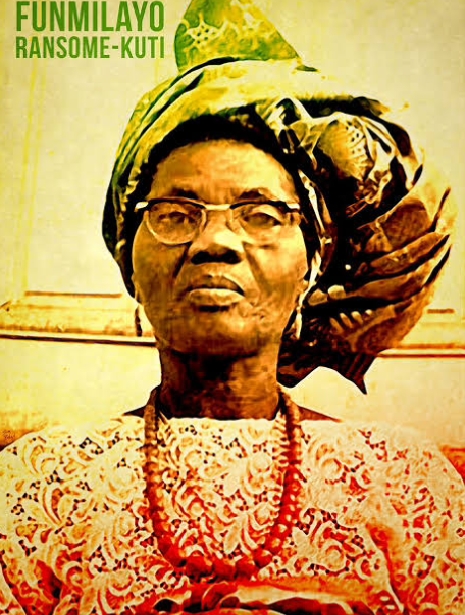
Education occupied a central place in her early life. At a time when many girls were denied access to formal learning, she pursued academic opportunities that helped shape her worldview. Exposure to education provided her with the confidence, discipline, and intellectual tools that would later define her activism. Those experiences also strengthened her belief that social progress depended upon empowering ordinary people with knowledge.
Her public profile grew steadily throughout the 1930s and 1940s as she became increasingly involved in campaigns aimed at improving the lives of women. Rather than limiting her efforts to speeches or symbolic gestures, she organized communities, mobilized support, and built networks capable of influencing public policy. Her activism was practical, strategic, and deeply rooted in everyday realities.
Recognition eventually extended beyond Nigeria’s borders. International observers began to view her as one of Africa’s most influential female activists. Yet even as her reputation expanded, her focus remained fixed on issues affecting ordinary women whose voices were frequently ignored by those in positions of authority.
The Woman Who Challenged Power
Funmilayo’s reputation was built upon a willingness to confront powerful institutions regardless of the consequences. During the colonial era, she became a leading figure in campaigns against unfair taxation policies imposed on women in Abeokuta. Rather than approaching the issue through isolated protests, she organized a movement capable of attracting widespread participation and sustained pressure.
The Abeokuta Women’s Union eventually became one of the most influential women’s organizations in Nigerian history. Through coordinated action, public demonstrations, petitions, and persistent advocacy, the movement challenged policies that many believed were unjust. Thousands of women participated, creating a powerful example of collective resistance that resonated across the country.
Authority did not intimidate her. Colonial administrators faced direct criticism from her. Traditional institutions also encountered opposition whenever she believed they were acting against the interests of ordinary citizens. Her activism was rooted in the conviction that leadership should serve the people rather than dominate them.
Courage became one of her defining characteristics. That courage was not merely political. It reflected a broader philosophy that encouraged questioning authority whenever justice, dignity, or fairness appeared threatened. Those values would later become unmistakably familiar in the life of her son.
The Household That Shaped Fela
Fela was born on October 15, 1938, into a family unlike most others in colonial Nigeria. His home combined intellectual rigor, social awareness, political engagement, religious influence, and educational achievement. Conversations about society, leadership, inequality, responsibility, and national development were part of everyday life.
His father, Reverend Israel Ransome Kuti, was a respected educator, minister, composer, and public intellectual. Academic excellence was highly valued within the household. Discipline and critical thinking were encouraged from an early age. Exposure to intellectual discussion became a normal part of growing up.
Funmilayo brought another dimension to that environment. Her activism exposed her children to examples of courage, organization, public engagement, and resistance against injustice. Rather than teaching these principles through abstract lectures, she demonstrated them through her actions. Her campaigns, meetings, public appearances, and political activities offered practical lessons about challenging authority when necessary.
Young Fela therefore grew up witnessing something rare. Resistance was not an idea discussed only in books. It was visible within his own family. Leadership was not presented as blind obedience to existing structures. Leadership involved questioning systems that failed the people they were meant to serve.
Those experiences did not automatically create the artist Fela would become. They did, however, provide a foundation upon which many of his later convictions would develop.
Fela’s Transformation Into A Revolutionary Artist
Music initially occupied a larger place in Fela’s ambitions than politics. During his early years, he focused primarily on developing his artistic abilities and exploring different musical influences. His journey eventually took him to London, where he studied music and expanded his exposure to global sounds and cultural movements.
Exposure to different environments broadened his perspective considerably. Encounters with new ideas challenged assumptions and introduced him to wider conversations about race, identity, colonialism, freedom, and social justice. These experiences helped shape the worldview that later defined much of his work.
Yet the significance of those experiences becomes easier to understand when viewed alongside his upbringing. Ideas encountered abroad often resonate most strongly when they connect with values already present beneath the surface. Many of the themes that later emerged in Fela’s music reflected concerns that had long existed within the environment that raised him.

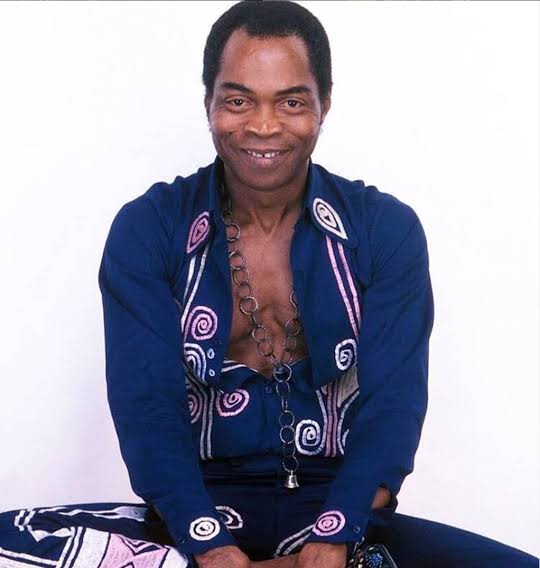
Political consciousness did not suddenly appear overnight. Rather, it evolved through a combination of personal experiences, intellectual influences, social observation, and family values. The willingness to challenge authority, confront injustice, and speak openly against powerful institutions echoed principles that had already been demonstrated within his household.
As his music matured, artistic expression became inseparable from political commentary. Songs increasingly addressed corruption, oppression, inequality, abuse of power, and the struggles faced by ordinary Nigerians. The artist gradually became a symbol of resistance whose influence extended far beyond entertainment.
Echoes Of A Mother’s Influence
Many of the qualities that defined Funmilayo’s activism later appeared in Fela’s public life. Fearlessness stood out prominently in both figures. Neither seemed willing to remain silent when confronted with actions they considered unjust. Both accepted significant personal risks in pursuit of their convictions.
Persistence also connected their stories. Funmilayo spent years organizing women, confronting authorities, and pursuing social change despite obstacles. Fela similarly continued speaking against governments and institutions even when arrests, harassment, intimidation, and violence became recurring realities.
Public service formed another shared theme. Their methods differed significantly, but both devoted substantial portions of their lives to addressing issues affecting ordinary people. Funmilayo used political organization and activism. Fela used music, performance, public commentary, and cultural influence.
Their similarities do not erase the originality of either figure. Funmilayo was not a musician. Fela was not a political organizer in the same mold as his mother. Yet certain values appear consistently throughout both lives, creating a connection that helps explain why Seun’s statement continues to attract attention.
The relationship between mother and son extended beyond family ties. It represented a transmission of principles, courage, and social awareness from one generation to another. That inheritance became visible throughout many of the defining moments that shaped Fela’s legacy.
The Kalakuta Republic Attack Changed Everything
Few events illustrate the bond between Fela and Funmilayo more powerfully than the tragedy that unfolded in February 1977. By that stage, Fela had become one of the most outspoken critics of Nigeria’s military government. His music was attracting widespread attention, not merely because of its sound but because of the messages embedded within it. Through songs, interviews, and public appearances, he consistently challenged those in power and exposed what he viewed as corruption, oppression, and abuse.
Tensions between Fela and the authorities had been building for years. The release of the album Zombie intensified that conflict considerably. The record mocked the mentality of soldiers who followed orders without question, and many within the military establishment viewed it as a direct attack. Public attention surrounding the album continued to grow, creating a climate of confrontation that eventually reached a devastating climax.
On February 18, 1977, hundreds of soldiers stormed Kalakuta Republic, the communal residence and cultural headquarters established by Fela in Lagos. The operation quickly descended into violence. Residents were beaten, properties were vandalized, and large sections of the compound were destroyed. Witness accounts described scenes of chaos that left lasting scars on everyone present.
Among those caught in the attack was Funmilayo Ransome Kuti. Already an elderly woman at the time, she suffered horrific injuries after being thrown from an upstairs window during the raid. The assault shocked many Nigerians because it involved a woman who had spent decades fighting for justice, education, and social progress. Her injuries proved severe and irreversible.
Funmilayo eventually died on April 13, 1978, from complications linked to the injuries she sustained during the attack. Her death transformed what was already a national scandal into one of the most painful episodes in Nigeria’s modern history. For Fela, the loss was deeply personal. For the nation, it symbolized the devastating consequences of political repression.
A Son’s Grief Became Political Resistance
Funmilayo’s death did not silence Fela. If anything, it strengthened his resolve to confront the authorities he believed were responsible for her suffering. Grief became fuel for protest. Anger became artistic expression. Personal loss became a national statement.
One of the most enduring images associated with this period emerged when Fela reportedly carried his mother’s coffin to the gates of Dodan Barracks, then the seat of Nigeria’s military government. The act was both symbolic and confrontational. It represented a direct challenge to those he blamed for her death and served as a powerful reminder that political decisions often carry human consequences.
Music once again became his chosen medium of resistance. Through songs such as Coffin for Head of State, Fela transformed private pain into public memory. Rather than allowing the incident to fade into history, he preserved it through art that could reach audiences far beyond Nigeria’s borders. The song remains one of the most emotionally charged recordings of his career because it combines political criticism with personal tragedy.
Those events reinforced an already strong connection between mother and son. Funmilayo’s activism had influenced Fela throughout his life. Her death became another defining chapter in his political evolution. Every discussion about Fela’s resistance to authority eventually returns to this moment because it reveals how deeply his mother’s life and legacy remained intertwined with his own.
Historical memory often treats figures separately, yet the story of Fela cannot be fully told without acknowledging the role Funmilayo played before, during, and after many of the events that shaped his journey.
Looking Beyond Music To Understand Fela
Discussions about Fela frequently focus on his achievements as a musician. Those accomplishments are undoubtedly remarkable. He pioneered Afrobeat, developed a distinctive performance style, built an international audience, and influenced generations of artists across multiple continents. His musical innovations altered the landscape of African popular culture in ways that remain visible decades later.
Yet reducing Fela’s significance to music alone provides an incomplete picture. His impact extended into politics, social commentary, cultural identity, and public consciousness. Songs became vehicles for larger conversations about governance, accountability, poverty, inequality, and national direction. Audiences were not merely listening to music. They were engaging with ideas.
Understanding how those ideas developed requires looking beyond the recording studio. Personal history, family influence, educational experiences, social observation, and political events all contributed to the formation of the man behind the music. No individual emerges fully formed without context.
Funmilayo represents one of the most important elements of that context. Her example demonstrated that authority could be challenged. Her activism showed that ordinary citizens could organize for change. Her courage provided a living model of resistance long before Fela became known for those same qualities.
Seun’s statement therefore directs attention toward a broader understanding of greatness. Extraordinary individuals often possess remarkable talent, but talent develops within environments shaped by parents, mentors, communities, and experiences. Recognizing those influences does not diminish achievement. It helps explain it.
Nothing Comes From Nothing
Perhaps the most revealing part of Seun’s remarks was not the reference to Fela himself but the philosophy contained within a single sentence.
“Nothing comes from nothing.”
Those words capture a reality that extends far beyond the Kuti family. Every major achievement has roots. Every influential figure emerges from a network of relationships, experiences, opportunities, challenges, and lessons accumulated over time. Success rarely appears without foundations that were built long before public recognition arrives.
Funmilayo’s influence on Fela reflects this principle clearly. Her activism created an atmosphere where questioning authority was acceptable. Her courage demonstrated that resistance often carries personal costs. Her commitment to justice established values that remained visible throughout her son’s life. Those contributions formed part of the foundation upon which Fela built his own legacy.
Acknowledging those foundations does not imply that Fela’s accomplishments belonged to someone else. His musical genius remained uniquely his own. His creativity, charisma, determination, and vision cannot be transferred or inherited automatically. Millions of people are born into remarkable families without changing history. Achievement still requires individual action.
Seun’s argument appears less concerned with reducing Fela’s importance than with expanding the conversation surrounding it. Rather than viewing greatness as an isolated phenomenon, he encourages people to examine the influences that help produce it. Through that lens, Funmilayo becomes more than a supporting character in Fela’s story. She becomes one of its central architects.
Is Seun Kuti Right?
Answering that question requires separating influence from achievement. Fela’s accomplishments were undeniably his own. No one composed his music for him. No one stood on stage in his place. No one created Afrobeat on his behalf. His artistic vision emerged through years of experimentation, discipline, performance, and personal growth.
At the same time, the values that distinguished him from many of his contemporaries did not emerge from a vacuum. Fearlessness, social consciousness, resistance to injustice, willingness to confront authority, and commitment to speaking openly against oppression were qualities he witnessed at home long before the world associated them with his name.
Funmilayo Ransome Kuti provided more than parental guidance. She embodied a living example of courage in action. Through decades of activism, she demonstrated.