
Words often disappear as quickly as they are spoken, while others linger, echoing far beyond the room where they first landed. Every so often, a public remark captures the country’s attention, inviting responses that stretch well beyond politics into entertainment, media, culture, everyday conversations. That moment arrived after First Lady Oluremi Tinubu shared business advice that many expected would pass like countless official speeches before it. Instead, it became the spark for one of Nigeria’s most talked about conversations, drawing in celebrities whose reactions ensured the story refused to fade from the headlines.
Familiar names soon stepped into the conversation, each bringing fresh attention to remarks that had already travelled across television screens, radio stations, newspaper columns, social media platforms. Every response broadened the discussion, transforming a simple message about small businesses into a national story that reached millions of Nigerians. As more influential voices spoke out, curiosity grew, public interest intensified, making it impossible to ignore how a few carefully spoken sentences had evolved into a debate that extended far beyond akara, kuli kuli, or roasted corn.
Remarks that sparked conversation

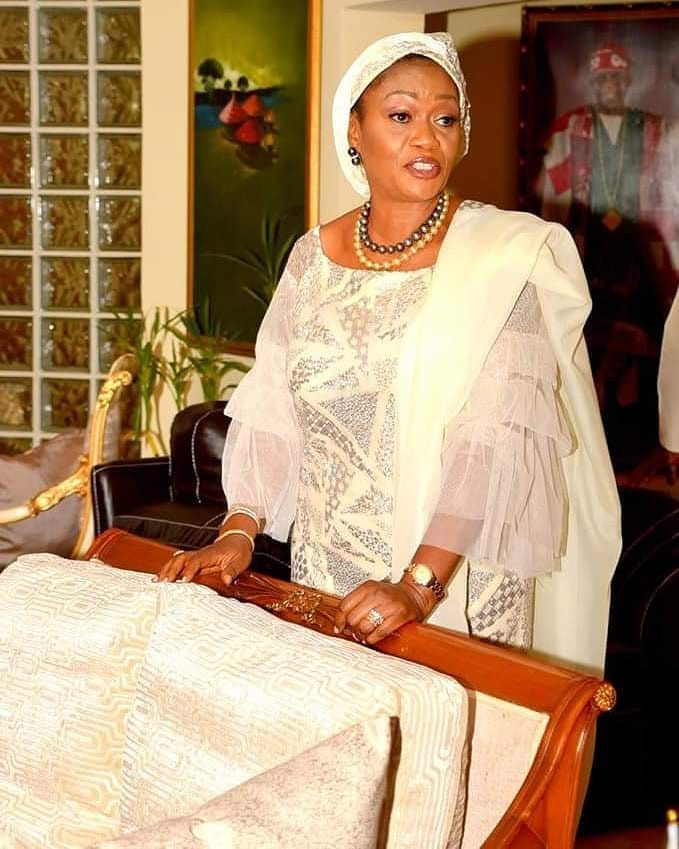
During a meeting of the Renewed Hope Initiative held in June 2026, Nigeria’s First Lady, Oluremi Tinubu, addressed women who had received grants intended to support small businesses. Speaking about practical ways beneficiaries could put the money to use, she encouraged them to consider ventures that required relatively small startup capital.
She said, “To start akara business doesn’t take a lot of money. To start roasting corn and kuli kuli doesn’t take much. We didn’t give them a loan…”
Her remarks were intended to emphasize that the financial assistance was a grant rather than money that had to be repaid. Rather than treating the funds as personal income, beneficiaries were encouraged to invest them in businesses capable of generating steady earnings for themselves and their families. Those few sentences quickly moved beyond the event itself, becoming one of the most discussed topics across Nigeria within days.
Public attention grows
News clips from the event rapidly circulated across X, Facebook, Instagram, TikTok, YouTube, WhatsApp, television broadcasts, radio programmes, newspapers, blogs, creating an unusually broad public conversation. Discussions soon moved beyond the speech itself as Nigerians from different backgrounds began sharing their own interpretations of the First Lady’s advice.
Television panels dedicated segments to the discussion, online creators produced commentary videos, newspaper columnists published opinion pieces, while countless social media users compared the remarks with everyday economic realities. Every fresh reaction appeared to encourage another, ensuring the conversation remained active long after the original speech had ended.
DJ Switch joins discussion


Among the earliest prominent voices to react was DJ Switch, whose comments quickly spread across social media because of both their language and the issues they raised. Rather than limiting her response to the First Lady’s specific examples, she broadened the conversation by drawing attention to the direction she believed national development should take.
According to DJ Switch, governments should be creating opportunities within technology, innovation, manufacturing, education, alongside other industries capable of producing long term economic growth instead of encouraging what she viewed as subsistence businesses as the country’s broader economic aspiration.
She wrote, “With absolutely no due respect Remi! Thnder fire you! While other nations are creating spaces and infrastructure to develop their people for this rapidly technologically advancing world, you want us to sell kuli kuli? And the otondo’s behind you are nodding their gr33dy necks! I can’t express how much I dspise you people.”
Her post rapidly gained traction across several platforms, attracting thousands of comments, reposts, screenshots, reaction videos, making it one of the most widely shared celebrity responses connected to the controversy.
Television perspective
Discussion soon reached television studios where journalists also examined the growing controversy. During a programme on Arise Television, broadcaster Ayo Mairo Ese addressed the First Lady’s comments while discussing women’s economic empowerment alongside broader national development.


Speaking during the conversation, Ayo Mairo Ese argued that the remarks sounded outdated because Nigerian women possessed the capacity to build businesses that could grow beyond simple survival enterprises. She also stated that government messaging should increasingly encourage industries capable of creating employment on a much larger scale while expanding opportunities for future generations.
Her comments added another widely circulated perspective to the national discussion as clips from the programme spread online, drawing fresh conversations across social media platforms where many viewers shared, debated, or challenged her observations.
Tunde Ednut’s response


Popular blogger Tunde Ednut also joined the growing conversation through an Instagram carousel that quickly attracted widespread attention. Rather than publishing a lengthy written commentary, he relied on a sequence of slides that contrasted political privilege with the advice given to ordinary Nigerians.
One slide declared, “For APC members, it’s a different story.”
Another followed with, “But when it comes to the rest of Nigerians… Make we start Kuli kuli, Akara business.”
His accompanying caption read, “May God forgive Tinubu, his wife and his children. Say AMEN!!!”
Those posts circulated rapidly across Instagram before spreading to other platforms through screenshots and reposts, adding another influential celebrity voice to the expanding national conversation.
Everyday realities enter discussion
Personal experiences quickly became part of the national conversation as many Nigerians compared the First Lady’s remarks with the realities they encounter while trying to earn a living. Stories about the rising cost of raw materials, transportation, rent, cooking gas, electricity, shop space, alongside other daily operating expenses became common across social media, radio phone in programmes, television discussions. Many people argued that even businesses traditionally regarded as low capital ventures now require significantly more money to establish and sustain because of inflation and the rising cost of essential commodities.
Several Nigerians also shared personal accounts of running small businesses, explaining how increasing prices have steadily reduced profit margins while making it harder to stay afloat. Others pointed out that the issue had grown beyond the examples mentioned during the speech, evolving into a broader conversation about the cost of doing business, the challenges facing entrepreneurs, and the economic realities confronting millions of households. Those experiences gave the debate a more personal dimension, ensuring it reflected not only public reactions but also the everyday struggles many Nigerians navigate in their pursuit of a stable livelihood.
Cost of starting small business
Discussion soon expanded to the financial demands of launching even modest businesses. Many Nigerians highlighted the prices of beans, cooking oil, maize, charcoal, cooking gas, transportation, rent, grinding fees, packaging materials, market levies, and other essentials, arguing that businesses often described as requiring little capital now demand far greater financial commitment than they once did. For many participants in the conversation, the examples mentioned by the First Lady became a starting point for wider discussions about how inflation has steadily increased the cost of operating even the smallest enterprises.
Many Nigerians also observed that launching a business is only the beginning of a much longer journey. They spoke about maintaining consistent sales, adapting to changing market conditions, retaining customers, expanding operations, and remaining profitable in an unpredictable economy.
Continuing national discussion
Hours after the original remarks, discussions surrounding the First Lady’s comments remained firmly within Nigeria’s public conversation. Celebrity reactions, television debates, online commentary, newspaper reports, radio discussions, public conversations collectively ensured the issue remained relevant as more people encountered the different viewpoints shared by public figures.
Remarks delivered during a grant presentation had evolved into one of the country’s most talked about public conversations, demonstrating how quickly a few carefully remembered sentences can grow into a nationwide discussion once they intersect with everyday experiences, public expectations, celebrity influence, constant social media engagement.