Graduation ceremonies have long been regarded as important milestones in the academic journey of pupils and students, providing opportunities for families, teachers and schools to celebrate educational progress and achievements.
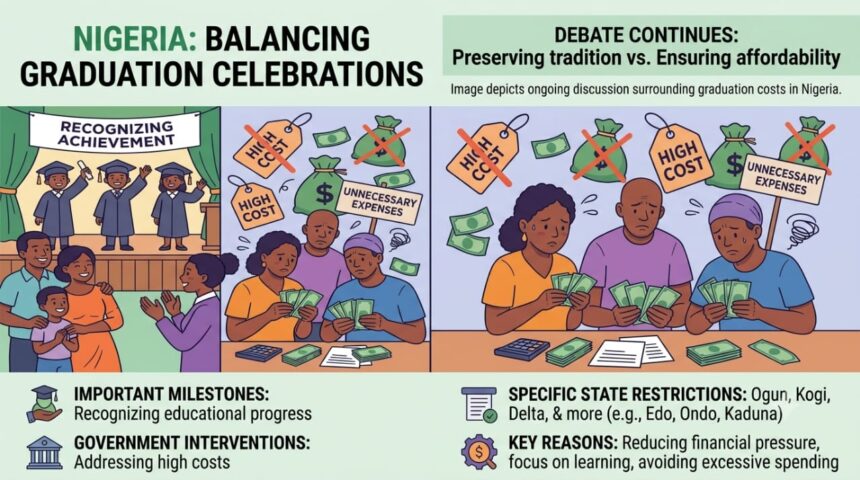
In recent years, however, concerns over the increasing cost and commercialisation of such events have prompted several governments across Nigeria to introduce restrictions aimed at reducing the financial burden on parents and guardians.
The federal government was among the first to take a decisive step by prohibiting graduation ceremonies for nursery, kindergarten and other pre-primary school pupils across the country.
The policy, announced on January 9, was accompanied by a directive mandating the adoption of “high-quality” textbooks designed to remain in use for between four and six years.
Authorities argued that the move was intended to curb unnecessary expenses and refocus attention on learning outcomes rather than elaborate celebrations.
Beyond the federal government’s intervention, several state governments have introduced similar measures affecting schools under their jurisdictions.
In Ogun State, the government directed both public and private schools to discontinue graduation ceremonies and end-of-session parties.
The directive was conveyed through a circular issued by the Director of Education, A.A. Bisiriyu, on behalf of the ministry’s Permanent Secretary, and addressed to administrators of schools across the state.
Officials explained that the decision was driven by concerns that such activities were imposing avoidable financial pressure on many families already grappling with rising education-related expenses.
Kogi State has also maintained a firm position against what it described as excessive graduation ceremonies in nursery, primary and junior secondary schools.
The state government warned that schools found violating the directive could face sanctions, including closure.
The Commissioner For Education, Wemi Jones, stated that the policy was introduced to ease the financial burden on parents and discourage unnecessary spending associated with school celebrations.
Kogi authorities also reaffirmed an earlier prohibition on sign-out ceremonies among graduating tertiary institution students.
In Delta State, the government reminded proprietors of private schools that graduation parties and related end-of-session celebrations remain prohibited.
The state warned that institutions disregarding the directive could face severe penalties, including closure for up to five years.
The government had announced the ban in September 2025, describing lavish graduation events as an “unnecessary financial burden” on families.
Several other states have either imposed outright restrictions or introduced regulatory measures aimed at limiting graduation-related activities in schools.
Among them are Edo, Ondo, Ekiti, Kaduna, Niger, Ebonyi and Abia states, where authorities have taken steps to discourage elaborate ceremonies and reduce associated costs.
Benue, Osun and Imo states have also implemented policies designed to regulate or restrict graduation activities within basic and secondary education institutions.
Supporters of the restrictions argue that the measures protect parents from mounting financial obligations and help schools concentrate resources on educational development rather than ceremonial events.
Others, however, contend that graduation ceremonies remain valuable opportunities to recognise pupils’ accomplishments, celebrate academic milestones and encourage young learners as they progress through the education system.
Despite the differing views, the growing number of states adopting restrictions reflects a broader effort by education authorities to address concerns about affordability and ensure that schooling remains accessible to families facing economic challenges.
As governments continue to review education policies, the debate over graduation ceremonies underscores the balance policymakers seek between preserving meaningful traditions and reducing financial pressures on parents and guardians.