
On June 23, 2026 the Nigerian Senate passed a bill seeking to amend the 1999 Constitution to provide for the establishment of state police services across the federation.
Recall that on June 11,2026,the House of Representatives passed the bill for further legislative action.
The bill seeking the establishment of state police, following a decisive voice vote during that Thursday’s plenary.
During the House of Representatives voting process, 289 members supported the motion for state police, while four voted against it, thereby clearing the proposal for further legislative progression within the constitutional amendment process.
WITHIN NIGERIA gathered that at the House of the House of Representatives session, presided over by Speaker Abbas Tajudeen, commenced with over 290 lawmakers in attendance.
The House Leader, Julius Ihonvbere, thereafter (APC, Edo), moved a motion for the House to suspend its rules to enable consideration of a motion on the rescission of an earlier decision relating to the presentation of reports by the Committee on Constitution Review.
The motion, seconded by the Minority Leader, Fred Agbedi (PDP, Bayelsa), was adopted.


The House later proceeded to the specific item on security reform.
Mr Tajudeen explained that the House would prioritise only the security-related amendment at this stage, describing it as urgent and necessary.
He said the decision was also influenced by the need to avoid further delay, noting that members would proceed on a two-week end-of-year recess afterwards to enable proper review of remaining bills upon resumption.
Midway into proceedings, the speaker announced that the electronic voting system was not functional, compelling lawmakers to adopt a manual voice vote.
The Deputy Speaker of the House, Benjamin Kalu, who doubles as the chairman of the Constitution Review Committee, in his presentation, described the bill as a response to Nigeria’s worsening security challenges.
He said the proposed reform was designed to decentralise policing and improve response time to security incidents by allowing states to establish their own police structures.
He argued that a centralised policing system, with command structures concentrated in Abuja, had slowed response times to emergencies.
According to him, state police would enable officers who are familiar with local languages, geography and communities to respond more effectively to threats.
He urged lawmakers to treat the bill as a legacy reform that would strengthen national security beyond military intervention, stressing that it reflected a broad national consensus.
The speaker later ruled that the House would not consider the bill clause by clause but by its long title. He then read out the title, after which a manual count was conducted.
However, with Senate passage, the legislation replaces the existing Nigeria Police Force framework with a dual structure comprising a Federal Police Service and State Police Services.
The bill was considered after Senate Leader Sen. Opeyemi Bamidele presented its general principles. It subsequently scaled second reading, was considered clause-by-clause and passed third reading.
WITHIN NIGERIA findings showed that the key provision of the bill empowers state governors to appoint Commissioners of Police for their respective states, subject to confirmation by the state Houses of Assembly.
Under Clause 17 of the proposed constitutional amendment, “A State Police Service shall be headed by a Commissioner of Police of the State appointed by the Governor of the State on the recommendation of the National Police Council, subject to confirmation by the House of Assembly of the State and to such qualifications and national minimum standards as may be prescribed by an Act of the National Assembly”.
According to Section 17(6), it provides that “a governor may issue lawful written directives of a general policy nature to the Commissioner of Police on matters relating to the maintenance of public safety and public order within the state”.
To allay fears of possible abuse of the proposed policing structure, lawmakers incorporated safeguards aimed at protecting political freedoms and civil liberties.
Again in Section 17(7) it states that “a state Commissioner of Police shall not arrest, detain, investigate or deploy force against any person, political party or group merely for criticizing the government except in accordance with the law”.
This is to insulate the state police from being used as a political tool against the opposition parties, activists, journalists and other dissenting voices, while ensuring that any action taken complies with due process and existing legal provisions.
It also states in section 214, that the “The Federal Police Service may temporarily intervene in the internal security affairs of a State and may, to the extent necessary, assume specified operational responsibility, including temporary operational command of a State Police Service or any part thereof, only where – (a) there is an actual or imminent breakdown of public order or public safety which the State Police Service is unable or unwilling to contain; (b) the Governor of the State requests federal intervention etc.
“An intervention under subsection (10) of this section shall be authorised in writing by the President and shall state the grounds, territory, functions and duration of the intervention; and notice of the intervention shall be given to the Governor of the State, the Speaker of the House of Assembly of the State, the National Police Council and the National Assembly within forty-eight hours of the start of any intervention. (13) No intervention under subsection (10) of this section shall continue bevond such period as may be prescribed by an Act of the National Assembly unless approved by resolution of the Senate in the manner prescribed by that Act”.
The passage of the bill by the upper chamber came a day after President Bola Tinubu transmitted it, seeking the establishment of state police as part of efforts to reform Nigeria’s security architecture.
The president said the bill is designed to provide a legal framework for a dual policing structure, allowing states to establish and operate their own police services alongside the federal police.
Stressing further, Tinubu said the proposed amendment is a critical component of ongoing efforts to reorganise the country’s policing system, enhance security and better protect citizens. He added that communities, municipalities and local government areas would play more active roles in policing responsibilities under the new arrangement.
The development advances the Federal Government’s efforts to create a workable framework for state police, a proposal many Nigerians have advocated as a way to improve internal security, strengthen grassroots intelligence gathering and enhance the capacity of state governments to respond to emerging threats.
Nigeria’s policing system is currently controlled by the Federal Government through the Nigeria Police Force. However, worsening security challenges have intensified calls for a decentralised policing structure.
Major provisions of the State Police bill
Our findings showed that one of the major provisions of the bill seeks to amend Section 214 of the 1999 Constitution to formally provide for the establishment of both the Federal Police and State Police.
Under this proposal, the National Assembly will be responsible for defining the structure, organisation, administration and powers of the Federal Police, as well as setting the legal framework and minimum standards for the establishment and operation of state police services.
However, the bill further provides that no state police force shall commence operations unless it is established by a law passed by the relevant State House of Assembly and certified as meeting national minimum standards to be set by an Act of the National Assembly.
It also stipulates that until a state police structure becomes operational, the Federal Police will continue to exercise policing powers and responsibilities within such states.
To safeguard the autonomy of state police formations and prevent undue interference, the bill restricts federal intervention in state security affairs. The Federal Police may only intervene in cases of a total breakdown of law and order, upon request by a state governor, or where a state police force is unable to function due to administrative, financial or operational constraints.
The amendment also introduces changes to the appointment and command structure of the police.
Under the proposed amendment to Section 215, the Inspector-General of Police would be appointed by the President on the advice of the Nigeria Police Council from among serving officers of the Federal Police, subject to confirmation by the National Assembly.
Similarly, a State Commissioner of Police would be appointed by a state governor on the advice of the Nigeria Police Council from among serving officers of the State Police, subject to confirmation by the respective State House of Assembly.
The bill also empowers governors to issue lawful directives to State Commissioners of Police on matters relating to public safety and maintenance of law and order. However, where a commissioner considers such directives unlawful or inconsistent with established policing standards, the matter shall be referred to the Nigeria Police Council, whose decision shall be final.
Finally, the proposal amends Section 84 of the Constitution by replacing references to the “National Police Council and the Federal Police Service Commission” with the “Nigeria Police Council and the Police Service Commission.”
Reactions trail the passage of the bill
Following the passage of the by the National Assembly, former Inspector-General(IG) of Police, Mike Okiro, has thrown his weight behind the state police establishment.
According the former police chief, the establishment of the state police will help in no small measures in protecting school children across Nigeria.
Okiro further said that such a measure would significantly reduce the risk of mass abductions in educational institutions.
In an interview Speaking on Arise Television on strategies to prevent the abduction of schoolchildren, Okiro recalled that he had earlier proposed the initiative in 2012, but lamented that it was not implemented by the authorities at the time.
In his words, “In 2012, I proposed a special squad for all Federal Government Schools. But the government did not implement it. If my proposal was implemented, abduction of school children would not have been easy.”
According to him, the proposal was formally submitted to the administration of former President Goodluck Jonathan but did not receive the required implementation attention.
He further noted that the consequences of the delay became evident with the abduction of the Chibok schoolgirls in 2014, two years after his recommendation was submitted.
Okiro lamented: “If my proposal was implemented, the Chibok girls may not have been abducted easily.”
“No investor will come into a country where security is not guaranteed. The government must wake up and take decisive action because insecurity affects everyone and undermines development,” he said.
The former police chief disclosed that former President Muhammadu Buhari later invited him in 2018 to revisit the proposal, following renewed concerns over school security nationwide.
He explained that the renewed engagement was aimed at strengthening protective measures around vulnerable educational institutions through coordinated security deployment.


In the same vein, the presidential candidate of the Nigeria Democratic Congress (NDC), Peter Obi, has asked the federal government to suspend implementation of the State Police Bill until after the 2027 general election.
But the former governor expressed concern that, if implemented, the current administration of President Bola Tinubu could use the state police against the opposition politicians in the forthcoming 2027 election.
While supporting the passage of the bill, Obi frowned at the hasty passage of the said bill.
In his words, “Going by what Nigerians have seen so far, there is no guarantee that this administration can resist the temptation to take advantage of state policing to influence the 2027 general election by proxy.
“In view of that possibility and the danger it poses to the polity, it is necessary to defer its implementation until after the general election,” he said.
He said the passage of the Bill by the National Assembly marks “a significant legislative milestone in addressing” insecurity in Nigeria, but its hasty passage was suspicious.
Obi further argued that while the existing centralised policing structure was unsuitable for a complex country like Nigeria, the legislative and constitutional implementation of the State Police Bill “appears shaky and raises legitimate concerns.”
He expressed concerns that the bill was passed without a public hearing, explaining that policing should be more visible at the local government and community levels.
“Indeed, the rush to enact the law without proper legislative procedures fuels suspicion among many observers about the political motives behind it,” he stated.
Mr Obi said the greatest concern about the State Police Bill is the possibility that state governors could hijack it.
“There is a widespread, justifiable fear that state police forces could become instruments in the hands of governors.
“The suspicion is that a state-controlled police force could be weaponised to suppress political rivals, disrupt opposition rallies, and manipulate elections,” he said.
Continuing, the former governor said: “For state policing to evolve from a risky political gamble into a genuine security solution, the law must not only permit states to establish police forces but also clearly provide for independent oversight bodies, such as a state-level Police Service Commission that is entirely free from executive influence, to ensure that policing serves the public interest rather than the interests of the ruling elite.”
At the same time, the All Democratic Congress, ADC has also expressed concern over the hasty implementation of the bill.
In a statement issued by its National Publicity Secretary, Bolaji Abdullahi, the ADC said although it had consistently supported state police, the reform could not succeed without institutional safeguards to guarantee professionalism, accountability and effective oversight.
“The African Democratic Congress supports state police. We have always believed that Nigeria’s policing architecture must evolve to reflect the realities of our federal system. But support for state police cannot be confused with support for the Tinubu administration’s handling of this important national reform,” the statement said.
According to the party, the current effort by the Federal Government amounts to “a hurried response to a worsening security crisis, not the careful institutional planning required to build a functional, accountable and effective policing system.”
The party argued that state police should not be presented as an immediate solution to terrorism, banditry and kidnapping, noting that decentralised policing has featured prominently in the country’s constitutional debate for decades.
“It is equally important to state that there is nothing novel about the idea of state police.
“What is new is the attempt by the Tinubu administration to package this long-standing national consensus as a bold new initiative and, worse, to present it as a silver bullet for the country’s current security crisis. It is neither. State police is a structural reform whose benefits will only be realised over time. It cannot, by itself, solve today’s emergency,” the statement read in part.
Stressing further, the party said that “legislation with such far-reaching implications for every Nigerian, and one that could fundamentally alter the country’s constitutional architecture, requires broad consultation and careful reflection.
“Instead, what we are seeing is a government in desperate haste to amend the Constitution in order to create the impression that it is doing something about the country’s worsening insecurity.
“After all, if President Tinubu were genuinely committed to state police, why did it take his administration almost until the end of its tenure to begin rushing through a constitutional amendment?” it asked.
The party maintained that even if the legislation is passed, establishing functional state police services would require substantial investments in recruitment, training, funding, equipment, operational structures and independent oversight.
It also raised concerns over the absence of safeguards against political interference.
It added that effective policing must be supported by reforms in the judiciary, correctional services, prosecution, intelligence gathering and forensic capacity.
“The ADC will support measures that genuinely strengthen Nigeria’s security. But we will continue to oppose every attempt to substitute the hard work of building institutions capable of keeping Nigerians safe with mere political theatre,” the statement added.

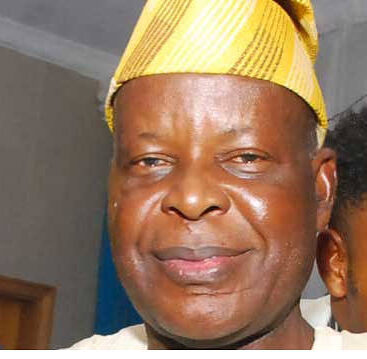
As the reactions continue to mount, Human rights lawyer, Femi Falana, has taken a different view on the matter.
According to the legal icon, unless unemployment is tackled, state police may not be the solution of insecurity in Nigeria.
Falana made this statement on Thursday when he appeared as a guest in an interview on Channels Television’s Politics Today.
According to him, “I don’t think we should criminalize politicians, and I don’t want to engage in any conspiracy theory.
“The debates has been on since we started the campaign for restructuring in the country and set out a new phenomenon.
“How do we have more police stations? How do we employ more policemen and women without considering social security? Why are we not talking of creating employment for young people? Why are we not giving assistance to Nigerians that are vulnerable, extremely poor?
“An unless you address this problem holistically, creating a state police or local government police will not address the crisis of insecurity in the country,” he said.