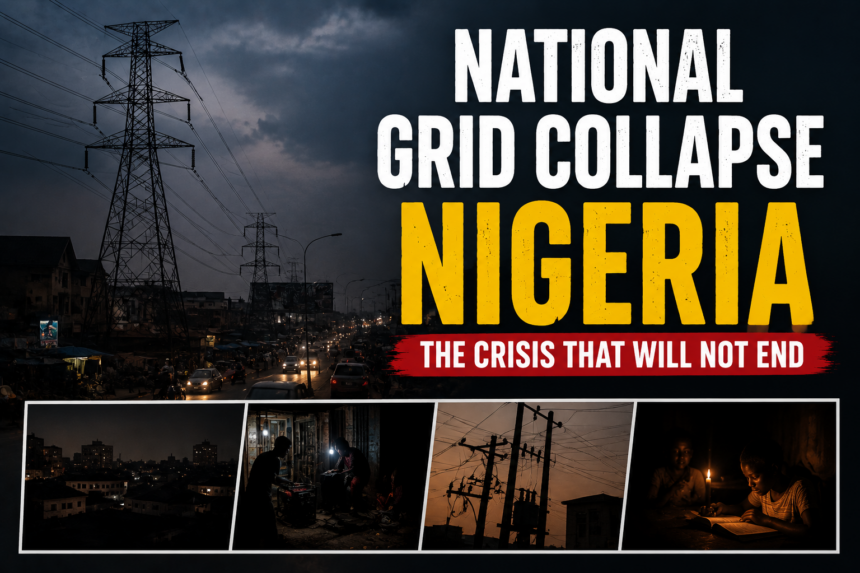
On the morning of January 23, 2026, a Friday, the lights went out across Nigeria. Not in a neighbourhood, not in a state, everywhere. By 1 pm that day, real-time data from the Nigerian Independent System Operator showed total power generation had fallen to zero megawatts. Abuja Electricity Distribution Company, which had been receiving 639 megawatts at 10 am, was now at nothing. Ikeja Electric, 630 megawatts before midday, also gone. Every single one of the country’s 11 electricity distribution companies recorded zero allocation. Power plants at Afam, Alaoji, Egbin, Geregu, Jebba, Kainji, Odukpani and Okpai, all offline. The country had gone dark.
- What Actually Triggered the January Collapses
- The Transmission Bottleneck Nobody Wants to Fix
- The N6.8 Trillion Debt That Is Choking Generation
- How the Generator Economy Became Nigeria’s Real Grid
- The 105-Collapse Record That Spans Two Administrations
- What Aba Got Right, and What the Rest of Nigeria Has Not
- The Electricity Act 2023 and Why More States Are Still Waiting
- What the N3.3 Trillion Presidential Settlement Actually Means
- Power Is Not a Luxury. It Is the Economy.
Four days later, on January 27, it happened again. Then the calculation began for people trying to make sense of what they were living through: this was the second collapse in four days, the third in less than a month if you count the December 29, 2025 collapse that had ended the old year. In 2025, for a brief period, there had been a flicker of improvement, only four total collapses compared to the dozen or more that had become routine in 2024. That hope is gone. Nigeria was back in familiar darkness.
The question that hangs over all of this is not whether it will happen again. It will. The real question, the one Nigerians who pay N50,000 a month in generator fuel have long stopped expecting answers to, is why the country that sits on some of the world’s largest gas reserves cannot keep the lights on.
National Grid Collapse Nigeria
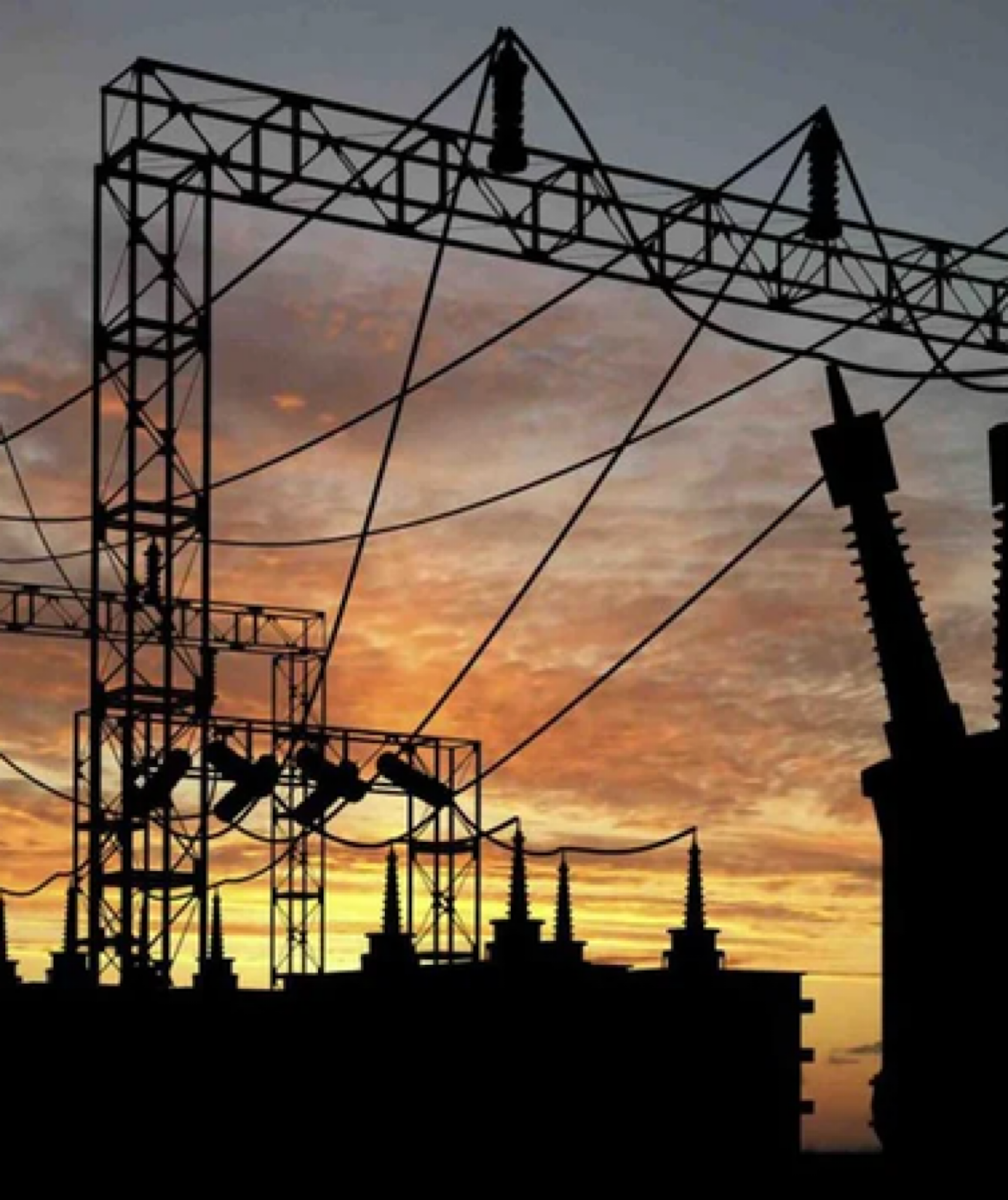

Understanding what drives each national grid collapse Nigeria experiences means tracing the failure across three distinct layers: a transmission network that has never been adequately funded, a generation industry drowning in unpaid bills, and a policy history of kicking structural problems down the road. None of these is a secret. None is new. And yet here we are.
What Actually Triggered the January Collapses
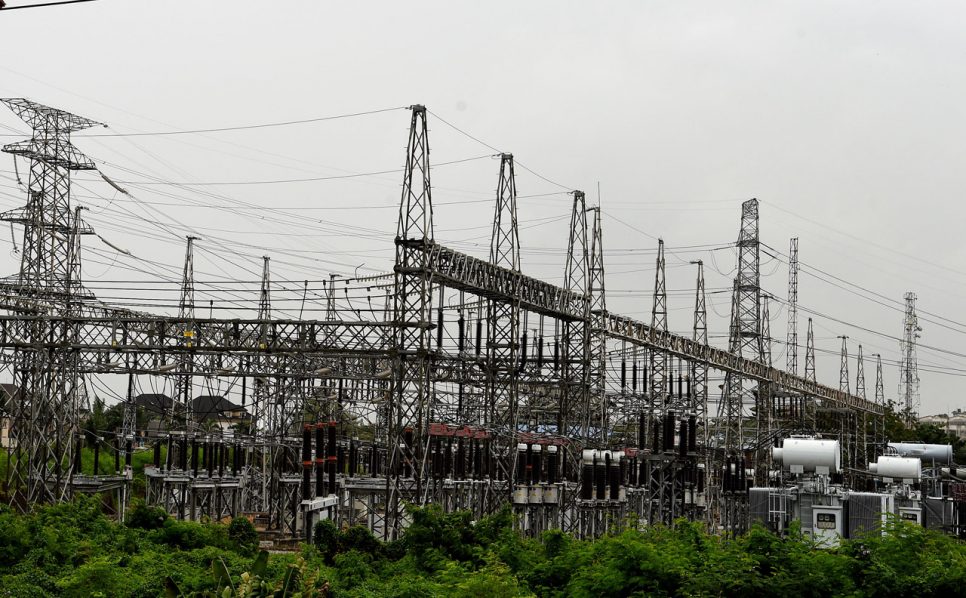
When the Nigerian Independent System Operator finally broke its silence following the January 23 blackout, the explanation it offered was technically accurate but told only part of the story. In a preliminary statement, NISO said the collapse was caused by the simultaneous tripping of multiple 330kV transmission lines, alongside the disconnection of some grid-connected generating units. Translation: multiple high-voltage backbone lines went down at the same time and the system had no mechanism to absorb the shock.
The January 27 collapse was attributed to a voltage disturbance originating from the Gombe Transmission Substation. So within one week, two different points of failure had brought the entire grid to its knees. That is not bad luck. That is a system with no redundancy, no meaningful spinning reserves, and no buffer between a localized fault and a total national blackout.
This matters because the Nigerian Electricity Regulatory Commission had already flagged precisely this vulnerability. NERC data showed that the grid’s frequency performance, the measure of system stability, had been oscillating between 49.46Hz and 50.69Hz, well outside the prescribed 49.75 to 50.25Hz range. Frequency instability of that magnitude signals a system operating at the edge of its tolerance. A single disruption anywhere along those 330kV corridors becomes a cascading event because there is no cushion to absorb it.
The sequence of the January collapses also exposed something specific about the transmission network’s architecture. Nigeria routes power from all 23 of its generating companies through a single entity: the Transmission Company of Nigeria. TCN manages the entire backbone. When those 330kV lines trip, there is no alternative path. The electricity simply stops. This is not how grid operators in comparable economies run their networks. Redundant transmission pathways, interconnections between regional sub-grids, automatic load-shedding protocols, these are standard features of grids that stay up when a substation has a fault. Nigeria has none of them at scale.
The Transmission Bottleneck Nobody Wants to Fix
The Transmission Company of Nigeria has been operating on the same essential infrastructure for decades. While there have been periodic upgrades, new transformers, some line expansions supported by development finance partners including the African Development Bank, the fundamental architecture of the grid has not changed since the era of the old National Electric Power Authority. The country moved from NEPA to PHCN to privatisation in 2013, but the wires in the ground and the towers in the fields are still largely the same.
TCN’s own communications to the public give a sense of the problem. In 2024 alone, vandals destroyed 128 transmission towers, according to data TCN reported publicly. Transmission towers that carry 330kV lines serving millions of people were physically dismantled, copper stripped, structures left collapsed. Replacement and re-erection work takes weeks and requires budgets the company does not consistently have. This is a physical infrastructure that is being worn down faster than it is being rebuilt.
There is also the matter of how much electricity the transmission network can carry even when it is functional. Nigeria’s installed generation capacity is reported at around 15,500 megawatts. Actual transmission to consumers rarely exceeds 5,000 megawatts. The gap between what could theoretically be generated and what can actually be delivered to a home or factory is not because the generators are offline, it is partly because the transmission network cannot carry the load. Experts have put the minimum requirement for adequate national supply at 30,000 megawatts. Nigeria cannot even reliably transmit one-sixth of that.
The NERC order of April 8, 2026 requiring regional transmission loss reporting is a step toward accountability. The national average transmission loss factor stood at 8.71 per cent in 2024 before improving to 7.24 per cent in 2025, still above the 7 per cent approved benchmark. NISO has been directed to install smart meters at all regional interconnection points by December 2026. These are important regulatory moves, but they are administrative responses to what is fundamentally an investment deficit. A country that generates 4,000 to 5,000 megawatts for 220 million people does not need better reporting frameworks first. It needs money, physical infrastructure, and the political commitment to spend both without pilfering them.
The N6.8 Trillion Debt That Is Choking Generation
The financial crisis in Nigeria’s power sector is not complicated to explain. It is just very uncomfortable to confront. Generation companies sell electricity to the Nigerian Bulk Electricity Trading Company, NBET, which resells it to the distribution companies. Since the sector was privatised in 2013, NBET has never once paid the generation companies in full. Not in a single month. The result is a debt that has been accumulating for over a decade and as of February 2026 stood at N6.8 trillion.
The Association of Power Generation Companies CEO, Dr. Joy Ogaji, put the situation plainly in March 2026. Speaking to journalists, she said that of every N280 billion in monthly invoices the generation companies issue, only 35 per cent is ever paid. That shortfall of roughly N200 billion accumulates every month. In 2025 alone, N2.4 trillion was added to the pile. The debt grew to N6.6 trillion in January 2026, N6.8 trillion by February, and is projected to reach N8.8 trillion by December if nothing changes. As Ogaji put it: “Yes, it is 120 per cent correct to say that the debt is the reason why we are in darkness.”
Where it gets especially dangerous is the gas supply chain. Thermal power plants account for roughly 70 per cent of the electricity on Nigeria’s grid. And of every naira those thermal plants invoice NBET, about 70 kobo belongs to the gas suppliers who fuelled the generation in the first place. Working through that arithmetic, Ogaji calculated that approximately N3.3 trillion of the N6.8 trillion total debt is effectively owed to gas producers. Those gas producers, companies that also have their own costs and obligations, have been quietly absorbing non-payment for years. In 2026, they stopped being quiet. “Gas is not available,” Ogaji said, “because the gas suppliers have told us that if we need gas, we need to put money on the ground to get gas in the pipe.”
This is the mechanism behind each grid collapse that NISO describes as a ‘system disturbance caused by generation constraints.’ The power plants are not failing because of random mechanical bad luck. They are failing because they cannot secure the gas to run, because the traders who sold them gas last month have not been paid, because the money that should have come from NBET never arrived. The grid is not collapsing from the top down. It is collapsing from the bottom up, from unpaid gas invoices to idle turbines to zero megawatts on the national dashboard.
President Tinubu in April 2026 approved a N3.3 trillion payment plan described as full and final settlement of legacy debts accumulated between February 2015 and March 2025. The government raised N501 billion in bonds in January 2026 as a first tranche, with N223 billion reportedly disbursed to fifteen power plants that signed settlement agreements. Further payments of N600 billion to N800 billion are planned for mid-2026. The conditionality built into the plan, GenCos must use a portion of payments to settle their own gas supplier debts, at least acknowledges where the supply chain is breaking. Whether the money moves fast enough, and whether it is actually paid rather than pledged, will determine whether this changes anything for ordinary Nigerians.
How the Generator Economy Became Nigeria’s Real Grid
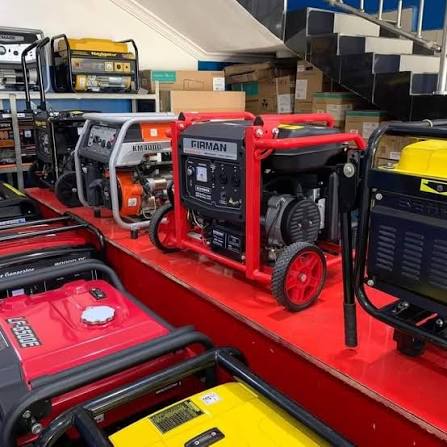

Nigeria has two electricity systems. One is the national grid, which generates between 4,000 and 5,000 megawatts on a good day and collapses entirely on bad ones. The other is the shadow grid: the 14 to 20 gigawatts of capacity that businesses and households have assembled from diesel generators, petrol-powered standby sets, inverters, and increasingly, solar installations. The shadow grid is never measured on any official dashboard. It hums steadily in the background of every factory floor, every bank branch, every tailoring shop that cannot afford to lose a working afternoon.
The cost of operating this shadow grid is staggering. Nigerian businesses and households spend somewhere between $20 billion and $22 billion every year on fuel for generators alone, depending on which analyst’s estimate you use. The World Bank has put the broader cost of electricity outages at $29 billion annually, roughly 10 per cent of Nigeria’s 2025 GDP estimates. Another estimate from the Africa Trade Barometer put the figure at $26 billion in direct losses from electricity shortages, with a further $22 billion in off-grid fuel costs. The ranges differ but the magnitude is consistent: power failure is costing Nigeria an amount equivalent to a meaningful share of its entire economy, every year.
Large corporations have moved decisively. Dangote Industries alone operates an estimated 1,500 megawatts of captive power. In 2025, more than 20 firms left the national grid entirely, adding 1,045 megawatts of off-grid capacity. The Manufacturers Association of Nigeria has reported that energy costs now account for 35 to 40 per cent of total production costs for many of its member companies. At that level, you are not running a manufacturing business with an energy cost attached. You are running an energy cost with a manufacturing business attached.
For the tailors, the welders, the small provision shops, the pharmacies that need refrigeration for drugs, the calculation is different but equally brutal. A 5kVA solar system costs between N4 million and N6 million. Most households and micro-businesses cannot afford that. So they buy petrol daily, they run generators for four hours in the evening, they watch the fuel prices and calculate what they can afford to operate. Nigeria’s per capita electricity consumption stands at around 144 kilowatt-hours annually, ranking among the lowest in the world. Egypt manages 1,700kWh per person. South Africa, 3,800kWh. Even Tanzania’s 180kWh exceeds Nigeria’s, despite having a much smaller economy. Every percentage point of that gap represents economic activity that is not happening, jobs that are not being created, goods that are not being produced.
The 105-Collapse Record That Spans Two Administrations
Between 2010 and early 2026, Nigeria’s national grid collapsed at least 105 times. Ninety-three of those collapses occurred during President Muhammadu Buhari’s tenure from 2015 to 2023. The remaining twelve-plus have happened under President Bola Tinubu since 2023, with the pace of early 2026, two collapses in four days, suggesting that number will grow considerably before the year ends.
The consistency of the failure across two very different administrations, with different ministers, different policies, and different reform frameworks, points to something structural rather than political. The APC government elected in 2015 inherited a broken sector and spent a decade running power sector programmes whose results were not proportional to the resources committed. The CBN injected over N2.3 trillion into the sector through various intervention mechanisms as of 2023. The World Bank invested over $2 billion in Nigerian power infrastructure over five years. The grid collapsed 93 times anyway.
In 2024, the collapse count hit around twelve incidents, nearly monthly. The pattern improved in 2025, falling to four collapses across the year on February 12, March 7, September 10, and December 29. Energy sector analysts cautiously noted the improvement. Then January 2026 arrived and the grid collapsed twice in a single week. Tunde Adekoya, an Abuja-based energy consultant, had noted after the September 2025 collapse that “fixing Nigeria’s power sector requires more than promises; it requires a sustained commitment to funding, transparency and accountability.” As of the January collapses, that commitment had not materialized in any form visible to the grid.
There is something specific about the political economy of Nigeria’s power sector that makes reform particularly difficult. Electricity tariffs have remained politically sensitive for decades. Setting prices below cost-recovery levels has kept DisCos perpetually underfunded, kept NBET unable to pay GenCos, kept GenCos unable to pay gas suppliers, and kept gas suppliers unwilling to supply. Every administration has understood this chain of causation. None has been willing to absorb the political cost of fixing it at the tariff level. The result is a sector where the money is not there, has never been there in adequate amounts, and where the gap is papered over with bond issuances and presidential payment plans that address yesterday’s debt while tomorrow’s debt builds at N200 billion a month.
What Aba Got Right, and What the Rest of Nigeria Has Not
When the grid collapsed on January 23, 2026, and plunged cities from Lagos to Kaduna into darkness, Aba was fine. The commercial capital of Abia State, with a population of roughly 900,000, was getting its power from Geometric Power’s gas-fired plant, not from the national grid. Factories in Aba were receiving more than 23 hours of supply a day, something most Nigerian cities cannot claim even in the best weeks of grid operation. Geometric Power’s 188-megawatt plant is the reason.
Abia’s path to this arrangement was deliberate. In March 2025, Governor Alex Otti signed the Abia State Electricity Law 2025 and established the Abia State Electricity Regulatory Authority. The Nigerian Electricity Regulatory Commission formally transferred full regulatory oversight to that state body with effect from December 24, 2025, meaning that by the time the January grid collapses happened, Abia was no longer under NERC’s jurisdiction. It had its own regulator, its own generation arrangement, and its own insulation from the national grid’s instability. Otti, in announcing this independence, noted that the disasters happening at the national level were simply not affecting his state the way they once would have.
Enugu has taken a parallel path under the 2023 Electricity Act. The Enugu Electricity Regulatory Commission was established and assumed full regulatory oversight, and in March 2026 issued a 20-year distribution licence to MainPower Electricity Distribution Limited, the first such licence issued under a state electricity regime in Nigeria. Communities in Ekiti that had gone without power since 2013 were reconnected through state-managed electrification programs. These are not large-scale national solutions. But they are proof that reliable electricity is achievable in Nigeria when the institutional structure allows for accountability and investment at a scale that does not require reforming the entire federal apparatus first.
The Afrexim Bank is financing an expansion of Geometric Power’s operation that will cover nine of Abia State’s seventeen local government areas through an integrated power project, projected to provide over 25,000 small businesses with reliable supply and create up to 300,000 indirect jobs. UNDP Nigeria, which has been tracking these state-level reforms, noted in early 2026 that energy sector revenues nearly doubled in 2025, attributing the improvement partly to the reforms enabled by the Electricity Act. The contrast with the national grid’s performance in the same period is hard to overstate.
The Electricity Act 2023 and Why More States Are Still Waiting
President Tinubu signed the Electricity Act in June 2023, and it fundamentally changed the legal architecture of Nigeria’s power sector. For the first time since the colonial-era Lighting Electricity Act, states were given clear legal authority to generate, transmit, and distribute electricity within their borders. The constitutional amendment that came with it removed the federal government’s exclusive monopoly on transmission. On paper, this was a transformative moment.
Almost three years later, implementation across the country is uneven. Research by Veriv Africa tracking state-level progress found that while over 80 per cent of states have aligned their electricity laws with the 2023 Act and roughly 73 per cent have initiated some form of mini-grid or off-grid development, only about half of Nigeria’s states have actually established functioning electricity regulatory commissions. Without a state regulator, a state cannot issue licences, enforce standards, or attract the investors that would put capital into local generation.
The hesitation is partly understandable. Setting up a functioning regulatory authority requires technical capacity, funding, and political will over a sustained period. It is not a single decision but a series of institutional steps, each of which can stall. For states that have been receiving power from the national grid without any administrative burden, taking on the regulatory responsibility requires accepting a new category of political accountability. If power fails on a state-managed network, the governor owns that failure directly.
But the argument for acting runs stronger. Lagos alone accounts for over 20 per cent of national electricity demand. A Lagos state grid that could supply power reliably to its industrial clusters and commercial centers would transform the economics of doing business in Nigeria’s biggest city. The same logic applies to Rivers, Kano, Ogun. States that have large demand bases and access to investment capital have every incentive to stop waiting for Abuja to solve a problem Abuja has been failing to solve for decades. As one Punch commentary put it, the Aba success story should not remain an isolated experiment. It needs to become a template.
What the N3.3 Trillion Presidential Settlement Actually Means
The Tinubu administration’s April 2026 announcement of a N3.3 trillion debt settlement plan is the most significant financial intervention in the power sector in years. The figure emerged from a tripartite audit involving the Ministry of Finance, NBET, and the GenCos, after months of negotiations in which the generation companies had initially demanded up to N6.6 trillion. The audit concluded the verifiable legacy debt, covering obligations accumulated between February 2015 and March 2025, at N2.8 trillion, which the government accepted as the settlement figure.
Fifteen power plants have signed settlement agreements totalling N2.3 trillion. Of the N501 billion raised through the first bond issuance in January 2026, N223 billion has reportedly been disbursed. Further tranches of N600 billion to N800 billion are planned for May, June, and July 2026, with the full obligation expected to be spread over 12 to 24 months. The conditionality is important: a portion of each tranche must demonstrably reach gas suppliers, because without gas supply, the debt payment alone does not generate power.
This is not a trivial intervention. If the disbursements happen on schedule and the gas supply chain responds as the government expects, it should reduce the frequency of generation-related grid collapses. Plants that had been throttled by gas shortfalls could come back to higher output. The question that energy economists have been asking since the announcement is whether this settles the problem or merely the most recent chapter of it. The structural issue, that the sector is designed to run at a loss because tariffs remain below cost-reflective levels, has not been resolved. Every month, another N200 billion in arrears accumulates. By December 2026, even after this settlement, the sector will have added fresh debt that represents a new baseline for the next crisis.
Olu Verheijen, Special Adviser to the President on Energy, said publicly that the initiative goes beyond debt settlement and is intended to rebuild confidence in the sector. That framing, rebuilding confidence, is telling. It acknowledges that the current state of the sector has destroyed investor appetite and operational trust. It is also the right framing. Because the power sector’s problems are not primarily financial. They are about whether anyone rational would put money into a system where contracts are not honoured, tariffs do not cover costs, and debt doubles every few years. Until the structural logic of the sector changes, each debt settlement plan will be followed eventually by another crisis of the same kind.
Power Is Not a Luxury. It Is the Economy.

There is a version of Nigeria’s electricity story that sounds like a technical problem: frequencies out of range, 330kV lines tripping, gas volumes falling short of contracted supply. But the reality on the street is not technical. It is the pharmacy that lost its cold chain, the fabric shop that could not run the cutting machine, the startup that spent 40 per cent of its first-year revenue on diesel before closing. These are not edge cases. They are the normal experience of doing business in Nigeria.
The national grid has now collapsed at least 105 times since 2010. South Africa, with a population of under 60 million, generates over 58,000 megawatts. Egypt, with 109 million people, generates more than 59,000 megawatts. Nigeria, Africa’s largest economy, most populous nation, sitting on some of the world’s largest gas reserves, generates between 4,000 and 5,000 megawatts and cannot always keep that stable. The gap is not a mystery. It is the accumulated result of under-investment, structural distortions, a transmission monopoly that was never adequately funded, a payment chain that collapsed at NBET and never recovered, and a political class that has treated electricity as a subsidy problem rather than an economic infrastructure imperative.
The Electricity Act of 2023 gave states the tools to start building something different. Abia used them. Enugu is using them. A handful of other states are moving. That decentralisation path is probably the most realistic route to reliable power for most Nigerians in the near term, not because the national grid cannot be fixed, but because fixing it requires a quality of sustained institutional commitment that Nigeria’s power sector has never received. What Aba’s factories are proving today, that Nigerians pay for reliable electricity when they actually get it, is the simplest argument for why states should stop waiting and act.
The April 2026 debt settlement, if it reaches gas suppliers on schedule, will reduce how often the country goes dark. That is worth something. But the deeper measure of whether Nigeria’s power sector is actually changing will be visible not in government announcements, but in whether the tailor in Surulere can leave her generator off for a week and still finish her orders.