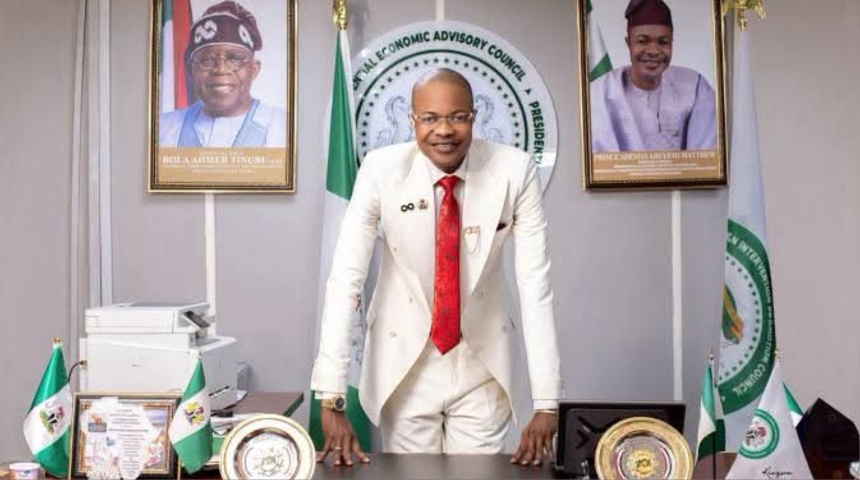
A name that meant nothing to most Nigerians two months ago is now attached to one of the strangest scandals to come out of the Presidential Villa in years. Adeniyi Adeyemi, also known in official documents as Prince Adeniyi Adeyemi Matthew, stands accused of inventing a federal agency, forging a presidential appointment letter, and walking the halls of the Federal Secretariat as a “Director-General” of a body that, according to the government, never existed.
The case has everything: a budget line worth over a billion naira for a phantom council, a Central Bank account opened through false documents, a Chief of Staff issuing public disclaimers, and a suspect who refuses to go quietly. With trial dates now set and both sides trading accusations in the press, here is what is actually known about Adeyemi and the council at the centre of it all.
Who Is Adeniyi Adeyemi?
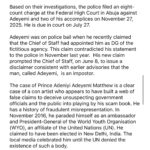
Adeyemi is not new to grand claims. Long before “Presidential Foreign Intervention Promotion Council” entered the national vocabulary, he had already built a habit of attaching himself to impressive-sounding titles. The Presidency says that as far back as November 2016, he presented himself as an ambassador and President-General of the World Youth Organisation, an outfit he claimed was affiliated with the United Nations and to which he said he’d been elected in New Delhi. Nigerian media covered him with interest until the UN denied that any such body existed.
That pattern, officials say, resurfaced almost a decade later, only this time aimed much closer to the seat of power.
The Council That Wasn’t There
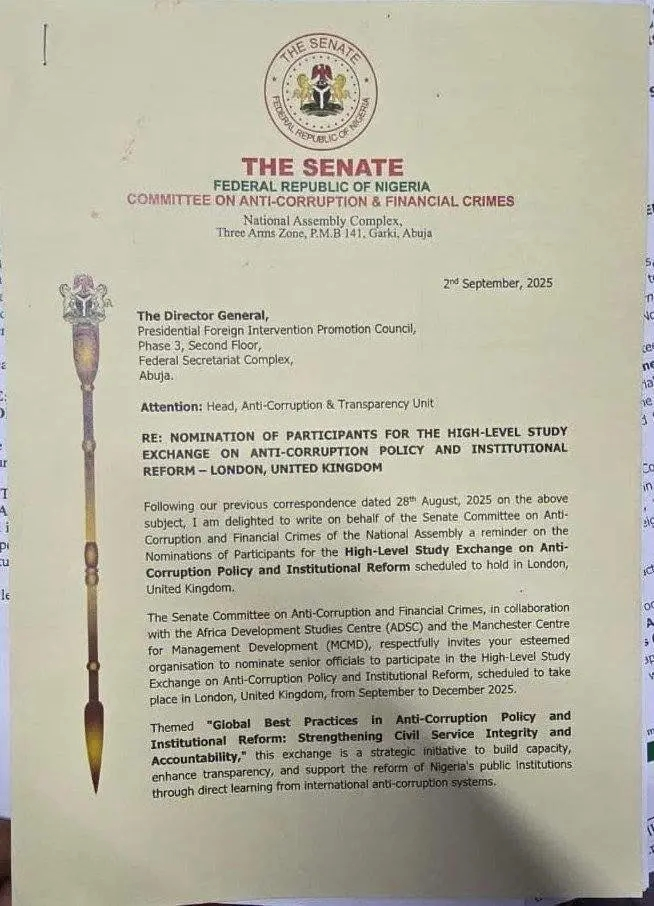
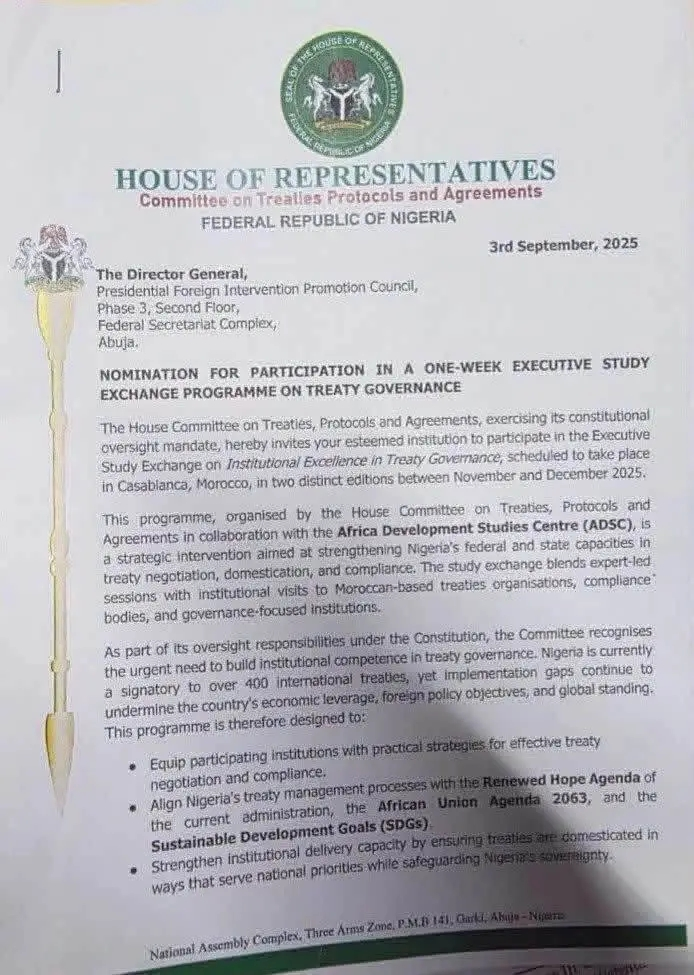
According to the Presidency, Adeyemi set up and ran an organisation calling itself the Presidential Foreign Intervention Promotion Council, also referred to as the Presidential Economic Advisory Council. He is accused of positioning himself as its Director-General, complete with an office at the Federal Secretariat Complex in Abuja, where he reportedly held meetings with both Nigerian and foreign officials.
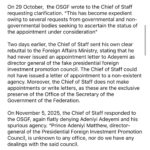
The trouble started, officials say, when staff at the Nigerian Investment Promotion Commission noticed that another body appeared to be performing similar functions to theirs. That complaint eventually reached the Chief of Staff to President Bola Tinubu, Femi Gbajabiamila, who petitioned the Department of State Services and the Nigeria Police Force on October 17, 2025, asking them to investigate what he called an elaborate forgery and impersonation scheme.
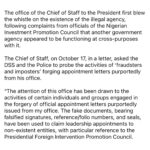
In his petition, Gbajabiamila alleged that appointment letters supposedly issued from his office carried falsified signatures, seals and reference numbers, all used to prop up claims of appointment to agencies that simply did not exist on the government’s books.
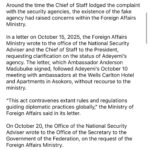
Things escalated quickly from there. The Ministry of Foreign Affairs had its own concerns after Adeyemi allegedly met with ambassadors at the Wells Carlton Hotel in Asokoro on October 10, 2025, without notifying the ministry beforehand. He is also said to have sought a note verbale, essentially a formal diplomatic request, to help secure United States visas for staff of his purported council.


The Arrest and the Charges
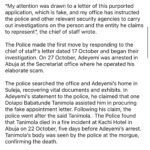
Police moved on October 27, 2025, arresting Adeyemi at his office inside the Federal Secretariat Complex. Searches of that office and his residence in Suleja reportedly turned up a stash of documents investigators now consider evidence.
By November 27, 2025, the police had filed an eight-count charge at the Federal High Court in Abuja against Adeyemi and two co-defendants. The charges cover forgery, impersonation, and obtaining by false pretences. One count accuses him directly of forging an appointment letter made to look as though it came from President Tinubu himself and bore the Chief of Staff’s signature. Another accuses him of falsely presenting himself as Director-General of the council.
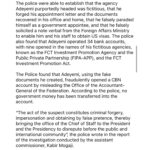
Investigators also allege that Adeyemi ran an unusually large number of bank accounts, thirty-four in total, with nine of them registered under names tied to fictitious agencies such as the FCT Investment Promotion Agency. Perhaps the most eyebrow-raising claim is that he used forged paperwork to open an account with the Central Bank of Nigeria by misleading the Office of the Accountant-General of the Federation, although the police say no public funds ever passed through it.
The case is scheduled for hearing on July 27, 2026.
Adeyemi Fires Back
Adeyemi has not taken the accusations lying down. Out on bail, he resurfaced with a claim that directly contradicts the story he reportedly gave police during the original investigation: that Gbajabiamila himself had appointed him Director-General of the council. That fresh claim prompted the Chief of Staff to issue a public disclaimer on June 8, 2026, stating flatly that no such office exists under the current administration and that his office never made any such appointment.
Appearing on Channels Television, Adeyemi insisted he had indeed been given an appointment letter and pushed back hard against the criminal label. In a statement carried by Vanguard, he said he refuses to be silenced or intimidated, framing his public defence as a natural response to what he considers an unfair pile-on.
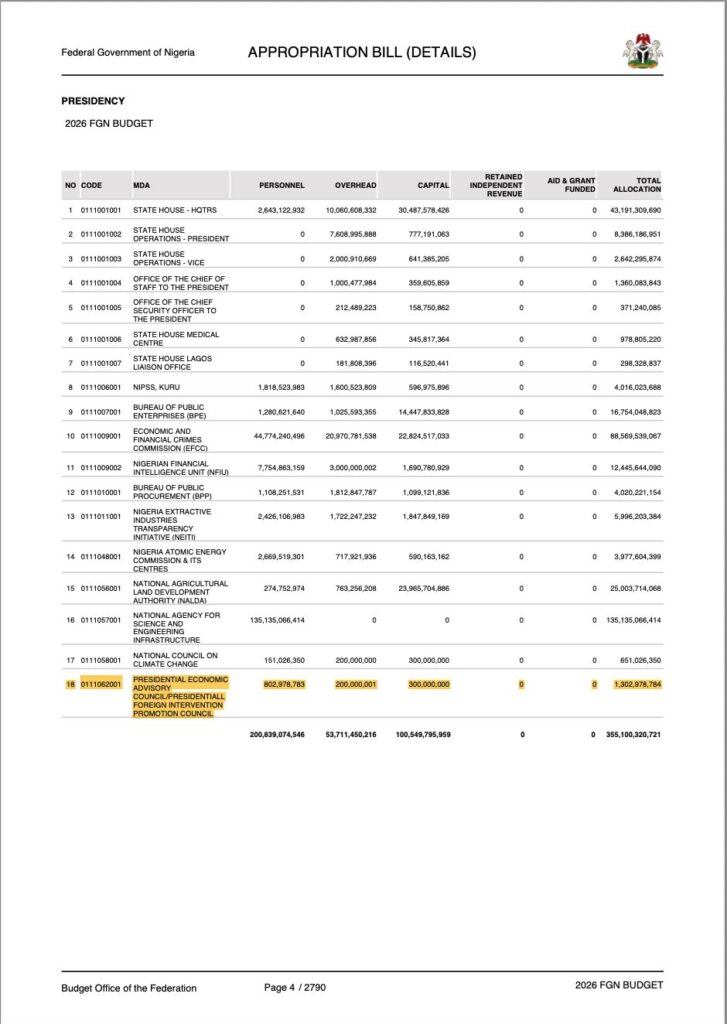
He has gone further, alleging that Gbajabiamila received 400 million naira through a proxy and demanded an additional 200 million naira to secure his appointment, a claim the Presidency has dismissed outright. Adeyemi has also raised a question that has stuck with a lot of Nigerians following the story: if the council never existed, how did it end up with a budget line? Findings reported by Vanguard indicated that the council was allocated over 1.3 billion naira in the 2026 federal budget. A senior lawyer quoted by Punch pressed the point further, asking how a government could explain a whopping sum of 24 billion naira budgeted for an agency it now says never existed, and how that agency ended up with an account at the Central Bank in the first place.
The Presidency’s Response
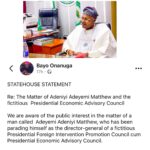
The Presidency has not minced words in its own defence. In a lengthy statement issued by Special Adviser on Information and Strategy, Bayo Onanuga, titled “Re: The Matter of Adeniyi Adeyemi Matthew and the Fictitious Presidential Economic Advisory Council,” the government laid out a detailed timeline meant to distance the Chief of Staff from any wrongdoing. Onanuga described Adeyemi as a con artist with a documented history of fraudulent misrepresentation, pointing back to the 2016 World Youth Organisation episode as evidence of a repeat pattern.
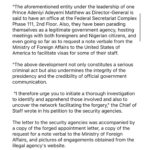
The statement stressed that appointments into federal offices go through the Office of the Secretary to the Government of the Federation, not the Chief of Staff, and that Gbajabiamila does not personally issue appointment letters. On November 5, 2025, in a letter to the OSGF, the Chief of Staff reportedly disowned Adeyemi outright, stating that neither the man nor his purported council was known to his office or had any dealings with it.
Onanuga also used the statement to warn politicians against dragging the matter into unrelated political fights, cautioning the public not to treat Adeyemi’s version of events as settled fact while the case is still before the courts. As he put it in comments reported by TheCable, those weaponising the claims should hold off and let the trial run its course rather than swallowing Adeyemi’s account uncritically.


Why This Story Refuses to Die
Part of what keeps this scandal alive in the headlines is how badly the numbers don’t add up on their own. A fictitious agency with a Federal Secretariat office. A fictitious agency with a Central Bank account. A fictitious agency that somehow made it into the federal budget not once but across two fiscal cycles. Nigerians online have picked up on the contradiction, and outlets like TheCable have openly questioned how a man could allegedly operate this deep inside government machinery for so long without anyone catching on sooner.
Opposition politicians have also weighed in. Atiku Abubakar has publicly criticised how the Presidency has handled its response to the scandal, adding a political dimension to what started as a straightforward fraud case.
For now, the matter rests with the Federal High Court in Abuja. Adeyemi and his two co-defendants are due back in court on July 27, 2026, and until then, both camps will likely keep making their case in the media rather than the courtroom. What’s clear is that this is no longer just about one man and a fake title. It has turned into a test of how transparent the Presidency is willing to be about its own budget lines, its own vetting process, and how a supposedly non-existent agency managed to look so real for so long.