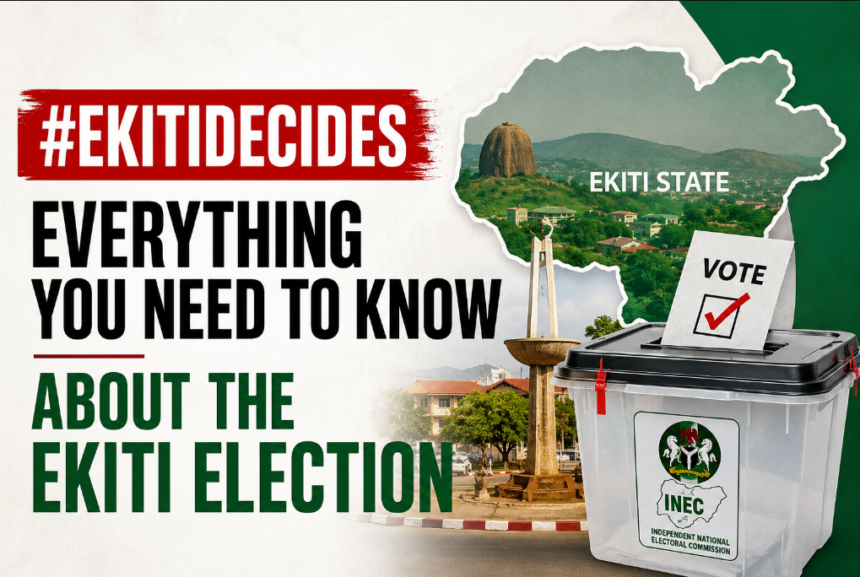
On June 20, Ekiti State will head to the polls to determine who will emerge as the number one citizen of the state. With a population of over two million people, voters are set to participate in an election that has historically been highly competitive and intense.
The Independent National Electoral Commission (INEC) has expressed optimism about the successful conduct of the election. The electoral umpire noted that there is total operational, technological, and logistical readiness to conduct the poll across 16 Local Government Areas, 177 Registration Areas (Wards), and 2,445 Polling Units.
According to INEC, the state now has 1,059,360 registered voters, representing a collection rate of 97.0 per cent, and 97.1 per cent of registered voters have collected their PVCs. This figure has increased from 989,224 in 2022 and 909,585 in 2018.
Elections in Ekiti have not been without challenges
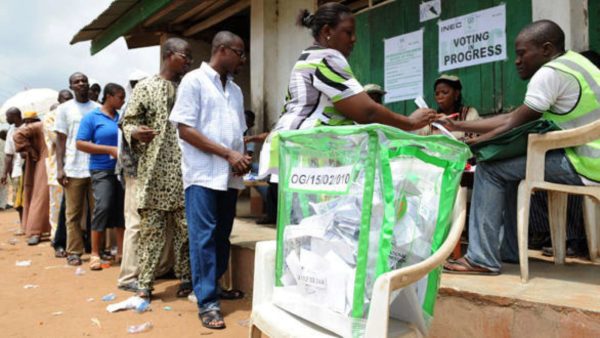

Vote buying has been a major challenge in Ekiti elections over the years. In 2022, the buying and selling of votes defined the turnout of the election. The Centre for Democracy and Development (CDD) documented at least 41 cases of vote buying across six local government areas (Ado-Ekiti, Ijero, Ikole, Irepodun/Ifelodun, Ise/Orun, and Moba LGAs), indicating that the practice was organised and widespread.
This practice has continued to threaten elections in Nigeria, posing a challenge to the conduct of free and fair elections.
As the election is set to kick off, INEC has raised these concerns ahead of the Saturday poll. The electoral body noted that Ekiti has a history of covert vote buying near polling units, often facilitated through hidden arrangements designed to evade detection.
This practice clearly breaches the Electoral Act 2026, a legal instrument used for the conduct of elections in Nigeria. Section 125(1) of the Electoral Act 2026 criminalises any form of vote buying, bribery, or electoral inducement before, during, or after an election.
Offenders are liable on conviction to a fine of up to ₦2,000,000, imprisonment for up to 12 months, or both.
However, the commission said it has developed strategies involving the deployment of security personnel not only within polling units but also around their perimeters to deter illicit financial transactions.
More than 22,000 security operatives have been deployed to polling units nationwide to ensure a safe environment for the election.
14 political parties contest to clinch power
13 political parties are looking to jostle power from the incumbent Governor, Biodun Oyebanji of the All Progressives Congress (APC), who is seeking to retain the governorship seat for another four years. Oyebanji won the 2022 governorship election with 187,057 votes, and now the electorate will decide if he is to remain in power.
Other candidates include Oluwole Oluyede, vying under the Peoples Democratic Party (PDP). In 2022, Oluyede contested under the banner of the African Democratic Congress (ADC) before joining the PDP. Also, Oluwadare Bejide is contesting under the ADC banner. He served as the state secretary of the National Republican Convention (NRC) in old Ondo State and was a former Nigerian Ambassador to Canada.
Opeyemi Falegan, 41, is contesting under the Accord Party and is one of the youngest candidates in the race. Also, Oyebanji Olajuyin, a 67-year-old medical doctor and former Chief Medical Director of the Ekiti State University Teaching Hospital, will be on the ballot as the Labour Party candidate.
Other candidates are Blessing Abegunde, who is among the youngest in the governorship race, running under the New Nigeria People’s Party (NNPP); Bidemi Awogbemi of the Action Peoples Party (APP); Ayodeji Ojo of the Action Democratic Party (ADP); Samuel Akande of the African Action Congress (AAC); and Olaniyi Ayodele of the Peoples Redemption Party (PRP).
Also contesting are Victor Adetunji of the Zenith Labour Party (ZLP), Olu Omotoso of Action Alliance, Joseph Anifowose of the Allied Peoples Movement (APM), and Ayodele Osinkolu of the Young Progressive Party (YPP).