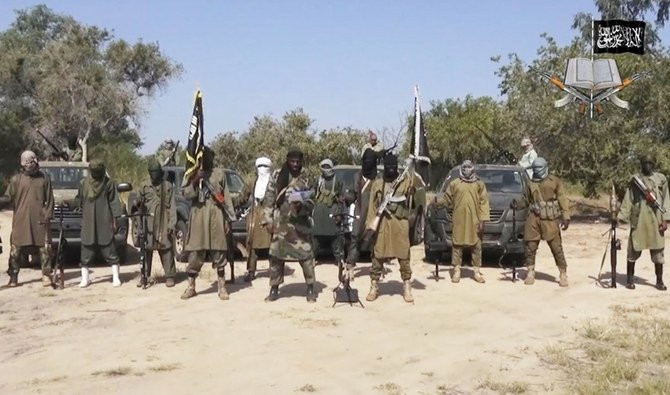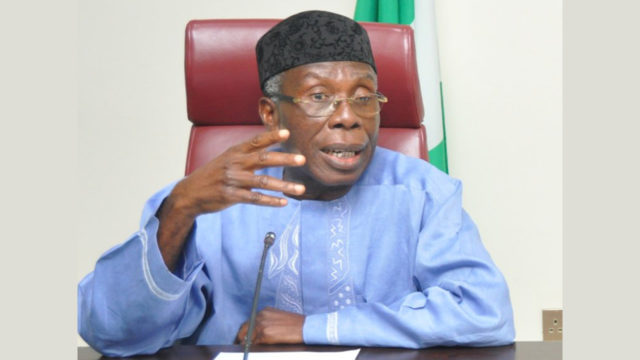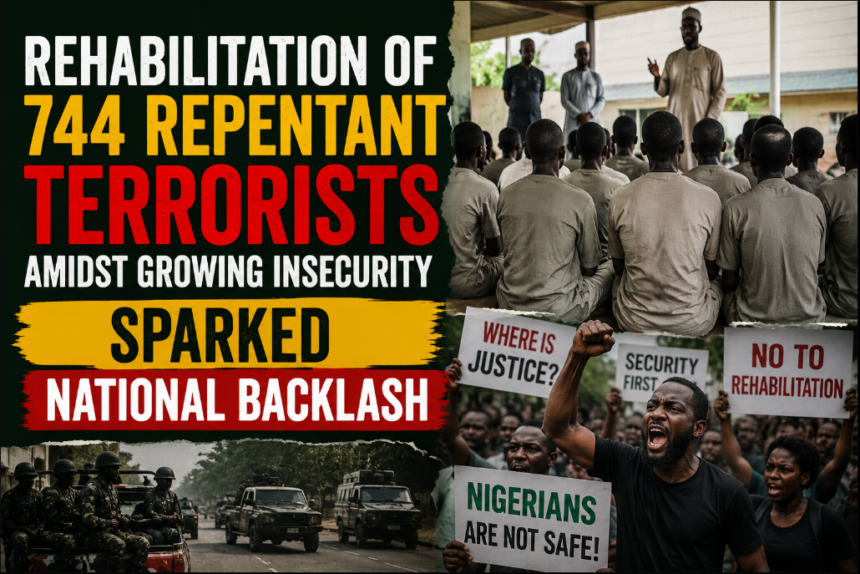
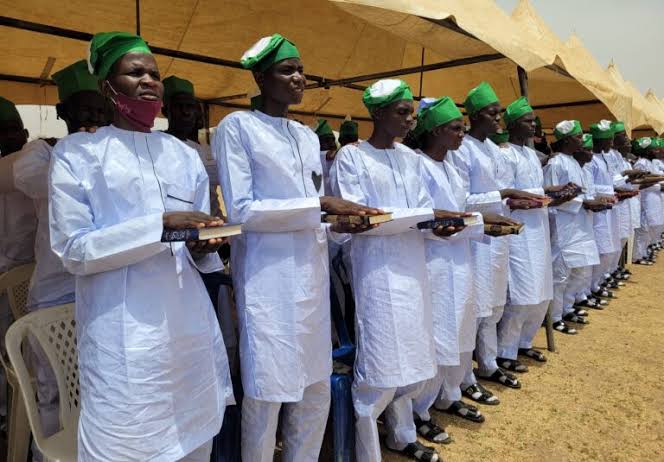
The Tinubu-led government, under the Operation Safe Corridor, held a ceremony for not less than 744 repentant terrorists as part of its De-radicalisation, Rehabilitation and Reintegration programme. This news has attracted widespread controversy, with many criticising the government’s perceived lacklustre efforts to end the country’s worsening insecurity, while organising a ceremony to reintegrate individuals who have caused the nation’s tragedy for years.
The Operation Safe Corridor, which is an initiative designed to encourage repentant defections from insurgent groups, has processed thousands of ex-terrorists since its inception in 2016. However, the latest batch of 744 has drawn renewed scrutiny, largely due to the country’s fragile security climate.
Nigeria continues to grapple with persistent violence ranging from terrorism and insurgency to banditry and mass kidnapping. This has resulted in staggering human and economic losses, with thousands killed and millions displaced since 2009.
The administration of President Mohammed Buhari alone saw the death of over 63,111 Nigerians from violent attacks, and in only two years of the current administration, at least 10,217 people were killed. The scale of violence has continued in 2026, raising concerns about the effectiveness of existing efforts to combat terrorism.
Controversial trails government’s decision

It is against this backdrop that the reintegration of former terrorists is provoking strong public reactions.
For many Nigerians, the initiative raises moral and ethical concerns, especially regarding justice for the victims of the acts of terrorism carried out by these groups. Critics argue that while ex-terrorists are being rehabilitated and prepared for reintegration into society, the victims of terrorism, many of whom have lost families, homes, and livelihoods, receive little attention.
This perceived injustice has fueled criticisms, with some viewing the FG’s initiative as one designed to reward perpetrators while neglecting those who bear the brunt of insecurity.
Legal practitioner Maxwell Opara described the release of the 744 individuals as a mockery of the nation’s judicial system, as the initiative undermines the rule of law and bypasses due process. He argued that individuals linked to crimes resulting in mass killings, destruction of property, and displacement should ordinarily face prosecution, and, when found guilty, be punished.
Also, opposition party, African Democratic Congress (ADC), described the reintegration plan as a “dangerous failure of judgment,” arguing that it reflects a government that does not fully grasp the scale of the terrorist threat facing the country.
The party warned that treating terrorists as “prodigal sons” risks trivialising the severity of their crimes, adding that reintegration without justice leads to injustice and disregards accountability. For them, the absence of visible justice for victims (many of whom remain in Internally Displaced Persons camps) undermines public trust and weakens the deterrent effect of the country’s counterterrorism efforts.
Military defends initiative
Despite these criticisms, the military has consistently defended the initiative, insisting that it remains a critical component of Nigeria’s counterinsurgency strategy. Chief of Defence Staff, Gen. Olufemi Oluyede, maintains that the programme is not designed to grant amnesty indiscriminately, but to carefully process individuals who have genuinely renounced extremist ideologies.
Coordinator of Operation Safe Corridor, Brig. Gen. Yusuf Ali said rehabilitated individuals undergo a structured deradicalisation process that includes psychological evaluation, ideological reorientation, and vocational training before being considered for reintegration into society. The process, he argues, is aimed at transforming former terrorists into productive citizens.
Expert urge FG to adopt new strategies against insecurity
While the military insists the programme is necessary, the disconnect between policy intent and public perception continues to widen. Since January 2026, over 1,000 Nigerians have been abducted, bandits have sacked entire villages, worshippers have been gunned down, and the violence now threatens the 2027 elections.
Ikemesit Effiong, Managing Partner at SBM Intelligence, told Within Nigeria that despite the reintegration of 744 individuals marking a tactical milestone for Operation Safe Corridor, no credible public data exists on recidivism or post-reintegration outcomes.
According to him, with over 300,000 reported surrenders since 2016, the government views it as a strategic necessity; however, affected communities see the move as a revolving door without accountability.
“Until transparent tracking is instituted, this will remain a high-risk gamble on an unproven model,” he said.
Effiong opined that rehabilitation is essential for long-term peace, but the current iteration is dangerously flawed. He emphasised that the integrity of the screening process is opaque, and community acceptance – critical for any DDR programme – remains catastrophically low.
He said that the absence of a parallel victim support system has created a perception that crime pays, adding that a message that actively corrodes public trust may fuel future violence.
“ In the short term, the decision has been corrosive. Spending over N604 million on rehabilitation infrastructure while victims languish in IDP camps has deepened societal fractures and fuelled public cynicism. Long-term impacts remain unknown. There is simply no data
“ A recidivism rate above 10-15% would be catastrophic. Without robust monitoring, the government is effectively conducting an uncontrolled national security experiment with no clear success metrics,” he said
He explained that the insecurity crisis in Nigeria is structural, and until the government tackles intelligence failures, economic desperation, and weak governance, the violence will only accelerate.
Effiong believes that the government must urgently move beyond a militarism-rehabilitation binary and pursue a three-pronged strategy, which includes: invest in intelligence, shifting from reactive force to proactive, community-based information-gathering; professionalise security forces, enforcing accountability, improving welfare, and ending human-rights abuses that alienate civilians; and address economic drivers.
“Poverty and unemployment remain the primary engines of recruitment. Military operations alone haven’t worked; they’re merely containing a problem that demands socioeconomic solutions,” he noted.