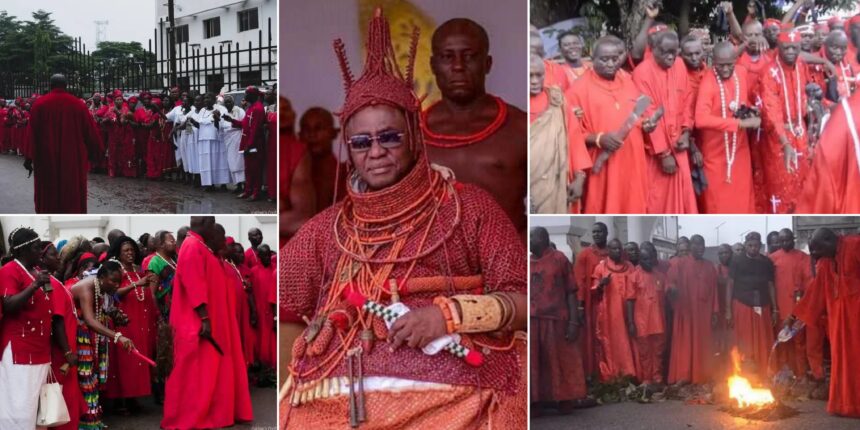
Silence settled over parts of Benin City before dawn as preparations quietly gathered pace around one of Nigeria’s most respected traditional institutions. Long before the wider public began discussing the event, respected palace figures, traditional priests, shrine custodians, native doctors, palace chiefs were already responding to a royal directive that carried both cultural weight and spiritual significance. By the time details of the gathering reached the public, attention had already shifted toward understanding why such an extraordinary exercise had been convened.
News of the palace’s directive travelled quickly because it arrived at a time when conversations about insecurity had become increasingly common across Edo State. Reports of kidnappings, violent attacks, armed robbery, cult related violence had continued generating concern among residents, making every major security related development a subject of widespread interest. Against that backdrop, the decision of the Oba of Benin to summon custodians of traditional worship immediately stood out as an event that demanded closer examination.
Rather than announcing a political campaign or introducing a new security outfit, the Benin Palace chose a path deeply rooted in the kingdom’s history, traditions, spiritual heritage. Looking beyond the headlines reveals a carefully organised sequence of events beginning inside the palace, extending into a kingdom wide spiritual exercise, ultimately becoming one of the most widely discussed traditional initiatives to emerge from Edo State during June 2026.
Royal directive
Tuesday, 24 June 2026 marked the beginning of the events that would later attract nationwide attention. On that day, Oba Ewuare II convened an emergency meeting inside his palace in Benin City, bringing together individuals who occupy important positions within the traditional structure of the Benin Kingdom. Those invited reflected different aspects of the kingdom’s spiritual and cultural institutions, underscoring the importance attached to the gathering.
Present at the meeting were traditional priests, priestesses, native doctors known within Benin tradition as Ewaise, shrine custodians, traditional worshippers, palace chiefs. Bringing together such a broad representation of traditional authorities immediately signalled that the meeting involved matters extending beyond ordinary palace administration. Every group present carried responsibilities closely connected with preserving customs that have formed part of the Benin Kingdom for generations.
Details emerging after the gathering indicated that Oba Ewuare II used the meeting to issue a far reaching directive centred upon the growing security challenges confronting Edo State. Rather than limiting his message to appeals for vigilance or public awareness, the monarch instructed those present to begin what he described as a spiritual warfare directed against violent criminality across the kingdom.

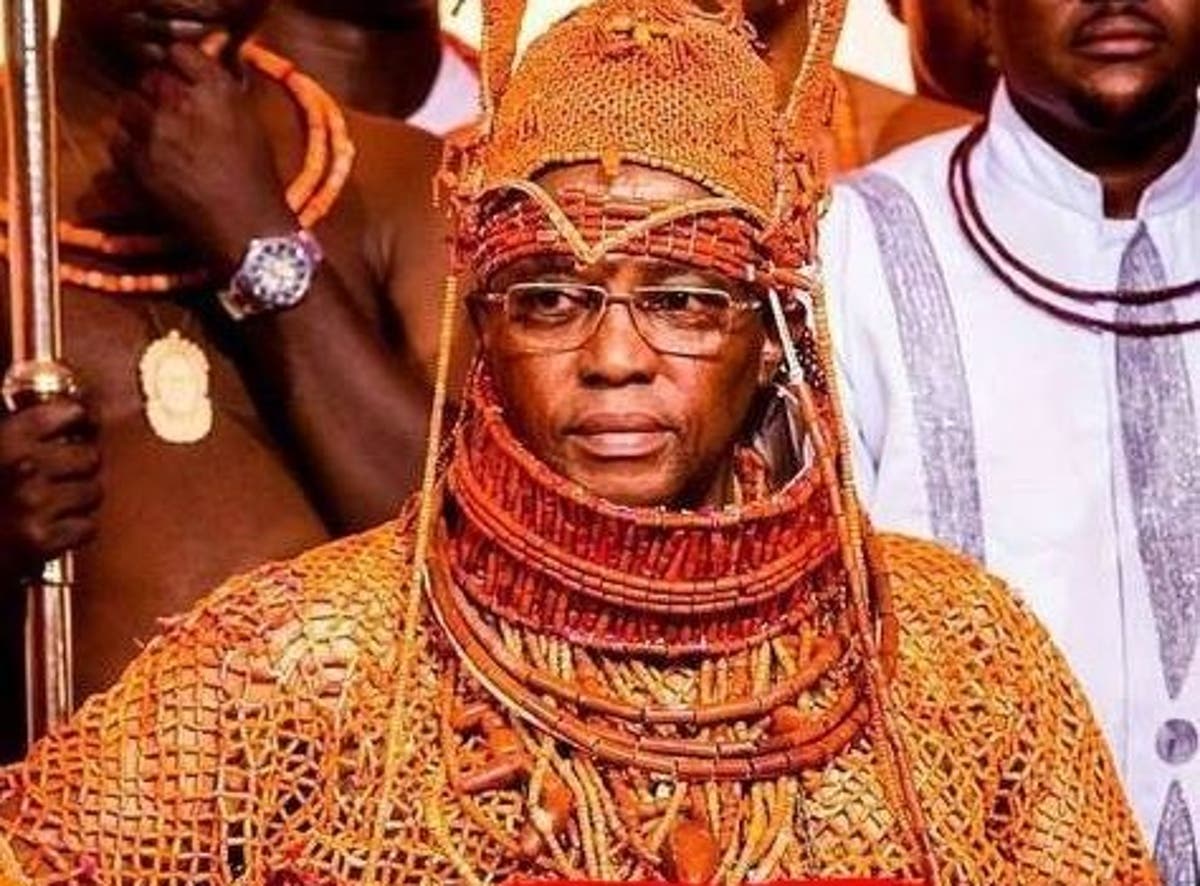
That instruction immediately became the defining outcome of the palace meeting. Within hours, discussions about the royal directive spread beyond Benin City as many people sought to understand the purpose, meaning, plus expected impact of the exercise ordered by one of Nigeria’s most influential traditional rulers.
Focus of the exercise
Central to the Oba’s directive was a clear identification of the categories of criminal activity the spiritual exercise sought to confront. According to palace reports, the monarch instructed the traditional authorities to direct their prayers, invocations, spiritual pronouncements toward individuals involved in kidnapping, armed robbery, banditry, ritual related killings, cult activities, alongside every person accused of supporting or protecting those responsible for violent crime.
That broad scope reflected the concerns that have increasingly shaped public conversations within Edo State over recent years. Rather than concentrating upon one offence alone, the palace directive recognised several forms of criminal activity that residents have repeatedly associated with growing insecurity across different communities. By naming each category individually, the royal instruction presented the exercise as a comprehensive spiritual response to multiple security challenges affecting the kingdom.
Another notable feature of the directive involved those regarded as collaborators. According to reports from the palace, the spiritual exercise extended beyond individuals directly carrying out criminal acts to include anyone believed to sponsor, harbour, assist, protect, finance, or otherwise facilitate violent crimes. Within the traditional understanding guiding the ceremony, responsibility reached beyond those committing offences themselves.
Attention quickly turned toward the significance of such pronouncements because the Benin Kingdom has long attached cultural importance to traditional authority, ancestral heritage, spiritual customs preserved through generations. That historical background provided an important foundation for understanding why the palace regarded the exercise as a meaningful contribution to wider efforts aimed at restoring peace.
Growing security concerns
Events leading to the royal directive did not emerge in isolation. Across different parts of Edo State, insecurity had remained an important subject of public discussion as reports involving kidnappings, attacks on travellers, armed robbery, cult related violence continued attracting attention. Those developments formed part of the broader background against which the palace meeting eventually took place.
Kidnapping along major highways had featured prominently within conversations involving residents, particularly those travelling between communities. Reports concerning attacks upon commuters contributed to growing concern regarding personal safety, while incidents linked to armed robbery added further pressure upon communities already dealing with the wider effects of criminal activity. Those developments gradually created an atmosphere where security became one of the state’s most pressing public concerns.
Cult related violence also remained among the issues highlighted within discussions surrounding insecurity. Alongside reports involving ritual related crimes, these incidents reinforced calls for stronger responses capable of addressing both immediate threats plus longer term concerns affecting different communities across Edo State. Traditional institutions, religious organisations, government authorities, security agencies each occupied different positions within those conversations.
Against that background, the palace explained that conventional security efforts could be complemented through the cultural plus spiritual influence historically associated with the Benin traditional institution. Rather than presenting the exercise as a replacement for policing, the directive reflected the belief that traditional authority also possesses a role in seeking peace, stability, protection for the kingdom.
Divine inspiration
Another important aspect of the palace’s explanation centred upon the source of the royal directive itself. According to reports, Oba Ewuare II explained that the instruction arose through inspiration received from God Almighty together with the royal ancestors. Within the traditional understanding of the Benin Kingdom, those references carried deep spiritual significance because they connected the exercise with beliefs that have remained central to the institution for generations.
Presenting the directive in that manner distinguished it from an ordinary administrative decision. Rather than describing the exercise as a response based solely upon current security developments, the monarch framed it within the kingdom’s spiritual heritage, emphasising that the decision reflected guidance believed to extend beyond human judgment alone. That explanation became one of the defining features of the entire initiative because it established the spiritual foundation upon which every subsequent activity rested.
Oba Ewuare II also appealed to Edo people living both within Nigeria plus across the diaspora to unite in support of the exercise through prayers, solidarity, shared commitment toward restoring peace. His message reflected the belief that confronting insecurity requires collective responsibility, encouraging citizens to remain connected with the kingdom during a period of heightened concern over violent crime.
Those remarks completed the first stage of the palace’s initiative. Having convened traditional authorities, outlined the focus of the exercise, explained its spiritual basis, the Oba’s directive then moved toward the ceremonial activities that would later take place on Thursday, 2 July 2026, drawing even greater national attention as traditional rites unfolded around the palace in Benin City.
Thursday’s royal rites
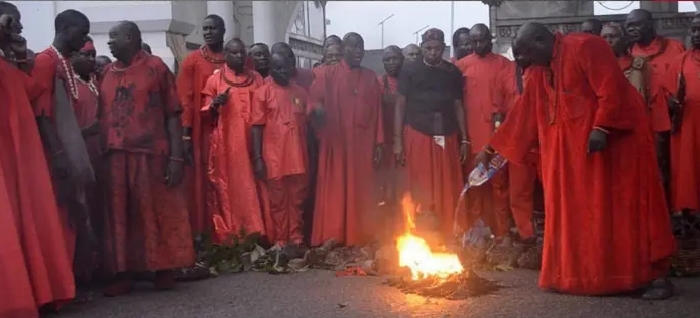
Thursday, 2 July 2026 marked the day fixed by the Benin Palace for the principal spiritual exercise. From the early hours of the morning, activity gradually increased around the palace in Benin City as traditional worshippers assembled in ceremonial attire to participate in the rites ordered by Oba Ewuare II. The atmosphere reflected the significance attached to the occasion, with every stage of the exercise unfolding according to customs preserved within the Benin Kingdom over many generations.
Traditional priests, priestesses, native doctors known as Ewaise, shrine custodians, palace functionaries each assumed roles connected with the ceremony. Rather than resembling a political gathering or a conventional security meeting, the exercise followed a distinctly traditional pattern rooted in the kingdom’s spiritual heritage. Every participant represented an institution whose responsibilities have long been connected with preserving customs regarded as central to the identity of the Benin people.

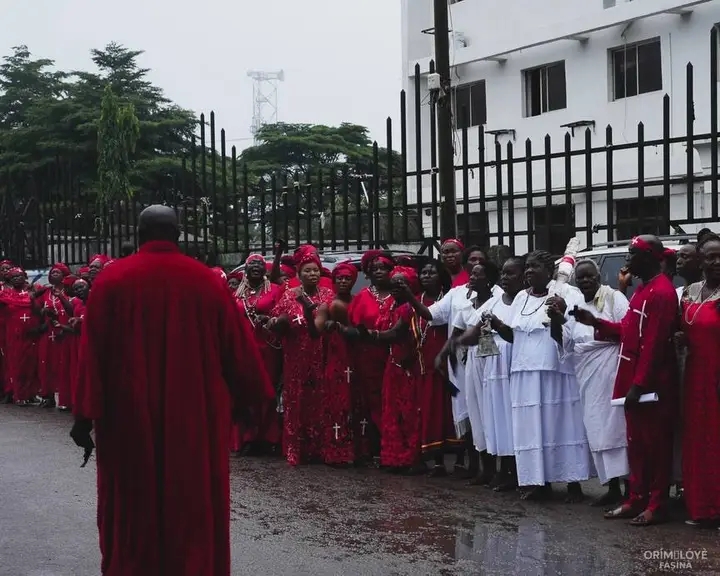
Several symbolic activities formed part of the royal exercise. Libations were offered according to established tradition, prayers were rendered, ancestral invocations were made, protective rites were performed, while solemn pronouncements were directed against kidnapping, armed robbery, cult related violence, ritual killings, every form of violent criminality identified during the earlier palace meeting. Those activities represented the ceremonial heart of the initiative announced by the Oba just days earlier.
Attention surrounding the event extended well beyond Benin City because images plus reports from the palace quickly circulated across the country. For many observers, the ceremony offered a rare public glimpse into traditional practices that ordinarily remain closely associated with the cultural life of the Benin Kingdom rather than becoming subjects of national discussion.
Purpose of the ceremony
Beyond the visible ceremonies lay a broader objective explained by palace representatives following the exercise. According to information released after the rites, the spiritual activities were intended to invoke divine plus ancestral intervention against violent criminality while seeking lasting peace throughout Edo State. Within that framework, the ceremony represented a spiritual appeal rather than a law enforcement operation.
Palace representatives explained that one important purpose involved spiritually exposing individuals engaged in kidnapping plus other violent offences. Another objective centred upon invoking consequences against those believed to participate in criminal activities threatening the safety of communities across the state. Those intentions reflected the traditional understanding that spiritual accountability forms part of the wider moral order preserved within the kingdom’s customs.

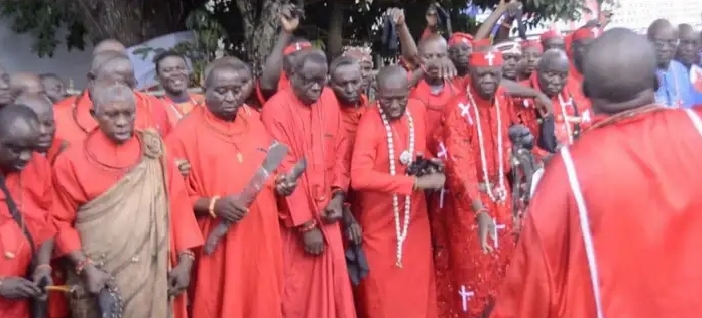
Further explanations also indicated that the rites extended toward individuals accused of secretly assisting criminal networks. Collaborators, informants, financiers, persons believed to provide protection or encouragement for violent offenders were likewise included within the spiritual pronouncements made during the ceremony. From the palace’s perspective, confronting insecurity required addressing every level of participation connected with violent crime.
Protection of the land itself also featured prominently within the exercise. Through prayers, invocations, ceremonial declarations, the rites sought to fortify Edo State against continued criminal activity while invoking peace, stability, safety for residents across different communities. Those objectives reflected the broader purpose consistently associated with the royal directive from its beginning.
Traditional authority
Understanding the significance of the ceremony also requires appreciating the place occupied by the Benin traditional institution within the kingdom’s history. Long before the emergence of modern governmental structures, traditional rulers exercised authority extending beyond administration into matters involving culture, customs, spiritual leadership. That heritage continues shaping many ceremonial responsibilities performed by the Oba of Benin today.
Oba Ewuare II’s decision therefore reflected responsibilities historically associated with the throne rather than introducing an entirely new practice. Throughout different periods of the kingdom’s history, traditional institutions have remained closely connected with preserving social order, cultural identity, moral values through customs recognised by the people. Spiritual exercises conducted under royal authority form part of that wider historical tradition.
Another important aspect concerns the individuals invited to participate in the exercise. Traditional priests, shrine custodians, native doctors, palace chiefs occupy recognised positions within the kingdom’s cultural structure. Their presence during the ceremony reflected established traditional roles rather than temporary appointments created specifically for the event. Each group contributed according to responsibilities preserved through generations of customary practice.
Viewed within that historical context, the palace gathering represented far more than a response to contemporary security concerns alone. It also reflected the continuing role of traditional institutions within the cultural life of the Benin Kingdom, demonstrating how customs preserved across centuries continue finding expression during significant moments affecting the community.
Security agencies
Despite the widespread attention surrounding the spiritual exercise, the Benin Palace made an important clarification concerning its relationship with conventional law enforcement. Palace representatives explained that the ceremony was never intended to replace the responsibilities carried out by the Nigeria Police Force or other recognised security agencies operating within Edo State.
Rather than presenting spiritual rites as an alternative to criminal investigations, arrests, prosecutions, the palace described the initiative as complementary to existing security efforts. According to that explanation, traditional institutions possess cultural plus spiritual responsibilities capable of existing alongside the legal responsibilities assigned to government agencies charged with maintaining public safety.
Reference was also made to wider efforts already being pursued by the Edo State Government in response to insecurity. Among those measures were plans relating to special courts intended to accelerate the prosecution of kidnapping, armed robbery, related criminal offences. That broader context reinforced the palace’s position that the traditional exercise formed one part of a wider effort involving different institutions responding within their respective responsibilities.

This clarification became particularly significant because it distinguished the royal initiative from official policing activities. While the palace emphasised spiritual intervention according to traditional beliefs, responsibility for investigation, arrest, prosecution, judicial determination remained firmly within the authority of recognised government institutions established under Nigerian law.
Earlier royal action
Events surrounding the July 2026 spiritual exercise also recalled another major intervention carried out by Oba Ewuare II several years earlier. During 2018, the Benin monarch drew international attention after taking decisive traditional action against priests who administered oath taking rituals connected with human trafficking. That intervention became one of the most widely reported moments of his reign because it addressed an issue that had affected countless victims beyond Nigeria’s borders.
The royal pronouncement issued during 2018 sought to dismantle the spiritual influence that traffickers were believed to exercise over many victims through customary oaths. Those rituals had long been described as powerful psychological tools used to create fear, compel silence, discourage victims from seeking help after leaving Nigeria. By publicly intervening through the authority of the Benin throne, Oba Ewuare II introduced a cultural response that attracted attention from governments, international organisations, human rights groups across different countries.
Although the circumstances surrounding human trafficking differed significantly from the security concerns that emerged during June 2026, both events reflected the monarch’s willingness to employ traditional authority when confronting issues considered harmful to the welfare of the kingdom. Rather than remaining limited to ceremonial duties, the palace once again demonstrated how traditional leadership can become actively involved in matters regarded as affecting the safety, dignity, stability of society.
Remembering that earlier intervention also provided important historical context for the July 2026 exercise. Those familiar with the Benin Kingdom’s recent history recognised that the latest royal directive formed part of a broader pattern in which Oba Ewuare II has occasionally invoked the cultural plus spiritual authority of the throne during periods of significant public concern.
Measurable outcome
One important question naturally followed the completion of the traditional rites. Could the spiritual exercise produce measurable changes in the security situation across Edo State. Although that question attracted widespread interest, available facts presently provide only a limited basis for reaching any definite conclusion.
Only a short period separated the palace ceremony from the public discussions that followed, making it far too early to determine whether the exercise produced any direct effect upon kidnapping, armed robbery, cult related violence, or other criminal activities identified by the Oba. Security trends generally require careful observation over time before reliable conclusions can be drawn regarding changes in crime patterns or public safety.
Available information also indicates that conventional security operations have continued independently of the royal exercise. Police officers, other security agencies, government authorities remain responsible for investigating reported crimes, arresting suspects, presenting cases before the courts according to established legal procedures. Those responsibilities continue regardless of the spiritual activities conducted under the authority of the Benin Palace.
Current evidence therefore does not establish a direct relationship between the July 2026 rites plus measurable reductions in criminal activity. The significance of the ceremony remains closely connected with the cultural, traditional, spiritual beliefs through which participants understand the exercise rather than conclusions that can presently be demonstrated through verified law enforcement statistics.
Cultural significance
Looking beyond immediate security concerns reveals another important dimension of the palace initiative. Traditional ceremonies within the Benin Kingdom carry meanings extending far beyond the visible activities witnessed during public gatherings. Every prayer, libation, ancestral invocation, ceremonial declaration reflects customs that have survived through centuries, continuing to shape the identity of one of Africa’s oldest traditional institutions.
For many within the kingdom, preserving those customs represents more than maintaining historical practices. Traditional rites also express continuity between generations, reinforcing values associated with communal responsibility, respect for ancestral heritage, commitment toward the wellbeing of society. Conducting the July 2026 exercise under the authority of the Oba therefore reflected both immediate concern over insecurity plus the enduring place of traditional institutions within the kingdom’s cultural life.
Another notable aspect involved the participation of different custodians of Benin tradition. Traditional priests, priestesses, native doctors known as Ewaise, shrine custodians, palace chiefs each represented institutions whose responsibilities have been preserved across successive generations. Their presence demonstrated the collective character of the ceremony, emphasising that the exercise extended beyond one individual to encompass different parts of the kingdom’s traditional structure.
That wider cultural context explains why the event attracted attention far beyond Edo State. Although the ceremony focused upon security concerns affecting the kingdom, it also provided a rare public window into customs that ordinarily remain closely associated with traditional life rather than becoming subjects of national discussion.
Closing thoughts
Days surrounding the palace gathering gradually transformed an internal traditional exercise into one of Nigeria’s most closely followed cultural stories of July 2026. Every stage unfolded in sequence, beginning with the emergency meeting convened by Oba Ewuare II on 24 June 2026, followed by the royal directive issued to traditional authorities, culminating in the spiritual rites performed on 2 July 2026 around the Benin Palace. Together, those events created a timeline that drew attention not only because of the ceremony itself, but because of the institution from which it originated.
Available facts present a clear picture of the initiative’s purpose. The palace sought to invoke traditional plus spiritual authority against kidnapping, armed robbery, cult related violence, ritual killings, every form of violent criminality identified during the royal meeting. At the same time, palace representatives consistently maintained that the exercise was intended to complement rather than replace the responsibilities of security agencies charged with enforcing Nigerian law.
Whether viewed through the lens of culture, history, spirituality, or public administration, the events of June plus July 2026 demonstrated the continuing influence of the Benin traditional institution during moments of public concern. While measurable effects upon criminal activity remain too early to determine, the royal exercise has already secured a place among the most significant traditional interventions of Oba Ewuare II’s reign, highlighting how centuries old customs continue shaping conversations about peace, security, communal responsibility within contemporary Nigeria.