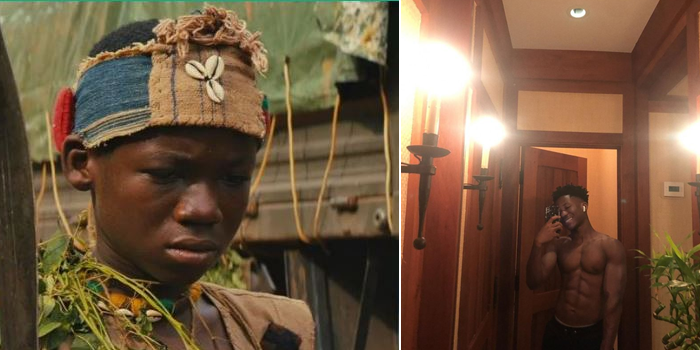
Award-winning Nollywood actor and filmmaker Lateef Adedimeji has built a reputation for bringing powerful characters to life on screen. But away from the cameras, he says his greatest role today is being a husband, a father and a storyteller committed to preserving Nigeria’s history.
Speaking on The Morayo Show, Adedimeji opened up about the joy and surprise of becoming a father to triplets with his wife, actress Bimpe Oyebade aka Mo Bimpe, why he changed his mind about marrying a colleague, how he became known for his emotional acting, and his passion for telling indigenous stories through film. He also spoke about his NGO, which is helping young Nigerians through theatre and education.
Here are the biggest moments from the conversation.
Fatherhood came with shock, joy and a new sense of purpose


For Adedimeji, discovering that he and his wife were expecting triplets was a moment he will never forget. He admitted that while they had been praying and waiting for children, the news still came as a surprise. In his words:
“It was shocking. But at the same time, it was a mixed feeling. When you’ve been expecting something and then it came and it was beyond your own expectation… the waiting is not a bad one.”
Pregnancy was not an easy journey, especially because both he and his wife continued working while expecting the babies. He praised Mo Bimpe for her strength, recalling how she insisted on following him to film locations instead of staying at home.
The actor also revealed that he was present throughout the delivery, saying watching his wife give birth gave him even greater respect for women. He revealed:
“I was right there and I saw it happen. It wasn’t an easy task, but I give it to women. Well done.”
Away from movie sets, Adedimeji says he enjoys being a hands-on father. He changes diapers, spends time with the babies and often carries them to his room so they can sleep on his chest.
Even while filming, he reveals he constantly checks on them through video calls and installed CCTV. Although raising three children at once comes with huge financial responsibilities, he believes God has continued to provide everything they need. He said:
“It is expensive, but at the same time it’s not expensive because God is providing.”
Why he and Mo Bimpe are protecting their children’s privacy
Since announcing the birth of their babies, the couple has attracted enormous public attention. Adedimeji said fans became so excited that many people began sharing AI-generated photos online while claiming they were pictures of his children.
Rather than getting angry, he said he understands that the reactions come from love. However, he made it clear that he and his wife will reveal their children’s faces only when they are ready. He said:
“When we decide to reveal their faces, you will see them. All the ones you’ve been seeing are AI babies.”
How friendship changed his mind about marrying an actress


Adedimeji admitted that he once believed he would never marry someone in the film industry. Life, however, had other plans. The actor said he and Mo Bimpe first became friends and business partners before their relationship grew into love.
Despite coming from different religious backgrounds, he said what mattered most was the peace they found in each other. In his words:
“To me, the first religion is your conscience and your peace of mind. Every other thing comes after.”
He said both families eventually accepted their relationship, allowing them to move forward together.
Asked what attracted him most to his wife, Adedimeji pointed to her intelligence and strong personality rather than her appearance. The actor shared:
“I like when a woman is intelligent. It goes beyond beauty. I need somebody to push me forward, and she did.”
How he became Nollywood’s ‘crying machine’
One of Adedimeji’s biggest trademarks is his ability to deliver emotional scenes with remarkable ease. He revealed that it was never a natural gift but a skill he deliberately developed after entering the industry.
At the beginning of his career, he was often compared to established actors like Odunlade Adekola because of his appearance. While he appreciated the comparisons, he knew he needed something that would make him stand out.
He began studying emotional performances and intentionally practised producing tears whenever a role demanded it. Adedimeji confessed:
“If you give me a role where I’m supposed to shed a tear for two seconds, I will mount pressure on it.”
“People started calling me a crying machine. They didn’t know my name, but they knew me for something that was mine.”
The surprising role Mo Bimpe played in creating one of his funniest characters
While many fans know Adedimeji for emotional roles, others love his comic character, Iya Peju. The actor revealed that the character would never have existed without his wife.
According to him, Mo Bimpe often records his funny habits without his knowledge. She later plays the videos back to him and encourages him to build on those natural mannerisms.
During the COVID-19 lockdown, one of those moments became the inspiration for Iya Peju, a character that quickly became popular online. He shared:
“She’s always with a camera. She records me when I do things, and I don’t even know.”
Why preserving indigenous stories has become his mission

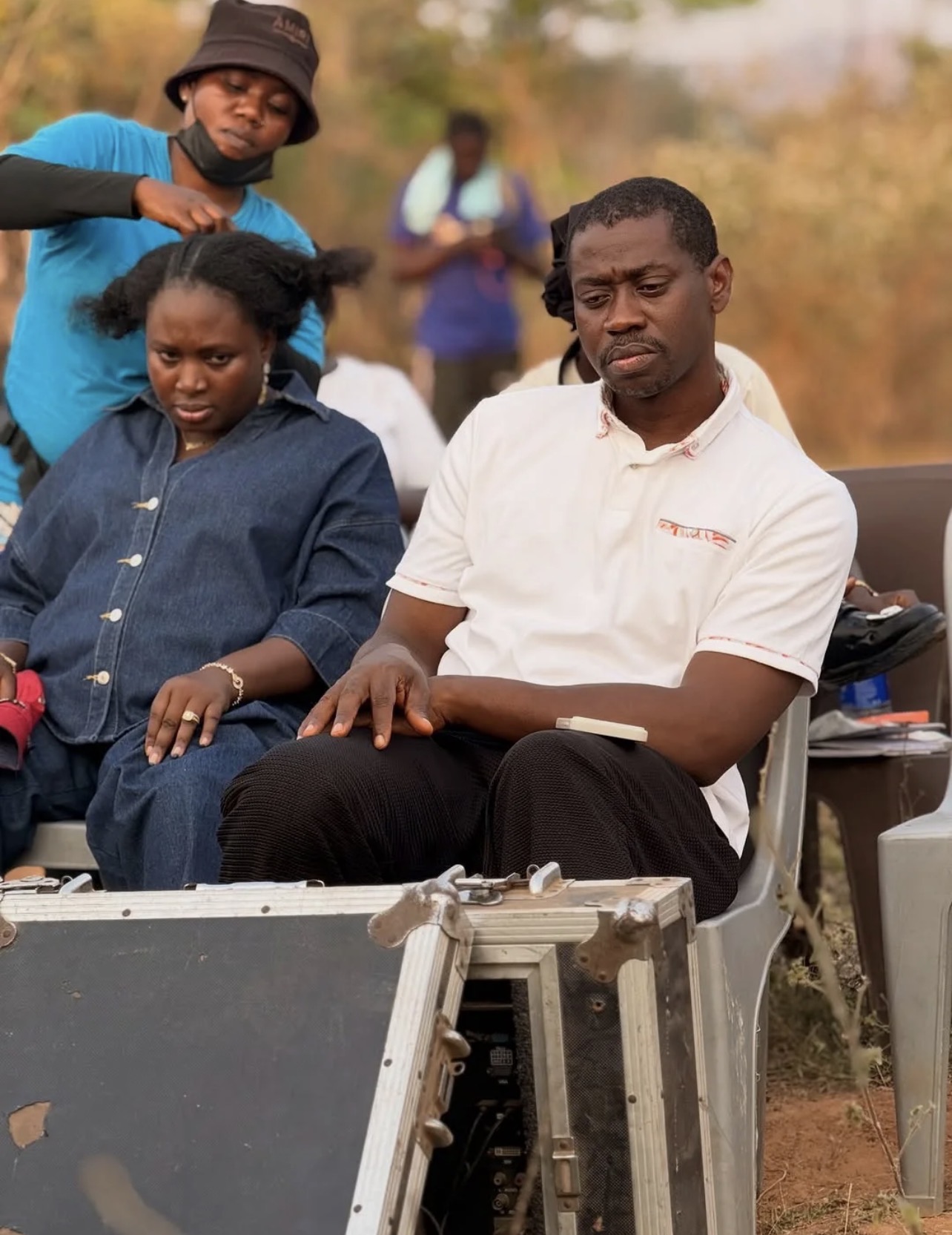
Beyond acting, Adedimeji says he is passionate about documenting Nigerian history through film. He believes many important cultural stories risk being forgotten if filmmakers do not preserve them for future generations. In his words:
“I love original stories. I love indigenous stories because we don’t have documentation of our own history.”
After working on Jagun Jagun, he said his passion for historical storytelling grew stronger. That journey inspired him to tell the story of Lisabi, which celebrates the history of his hometown.
He then turned his attention to his wife’s Ekiti roots, leading to his latest project, Kiriji. For Adedimeji, these films are about more than entertainment. They are about ensuring that young Nigerians grow up knowing where they come from.
Asides filmmaking, Adedimeji is also investing in young people through his NGO. He revealed that his organisation is taking stage plays to secondary schools to address important conversations many children never have with their parents.
He believes early guidance can help young people make better decisions and prepare them for the future.
Conclusion
Throughout the conversation, Lateef Adedimeji spoke less about fame and more about purpose.
Whether he was discussing fatherhood, marriage, filmmaking or mentoring young people, he noted every stage of his journey has given him a greater sense of responsibility.
Today, that responsibility goes beyond acting. It includes raising his children, preserving Nigeria’s history through film and using his platform to inspire the next generation.
For Adedimeji, success is no longer measured only by awards or box office numbers, but by the legacy he leaves behind on screen and in the lives he hopes to influence.