Every election leaves behind a story that stretches far beyond the ballot itself, especially when the office at stake carries influence that reaches courtrooms, government institutions, businesses, civil society organisations, citizens seeking justice, as well as the future direction of an entire profession. That atmosphere is gradually building across Nigeria’s legal community as thousands of lawyers prepare for a decision that will determine who occupies one of the country’s most respected professional offices.
Quiet consultations, carefully planned campaigns, strategic engagements, public debates, institutional conversations, legal procedures, electoral preparations, as well as weeks of anticipation have steadily transformed what began as another internal association exercise into one of the most closely watched professional elections of 2026. Long before electronic voting officially opens, every stage leading to the final contest has already revealed why this race commands national attention, setting the stage for a contest whose outcome will influence far more than the leadership of the Nigerian Bar Association.
Understanding The Election
The 2026 Nigerian Bar Association presidential election represents one of the most significant leadership transitions within Nigeria’s legal profession. Scheduled to produce the successor to Afam Osigwe, SAN, whose tenure as President of the Nigerian Bar Association is approaching its conclusion, the election brings together experienced legal practitioners competing for responsibility over the country’s largest association of lawyers. Far beyond choosing another office holder, the exercise will determine who leads an institution that frequently speaks on constitutional governance, judicial independence, protection of human rights, electoral integrity, administration of justice, legal reforms, professional ethics, public accountability, as well as matters affecting democratic development across Nigeria.
Every election conducted by the association attracts widespread attention because the NBA remains one of the country’s most influential professional organisations. Its positions often shape national conversations whenever constitutional issues emerge before the courts or public institutions. Governments regularly receive legal opinions from the association, while judicial reforms, legislative proposals, professional standards, public interest litigation, welfare concerns affecting lawyers, legal education, disciplinary matters, as well as access to justice frequently occupy the association’s agenda. Leadership of such an institution therefore carries responsibilities extending well beyond ordinary administrative duties.
NBA’s National Influence
Established as the umbrella body representing legal practitioners across Nigeria, the Nigerian Bar Association has grown into a respected institution with membership running into tens of thousands. Lawyers practising within private chambers, corporate organisations, government ministries, academic institutions, financial organisations, regulatory agencies, international bodies, as well as public interest organisations all identify with the association through various branches spread across the country.
Successive NBA administrations have consistently engaged governments on issues affecting democracy, constitutional order, judicial funding, electoral reforms, security, legal practice, access to justice, prison reforms, protection of civil liberties, as well as national development. Every president therefore inherits responsibilities requiring administrative competence, professional credibility, diplomatic engagement, financial accountability, strategic planning, as well as the confidence of lawyers across different generations.
Road To Final Ballot
Preparations for the 2026 election unfolded across several months, following the timetable released by the Electoral Committee of the Nigerian Bar Association. Aspirants interested in contesting various national offices completed nomination procedures before presenting documents required for screening. Those submissions became the foundation upon which the Electoral Committee evaluated eligibility according to the association’s constitution together with its electoral guidelines.
Screening gradually narrowed the field before appeals emerged from aspirants dissatisfied with aspects of the process. Questions relating to eligibility, zoning arrangements, interpretation of constitutional provisions, nomination requirements, as well as procedural compliance generated discussions within the legal community. Court proceedings also surfaced during the period, raising concerns about whether the election timetable could face disruption before voting eventually commenced.
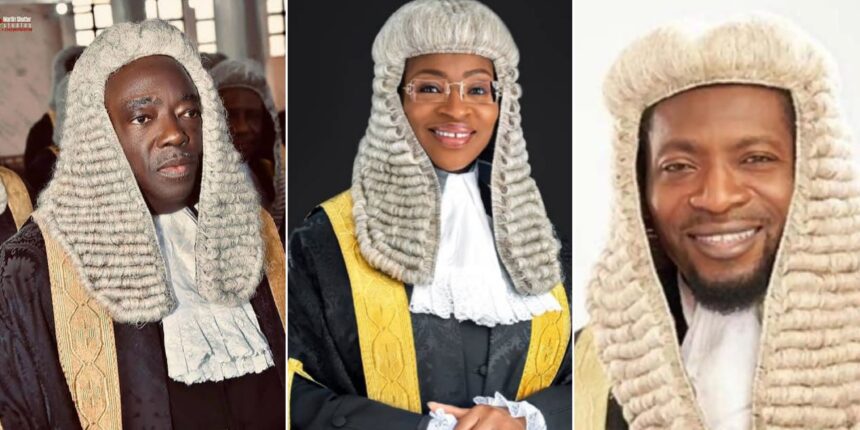
Despite those legal developments, the Electoral Committee continued performing its responsibilities by considering appeals, reviewing petitions, issuing clarifications where necessary, concluding the screening exercise, as well as publishing the final list of qualified candidates. Upon completion of that process, 35 candidates secured clearance to contest various national offices, while 3 Senior Advocates of Nigeria officially emerged as presidential candidates.
Olumuyiwa Akinboro’s Campaign

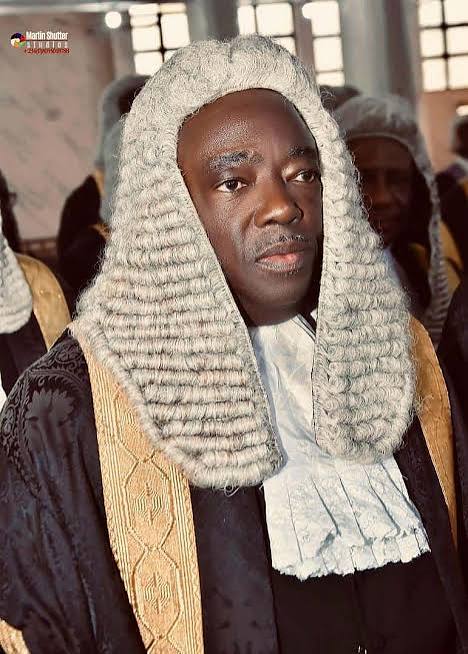
Olumuyiwa Akinboro, SAN, enters the presidential contest with decades of experience within commercial legal practice. Over the course of his professional career, he has built a reputation through legal advisory services, commercial dispute resolution, institutional participation, as well as sustained involvement within activities of the Nigerian Bar Association. Those experiences form the foundation upon which his presidential campaign has been presented to members across various NBA branches.
His campaign consistently highlights the importance of strengthening the independence of the Nigerian Bar Association while protecting its credibility whenever national legal issues arise. Greater institutional transparency occupies another prominent position within his agenda, particularly concerning administrative processes, financial accountability, communication with members, policy implementation, as well as decision making structures affecting the association.
Lawyers’ welfare also remains central to his proposals, reflecting growing concerns about economic realities confronting practitioners across different stages of legal practice. Young lawyers searching for career opportunities, experienced practitioners navigating changing professional demands, as well as members seeking stronger institutional support all feature prominently within his campaign conversations. Modernising the association through improved administrative systems together with expanded professional opportunities equally forms part of his overall vision.
Attention also focused on Akinboro following his public position regarding proposals connected with adjustments to the election timetable. Rather than accepting changes outside approved procedures, he maintained that every stage of the election should strictly comply with established electoral guidelines. That position reinforced his emphasis on procedural certainty together with institutional consistency throughout the electoral process.
Lateef Omoyemi Akangbe’s Vision


Lateef Omoyemi Akangbe, SAN, joins the presidential race after years of distinguished legal practice, particularly within commercial litigation. Widely recognised across Nigeria’s legal community, his experience extends beyond courtroom advocacy into professional administration, committee participation, policy discussions, as well as long standing engagement within activities of the Nigerian Bar Association.
Professional development occupies a major position within Akangbe’s campaign agenda. His proposals seek to strengthen continuing legal education while ensuring lawyers remain equipped to respond to changing legal, commercial, technological, regulatory, as well as international developments shaping legal practice. That objective reflects increasing demand for lawyers capable of providing services within rapidly evolving sectors of Nigeria’s economy.
Institutional reforms equally feature prominently throughout his campaign. Greater collaboration between the Nigerian Bar Association together with public institutions forms another important element of his programme, particularly where cooperation could improve justice delivery, strengthen legal reforms, enhance public administration, as well as promote respect for constitutional governance without compromising the association’s independence.
Young lawyers remain another important constituency addressed within his campaign. Improved mentorship, broader professional opportunities, stronger institutional support, enhanced participation within NBA activities, as well as practical initiatives aimed at improving legal practice standards nationwide all feature consistently within his engagements across different branches of the association.
Oyinkansola Badejo Okunsanya’s Agenda

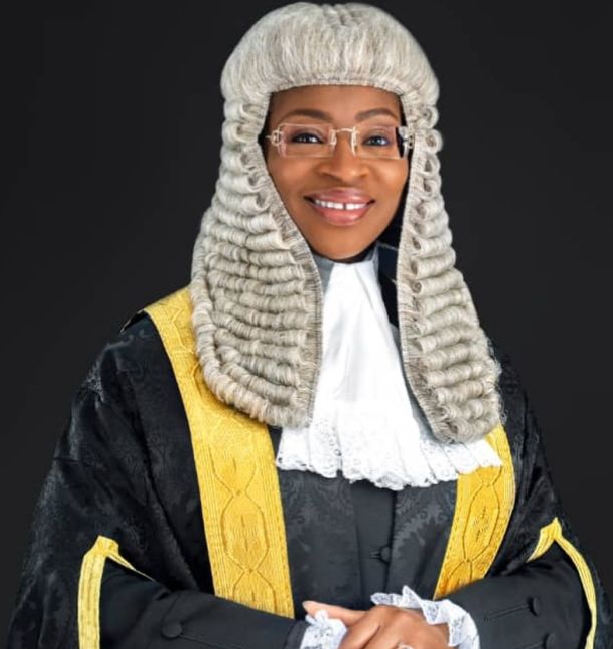
Oyinkansola Badejo Okunsanya, SAN, enters the election as the only female presidential candidate, bringing a campaign centred upon inclusive leadership together with institutional accountability. Her emergence immediately attracted national attention because female candidates rarely reach the final stage of presidential contests within the Nigerian Bar Association, making her candidacy historically significant.
Digital transformation remains one of the defining pillars of her campaign. Growing reliance upon technology within legal practice has increased expectations surrounding electronic services, digital communication, professional development platforms, administrative efficiency, member engagement, as well as modern record management across professional associations. Her proposals seek to position the NBA for those changing realities while strengthening operational effectiveness.
Gender inclusion also features prominently throughout her engagements with lawyers across Nigeria. Rather than limiting participation to established professional circles, her campaign emphasises broader representation, equal opportunities, institutional openness, leadership development, merit based advancement, as well as greater participation by younger members entering the legal profession.
Public confidence within the legal profession forms another important element of her programme. Through stronger accountability, transparent administration, improved institutional communication, ethical leadership, professional responsibility, as well as consistent engagement with members, her campaign seeks to reinforce trust between the association, its membership, public institutions, as well as Nigerian society.
Electoral Challenges
Reaching the final ballot required navigating several legal, procedural, as well as administrative developments that unfolded throughout 2026. Discussions surrounding zoning arrangements generated considerable interest among lawyers because zoning has historically influenced leadership expectations within the association. Differing interpretations of constitutional provisions encouraged wider conversations regarding fairness, representation, institutional continuity, as well as electoral legitimacy.
Nomination procedures also received close scrutiny as aspirants prepared documentation for screening. Questions concerning eligibility requirements, constitutional compliance, submission timelines, procedural interpretation, as well as qualification standards became subjects requiring determination before final clearance could be granted.
Appeals subsequently followed publication of preliminary screening outcomes. Those appeals required careful examination by the Electoral Committee before final decisions emerged. Every determination carried significance because presidential aspirants, candidates for other national offices, branch leaders, legal practitioners, as well as observers closely monitored developments capable of influencing the election timetable.
Court proceedings introduced another layer of complexity during preparations. Legal actions filed before competent courts generated temporary uncertainty regarding aspects of the electoral process. Despite those proceedings, the Electoral Committee eventually completed its responsibilities, resolved outstanding appeals, confirmed qualified candidates, as well as published the final ballot containing 35 contestants across various national offices.
Other National Offices
Although public attention naturally concentrates upon the presidential contest, the election extends across numerous national offices responsible for daily administration of the Nigerian Bar Association. Members eligible to vote will elect officers whose combined responsibilities determine how effectively the association functions throughout the next administrative cycle.
Positions available include First Vice President, Second Vice President, Third Vice President, General Secretary, Assistant Secretaries, Treasurer, Financial Secretary, Welfare Secretary, Publicity Secretary, Legal Adviser, Auditor, together with several additional national offices provided under the association’s constitutional framework. Every office carries defined responsibilities supporting administration, financial management, communication, member welfare, policy implementation, legal advisory services, record keeping, institutional governance, as well as operational continuity.
Collectively, those officers will work alongside the incoming President to implement programmes, coordinate branch activities, supervise administrative functions, strengthen member engagement, respond to emerging professional issues, manage institutional resources, as well as guide the association throughout the coming tenure.
Campaign Priorities
Despite presenting different approaches, the 3 presidential candidates have repeatedly addressed several issues that continue shaping discussions throughout the campaign period. Lawyers’ welfare remains one of the most frequently discussed topics because economic realities continue affecting legal practitioners across different levels of professional experience. Younger lawyers particularly seek stronger institutional support capable of improving career development, financial stability, mentorship opportunities, professional exposure, as well as long term growth.
Judicial independence equally occupies a central position because confidence within Nigeria’s justice system depends significantly upon courts operating free from improper influence. Protection of constitutional governance, respect for the rule of law, timely administration of justice, institutional accountability, as well as continued legal reforms remain recurring themes throughout campaign engagements.
Continuing legal education has also featured prominently because legal practice constantly evolves alongside commercial innovation, technological advancement, international transactions, regulatory reforms, digital evidence, cyber law, artificial intelligence, as well as cross border legal practice. Strengthening professional capacity therefore remains essential for maintaining high standards across the profession.
Digital innovation continues attracting considerable attention as administrative systems increasingly migrate toward electronic platforms. Efficient communication, secure electronic voting, digital member services, online learning opportunities, improved record management, faster administrative processes, as well as wider participation all depend upon stronger technological infrastructure within the association.
Electronic Voting Process
Electronic voting remains the approved method through which eligible members of the Nigerian Bar Association will choose their next national officers. Adoption of digital voting reflects broader efforts aimed at improving accessibility, administrative efficiency, transparency, accuracy, as well as participation among lawyers located across different states within Nigeria together with practitioners residing outside the country.
Prior to voting, eligible members are expected to satisfy constitutional requirements governing participation before receiving access to the electronic voting platform. Administrative preparations completed by the Electoral Committee seek to ensure voting proceeds according to established procedures while protecting integrity throughout the electoral exercise.
Results produced through electronic voting will determine not only the next President of the Nigerian Bar Association but also every national office included within the election timetable. Following declaration of winners, successful candidates will prepare for transition before officially assuming responsibilities at the conclusion of the current administration.
Looking Beyond Election Day
Leadership transitions within professional associations frequently establish priorities that influence institutional direction for several years. Whoever emerges victorious from the presidential contest will immediately confront responsibilities extending across administration, professional regulation, institutional representation, public engagement, legal reforms, member welfare, financial management, technological development, as well as preservation of the association’s credibility.
Nigeria presently faces continuing conversations surrounding constitutional reforms, electoral processes, judicial independence, access to justice, legal education, economic pressures affecting professionals, technological innovation, as well as changing expectations regarding institutional accountability. Those realities ensure the responsibilities awaiting the next NBA President extend beyond ceremonial leadership into practical decision making capable of influencing both the legal profession together with national discourse.
Completion of screening exercises, determination of appeals, publication of qualified candidates, presentation of manifestos, organisation of debates, as well as final electoral preparations have now brought the 2026 Nigerian Bar Association presidential election to its decisive stage. With Olumuyiwa Akinboro, SAN, Lateef Omoyemi Akangbe, SAN, together with Oyinkansola Badejo Okunsanya, SAN, officially confirmed on the presidential ballot, attention now turns toward electronic voting, where members of Nigeria’s largest legal association will choose the individual entrusted with leading the profession into its next chapter.