
Pastor Taiwo Abimbola Olawuyi’s name returned to national attention during the first week of July 2026, bringing back memories that stretch across nearly 2 decades of one of Nigeria’s most talked about media stories. Her passing on Monday, July 6, 2026, reopened conversations about the remarkable life she lived after losing her husband, legendary investigative broadcaster Kola Olawuyi, while also drawing renewed interest to the heartfelt interviews she granted during her final years.
Those appearances offered rare insight into a family that had spent years carrying both grief alongside public curiosity, revealing personal reflections that challenged long standing assumptions surrounding one of Nigerian broadcasting’s most remembered figures. To understand why her death has resonated with so many people, it is necessary to revisit the woman she became after tragedy, the legacy of Kola Olawuyi that continued shaping conversations years after his passing, plus the truths she chose to place on record before her own final chapter came to an end.
News of Pastor Abimbola Olawuyi’s death
Family sources confirmed that Pastor Taiwo Abimbola Olawuyi died on Monday, July 6, 2026, following a brief illness. According to information shared by relatives, she passed away peacefully, although the exact nature of her illness was not disclosed publicly. At the time her death became known, funeral arrangements were yet to be announced, leaving many people waiting for further information from the family.
Her passing immediately attracted attention because she remained closely connected to one of Nigeria’s most influential names in investigative broadcasting. Even though she largely avoided public attention after her husband’s death, many Nigerians remembered her as the woman who carried the Olawuyi family through years of grief while preserving the legacy of a broadcaster whose work continued generating conversations long after his death.
For members of the Olawuyi family, her death represented another painful milestone. Nearly 19 years earlier, the family had lost Kola Olawuyi, leaving Abimbola to raise their 4 children while navigating the emotional, financial, plus spiritual challenges that followed. Through those difficult years, relatives often described her as the family’s strongest pillar, quietly providing stability while remaining committed to the values she shared with her late husband.
Life after Kola Olawuyi
Life changed dramatically for Pastor Abimbola Olawuyi after March 3, 2007, the day her husband died at the age of 44. Beyond coping with personal grief, she suddenly became the sole parent responsible for raising their 4 children during one of the most difficult periods of the family’s history. Every decision she made carried the responsibility of preserving stability while helping her children grow through the painful loss of their father.
Family members later revealed that those years demanded enormous strength. Rather than allowing tragedy to define the future of her household, she remained committed to keeping the family united while encouraging her children to pursue their education, faith, alongside personal development. Her journey as a widow stretched across almost 2 decades, making resilience one of the qualities most frequently associated with her name.


Although she occasionally granted interviews over the years, Pastor Abimbola largely chose a quiet life away from constant media attention. Public appearances became rare because much of her energy focused on ministry, motherhood, alongside protecting the memory of the man whose investigative work had influenced Nigerian broadcasting for many years.
Kola Olawuyi’s remarkable journey
Long before his death, Kolawole Olawuyi had established himself as one of Nigeria’s most respected investigative broadcasters. Born in 1963, he became widely recognised through Yoruba language programmes that explored sensitive issues many journalists rarely attempted to investigate during the 1990s alongside the early 2000s.
His programmes, especially Nnkan Nbe together with Iriri Aye, attracted large audiences because they examined stories that combined crime, mystery, religion, human behaviour, alongside social realities. Rather than limiting his work to routine news reporting, he developed a storytelling style that blended detailed investigations with compelling narration, making complex subjects easier for viewers to understand.
Viewers across Southwest Nigeria closely followed his broadcasts because they believed his reports uncovered hidden aspects of society rarely discussed openly. That reputation gradually transformed him into one of the most recognisable investigative journalists working in Yoruba broadcasting during his generation.
Investigations that built his reputation
Kola Olawuyi became known for pursuing subjects many reporters considered risky or controversial. His investigations explored ritual killings, kidnapping, fraud, secret cult activities, spiritual manipulation, criminal networks, alongside claims involving supernatural practices that frequently attracted widespread public interest.
Several of his reports also examined allegations involving controversial religious figures together with organisations facing public scrutiny. Rather than avoiding difficult conversations, he consistently focused on stories that generated strong public curiosity while encouraging viewers to think critically about events unfolding around them.

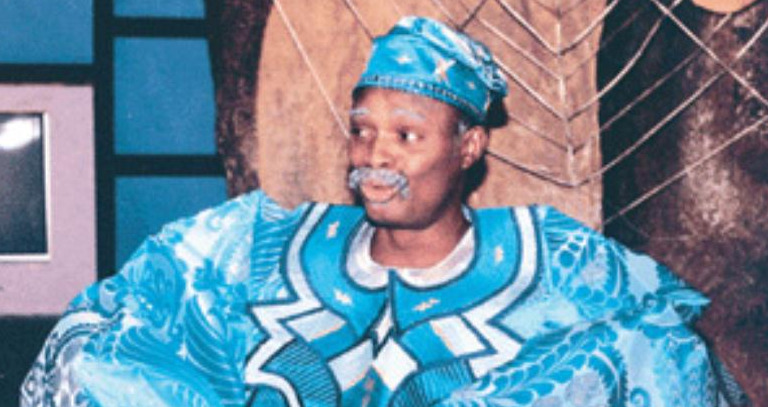
That fearless approach earned admiration from many followers who appreciated his willingness to investigate sensitive matters. At the same time, it also placed him at the centre of discussions whenever his reports involved influential personalities or highly controversial subjects.
Controversy surrounding TB Joshua investigation
Among Kola Olawuyi’s most remembered investigations was his reporting involving the late preacher TB Joshua during the 1990s. Those broadcasts generated significant public attention because they examined allegations that attracted enormous interest throughout Nigeria at the time.
Years after Kola Olawuyi’s death, rumours gradually emerged claiming there was a connection between those investigations alongside his eventual passing. Various conspiracy theories circulated repeatedly across different platforms, with some people suggesting that his journalism may have exposed him to unseen consequences.
Those claims continued resurfacing for many years despite the absence of official evidence supporting them. As time passed, speculation often overshadowed verified facts, making the circumstances surrounding his death one of the most discussed topics whenever his name appeared in public conversations.
March 3, 2007
Kola Olawuyi died on March 3, 2007, at a Lagos hospital after falling ill. He was 44 years old. News of his death shocked colleagues, viewers, friends, alongside members of the wider broadcasting community because he remained actively involved in investigative journalism before his illness.
Following his passing, numerous explanations quickly emerged from different quarters. Some people attributed his death to spiritual attacks connected with his investigations. Others suggested revenge from individuals allegedly displeased with previous reports. Additional rumours linked his death to investigations involving mysterious communities alongside controversial personalities.
Despite those widely circulated theories, none received official confirmation. Over the years, speculation continued growing while verified information remained relatively limited, creating an atmosphere where rumours frequently travelled faster than established facts.
Speaking openly before her passing
One of Pastor Abimbola Olawuyi’s most important public appearances came during 2025 when she granted a lengthy interview to Yoruba Tooto TV. For many Nigerians, the conversation became the first opportunity in years to hear directly from the woman who had lived closest to the events surrounding Kola Olawuyi’s final days. Rather than avoiding difficult subjects, she addressed them calmly, choosing facts over emotion while revisiting memories that had remained the subject of public discussion for nearly 2 decades.
Her decision to speak attracted widespread attention because many of the stories surrounding her husband’s death had been repeated countless times without confirmation. Through that interview, she sought to place her family’s account on record, hoping to separate verified events from rumours that had continued circulating over the years.
Throughout the conversation, she spoke with remarkable composure, reflecting not only on the pain of losing her husband but also on the responsibility of protecting his memory. Those remarks later became even more significant after news of her own passing emerged on Monday, July 6, 2026.
Rejecting long standing rumours
One of the strongest moments during the interview came when Pastor Abimbola directly addressed the widespread claims linking TB Joshua to Kola Olawuyi’s death. For years, that allegation had remained one of the most repeated stories surrounding the broadcaster’s passing, often resurfacing whenever discussions about his investigations returned to public attention.


She firmly rejected those claims, explaining that although her husband investigated TB Joshua during the 1990’s, there was no evidence connecting that work to his eventual death years later. According to her, the timeline itself showed that the events people often linked together were separated by several years, making the popular narrative inconsistent with the facts known to the family.
Her explanation represented one of the clearest public responses ever given by someone closest to Kola Olawuyi. Rather than encouraging speculation, she appealed to Nigerians to rely on verified information instead of repeating stories that had never been supported by credible evidence.
Her account of his final days
Pastor Abimbola also shared details about the period leading to her husband’s death, offering an account that differed sharply from many conspiracy theories that had circulated for years. According to her, Kola Olawuyi became ill, remained sick for roughly 1 week, then eventually died while receiving treatment at a hospital in Lagos.
She explained that the family experienced those difficult days firsthand, making them witnesses to his illness rather than to the extraordinary explanations that later emerged in public discussions. Her account therefore presented his passing as the result of a medical condition rather than the mysterious circumstances frequently described in rumours.

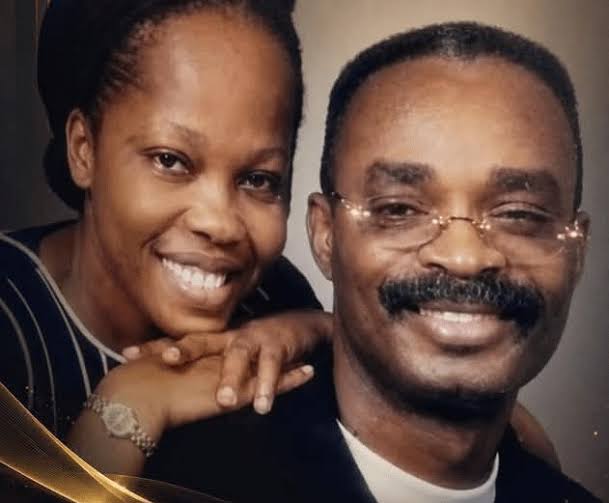
That testimony carried particular weight because it came directly from the person who stood beside him throughout his final days. For many listeners, her words provided a clearer understanding of events that had long been overshadowed by speculation instead of confirmed facts.
Widowhood’s difficult journey
Pastor Abimbola never pretended that life became easy after losing her husband. During interviews granted over the years, she openly acknowledged the enormous challenges that followed his death, particularly the responsibility of raising 4 children without the man who had once led the family.
She spoke about relying completely on God for strength during moments when grief seemed overwhelming. Every stage of her children’s lives brought new responsibilities, while the absence of their father remained a reality the family continued learning to live with. Despite those difficulties, she remained committed to ensuring that they grew up with the values their father cherished.
Her story gradually became one of perseverance rather than despair. Friends, relatives, alongside members of her church often described her as someone who transformed personal loss into quiet determination, choosing faith, family, alongside service instead of allowing tragedy to define the remainder of her life.
Why she chose not to remarry
Another subject Pastor Abimbola addressed during different interviews involved her decision never to remarry after Kola Olawuyi’s death. Questions about that choice followed her for many years because she remained a widow for almost 19 years before her own passing.
She explained that her decision reflected personal conviction shaped by her Christian faith, her commitment to her late husband, alongside her responsibility toward their children. Rather than viewing remarriage as the path she wished to follow, she believed dedicating herself to ministry plus her family represented the direction she felt called to pursue.
Those remarks offered further insight into the values that guided her life after 2007. While many people admired her resilience, she consistently redirected attention toward faith, describing it as the source of the strength that carried her through nearly 2 decades of widowhood.
Ministry became her calling
Following her husband’s death, Pastor Abimbola devoted much of her life to Christian ministry. She served at RCCG Grace City, where she focused on spiritual work while maintaining a quieter lifestyle than the one her husband had experienced during his years in broadcasting.
Unlike Kola Olawuyi, whose profession regularly placed him before television audiences, she preferred serving away from constant public attention. Ministry, raising her children, alongside preserving the Olawuyi family’s unity became the defining priorities of her later years.
That transition reflected a remarkable change in life’s direction. One chapter had been shaped by the public attention surrounding one of Nigeria’s best known investigative broadcasters. The next became a quieter journey centred on faith, family, resilience, alongside the enduring responsibility of protecting a legacy that continues to be remembered many years after Kola Olawuyi’s passing.
Legacy that endured
Nearly 2 decades after Kola Olawuyi’s death, his name continues to occupy a unique place in Nigeria’s broadcasting history. Many younger journalists first learned about his work through archived recordings, older colleagues, alongside stories shared by viewers who followed his programmes during the 1990’s plus the early 2000’s. Even years after leaving the television screen, conversations about investigative journalism frequently returned to his fearless reporting style.
His programmes stood out because they examined difficult subjects with patience, detailed storytelling, alongside a determination to uncover facts that many people wanted explained. That approach helped build a loyal audience across Southwest Nigeria while also influencing broadcasters who later entered the profession.
Although media technology has changed dramatically since his passing, the curiosity that defined his work continues to resonate. Digital platforms now dominate the way information travels, yet many people still reference Kola Olawuyi whenever discussions arise about investigative reporting conducted with persistence plus courage.
Family’s quiet strength
Behind the public story remained a family determined to preserve stability despite enormous personal loss. Pastor Abimbola became the steady presence holding that family together after March 3, 2007, ensuring that her children grew up carrying their father’s values while also building lives of their own.
Relatives often described her as the quiet foundation of the household. Rather than seeking attention because of her husband’s reputation, she concentrated on responsibilities that many people never saw. Daily parenting, spiritual guidance, education, alongside family unity became her priority throughout the years that followed.
Her ability to maintain that balance earned admiration from people who knew the family’s journey closely. While the public often remembered Kola Olawuyi through his investigations, those closest to the family remembered Pastor Abimbola through her consistency, patience, alongside unwavering commitment during difficult times.
Final chapter
News of Pastor Abimbola Olawuyi’s passing on Monday, July 6, 2026, therefore represented far more than the death of a respected pastor. It marked the closing of another chapter connected to one of Nigeria’s most recognised media families, bringing renewed attention to a story that has stretched across almost 19 years.
For many Nigerians, her final interviews have now taken on even greater significance because they remain among the last occasions when she publicly reflected on her husband’s life, his death, alongside the rumours that followed. Those conversations preserved her own voice within a story that had often been shaped by speculation instead of firsthand testimony.
Looking back today, those interviews reveal a woman determined to replace assumptions with facts, preserve her husband’s reputation with dignity, alongside leave behind a clearer record for future generations seeking to understand what truly happened.
Remembering Pastor Abimbola Olawuyi
Pastor Abimbola Olawuyi will be remembered through several different lenses. Members of her church remember a devoted minister committed to serving God. Her children remember a mother who guided them through life’s most difficult season with remarkable strength. Journalists remember the widow who carefully protected the legacy of one of Nigeria’s most influential investigative broadcasters. Many Nigerians remember the calm voice that finally addressed questions surrounding Kola Olawuyi’s death after years of public speculation.
Her life became a testimony of endurance rather than public attention. Every interview she granted reflected quiet confidence, thoughtful reflection, alongside an unwavering commitment to truth as she understood it. Even while discussing painful memories, she remained composed, choosing clarity over emotion whenever difficult questions arose.
Her passing closes an important chapter, yet the conversations surrounding Kola Olawuyi’s work, his contribution to investigative journalism, alongside the truths Pastor Abimbola chose to share before her own death will continue forming part of Nigeria’s media history. Together, their stories reflect resilience, faith, dedication, alongside the enduring impact of lives that continued influencing public conversations long after the television cameras stopped rolling.