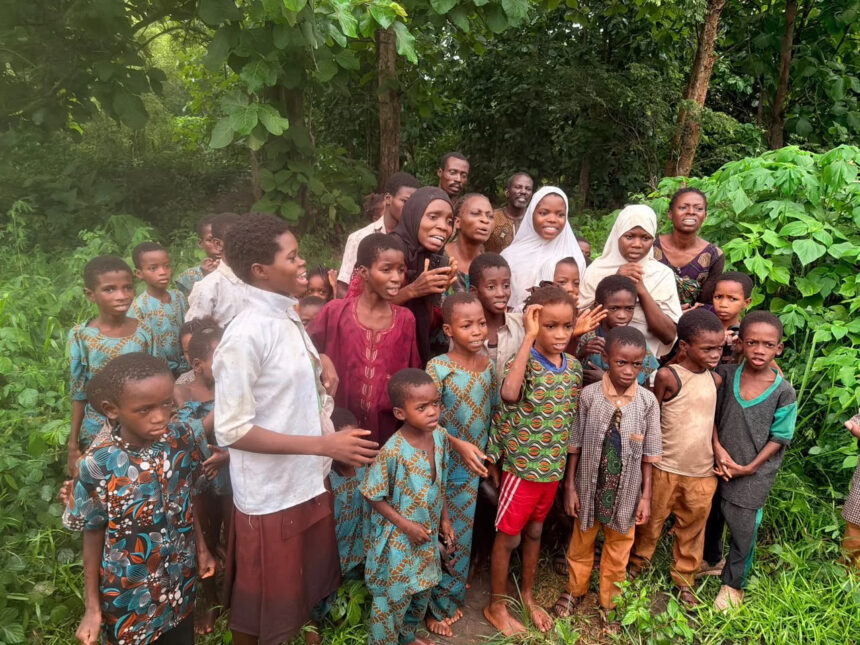
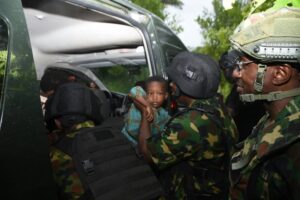
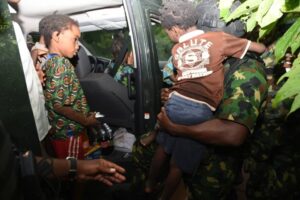
After nearly two months of anguish, prayers and mounting pressure on the federal government, the ordeal is finally over for the pupils and teachers abducted from three schools in Oyo State. The presidency confirmed on Friday, July 10, 2026, that all the victims seized in the Oriire mass abduction had been freed by Nigerian security forces, closing one of the most alarming kidnapping cases the country’s southwest has witnessed in years.
The confirmation came from Bayo Onanuga, the presidential spokesperson, who announced that the pupils and teachers taken from Oriire Local Government Area had regained their freedom. The Nigerian Army later said 44 people were rescued, though the presidency maintained that every victim had been recovered alive.
How the Abduction Happened
The nightmare began on May 15, 2026, when heavily armed gunmen launched a coordinated attack on three schools in the Esiele and Yawota communities of Oriire LGA: Community Grammar School, Baptist Nursery and Primary School, and L.A. Primary School. In a matter of minutes, the attackers overran the compounds and marched off with 39 pupils and seven teachers, including a school principal, Rachael Alamu.
The attack turned deadly almost immediately. Joel Adesiyan, an assistant headmaster at L.A. Primary School, was shot and killed while trying to escape the gunmen. Days into the captivity, the kidnappers beheaded another teacher, Michael Oyedokun, an act that sparked nationwide outrage and put unbearable pressure on both the Oyo State government and Abuja to act fast.
Investigators later linked the attackers to dislodged Boko Haram fighters operating under the Ansaru faction, who had set up camp deep inside the Old Oyo National Park forest. Defence Minister Christopher Musa said the terrorists had abducted the schoolchildren specifically to pressure the government into releasing detained commanders, and warned that any rescue attempt would put the captives’ lives at risk.
That threat became reality on the very day of the abduction, when a joint team of soldiers, police and local vigilantes attempting an early rescue was ambushed with improvised explosive devices planted along their route. Several security personnel were wounded and had to be evacuated for treatment, according to Governor Seyi Makinde.
The Kidnappers’ Demands
As the days turned into weeks, details emerged of a four-point list of demands from the abductors. They wanted the release of detained terrorist commanders, a ransom reportedly put at one billion naira to be paid into an account in the Benin Republic, two Hilux trucks, and the implementation of Sharia-related law in the area. The scale of the demands, paired with the killing of two teachers, made the case one of the most closely watched security crises in the country.
The abductions triggered protests across the state and beyond. Teachers under the Nigeria Union of Teachers staged a strike in Oyo State and warned that continued attacks on schools could push educators nationwide to withdraw their services. Civil society groups, including the Take-It-Back Movement, organised demonstrations in Ibadan demanding an urgent rescue.



Inside the Rescue Operation
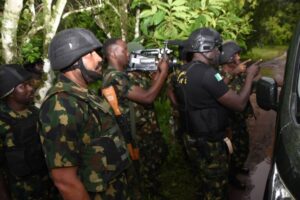
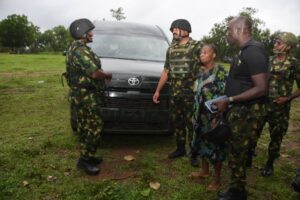
According to a statement from the Nigerian Army, the breakthrough came after an intelligence-led operation executed on July 10, 2026, coordinated by the General Officer Commanding 2 Division, Major General C.R. Nnebeife. The mission drew on personnel from the Office of the National Security Adviser through its National Counter Terrorism Centre, the Defence Headquarters, special forces from the Army, Navy and Air Force, the Nigeria Police Force, the Department of State Services, the National Intelligence Agency, the Nigeria Security and Civil Defence Corps, and local vigilantes and hunters working with the Amotekun corps.
Rather than a single dramatic raid, the operation unfolded over more than a month. Security agencies focused on identifying the ringleaders behind the kidnapping, mapping their network of informants, and dismantling their hideouts and logistics inside the forest reserve. Multiple arrests were carried out in Oyo and other states, which the Army said disorganised the group and forced it to unconditionally release the captives.
Sources close to the operation told Premium Times that troops also worked to cut off the terrorists’ food supply into the forest camp, gradually starving the group of resources. Associates of the kidnappers living outside the camp were picked up as well, further weakening the gang’s ability to negotiate or resist.
By the time the rescue was completed, eight members of the kidnapping gang had been arrested and handed over to the Department of State Services, while several others were reported neutralised during the operation.
No Ransom, No Concessions
Onanuga was emphatic that the release did not come at the cost of the government’s stated position against negotiating with terrorists. He said the notorious gang leader whose freedom the kidnappers had demanded remained in custody and continues to face prosecution. President Bola Tinubu echoed this in a separate statement on his X account, stressing that no ransom was paid and no concession was made to secure the victims’ freedom.
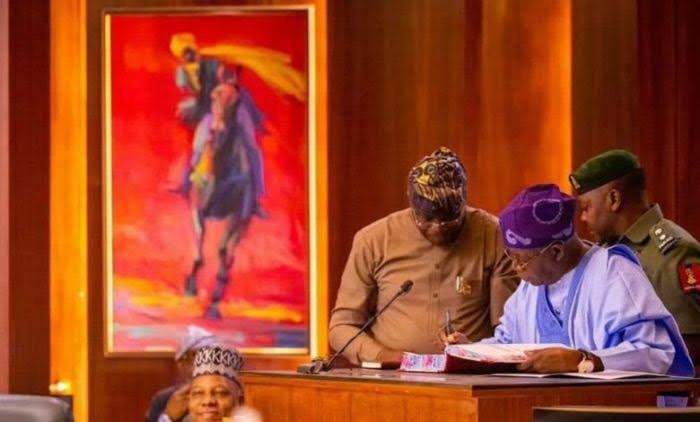
Tinubu, who had earlier described the attacks as barbaric, commended the military, the DSS and the police for what he called a tireless effort that ended more than 50 days of siege. He directed emergency response agencies to work with the Oyo State government to provide the freed pupils and teachers with medical care and other support as they begin to recover.
Emotional Scenes and Reactions
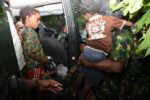
Footage shared alongside the presidency’s announcement showed one of the rescued teachers thanking the president on behalf of the group, while the freed children were seen eating biscuits and joining in appreciation for the security operation. In Ogbomoso, residents and passers-by broke into spontaneous celebration once news of the release spread.
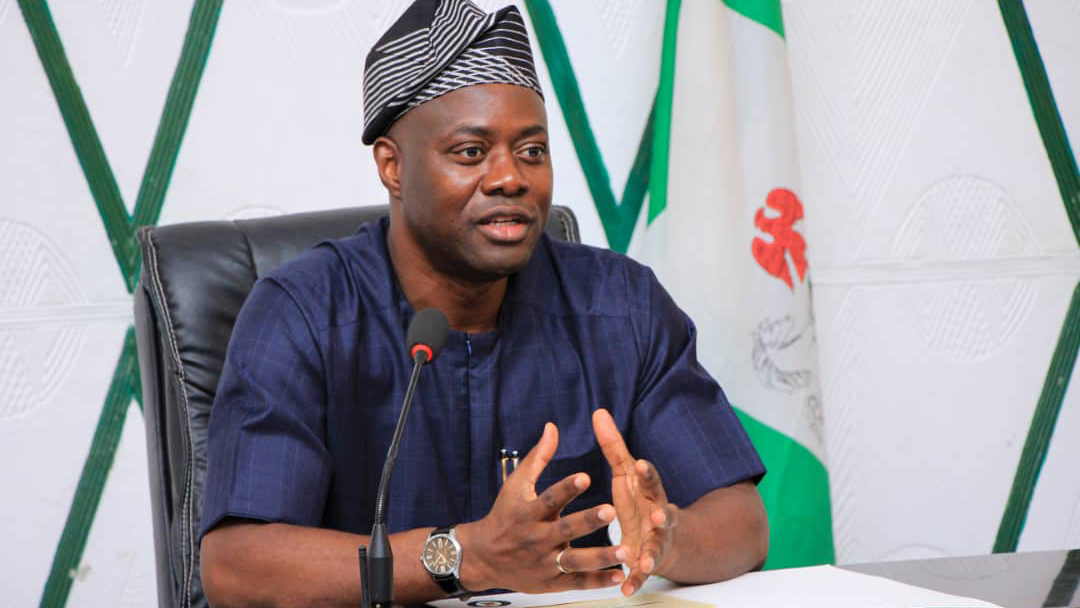
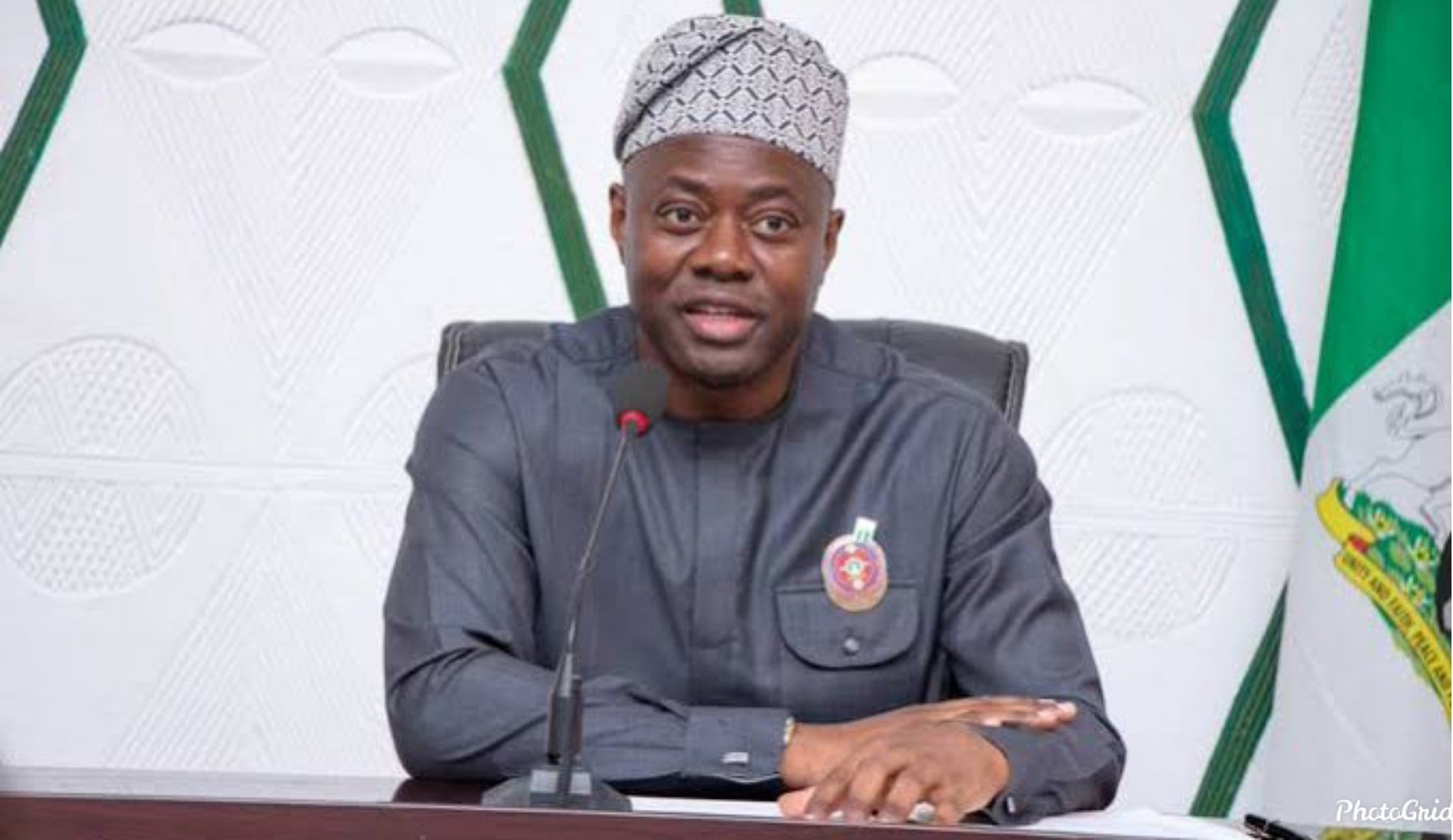
Governor Makinde, who had confirmed earlier in the crisis that one teacher was killed in custody based on video evidence, described the outcome as an enormous relief. He said his administration’s immediate priority is reuniting the victims with their families and supporting their rehabilitation after what he called a traumatic experience.
Professor Wale Alamu, husband of the rescued principal, Rachael Alamu, told reporters that the family had endured eight weeks of anguish before receiving the news. He thanked everyone who played a role in securing the release and urged the government to draw lessons from the incident to prevent a repeat.
Senator Mohammed Ali Ndume, representing Borno South, praised the security agencies on Channels Television for what he described as a rare example of a genuine rescue operation rather than a negotiated settlement.

What Happens Next
Beyond the celebrations, the Oriire case has forced a reckoning over school security in southwestern Nigeria, a region that had largely escaped the mass abductions long associated with the north. During a visit to the state, a federal delegation announced that President Tinubu had approved the recruitment of 1,000 forest guards in Oyo State to work alongside the state government in securing forest areas that have become havens for armed groups.
The Nigerian Army said further operations are still being conducted in the area, suggesting that the fight against the terrorist cell responsible for the Oriire attack is not entirely over even though the captives have been freed. For now, though, families in Oriire are focused on something simpler: getting their children and teachers home, and helping them heal from 56 days that no community should have had to endure.