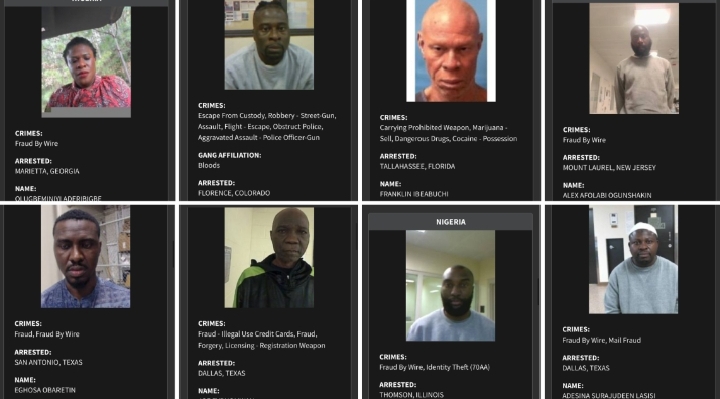
The release of a criminal enforcement list by United States immigration authorities has drawn renewed attention to the growing international fight against cybercrime and the consequences faced by individuals convicted of online related offences. The publication of names, photographs, plus criminal records has generated widespread discussion because several Nigerian nationals appeared among those identified by American authorities for possible immigration action. Behind the headlines lies a wider story involving criminal convictions, fraud networks, international investigations, plus the difficult relationship between online crimes committed by individuals and the reputation of an entire country.
Details surrounding the publication have attracted significant interest in Nigeria because of the connection to internet fraud cases often described locally as “Yahoo Yahoo”. The term has become associated with different forms of online deception, including financial scams, identity manipulation, plus fraudulent schemes targeting individuals and organisations across borders. The latest development has once again placed attention on how cybercrime investigations now operate internationally, with countries sharing information while pursuing convicted offenders.
The list published by the United States Department of Homeland Security has raised questions about who was included, why their cases attracted attention, what offences were involved, plus what the process means for those facing possible removal from the United States. A closer look at the available details shows that the situation involves more than a single figure circulating online, as the action forms part of a broader immigration enforcement process involving foreign nationals with criminal convictions.
DHS criminal aliens register explained
The United States Department of Homeland Security maintains public enforcement resources that highlight certain non citizen offenders who have criminal histories within the country. One of those resources is commonly referred to as the “Worst of the Worst” criminal aliens register, which identifies individuals considered priorities for immigration enforcement because of their criminal records.
The purpose of such public databases is to provide information about immigration enforcement actions involving foreign nationals convicted of crimes in the United States. The individuals listed are generally people whose criminal cases have already gone through the American justice system and who may become subject to removal proceedings under United States immigration laws.
Appearance on the register does not automatically mean that a person has already been deported from the United States. Deportation is a legal process that can involve several stages, including immigration court proceedings, possible appeals, completion of criminal sentences, plus arrangements required before a person can be returned to their country of nationality.
Each case may follow a different path depending on the person’s conviction, immigration status, legal challenges, plus decisions made by immigration authorities or courts. The publication of a name therefore indicates enforcement attention but does not by itself confirm that removal has already occurred.
Viral claim creates confusion
Public discussion around the issue intensified after claims circulated that the United States government had specifically released a list of 28 Nigerian “Yahoo boys” for deportation. That figure became widely shared online, creating the impression that the entire action involved only a small group of Nigerians convicted of cybercrime.
Available reports indicate that the figure of 28 appears to refer to a specific group of Nigerians whose cases were highlighted because they involved internet fraud related convictions. However, the wider DHS register reportedly contained a larger number of Nigerian nationals identified for immigration enforcement because of different criminal convictions.
Reports analysing the register indicated that 124 Nigerians were among those listed in connection with criminal records that could make them priorities for removal. The cases were not limited to one single category of offence, although financial crimes and cybercrime related convictions featured prominently among several individuals.
Understanding the difference between the wider register plus the smaller group highlighted in public discussions is important because online conversations have often simplified the situation. The enforcement action is based on individual criminal cases rather than a general targeting of Nigerian citizens.
Why Nigerians appear on the list
Several Nigerians identified through reports connected to the DHS register were associated with financial crimes involving digital platforms, electronic communication, plus fraudulent transactions. These cases reflect the global nature of modern cybercrime, where offenders can operate from one location while targeting victims in another country.
Financial fraud has become one of the most investigated categories of cybercrime because it directly affects businesses, individuals, financial institutions, plus government programmes. Criminal networks often use technology to hide their identities, create false documents, impersonate legitimate organisations, or manipulate victims into transferring money.
American authorities have increasingly focused on international fraud schemes because online crimes can create significant financial losses across borders. Cooperation between law enforcement agencies has expanded as investigators track digital evidence, financial transactions, communication records, plus online activities connected to criminal operations.
The Nigerian nationals listed in connection with these cases are reported to have been convicted of specific offences within the United States legal system. Their cases are treated individually based on the evidence presented, court decisions, plus immigration procedures that follow criminal convictions.
Business Email Compromise cases
One of the most common cybercrime categories linked to several international fraud investigations is Business Email Compromise, commonly known as BEC. This type of fraud involves criminals gaining access to or impersonating legitimate email accounts belonging to companies, executives, suppliers, or employees.
The criminals typically create situations designed to appear genuine. They may pretend to be company executives requesting urgent payments, suppliers changing bank details, or business partners needing confidential financial transfers completed quickly.
Victims often include companies, real estate organisations, financial institutions, plus international businesses handling large transactions. Because the communication appears to come from trusted sources, employees may unknowingly transfer money into accounts controlled by fraudsters.
Investigators describe BEC as a major global cybercrime threat because it combines technology with social manipulation. Criminals do not always rely on advanced hacking alone, as deception, research into organisations, plus psychological tactics often play important roles.
Several Nigerian nationals whose names appeared in reports connected to the DHS register were linked to cases involving this type of fraud. Their convictions formed part of the wider enforcement attention directed toward financial crimes involving digital communication.
Wire fraud convictions
Wire fraud represents another major category connected to several cases involving individuals listed through United States immigration enforcement records. The offence generally involves using electronic communication systems to obtain money through false representations, deception, or fraudulent schemes.
Common examples include fake investment opportunities, romance scams, false business transactions, plus online impersonation. Criminals may build relationships with victims before introducing financial requests designed to obtain money through dishonest methods.
United States prosecutors have frequently pursued wire fraud cases because of the significant financial impact these schemes can create. Depending on the circumstances, convictions may involve prison sentences, financial penalties, restitution orders, plus possible immigration consequences for foreign nationals.
The presence of wire fraud related cases among Nigerian nationals on enforcement lists reflects the wider challenge of combating digital financial crime. Authorities in different countries have continued increasing cooperation because many online fraud schemes operate across international boundaries.
Identity theft offences
Identity theft has also featured among cybercrime related cases involving foreign nationals convicted in the United States. This offence involves the unlawful use of another person’s personal information for financial gain, fraudulent activities, or attempts to access benefits and accounts.
Criminals involved in identity theft may use stolen names, social security information, financial details, or personal records to create fraudulent accounts or complete illegal transactions.
Victims of identity theft often face long recovery processes because correcting fraudulent activity can require extensive communication with financial institutions, government agencies, plus credit organisations.
United States authorities have treated identity related crimes seriously because personal information has become a valuable target within modern criminal networks. Digital access has made it easier for criminals to collect, exchange, plus misuse stolen information across borders.
COVID 19 relief fraud cases
Some convictions connected to fraud enforcement involved misuse of United States pandemic relief programmes introduced during the COVID 19 period. These programmes were created to provide financial support to individuals and businesses facing economic difficulties during the public health emergency.
Investigators later uncovered cases where some individuals allegedly submitted false applications using fake identities, incorrect business information, or stolen personal details to obtain funds they were not entitled to receive.
Fraud involving government assistance programmes became a major enforcement focus because such crimes affected resources intended for people and businesses experiencing genuine financial hardship.
Cases linked to pandemic relief fraud demonstrate how criminals adapted existing fraud methods to exploit emergency situations. Authorities have continued investigating these offences even after the end of the most intense period of the pandemic response.
Obinwanne Okeke case draws attention
Among Nigerians whose names have been widely discussed in connection with the DHS register is Obinwanne Okeke, a former entrepreneur who gained public recognition before his criminal conviction in the United States.


Okeke, who was associated with Invictus Group, attracted attention because of the contrast between his earlier public image as a successful young businessman and his later legal troubles involving a computer fraud scheme.
His case received international attention because of his background, business profile, plus the scale of interest surrounding the conviction. The case became one of the most publicly discussed examples involving a Nigerian national convicted in the United States for cyber related offences.
The situation demonstrated how criminal investigations can affect individuals regardless of previous achievements or public reputation. Once a conviction is secured, immigration consequences may follow depending on the person’s legal status within the United States.
His inclusion among names discussed in relation to immigration enforcement has renewed conversations about the importance of understanding that online crimes can carry serious consequences beyond financial penalties.
Other Nigerians identified in reports
Beyond the widely discussed case of Obinwanne Okeke, several other Nigerian nationals were also identified in media reports analysing names published through the United States Department of Homeland Security criminal enforcement register. Their cases involved different forms of financial crimes, cyber related offences, plus immigration consequences connected to criminal convictions.
Among those mentioned was Oludayo Adeagbo, who was linked to a Business Email Compromise scheme and convicted in a United States federal court. Cases involving BEC schemes often attract significant attention because they target organisations through carefully planned deception designed to redirect legitimate payments into fraudulent accounts.
Oriyomi Aloba was also reported among Nigerians connected to hacking and phishing related offences. Such cases typically involve attempts to gain unauthorised access to information, accounts, or systems through deceptive online methods.
Chibundu Anuebunwa was another Nigerian name mentioned in reports connected to fraud related convictions. Like other cases on the register, the listing relates to specific criminal proceedings rather than nationality alone, with enforcement decisions based on individual convictions plus immigration status.
Other names reported as appearing on the wider DHS register included Sunday Adediora, Sunday Kunkushi, Mkpouto Etukudoh, Marcus Unigwe, Olaniyi Ojikutu, Boluwaji Akingunsoye, Ejike Asiegbunam, Emmanuel Mayegun Adeola, Bamidele Bolatiwa, Ifeanyi Nwaozomudoh, Aderemi Akefe, Solomon Wilfred, Joshua Ineh, Usman Momoh, Oluwole Odunowo, Richard Ugbah, plus others mentioned in DHS updates.
The appearance of these names reflects individual cases involving criminal convictions or immigration enforcement attention. Each case has its own legal background, including the nature of the offence, court outcome, sentence, plus immigration proceedings that may follow.
Financial impact of cybercrime cases
Cybercrime cases involving international fraud networks often involve substantial financial losses because criminals may target businesses, individuals, plus organisations handling large amounts of money. Court records connected to some cases involving Nigerians identified through United States enforcement records showed schemes involving millions of dollars in intended losses, actual losses, or restitution orders.
Business Email Compromise schemes have been particularly damaging because criminals often target companies responsible for payroll, property transactions, international payments, plus supplier relationships. A successful fraudulent transfer can result in significant financial consequences before the victim organisation realises the communication was false.
Romance scams represent another category that has attracted law enforcement attention. These schemes often involve criminals creating fake identities online, developing emotional relationships with victims, then introducing financial requests based on fabricated emergencies or investment opportunities.
Identity related crimes have also contributed to financial losses because stolen personal information can be used to create fraudulent accounts, access benefits, or carry out transactions under another person’s identity.
The financial impact of cybercrime extends beyond direct losses. Victims may spend significant time recovering stolen funds, repairing damaged systems, correcting fraudulent records, plus improving security measures to prevent future attacks.
Meaning of deportation process
The term deportation often creates the impression that removal from the United States happens immediately after a name appears on an immigration enforcement list. However, the process usually involves several legal steps before a person can be removed.
Foreign nationals convicted of crimes in the United States may face immigration consequences after completing criminal sentences. Depending on their circumstances, cases can involve immigration court hearings, legal representation, appeals, plus decisions regarding whether removal should proceed.
Travel arrangements can also affect the timing of deportation. Before a person is returned to their country of nationality, immigration authorities may need to complete documentation processes together with coordination involving relevant foreign governments.
Being listed by DHS therefore signals immigration enforcement attention but does not confirm that deportation has already happened. The final outcome depends on the legal process surrounding each individual case.
This distinction is important because online discussions surrounding the list have sometimes presented the publication of names as immediate removal from the United States. The reality involves a structured process governed by American immigration laws.
Nigeria’s cybercrime challenge
The development has generated discussion in Nigeria because online fraud cases involving citizens have contributed to wider concerns about the country’s international reputation. While cybercrime is committed by individuals rather than entire populations, repeated high profile cases can influence how Nigerians are perceived abroad.
The consequences of cybercrime stereotypes can extend beyond those involved in criminal activity. Legitimate Nigerian businesses, international students, technology professionals, entrepreneurs, plus ordinary travellers may sometimes experience additional scrutiny because of negative associations created by fraudulent activities.
Nigeria has a growing technology sector with thousands of professionals working in software development, digital services, financial technology, plus online businesses. Many operate legally while contributing positively to the global digital economy.
However, the activities of cybercriminal networks continue creating challenges for law enforcement agencies seeking to protect Nigeria’s reputation while ensuring offenders are held accountable.
Government institutions in Nigeria, including security agencies responsible for investigating cyber offences, have increased efforts against internet fraud networks through arrests, prosecutions, public awareness campaigns, plus cooperation with international partners.
Understanding Yahoo Yahoo culture
The phrase “Yahoo Yahoo” has become commonly used in Nigeria when referring to internet fraud, especially scams involving fake identities, social engineering, plus financial deception. The term emerged from earlier forms of online fraud but has expanded in public discussions to describe various internet based criminal activities.
Cybercrime methods have changed over time as technology has developed. Earlier fraud schemes often relied on basic email deception, while modern operations may involve sophisticated methods such as identity manipulation, phishing campaigns, business impersonation, cryptocurrency related scams, plus large scale digital fraud networks.
Law enforcement agencies worldwide have continued adapting their strategies because criminals constantly change their methods to avoid detection.
The challenge for authorities involves balancing effective enforcement with ensuring that legitimate technology users, businesses, plus digital entrepreneurs are not unfairly associated with criminal activity because of the actions of individuals.
International cooperation against fraud
Modern cybercrime investigations increasingly depend on cooperation between countries because digital offences rarely remain within one national boundary. Criminals may operate from one country, use online platforms based elsewhere, target victims in another location, plus move stolen funds through multiple financial systems.
United States authorities have worked with international partners to investigate fraud networks involving individuals from different countries. Such cooperation may involve information sharing, evidence gathering, joint investigations, plus legal procedures designed to support prosecution.
Nigeria has also participated in international efforts against cybercrime because protecting the country’s digital economy requires cooperation with global law enforcement organisations.
The fight against cybercrime has therefore become a shared responsibility involving governments, financial institutions, technology companies, plus internet users.
What the listing means for Nigeria
The publication of Nigerian names on the DHS register represents another reminder of the serious consequences associated with cybercrime convictions abroad. For individuals involved, the impact can include criminal penalties, financial consequences, damaged reputations, plus possible immigration action.
For Nigeria as a country, the development highlights the importance of strengthening cybercrime prevention, supporting digital education, plus creating more awareness about legal opportunities within the technology sector.
Young Nigerians entering the digital space continue finding opportunities through legitimate careers in software development, online services, technology entrepreneurship, plus remote work. Protecting these opportunities requires separating innovation from criminal activities that harm victims and damage trust.
The situation also demonstrates why international law enforcement agencies continue prioritising cybercrime cases. As digital transactions become more common globally, protecting online systems has become a major security priority.
Important clarification
The individuals identified through the DHS register were not selected simply because they are Nigerians. The enforcement action relates to specific criminal cases involving foreign nationals who were convicted of offences within the United States legal system.
Each person listed has an individual legal history that determines the nature of their immigration situation. Some may already have completed criminal sentences, while others may still be involved in immigration procedures or legal processes.
The publication of names and photographs is part of a public enforcement approach used by United States immigration authorities to highlight individuals considered priorities for removal.
The situation should therefore be understood through the facts surrounding criminal convictions, immigration procedures, plus international efforts against cybercrime rather than through nationality alone.
Final perspective
The United States action involving Nigerian cybercrime convicts reflects a broader global battle against online fraud, identity theft, plus financial crimes carried out through digital platforms. Technology has created enormous opportunities for communication, business, education, plus innovation, but it has also created new methods for criminal activity.
Cases connected to the DHS register show how cybercrime investigations can cross borders and lead to serious consequences for those convicted. The process involves law enforcement agencies, courts, immigration authorities, plus international cooperation.
For Nigeria, the development reinforces the need to continue building a strong digital economy while confronting criminal networks that misuse technology. The future of Nigeria’s technology sector depends on trust, accountability, plus the ability to distinguish genuine innovation from activities designed to exploit others.
The names appearing on the enforcement list represent individual cases, but the wider lesson extends beyond those individuals. Cybercrime carries consequences that can affect victims, offenders, families, plus the global reputation of communities connected to those involved.