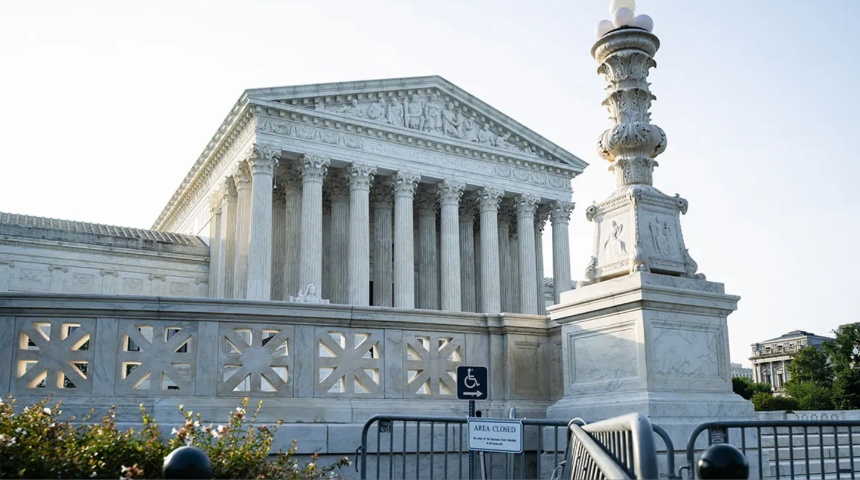
The Supreme Court of the United States has settled one of the most consequential legal fights of Donald Trump’s second term. On June 30, 2026, the justices ruled 6-3 that children born on American soil to parents who are undocumented or only temporarily present are still citizens at birth under the 14th Amendment. The decision, Trump v. Barbara, strikes down the executive order Trump signed on his very first day back in office.
For more than a year, the order sat frozen by lower courts, but it hung over hundreds of thousands of families as a real possibility. That possibility is now gone, at least through executive action.
What the Court Actually Decided
Chief Justice John Roberts wrote the majority opinion, joined by Justices Sonia Sotomayor, Elena Kagan, Amy Coney Barrett, and Ketanji Brown Jackson. The ruling held that children born in the US to parents who are unlawfully or temporarily present are “subject to the jurisdiction” of the country and are therefore citizens at birth under the Citizenship Clause.
Roberts leaned heavily on the Court’s 1898 ruling in United States v. Wong Kim Ark, which recognized as a citizen a man born in San Francisco to Chinese immigrant parents who were themselves barred from naturalizing. That case has stood for well over a century, and the government’s push to reinterpret it around a narrower idea of “domicile” did not persuade the majority.
“Citizenship, then and now, was the right to have rights, to freely participate in our political community,” Roberts wrote, framing the ruling as an extension of a promise the framers of the 14th Amendment made after the Civil War.
Justice Brett Kavanaugh took a middle path. He agreed the executive order could not stand, but grounded his reasoning in federal immigration statute rather than the Constitution itself, filing an opinion that concurred in the judgment while dissenting in part.
The three remaining conservatives on the bench, Clarence Thomas, Samuel Alito, and Neil Gorsuch, each wrote separate dissents. Thomas argued in a lengthy opinion that the 14th Amendment was written to secure citizenship for freed slaves and their children, not to grant it broadly to the children of parents without lawful, permanent ties to the country. Alito called the majority’s reasoning a “serious mistake” that stretches citizenship to cover even children of so-called birth tourists. Gorsuch partly aligned himself with Thomas but drew his own distinction between temporary visitors and undocumented immigrants who have built long-term lives in the US.

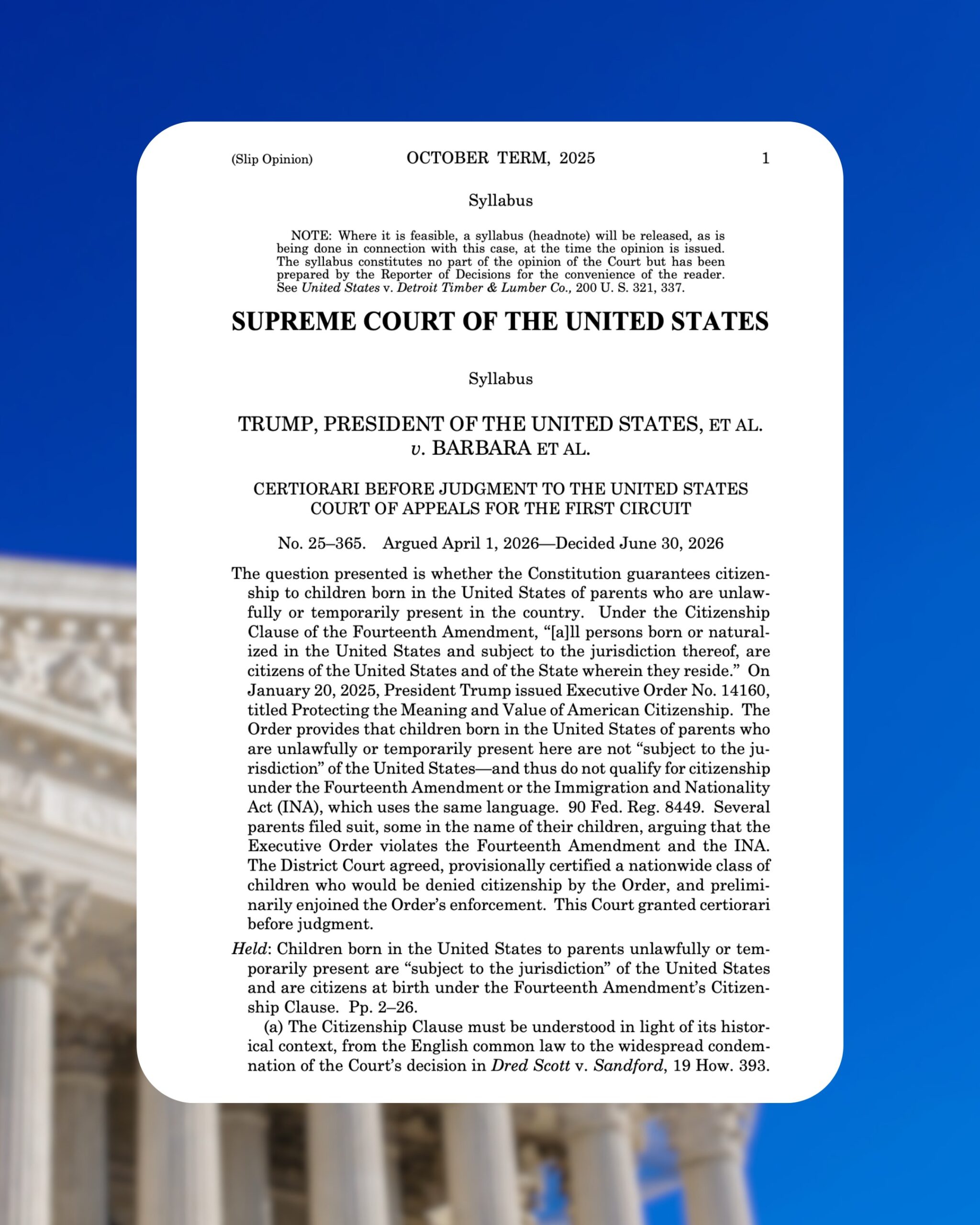
The order, Executive Order 14160, tried to deny automatic citizenship to babies born to parents who were either in the country illegally or on temporary visas. It was blocked almost immediately. Every federal judge who reviewed it, at every level, found it unconstitutional, with one describing it bluntly as “blatantly unconstitutional.” Those early rulings kept the policy from ever being applied to a single child.
What eventually reached the Supreme Court was not just the merits of the order but a related fight over nationwide injunctions, and by the time oral arguments were held on April 1, 2026, Trump himself sat in the courtroom, the first sitting president ever to attend a Supreme Court argument in person.
What This Means for Families Right Now
Nothing changes for parents and newborns. A child born in the United States, regardless of the parents’ immigration status, remains a US citizen at birth, exactly as it has been since the Wong Kim Ark decision. The Migration Policy Institute had estimated that roughly 255,000 children born each year to noncitizen parents would have lost automatic citizenship had the order survived, some of them facing the risk of effective statelessness. That risk has now been removed.
A US birth certificate remains sufficient proof of citizenship. There is no new federal database check, no revised process for issuing Social Security numbers or passports tied to a parent’s immigration status, and no retroactive question mark hanging over anyone already born in the country.
Trump’s Response and What Comes Next
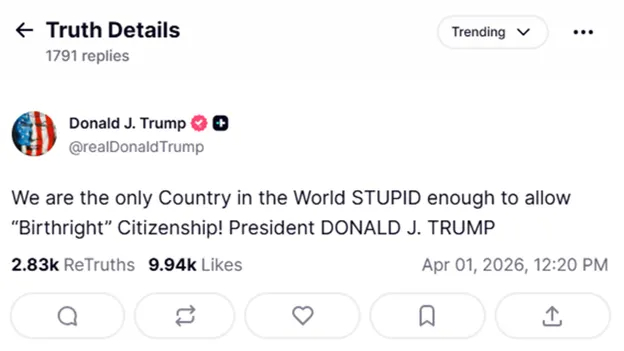
Trump reacted within hours on Truth Social, calling the ruling “too bad for our Country” but pivoting quickly to Congress. “We can easily make it up in Congress through Legislation,” he wrote, arguing that no constitutional amendment would be needed.
That claim lines up, in part, with something both Kavanaugh and Alito suggested in their opinions: that Congress retains room to legislate narrower exceptions to birthright citizenship within constitutional limits, something it has not done. Whether lawmakers have the appetite or the votes for that fight is a separate question entirely, and one that will likely define the next phase of this debate rather than the courtroom.

For now, though, the constitutional question is closed. The Supreme Court had the final word, and it came down firmly on the side of the rule that has governed American citizenship since 1898.
Quick Facts: Trump v. Barbara
| Detail | Information |
|---|---|
| Case name | Trump v. Barbara, 609 U.S. ___ (2026) |
| Decided | June 30, 2026 |
| Vote | 6-3 |
| Majority opinion | Chief Justice John Roberts |
| Joined by | Sotomayor, Kagan, Barrett, Jackson |
| Concurring in judgment, dissenting in part | Brett Kavanaugh |
| Dissenting | Thomas, Alito, Gorsuch (separate opinions) |
| Order at issue | Executive Order 14160, signed January 2025 |
| Key precedent cited | United States v. Wong Kim Ark (1898) |